ISC 321 - Quiz 1
 Call Kai
 Learn
 Practice Test
 Spaced Repetition
 Match
 Flashcards
 Knowt Play
1/70

There's no tags or description
Looks like no tags are added yet.
Name | Mastery | Learn | Test | Matching | Spaced | Call with Kai | Chat |
|---|
No analytics yet
Send a link to your students to track their progress
71 Terms
Marketing Concept
The birth of idea: “The need of producers should be considered only with regard to meeting the needs of consumers” -Adam Smith
The Evolution of Marketing Concept
1920s: Production Concept - Can we produce the product?
1930s: Sales Concept - Can we sell the product?
After WWII Marketing Concept - What do consumers want?
Today: ‘Right Principles’
Providing the right products/services to the right people
at the right place + the right time, using the right promotion techniques
What does the marketing concept rely upon?
Marketing Research! To define market segments, their size, and their needs
to satisfy consumer needs, managers make decisions about the controllable parameters of the marketing mix
Marketing Mix
the unique blend of products/service, pricing, promotion, and distribution strategies designed to meet the needs of a specific group of consumers
4ps: Product, price, place, promotion (5ps w/ Participation-customer engagement)
Promotion: sales promo, advertising, public relations, direct marketing
Place: channels, market coverage, assortment, location, inventory, transport
Product: features, quality, branding, packaging, services, warranties
Price: price strategy, pricing, allowances, discounts, payment terms
Integrated Marketing Communications (IMC)
the process of using a promotional mix in a unified way so that a systematic communication effect is created = ISC
4 Promotional Mix = Marketing Comms: Advertising, PR, Sales Promo, Direct Marketing
Marketing Research
the planning, collection, and analysis of data relevant to the marketing decision-making and the communication of the insights to management
3 functions:
Descriptive
Diagnostic
Predictive

Descriptive Function
To gather and present statements of facts
ex: addressing
What is the historic sales trend in the industry?
What are consumers’ attitudes and beliefs toward a product?
ex: Oscar Mayer-heard (through marketing research) plenty from consumers about what they disliked about its former bacon packaging
Oscar Mayer Center Cut Bacon was introduced: a new “Stay-Fresh Reclosable Tray”

Diagnostic Function
to explain data or actions
ex: addressing - what was the impact on sales when the Oscar Mayer package design was changed? How can product/service offerings be altered to better serve customers and potential customers?
Heinz: kids eat over 5 billion oz of ketchup each year, decided that heavy users (kids) should have a lot to say (via marketing research) about how to make ketchup fun
Heinz listened and watched kids using ketchup, resulting in a new bottle design and name selection, Heinz EZ Squirt Ketchup
Predictive Function
to specify how to use descriptive and diagnostic research findings to predict the results of a planned marketing decision
ex: addressing how can the company best take advantage of opportunities as they arise in the ever-changing marketplace
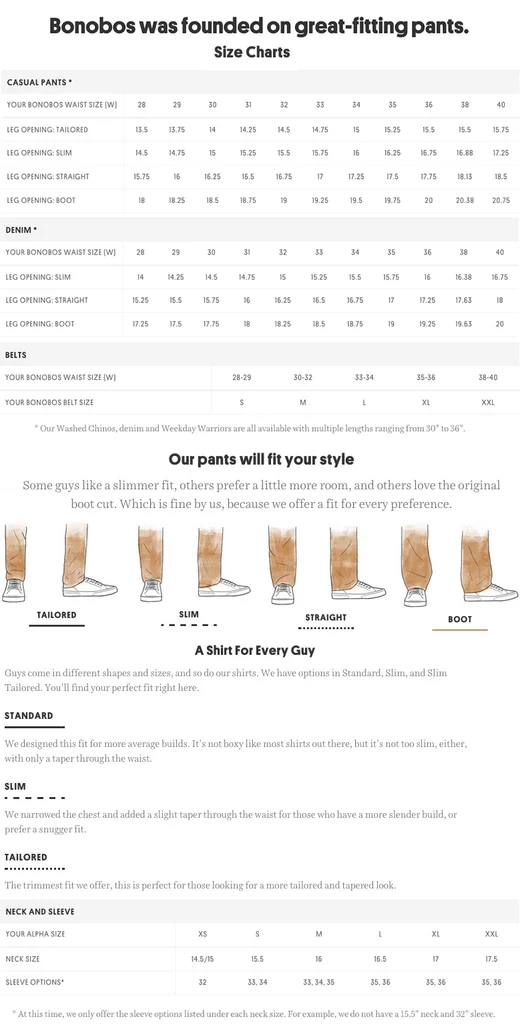
Bonobos-most brands typically only make mens shorts in general sizes like s,m,l, xl
Bonobos “core shorts” is sized numerically, hitting both odd and even waist sizes from 28-40 inches, can also pick length (7 or 9 inch), for a wide variety of different, almost custom fits

How these marketing functions can go together?
Descriptive Function: find what happened (reactive to a problem)
ex: UK has a lack of branding power; weaker than benchmarked institutions
Diagnostic Function: Find why and how from data (reactive to a problem)
ex: UK is represented by different units using different and old logos
Predictive Function: decided what to do next and what would happen next? (proactive; taking an opportunity)
ex: UK needs a new logo to present its strong and coherent brand

Marketing Research: Basic
Theory - or model-building (general)
to expand the frontiers of knowledge
examples:
Maslow’s Hierarchy of Needs
Product Life Cycle

Applied Research
problem solving (specifics)
to improve a situation through a solution from applied research
example: ANAR Foundation
problem- how to raise awareness of their phone number to help children and adolescents at risk
Solution- interactive + customized public images (ex: child abuse report)
When is Marketing Research important?
understand ever-changing trends in the marketplace
take advantage of opportunities (proactive)
protect from a prospective/actual problem (reactive)
point to brand touch points on multiple platforms (ex: social media, UGC)
When Marketing Research is not necessary?
when decision - making information already exists
when you have a lack of resources
when it was poor timing
when costs outweigh benefits
when there’s no agreement on what’s needed
Primary Research
to solve the problem under investigation
very involved, high cost, long time, collecting data by yourself, is done after secondary research
it’s your own research
when secondary did not offer answers to your research questions
Secondary Research
to be relevant to the problem under investigation
rapid and easy, low cost, short time, data collection done by others
should be done before conducting your own (primary research)
serving as a guiding light when you find a direction for your primary research (developing your research objectives)
Secondary Research - Internal Sources
examples:
sales person’s call reports
annual report
customer profiles — the creation of database marketing + data mining discovers a hidden pattern
External Sources
check outside resources available paid or free
example:
Government reports (ex: US Census)
Trade association research (ex: IAB, AAAAs)
Syndicated research (Pew Research Center, MRI+, Mintel Academics)
Business periodicals (Advertising Age, PRSSA)
Secondary Research - Advantages
less expensive + faster
helpful to clarify and redefine a problem/opportunity
providing important insights for primary research (ex: research objectives)
contributions to the development of the survey questionnaire
Secondary Research - Disadvantages
lack of availability - might not be any available data on your topic
Lack of relevance - data might be distant or outdated
Inaccuracy - might be biased (w/ or w/o intention), questionnaire source (external vs. internal)
Insufficiency - not enough to bring a closure to a problem
First thing to do in your primary research
Identification of problem/opportunity
specify your primary research through small-sized research (rather than assuming your directions)
secondary research
exploratory research: Focus group interview (FGI), Short Interview, Pilot Study (mini study)
Primary Research - Qualitative
observation
in-depth interview
FGI
Projective Techniques
Case Study
Pilot Study
Primary Research - Quantitative
observation
survey
experiment
content analysis
Primary Research - Advantages
control over the research process
specific results
Primary Research - Disadvantages
cost
time consuming
Step 1: The first thing to do when you conduct own/primary research?
identify major problems/opportunities
specify them with informational needs — secondary research results are helpful
Necessary to justify the need for your research and clarify the direction of your research
The need for your research
=How can I help my client with my research?
The direction of your research
=What kind of research should I conduct?
What is the goal of my research?
Developing research objectives
done based on the precise info addressing major problems/opportunities
done after finding the need for your research and developing your research roadmap
consider the “so what” questions of your topic
Develop multiple (usually 3) objectives
Scenario: Your company plans to develop a new ready-to eat lunch product for school children
two research objectives:
1.) To understand how school children evaluate your current lunch products
2.) (in class brainstorm) — ex: understand location, what foods children like the most, etc.
Step 2: Create the research design — Descriptive Studies (ex: survey)
answers the question who, what, when, where and how
help the research select variables for a casual study
Step 2: Create the research design — Casual Studies (ex: survey)
Examine whether an independent variable causes/affects a dependent variable
Step 3: Select the Research Method - Survey
(quantitative)
descriptive
obtain pre-existing facts and opinions
Step 3: Select the Research Method - Content Analysis
(quantitative)
descriptive
ISC content (non human samples)
Step 3: Select the Research Method - Experiments
(quantitative)
casual
testing stimuli
Step 3: Select the Research Method - Focus Group
(qualitative)
descriptive
motivation study

Step 4: Select the Sample Procedure
identify who will be your samples
decide a sample size (how many)
be cautious of a sampling error
-use either a probability or non-probability method
-probability methods are always preferred
Step 5: Collect the Data
in-person, phone, mail, online… and more
commercial services (ex: Amazon Mturk, SONA) and tools (ex: Qualtrics, Survey Monkey) available
Step 6: Analyze the data
use a qualitative and/or quantitative analysis
different tools available (ex: excel and SPSS for quantitative analyses)
Qualtrics for your project!
interpret findings and draw conclusions from data
Step 7: Write a report
data-based
implications for the client
ethical consideration
revisit research objectives
audience-friendly
Is secondary data always collected by others?
Yes! Secondary data is always collected by others
Is an experiment an example of qualitative or quantitative research?
an experiment is an example of quantitative research

Qualitative Research
characterized by absence of empirical measurements to describe attitudes, perceptions, behaviors, or performance
more subjective evaluations
sample size: small
info from each respondent: a lot
question techniques: open-ended, probing
main instrument: discussion guide, ex: FGI guide
types of analysis: subjective, interpretive
degree of republic-ability: low
type of research: usually exploratory
examples: in-depth interview, FGI, observation

Quantitative Research
conducted to obtain empirical measurements of attitudes, perceptions, behaviors, or performance
more objective evaluations
sample size: large
info from each respondent: relatively small
question techniques: multiple-choice
main instrument: questionnaire, ex: survey questionnaire
type of analysis: statistical, empirical
degree or republic-ability: high
type of research: descriptive or causal
examples: survey, experiment, content analysis

Qualitative + Quantitative: Recent Trend - Combining both
Qualitative research led to well-conceived quantitative research that verified the demand for the new product
Client: the detergent company (the maker of Woolite and Lysol)
FGI result said: glasses washed in a dishwasher tended to become clouded and stained
they need a survey: to determine the extend of the perceived “staining” problem among households and dishwashers
when combining both: qualitative research led to well-conceived qualitative research that verified the demand for the new product
survey result verified: consumer dissatisfaction with how their glasses looked after the numerous rounds in the dishwasher
consumer willingness to pay a reasonable price to find a solution
taken together: the company introduced a dishwasher detergent that protects glassware from mineral corrosion
Qualitative research - advantages (over quantitative)
cost: usually (not always) more cost efficient
fast turnaround
easy to set up
-Obtain in-depth interviews about consumer motivations and feelings
-improve the efficiency of quantitative research
Qualitative Research - Disadvantages (over quantitative)
less representative respondents
lack of highly skilled researchers (ex: professional FGI moderators)
not able to detect an overall trend in the marketing mix
limited contribution to find a decision

Qualitative Research Type
in-depth personal interview
focus group interview (FGI) (popular)
projective techniques
More: observations (usually by ethnographers)
case studies
In-depth interviews
Unstructured one-to-one interviews
the second most popular form of qualitative research
no group pressure on study participants
better with confident, emotional, or embarrassing topics than FGI
able to acquire details about complicated behaviors
need an interviewer thoroughly trained in the skill of probing and eliciting detailed answers to each question
Probe is important! Probe as much as possible
can you tell me more? would you be able to elaborate on that?
In-depth interview - advantages + disadvantages
advantages
flexibility
confidentiality
purity
depth of information
portability
individual focus
disadvantages
cost
time
potential for sample problems

FGI
group of 8-12 participants who are led by a moderator in a discussion on particular topics or concepts
emphasis on getting people to talk about the subject in a group setting
most frequently qualitative research method
goal: to understand and lear what people say and why
to find out how consumers evaluate about a product, idea, or performance
how it fits into their lives
what emotions/intentions that consumers have
What are group dynamics matter in FGI?
interaction among people in a group
more talkative due to the stimulation by others
stimulate free and spontaneous discussions (group pressures matter, too)
most people feel comfortable (more than in-depth interview)
Popularity of FGI?
why?
limited knowledge on statistic-based research
able to see what consumers actually do and ask why/how
Main users:
research firms
ad agencies
consumer good companies

Planning FGI - 1.)Preparation
Recruiting Participants:
8-12 respondents
qualified respondent (through pre-screening)
avoid repeat “professional” respondents
Focus Group Facilities:
conference room with a one-way mirror
conference table and chairs
audio-video equipment
Planning FGI - 2.) Select a moderator
the moderator should be able to:
conduct a group properly
have good biz skills
create rapport
rapport=bridge between people’s everyday life and clients interest
moderator=bridge builder
Bad moderator:
leading rather than guiding
being too knowledgeable
trying to be a comedian
being a poor listener
being too rigid with the discussion guide
focusing on individuals rather than the group
Planning a FGI - 3.) Develop a discussion guide
written outline of topics to be covered during FGI (AKA, aligning them with RQs)
consider depth vs. length
can be flexible in an actual FGI
Planning a FGI - 4.) Conduct FGI
length: about 90 mins (no more than 2hrs)
order:
introduction: rapport, rules of FGI
general topic discussion: easy & quick to answer
specific topic discussion: logical flow/probing & follow up questions
close

Use the inverted pyramid shape for the FGI Q flow - Introduction
Consent for a recording/observational process
Provide a casual, relaxed, & informal setting
create rapport at the beginning
Be honest; tell the truth
Discussion rules (specific strategies with in-class exercise):Take one at a time - Don’t dominate the discussion - Talk in any order - Listen to others
Use the Inverted Pyramid Shape for the FGI Q flow: Qs about bread
General attitude toward bread
Eating more/less bread now, compared to a few years ago? Explore reasons.
Disadvantages of bread, compared to other foods?
Foods bread goes with best? Why?
Usage/purchase of bread
When/where is bread consumed most often?
Types of bread used most frequently?
Likes/dislikes of each type of bread?
Brands preferred? Why these brands? Vary by family members?
Use the Inverted Pyramid Shape for the FGI Q flow: Qs about dieting + diet bread
Bread consumption when dieting
Changes in bread consumption related to dieting? Why?
Types of bread eaten when dieting, if any reasons?
Roles of bread in dieting
Attitude toward diet bread/brands
Awareness of diet breads/brands?
Experience with diet bread/brands
Satisfaction with each brand?
Why like or not like? Brand perceptions?
Important factors/product attributes associated with preferred brands?
Use the Inverted Pyramid Shape for the FGI Q flow: Qs about the clients product and ads
Reaction to “LESS” diet product samples
Overall reactions to each bread
- Reaction to taste, texture/mouth feel?
- Reaction to slide shape/thickness?
- Reaction to loaf shapes and size?
- Reaction to color and smell?
Show and discuss “Less” ad concepts
Overall reaction to each concept
Likes/dislikes for each concept?
Main idea for each concept?
Believability?
Planning a FGI 5.) Analyze Results
Prep - Make data accurate and searchable – e.g., Audio/video recording, a written transcript, automated transcript options
use thematic analysis
the most common form of analysis in qualitative research
look for themes that reoccur in narratives and summarize the main themes using quotations from the evidence as support
Thematic Analysis’s 3-Steps:
1.) Transcribe and get familiar with the data
the transcribed texts (ex: Zoom recording) become the primary source material for the subsequent thematic analysis
familiarize themselves with it by reading it several times
2.) Code the text based on what it is about
code them with a short but descriptive that represents the essence of a response -tip: color code or highlight responses
3.) Group codes into major themes
group codes with major trends and patterns (AKS. themes)
ensure that each theme has enough data to support the theme and is distinct
consider merging together similar themes and removing themes that don’t have enough data to back them up
provide examples (using “quote”) to illustrate each theme
What does focus group data do for research?
focus group data puts the human touch back into research
a dialogue between real people and textual analysis by a flesh-and-blood expert (thats you)
once you’ve got an accurate transcript of your FGI, your most powerful tool is your brain
FGI Advantages + Disadvantages
Advantages:
quicker, easier, and cheaper
group dynamics
spontaneous response
consensus and debate
chance to observe consumers
chance to text a product/ad
Disadvantages
dominant participant
group pressure
immediacy and understandability may mislead
may not be typical customers
human bias (moderator/interpreter)
New Trend - Online FGI
Advantages:
no geographical constraints
able to recruit people not available for traditional focus groups (doctors, layers, etc)
less time constraints and lower costs
moderators can carry on side constraints
Disadvantages
technical challenges - digital divide, online access
lack of general control over the respondent’s environment
not able to directly test touch and smell
difficult to capture emotions

Projective Technique
Quantitative research usually done by consumer psychologists, not typical market researchers
an unstructured, indirect form of questioning that encourages respondents to project their underlying motivations, beliefs, attitudes, or feelings regarding the issues of concern
why?
reluctance
defense mechanisms
inability to reveal feelings
Projective Techniques - challenges (not for group project)
require highly trained interviewers
require skilled interpreters
a serious risk of interpretation bias
tend to be expensive
engage people in unusual behavior
non representative sample
Comparison of 3 qualitative research methods

Projective techniques - type
1.) Word association - ask to say the first word that comes to mind after hearing a word
2.) Sentence and story completion - ask to complete a set of incomplete sentence or story; the most useful and reliable
ex: The last time I eat M & M ______________ The typical people who eat M & M are ______ Chocolate bars are better snacks than Cookies because ____________________
3.) Cartoon test - fills in the dialogue of a cartoon character; highly versatile
4.) Photo or picture spots - respondent sorts photos of different types of people
identifies brand images by projecting user images
trademarked technique by BBDO Worldwide
5.) Consumer Drawings - respondents draw what they are feeling or how they perceive an object
reveals unconscious motivations and perceptions
⭐️ interpretation bias is high - common with children
6.) Third-person technique- ask questions in terms of others, typical consumers, or most people
to minimize “social desirability bias” and social pressure
suitable for sensitive and stigmatized topics
— why don’t most people recycle?
— why do typical college students binge-drink?

Do you use projective techniques on class project?
NO, these are useful for tapping respondents deepest feelings, however DO NOT USE them in your project