patho chapter 15: alterations in blood flow
 Call Kai
 Learn
Learn Practice Test
 Spaced Repetition
 Match
Match Flashcards
 Knowt Play
1/48

There's no tags or description
Looks like no tags are added yet.
Name | Mastery | Learn | Test | Matching | Spaced | Call with Kai | Chat |
|---|
No analytics yet
Send a link to your students to track their progress
49 Terms
what are the primary functions of the circulatory system?
-transportation of oxygen and nutrients
-removal of metabolic waste products

what does effective human operation depend on?
proper functioning of the circulatory system
what are the three distinct layers of blood vessels
tunica intima
tunica media
tunica adventitia

what is the anatomy of a capillary?
single layer of endothelial cells attached to a basement membrane
what determines a capillaries permeability?
the tightness of the endothelial cell connection
how do lymphatic vessels resemble veins?
they have thin walls and valves
what is the equation to calculate blood flow?
flow=pressure/resistance
what is the equation to calculate blood pressure?
flow (cardiac output) times resistance
what is the equation to calculate resistance?
resistance=pressure
/flow
how does the velocity of blood flow relate to the total cross-sectional area of the vascular bed?
the velocity of blood flow varies inversely with the total cross-sectional area of the vascular bed
what factors are considered in the hemodynamics of the circulatory system?
wall tension and compliance, as well as the dynamics in the microcirculation, including capillaries and lymphatics
what is laplace's law in the context of hemodynamics?
relates to wall tension and compliance in blood vessels, describing how tension in the wall of a vessel is related to the pressure and radius of the vessel.
what regulates blood flow centrally?
the autonomic nervous system
what regulates blood flow locally?
the organ or tissue
how do lymphatic vessels maintain flow?
by contracting when stretched with lymph
what prevents lymphatic backflow?
intraluminal valves
how does external compression affect lymph flow?
by contracting muscles to enhance lymph flow
what are some common obstructions that cause altered blood flow?
thrombus
embolus
vasospasm
inflammation
mechanical compression
what are two types of structural alterations that cause altered blood flow?
artherosclerotic plaques
aneurysms
what is the most common cause of chronic progressive arterial obstruction?
artherosclerosis
what are risk factors for arteriosclerosis/atherosclerosis?
smoking
hyperlipidemia
male gender
advancing age
sedentary lifestyle
obesity
glucose intolerance
family history of cardiovascular disease
what are symptoms of arteriosclerosis?
chest pain
blood clots
shortness of breath
heart failure
headache
how is arteriosclerosis treated?
change to low fat, high-fiber diet and increase exercise
what is thromboangiitis obliterans also known as?
buerger disease
what is thromboangiitis obliterans (buerger disease)?
a rare inflammatory condition affecting both small and medium size arteries and veins of the upper and lower extremities
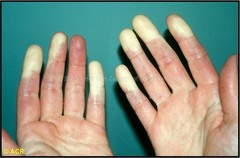
what is raynaud syndrome?
extreme vasoconstriction producing cessation of flow to the fingers and toes
what does vasoconstriction associated with raynaud syndrome cause?
color changes
what are aneurysms?
bulging blood vessels that can burst (localized arterial dilations)
how are aneurysms classified?
true or false
what are the six Ps of acute arterial occlusion?
pallor
paresthesia
paralysis
pain
pulselessness
polar (cold to touch)
true or false-emboli (blood clots) are associated with acute arterial occlusion
true
what causes valvular incompetence in veins?
overstretching the valves due to excessive venous pressures
what are common clinical manifestations of venous insufficiency?
feeling of heaviness or tension
pruritus
edema and stasis dermatitis
ulcer formation
when might valcular incompetence occur?
obesity
pregnancy
right heart failure
prolonged standing
how is valvular incompetence treated?
exercise
medication
revascularization procedures
what are varicose veins?
superficial, darkened, raised, and tortuous (twisted) veins due to valvular incompetence involving superficial veins

what are the clinical manifestations of varicose veins?
aching
heavy discomfort
venous ulcers
how are varicose veins treated?
elevation
elastic stockings
exercise
weight loss
sclerotherapy
vein stripping
vein ligation
what are the clinical manifestations of chronic venous insufficiency?
edema
venous stasis ulcers
pain
when does chronic venous insufficiency result?
when valvular incompetence involves the deep veins of the legs

how is chronic venous insufficiency treated?
compression
true or false-upper extremities are more frequently affected by deep vein thrombosis
false; upper extremities are less frequently affected
what is deep vein thrombosis?
an acute venous obstruction (clot) that is most frequently secondary to a thrombus in a deep vein of the lower extremities
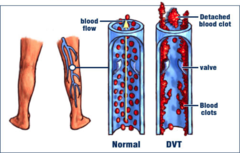
what are the clinical manifestations of deep vein thrombosis:
asymptomatic
edema
inflammation
dilated superficial veins
pain
why is deep vein thrombosis potentially life threatening?
because of the likelihood of embolization (blocking blood flow) to the pulmonary circulation
how is deep vein thrombosis treated?
aggressively with anticoagulants
what is lymphedema?
obstruction of lymph flow

what does lymphedema often result from?
the surgical removal of, or radiation damage to, lymphatic vessels during treatment of cancer
what are the clinical manifestations of lymphedema (lymphatic obstruction)?
regional edema
thickened subcutaneous tissue