Gastrointestinal System
 Call Kai
 Learn
 Practice Test
 Spaced Repetition
 Match
 Flashcards
 Knowt Play
1/181

There's no tags or description
Looks like no tags are added yet.
182 Terms
GI tract general setup
Continuous tube that begins with the mouth and ends with the anus
several auxiliary organs that help with secretions
Auxiliary organs of GI tract
Salivary glands, liver, gallbladder, pancreas
Three salivary glands
parotid, sublingual, submandibular
First stop in GI tract
Mouth
Function of the mouth
Mechanical and chemical digestion. Saliva helps moisten food and break it down
Enzymes in mouth and what they breakdown
Salivary amylase→help break down carbohydrates
Lingual lipase→helps break down fats
Second stop in GI tract
Pharynx and esophagus
Function of pharynx and esophagus
Motility→swallowing
How is the swallowing reflex of the pharynx controled
mechanoreceptors in the upper pharynx sense material pressing up against them→send signals to the swallowing center in the medulla→medulla sends signals back to pharynx to swallow
What types of muscle are found in the pharynx?
Upper part is exclusively skeletal muscle
Middle part is a combination of smooth and skeletal muscle
Lower part is exclusively smooth muscle
Sphincters in esophagus
There are two sphincters: upper and lower that help prevent the backflow of food
What causes the lower sphincter to close
Increased pressure
How is the upper sphincter controlled?
Coordinated by the swallowing reflex
Third stop in the GI tract
Stomach
Functions of the stomach
protein digestion and motility
Parts of the stomach
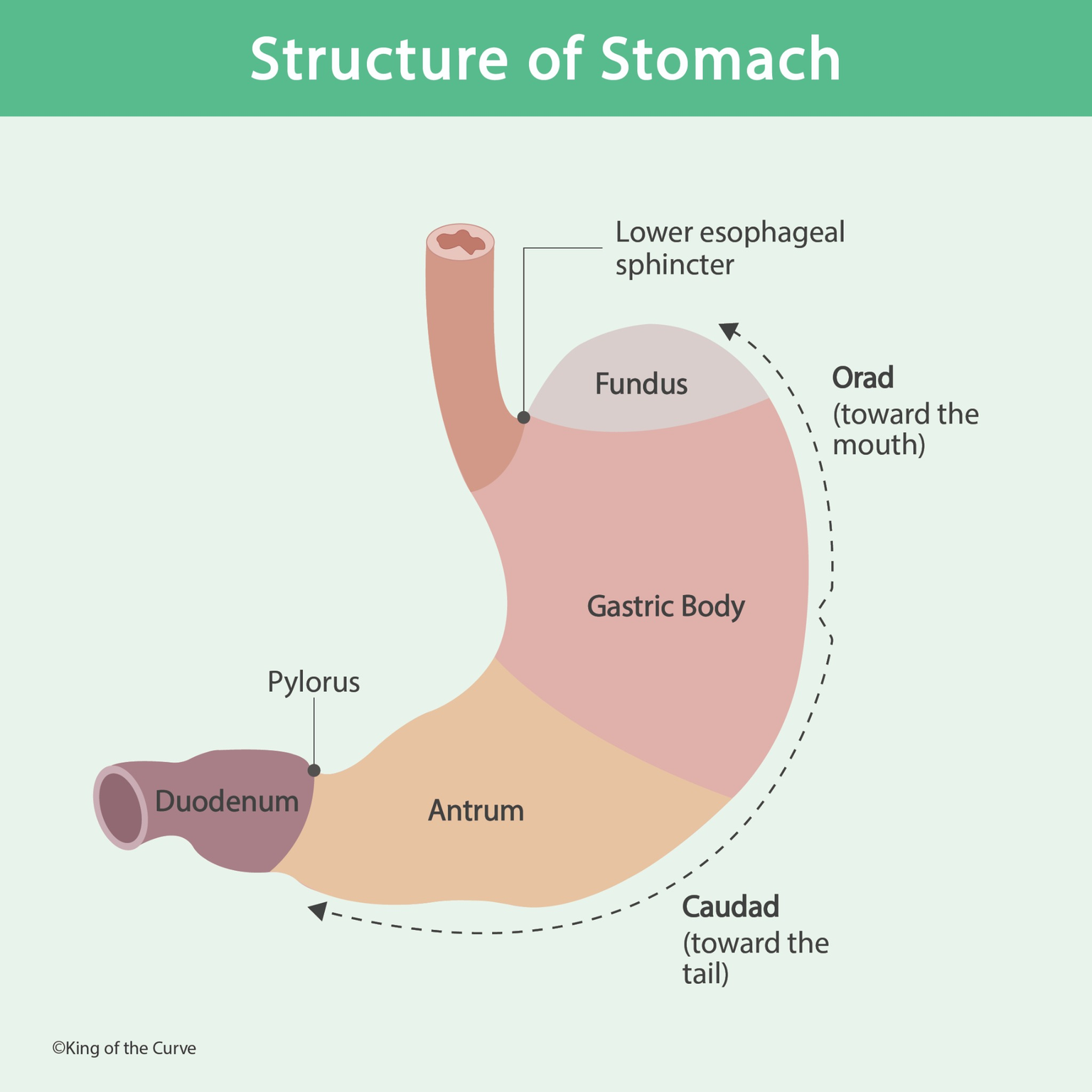
made up of the body, the fundus, the antrum, the pylorus+pyloric sphincter
Function of the stomach’s body
Secrete various factors→ HCl, intrinsic factor, mucus, pepsinogen
What cells secrete HCl?
parietal cells
What cells secrete mucus?
goblet cells
What cells secrete intrinsic factor
Parietal cells
Functions of the stomach’s antrum
secretes mucus, pepsinogen, and gastrin
helps mix and grind chyme through coordinated contractions
Function of stomach pyrolus and pyloric sphincter
Helps control the movement of contents from the stomach to the small intestine
Fourth stop in the GI tract
small intestine
Function of the small intestine
major site of digestion and absorption
Three parts of the small intestine
duodenum
jejunum
ileum
How does the small intestine maximize absorption?
Folded villi and microvilli
Blood flow to villi
Each villus is supplied with blood through villar capillaries→afferent and efferent flow to help with digestion
What helps small intestine digestion?
Pancreatic enzymes, liver/gallbladder’s bile
What molecules are secreted by the small intestine?
goblet cells secrete mucus for protection and lubrication
enteroendocrine cells secrete CCK and secretin→regulatory hormones
Fifth stop in small intestine
Pancreas, gallbladder, liver
What is the purpose of the pancreas, gallbladder, and liver?
Secretion
Where do the pancreas, liver, and gallbladder connect to?
Upper part of the duodenum
Pancreatic secretions
bicarbonate, digestive enzymes
How is the pancreas connected to the duodenum?
Pancreatic duct
What cells secrete bicarbonate in the pancreas?
pancreatic duct cells
What cells secrete pancreatic enzymes?
exocrine cells
Secretions of the liver/gallbladder
bile
How are the gallbladder and liver connected to the small intestine?
bile ducts connect the liver and gallbladder to the duodenum. Liver also connected via the hepatic portal vein to the ileum
Purpose of hepatic portal circulation?
Nutrients are triaged in the liver and detoxified if required
Sixth stop in the GI tract
Large intestine
Functions of the large intestine
absorption of water and salts; fecal storage→basically dehydrate the waste
Parts of the large intestine
cecum
ascending colon
transverse colon
descending colon
sigmoidal colon
rectum

Where is the appendix located?
Connected to cecum in large intestine
4 major functions of the digestive system
digestion
absorption
secretion
motility
Digestion
breakdown of nutrients
Where does digestion occur?
mouth, stomach and upper small intestine
Absorption
movement of material into the blood
Where does absorption occur?
small intestine (nutrients), large intestine (salts and water)
Secretion
movement of material into the GI tract
Where does secretion occur?
stomach, small intestine, large intestine
Motility
Movement of material through the GI tract
Where does motility occur?
All throughout the GI tract
4 layers of GI wall
mucosa
submucosa
muscularis externa
serosa


Parts of the mucosa
epithelium+glands
lamina propria
muscularis mucosa
Cells of GI epithelium
Mucous cells, endocrine cells, exocrine cells
Lamina propria
Contains the immune cells and connective tissue
Muscularis mucosa
Muscle layer associated with the mucosa layer, which helps squeeze glands to help empty their contents into the lumen
Parts of the submucosa
major blood and lymphatic vessels
submucosal plexus
Submucosal plexus
part of the enteric nervous system→synapse with glands, endocrine cells, the myenteric plexus
Components of the muscularis externa
circular muscle
myenteric plexus
longitudinal muscle
Myenteric plexus
Part of the enteric nervous system→synapses with ANS and submucosal plexus
Longitudinal muscles
What give GI tract their motility
Serosa
connective tissue→allows for adherence to abdominal cavity wall
How many epithelial membranes must nutrients cross when being absorbed by villi?
two epithelial membranes
Lacteals
lymphatic circulation of villi
How much fluid do we ingest per day?
1200 mL
How much solids do we ingest per day?
500-800 g
Volume of gastric secretions
200 mL
Volume of bile secretions
500 mL
Volume of pancreatic secretions
1500 mL
Volume of intestinal secretions
1500 mL
How much fluid is added to ingested amount of fluid/solids by the GI tract?
6.7 L→a substantial amount of fluid
Total volume of processed leftovers
1500 mL→50 g of solids and 100 mL of water in feces
Forms that carbohydrates can be in?
polysaccharides, disaccharides, monosaccharides
Examples of polysaccharides
glycogen and cellulose
Examples of disaccharides
sucrose, lactose, maltose
Sucrose
Glucose+fructose

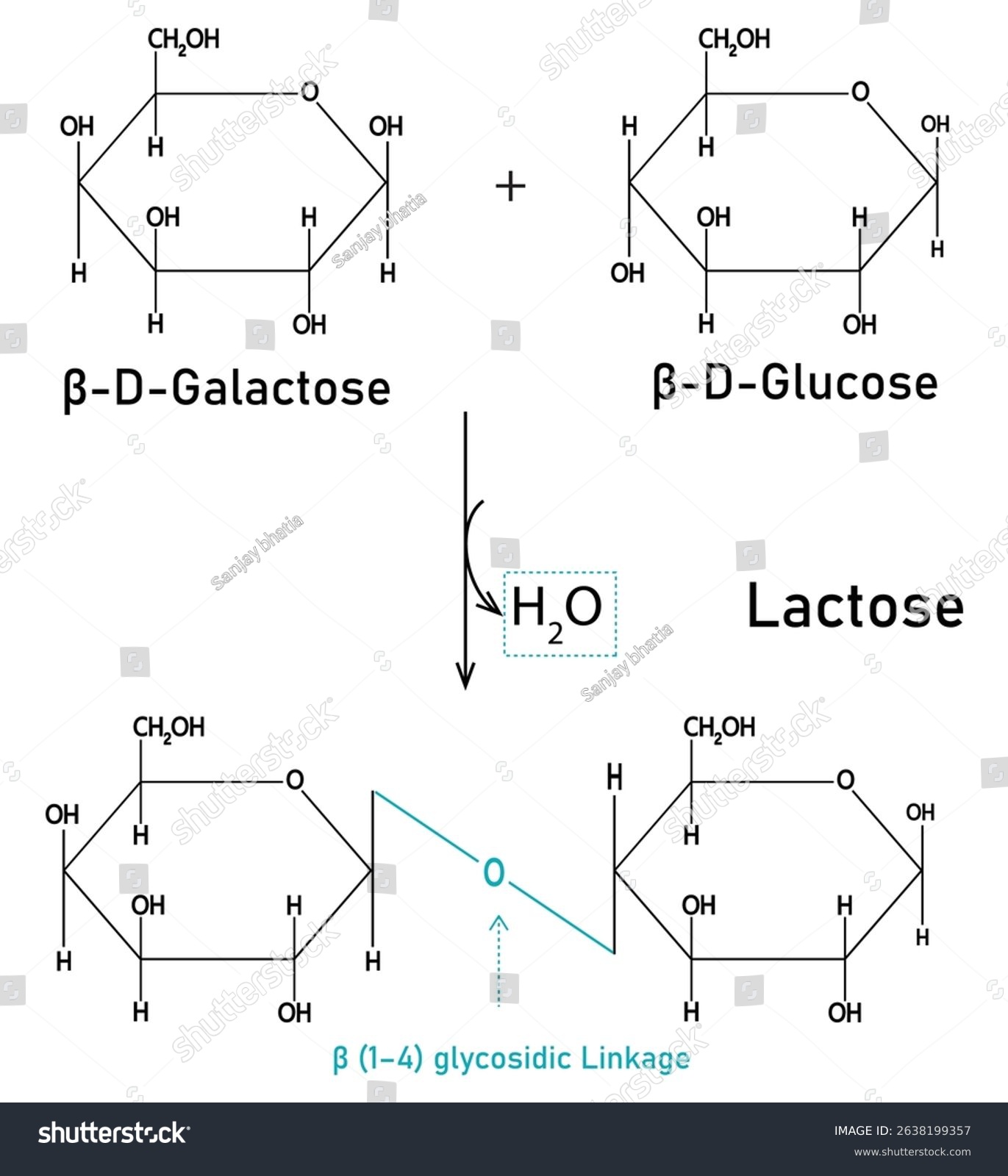
Lactose
galactose+glucose
Maltose
glucose+glucose

What size of carbohydrates can be absorbed by GI tract?
Only monosaccharides
Role of salivary amylase in carb processing
Cleaves long polysaccharides into smaller chains and leaves disaccharides untouched. Only starts the process of carb digestion
Steps of carb digestion in small intestine
Polysaccharides degraded by pancreatic amylase into maltose and indigested disaccharides
Maltose and indigested disaccharides is broken apart into glucose, fructose, and galactose molecules by brush border enzymes, which are located on the epithelial wall
Steps of carb absorption in small intestine
Glucose and galactose enter epithelial cells through SGLT monosaccharide/Na+ symporter
Fructose enters epithelial cells through GLUT transporters
All three monosaccharides exit epithelium and enter bloodstream through GLUT transporter
Na+/K+ ATPase in the basolateral membrane restores the extracellular concentrations of sodium and potassium leak channels restore potassium concentrations
Location of brush border enzymes
Epithelial wall
Steps of lipid digestion
lingual lipase and gastric lipase begin fat digestion in mouth and stomach, respectively
Co-lipase affixes lipase onto surface of emulsion droplets
Lipase breaks apart triglycerides into fatty acids and monoglycerides
Bile salts and phospholipids in small intestine coat large fat globules of monoglycerides and fatty acids, emulsifying them
hydrophobic parts face the fat globule while the hydrophilic parts face the lumen
fat globules become small emulsions and are prevented from re-coalecing into large fat globules by bile salts and phospholipids
What is the major component of fat globules?
Triglycerides
Lipid absorption into small intestine lumen
Globules of fatty acids and monoglycerides surrounded by bile/phospholipids exist in equilibrium with FREE fatty acids and monoglycerides. As free fatty acids and monoglycerides diffuse across the plasma membrane into epithelial cells, the luminal concentration of free fatty acids and monoglycerides decreases, which causes bile emulsions to release more free free fatty acids and monoglycerides according to Le Chatelier’s principle. The results is a gradual and controlled release and absorption of fats.
Steps of fat transport into the blood
Upon diffusion into intestinal epithelial cells, fatty acids and monoglycerides enter smooth ER
Synthetic enzymes reform triglycerides by combining fatty acids and monoglycerides
Triglycerides attached to amphipathic lipoproteins
Triglycerides+lipoproteins packaged into vesicles called chylomicrons
chylomicrons exocytosed out basolateral membrane and into LYMPH VESSELS→villi lacteals
Chylomicrons
Fat soluble vitamins
A, D, E, and K
Water soluble vitamins
B and C
How are water soluble vitamins absorbed?
Through mediated transport→transport proteins
Absorption of vitamin B12
vitB12 must binds intrinsic factor transport protein in order to be transported across the gut membrane
How are water and ions absorbed?
Via diffusion in small and large intestines
What ions are absorbed in GI tract?
sodium, chloride, potassium, calcium, iron
What are the general things that govern GI tract regulation?
Volume and composition of luminal contents
NOT THE NUTRITIONAL STATE OF THE BODY
Will the body absorb all nutrient places inside of it?
Yes! Doesn’t matter if you need them or not
Factors that signal presence and contents of food
GI wall distention→mechanoreceptors
chyme osmolarity→osmoreceptors
chyme acidity→chemoreceptors
chyme concentration→chemoreceptors
Neural regulation of the GI tract
ENS can regulate GI tract locally through submucosal and myenteric plexi
SNS and PSNS can either receive or relay inputs/outputs to the GI tract
Hormones that regulate GI tract
Gastrin, secretin CCK
Where is Gastrin made?
Made by the stomach