ne102 4/24 lecture: vesicle transport (of extracellular + transmembrane proteins)
 Call Kai
 Learn
 Practice Test
 Spaced Repetition
 Match
 Flashcards
 Knowt Play
1/12

There's no tags or description
Looks like no tags are added yet.
13 Terms
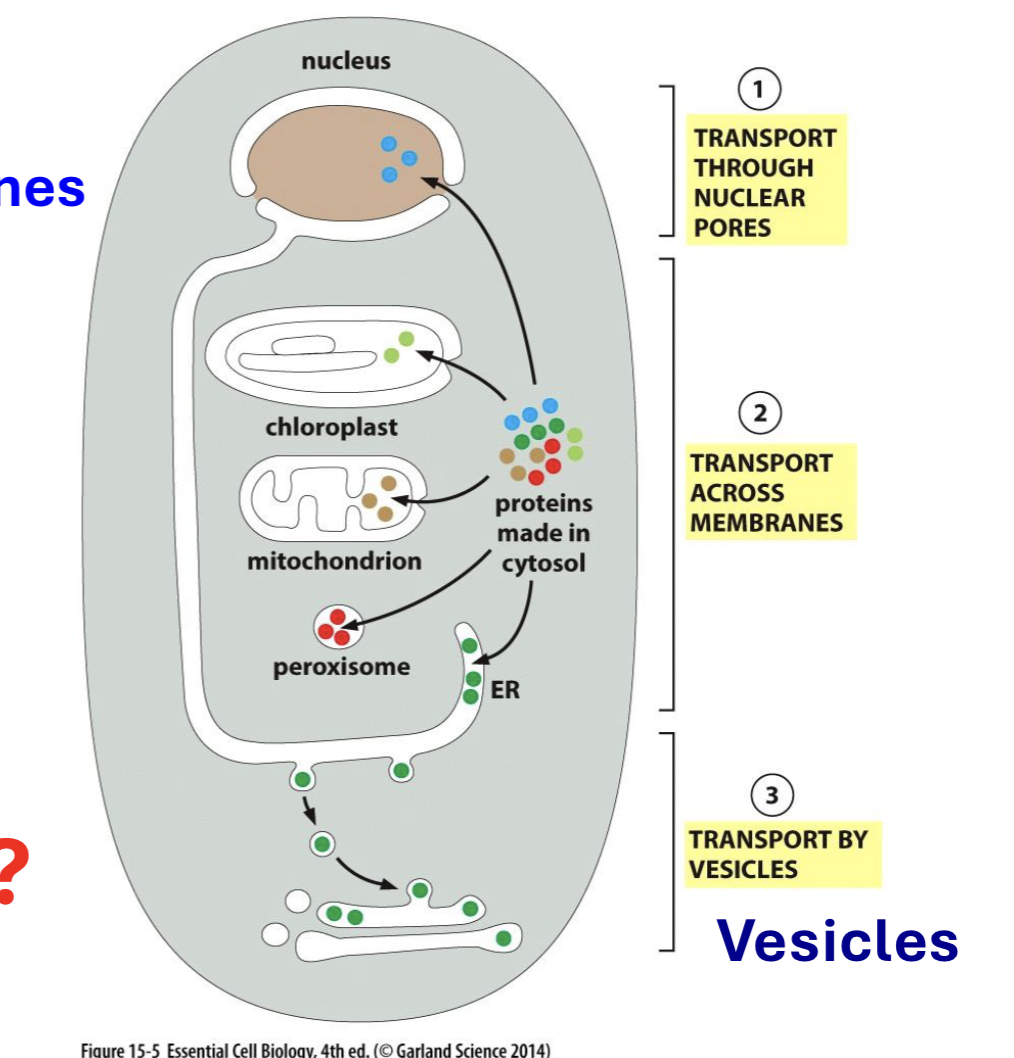
transport via vesicles
transport for organelles bc they’re made of proteins + lipids/membranes

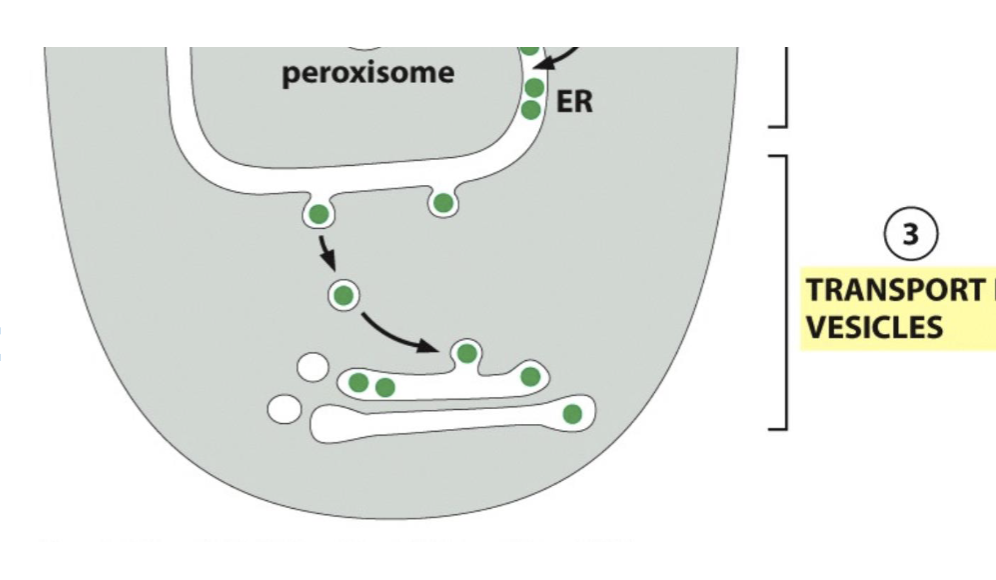
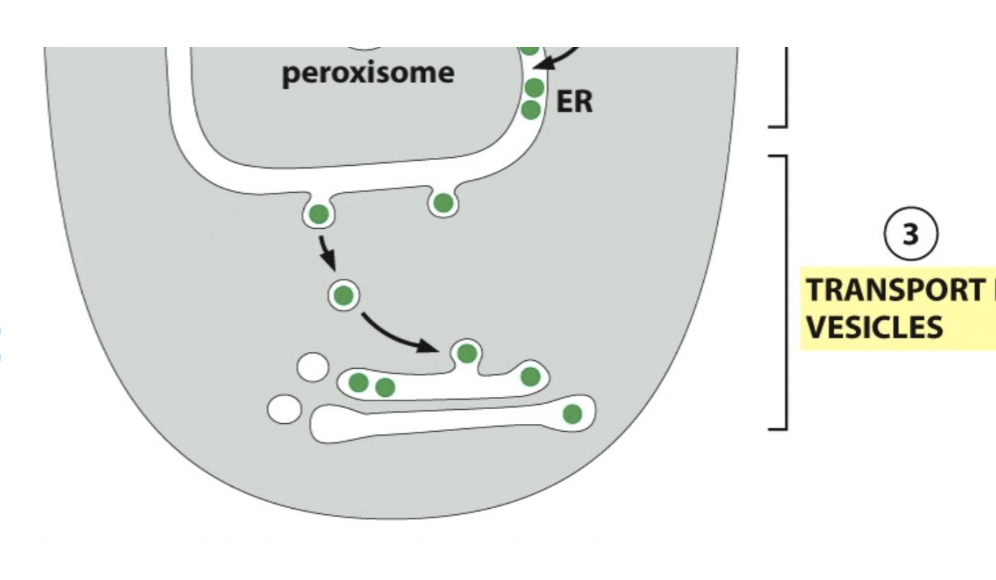
how is vesicle transport started?
protein translation completed in ER → intracellular transport occurs via membrane-enclosed vesicles

import into ER
a sequence of AA found in n-terminal region of proteins whose translation needs to be completed in ER


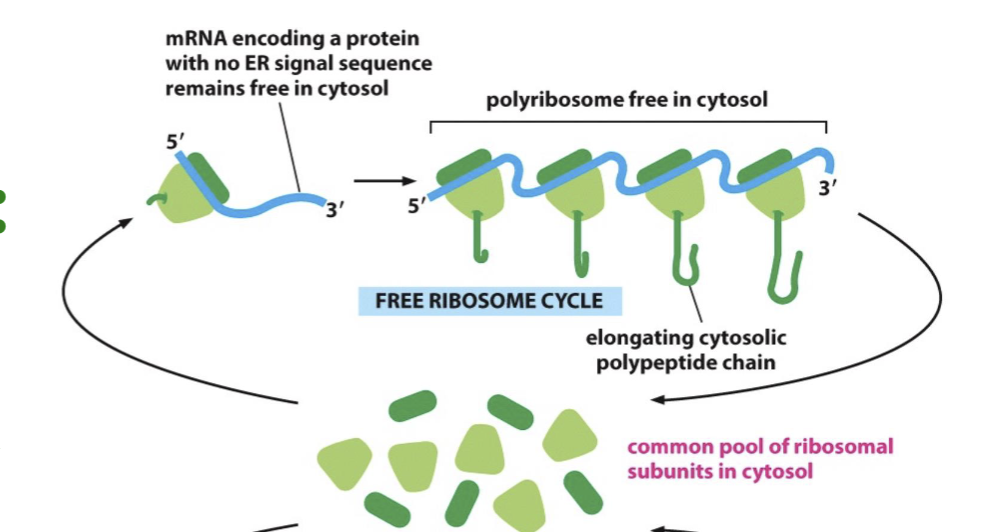
free ribosome cycle
mRNA encoding a protein a protein w/ no ER signal sequence remains free in cytosol → joins polyribosome free in cytosol → common pool of ribosomal subunits in cytosol

membrane bound ribosome cycle
common pool of ribosomal subunits in cytosol → ER signal sequence → mRNA encoding a protein w/ ER signal sequence is targeted to ER protein translocator → polyribosome bound to ER

what kind of proteins are translated in the ER?
integral membrane proteins (transmembrane proteins) ex: receptors; proteins that need to reach extracellular env, ex: proteins that function as SMs (soluble proteins b/c not transmembrane)

translation in ER process
ribosome w/ ER signal sequence binds to SRP, slows down protein synthesis → SRP receptor + protein translocator bind to SRP complex → SRP displaced from protein at translocation channel → signal peptide remains at channel


proteins translated in ER
SRP receptor = transmembrane protein, w/ a portion of the AA inserted into ER membrane during translation
soluble proteins that fall into ER lumen after translation = growth factors like BDNF


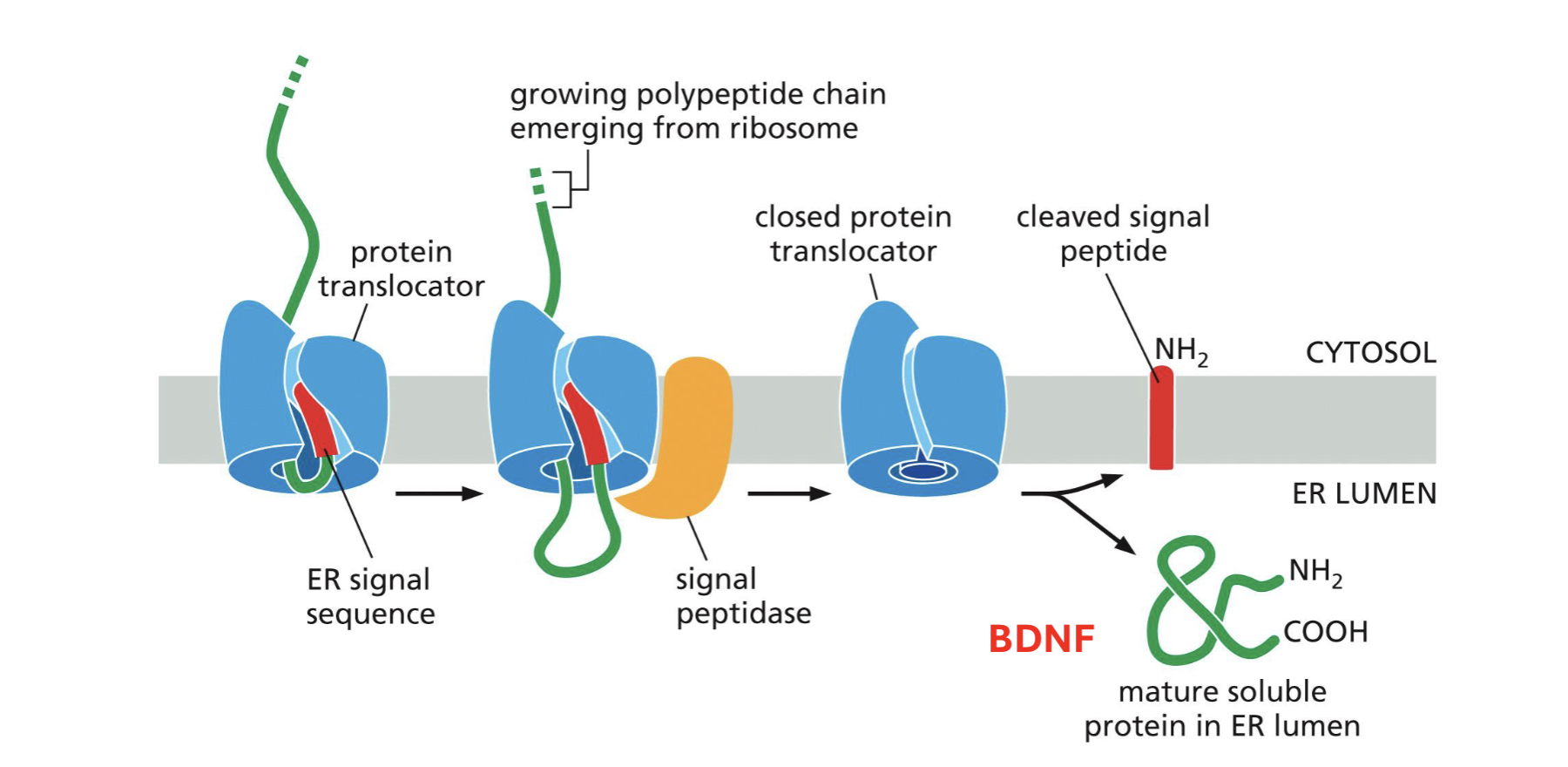
translation of soluble protein (BDNF)
protein translocator + ER signal sequence w/ growing polypeptide chain from ribosome → binds to signal peptidase → closed protein translocator → cleaved signal peptide + mature soluble protein (BDNF) in ER lumen

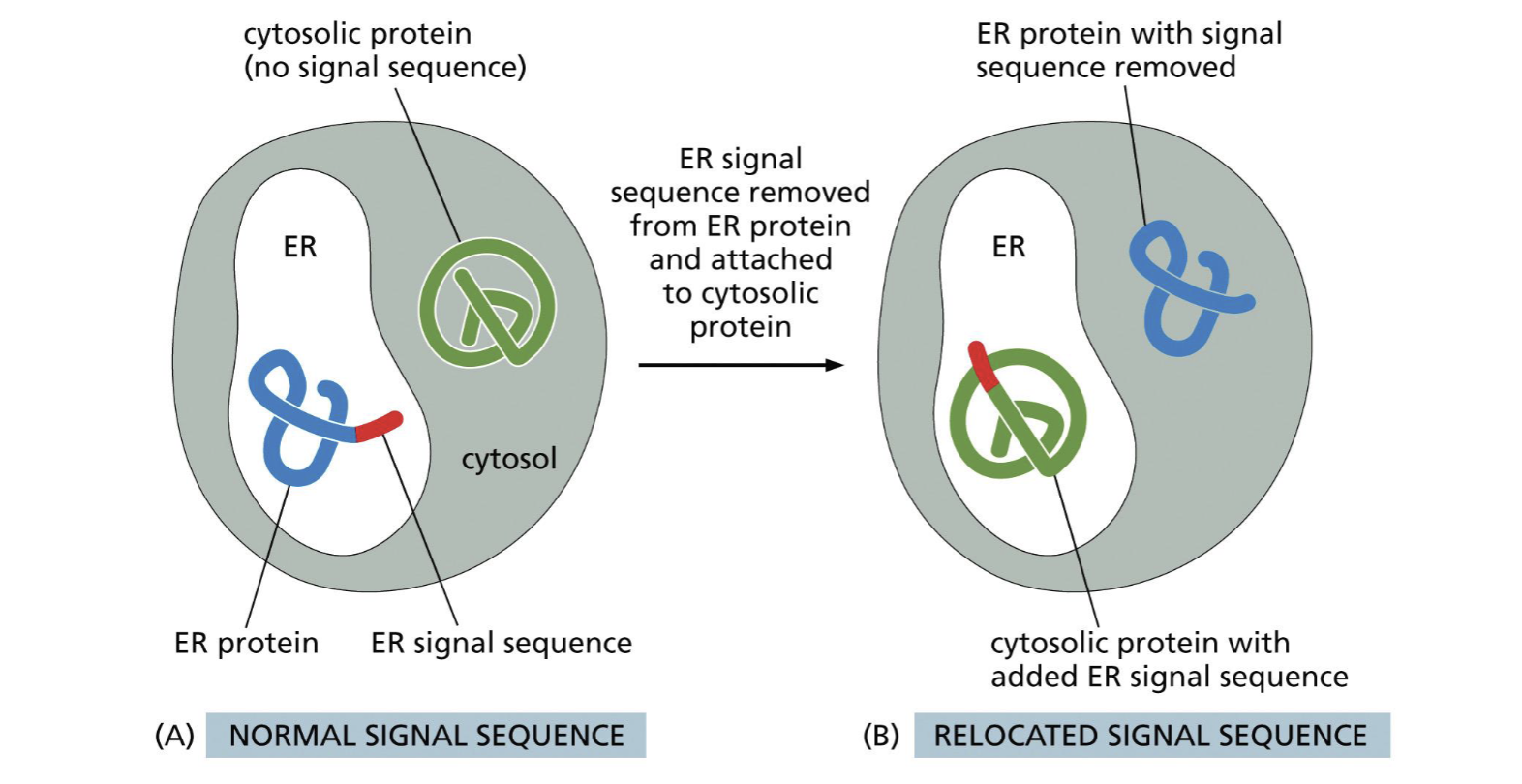
absence of ER signal sequence → protein translation outside of ER
normal signal sequence: cytosolic protein, no signal sequence; ER protein w/ ER signal sequence
relocated: cytosolic protein w/ added ER signal sequence in ER; ER protein w/ signal sequence removed in cytosol

single pass transmembrane proteins
APP, BACE, alpha secretase: protein includes one short sequence of hydrophobic AAs = stop-transfer sequence
ER signal sequence binds to protein translocator → stop-transfer sequence enters translocator + signal peptidase binds → hydrophobic AAs anchor + ER signal cleaved + separate from translocator → mature single pass transmembrane protein in ER membrane


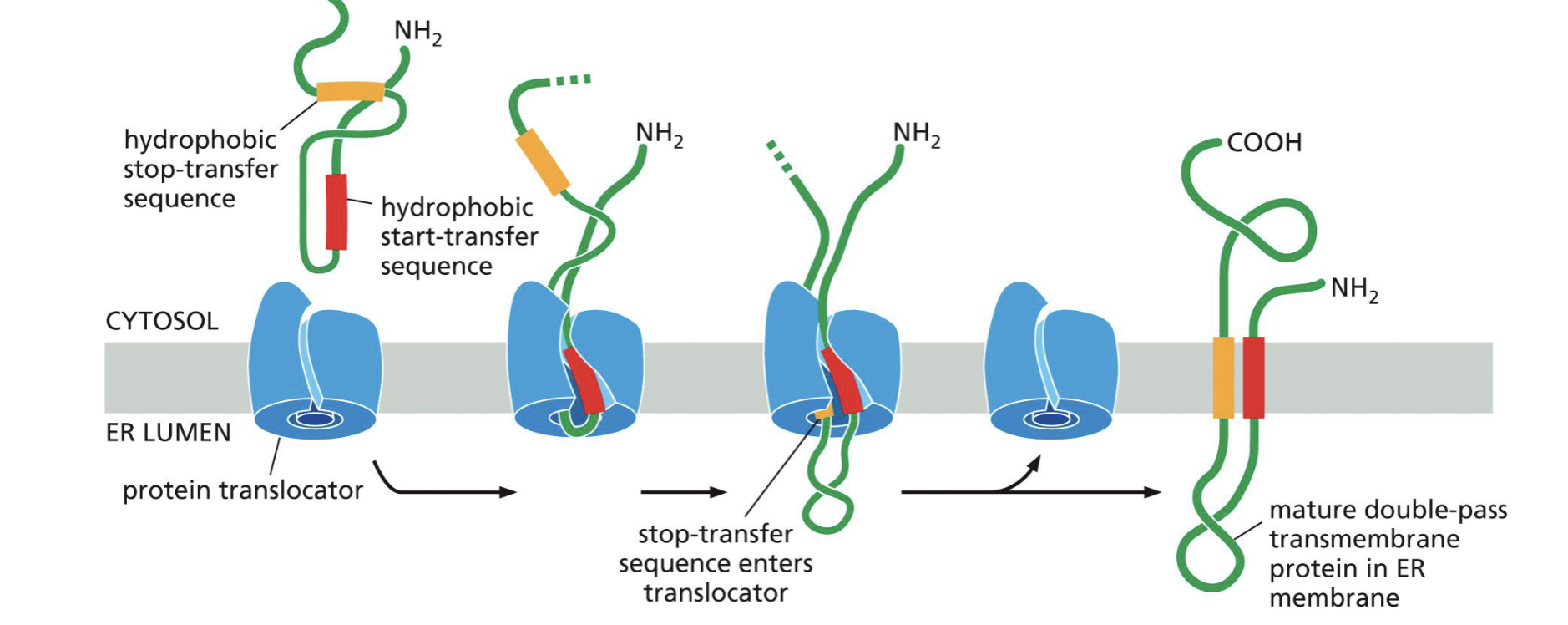
multiple pass transmembrane proteins
gamma secretase: protein includes multiple short sequences of hydrophobic AAs = start AND stop transfer sequences
ER signal sequence binds to protein translocator → stop-transfer sequence enters translocator + signal peptidase binds → both hydrophobic AAs anchor + ER signal cleaved + separate from translocator → mature double pass transmembrane protein in ER membrane
what happens with proteins synthesized within ER?
transport to final destination through formation of vesicles