ais ch 13
 Call Kai
 Learn
 Practice Test
 Spaced Repetition
 Match
 Flashcards
 Knowt Play
1/24

There's no tags or description
Looks like no tags are added yet.
25 Terms
trust services framework
security
confidentiality
privacy
processing integrity
availability
security
access to the system and data is controlled and restricted to legitimate users
confidentiality
sensitive organizational data is protected
privacy
personal info abt trading partners, ivnestors, and employees is protected
processing integrity
data are processed accurately, completely, in a timely manner, and only with proper authorization
availability
system and information are available
availability TSF
the system, products, or services are accessible and operational as committed or agreed upon
focuses on system uptime, reliability, and performance
the goal is to maintain consistent system availability to ensure users can rely on the org’s services wo unexpected interruptions
availability key objectives
minimize risk of system downtime
esp if unexpected
quick and complete recovery and resumption of normal operations
something happens/threat takes system down. how to resume?
minimizing downtime controls
preventative maintenance
make sure servers have capacity (ex., before holidays)
training
employees need to know how to prevent and respond to issues (e.g., police raining to respond to hs shooting)
patch management and antivirus software
stop and apply emergency patch (e.g., oil and gas experiencing issue with open ai identifying php but then it got posted and now everyone is aware).
use the antivirus software
fault tolerance
ability of a system to continue functioning in the event that a particular component fails
use of redundant components
extra servers
virtualization
RAID used as mirroring
data center location and design
raised floor
fire suppression
air conditioning
uninterruptible power supply UPS
surge protection
physical access controls

data center location and designs
raised floor
fire suppression
air conditioning
uninterruptible power supply UPS
surge protection
physical access controls
soc1
internal controls for financial reporting
ex., outsourcing payroll→ get soc 1 from payroll provide to complete audit of company
fault tolerance
ability of a system to continue functioning in the event that a particular component fails
use of redundant components
extra servers
virtualization
RAID used as mirroring
data center location and design
raised floor
12 inch cushion
fire suppression
no sprinklers to avoid water damage though
Gaseous Clean Agent Systems
air conditioning
like 50 degrees
uninterruptible power supply UPS
keeps power running when power runs out (ex., hospitals and like a generator but only for the server)
surge protection
when lose power, didn’t unplug fridge, electricity came back and fried the fridge during hurricane beryl. make sure ur server doesn’t get fried.
physical access controls
patch management and antivirus software
stop and apply emergency patch (e.g., oil and gas experiencing issue with open ai identifying php but then it got posted and now everyone is aware).
use the antivirus software
backup procedures
full
partial
incremental
copies only items that have changed since last partial backup
faster (smaller amount), recovery takes longer (may have to do multiple)
differential backup
copies all changes made since last full backup
slower (larger amount than incremental), recovery is faster
archive
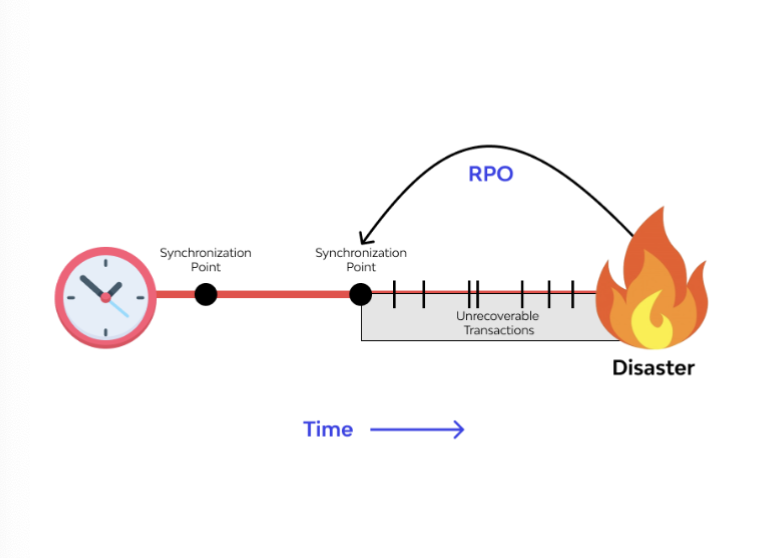
recovery point objective RPO
the max amount of data that the organization is willing to have to reenter or potentially lose
data created since last backup
business needs to determine, this not IT. this will guide your backup plans.
amazon maybeee has an hour max. vs a university could go a few days.
if ? is short/small, than u need backups more often.
if ? is larger, then can have more time btw backups
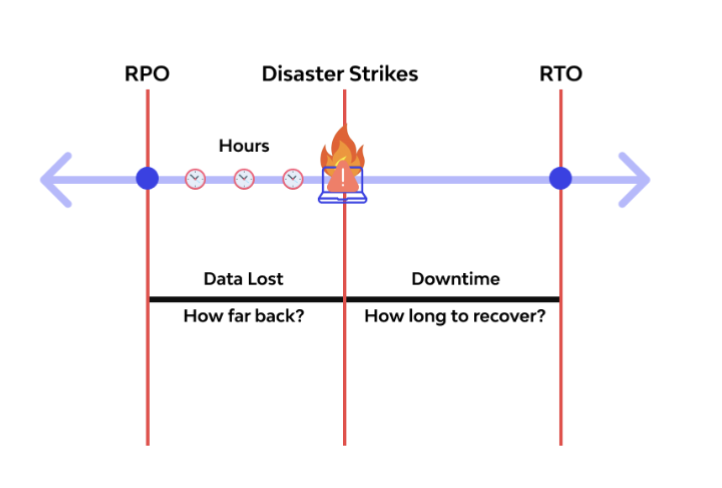
recovery time objective RTO
max tolerable time to restore an information system after a disaster
how long will trxs need to be processed manually
time after a disaster- how long does it take to restore critical functions. find the missing trxs. etc.
if RPO and RTO are zero (like a hospital) must spend a lot $ on bakup plans.
incremental backup
backup from last backup (regardless of type)
wednesday problem (4 backups to recover to the last backup- sun full, mon, tues, wed)
longer RTO - longer to recover

differential backup
backup since last FULL backup
wednesday issue (2 backups to restore- sunday’s full and wednesday’s backup)

q’s to ask
what type of media used for the backups
how old is the media?
has the restoration process been tested?
where are the backups stored? (hopefully not at the same place as the primary servers or not in the restroom)
onsite
offsite
how long are backups retained?
(client was wiping out the most recent backup while running a new backup).
who has access to the backups
disaster recover plan DRP
procedures to restore org’s IT function
temporarily replacing the necessary computer infrastructure, such as computers, network equipment and access, telephone lines, other office equipment
very IT focused in comparison
but need both DRP and BCP
business continuity plan BCP
how to resume all operations, not just IT
what if metro doesn’t work and ppl can’t come to work?
what if power is out?
focuses on the entire business, but need both DRP and BCP
reciprocal agreement
agreements with another org that uses similar equipment to have temp access to and use of their information system resources
e.g., houston has a hurricane, dallas will take over
cold site
an empty building that is prewired for necessary telephone and Internet access, plus a contract with 1 or more vendors to provide all necessary computers, and other office equipment within a specified period of time
goal is to rebuild everything within a time frame. takes longer bc need to rebuild. long RTO.
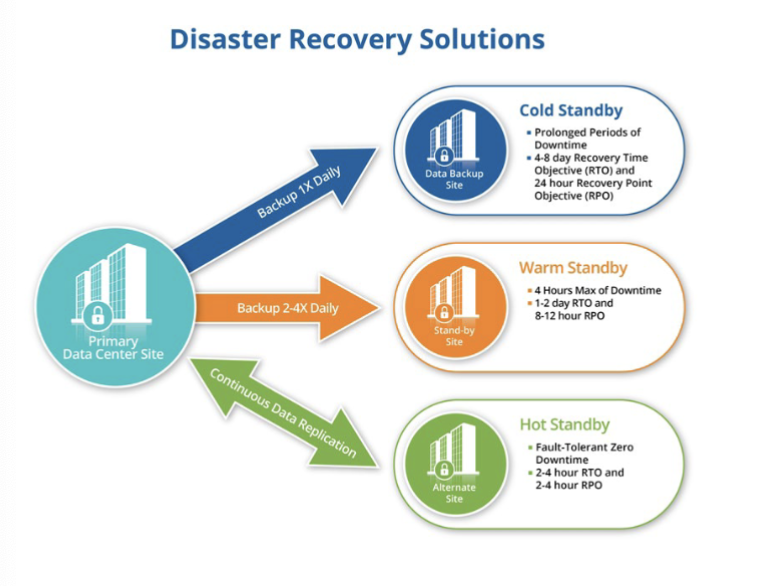
hot site
facility that is prewired for telephone and Internet access and also contains all the needed computing and office equipment
costs more

real-time mirroring
maintaining 2 copies of the database at 2 separate data centers both updated in real time at the same time
$$ to operate, but if something goes out no interruption. hospitals need this. short RTO