BIO 11 Cell Organelles & Functions Diagram
 Call Kai
 Learn
 Practice Test
 Spaced Repetition
 Match
 Flashcards
 Knowt Play
1/35

There's no tags or description
Looks like no tags are added yet.
36 Terms
Vacuoles
provides storage for the cell and regulates turgor pressure in the plant cells

Nucleus
Found in Eukaryotic cells. DNA is found here. The control center of the cell

Nucleolus
Inside the nucleus, this organelle produces ribosomes.

Cytoplasm
Term for the cell gel - all the organelles float in this and it is the site of most chemical reactions

Mitochondria
called the powerhouse of the cell- turns food energy into ATP energy for the cell

Centriole
paired structures that play a role in the movement of chromosomes during animal cell cell division (mitosis/meiosis)

Golgi apparatus/Golgi bodies/Golgi complex
these process, finish, sort and deliver products for the cell

vesicle
formed off of the Golgi apparatus and transports packaged products to the cell membrane

Lysosome
contains enzymes necessary for intracellular digestion. Cleans and recycles items in the cell.

Cell Membrane
semi-permeable membrane that controls what enters and leaves the cells

Smooth Endoplasmic Reticulum
Transports and modifies lipids in the cell as well as detoxifies poisons

Rough Endoplasmic Reticulum
Collects proteins synthesized in the attached ribosomes where they are collected in and transported throughout the cell.

Ribosome
Site of protein synthesis. Can be free in the cytoplasm or attached to the rough ER

Cytoskeleton
Helps maintain cell shape and structure.

Cell Wall
All plant cells have this. It is a protective wall made of polysaccharides (cellulose).

Nuclear Pores
Holes that allow RNA and other molecules into and out of the nucleus.

Chloroplast
site of photosynthesis in plant cells; turns sunlight energy into carbohydrates

Cilia
tiny hair-like projections used for movement/locomotion

Flagella
whiplike structure used for movement/locomotion
Prokaryotic cells
Cells without a nucleus to protect the DNA - bacteria and archea domains

Eukaryotic cells
Cells that do have their DNA inside of a nucleus. The are larger and more complex than prokaryotic cells - eukarya domain

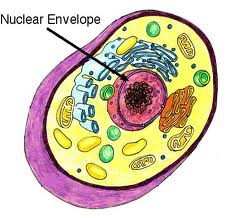
Nuclear (envelope) membrane
Allows thing to enter and leave the nucleus
Plant Cell
Eukaryotic cells that contain cell walls, very large vacuoles for storage and choloroplasts for photosynthesis

Animal Cell
Eukaryotic cell that lacks a cell wall, but contains centrioloes to help with cell division.

Smooth Endoplasmic Reticulum
Chloroplast
Central Vacuole
Nucleolus
Nucleus
Cell Wall
Cell Membrane
Rough Endoplasmic Reticulum
Cytoplasm
Mitochondria
Endosymbiotic theory
Theory that proposes that eukaryotic cells formed from a symbiotic relationship among several different prokaryotic cells
endosymbiosis evidence (basic)
mitochondria & chloroplasts have their own DNA, double membranes, and reproduce through binary fission