Speech Perception I+II
 Call Kai
 Learn
 Practice Test
 Spaced Repetition
 Match
 Flashcards
 Knowt Play
1/22

There's no tags or description
Looks like no tags are added yet.
23 Terms
Co-articulation
The overlapping of movements in the vocal tract during speech so that the articulation of one sound is influenced by neighbouring sounds

Phonemes
Speech sounds. The smallest units of speech that convey meaning

Source-filter theory
The lungs push air up the trachea (windpipe)
→ Air vibrates the vocal cords in the larynx (voicebox)
Vocal cords termed the ‘source’
Important for pitch and intonation
→ Vocal cords sounds are shaped by the supralaryngeal vocal tract
Includes lips, tongue, teeth, oral, nasal cavities and pharynx
Termed the ‘filter’
Important for producing different speech sounds

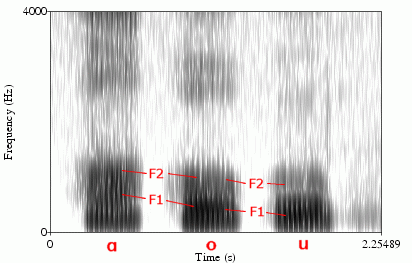
Spectrogram (source-filter theory)
Shows how sound amplitude varies across time (x-axis) and frequency (y-axis).
Vocal tract filtering produces bands of energy at certain frequencies called formants.
The lowest three formants (F1, F2, F3) are most important for speech intelligibility.
Vowels (source-filter theory)
Front → back vowels (e.g., "heed" → "had"): F2 frequency decreases.
High → low vowels (e.g., "heed" → "hod"): F1 frequency increases.
The brain identifies vowels by detecting these auditory patterns (formant frequencies).
Consonants (source-filter theory)
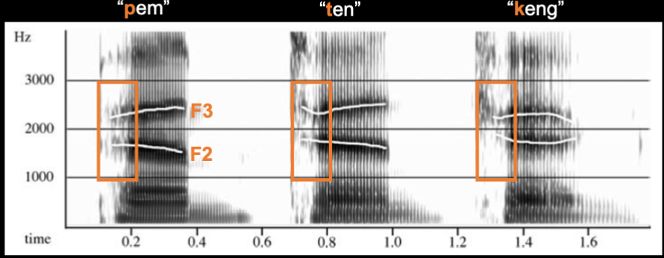
F2 and F3 are important for identifying consonants.
Different consonants (e.g., /p/, /t/, /k/ in "pem", "ten", "keng") produce different formant transitions
Phoneme perception (the experimental procedure)
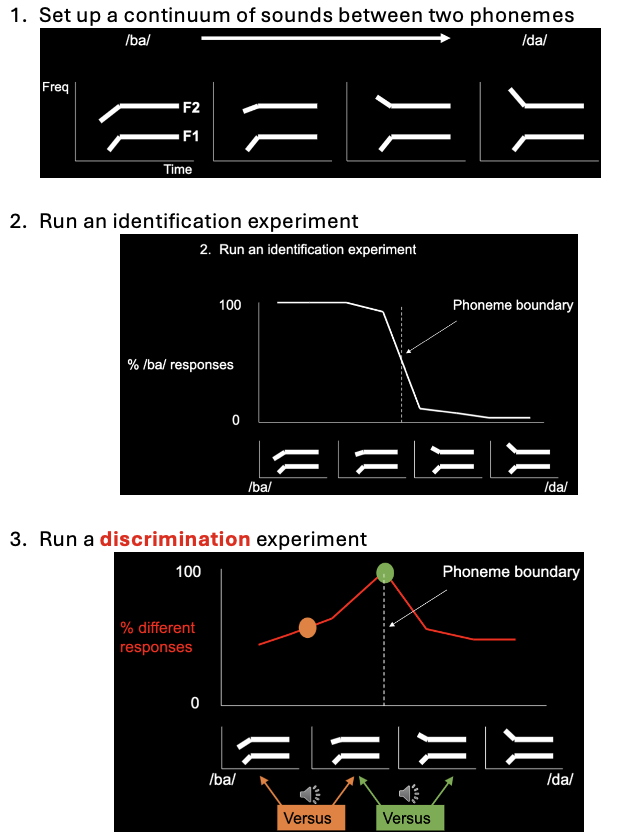
Sound continuum: Create a continuum of sounds gradually changing between two phonemes.
Identification experiment: Participants identify which phoneme they hear.
Discrimination experiment: Participants judge whether pairs of sounds are the same or different.
Categorical perception
The tendency to perceive gradual sensory changes in a discrete fashion
Three hallmarks of categorical perpception
1. Abrupt change in identification at phoneme boundary
2. Discrimination peak at phoneme boundary
3. Discrimination predicted from identification
(sound pair only labelled “different” if different phonemes)
The Ganong effect
A speech perception bias where listeners interpret an ambiguous sound in a way that forms a real word rather than a non-word

General auditory theory
Phonemes are identified using general auditory mechanisms involved in perceiving all sounds (speech and non-speech).
Auditory patterns are compared with stored internal templates, and the best match is selected to identify the sound.
Motor theory of speech perception
We perceive intended vocal gestures (articulatory movements) rather than the acoustic signal itself.
Evidence: Speech acoustics are more variable than the gestures producing them (e.g., /p/ in “pin” vs “spin” sounds different but uses the same lip movement).
Speech perception uses a specialised, uniquely human speech module, separate from non-speech sound perception.
Evidence: Speech sounds, unlike non-speech sounds, were proposed to be perceived categorically.
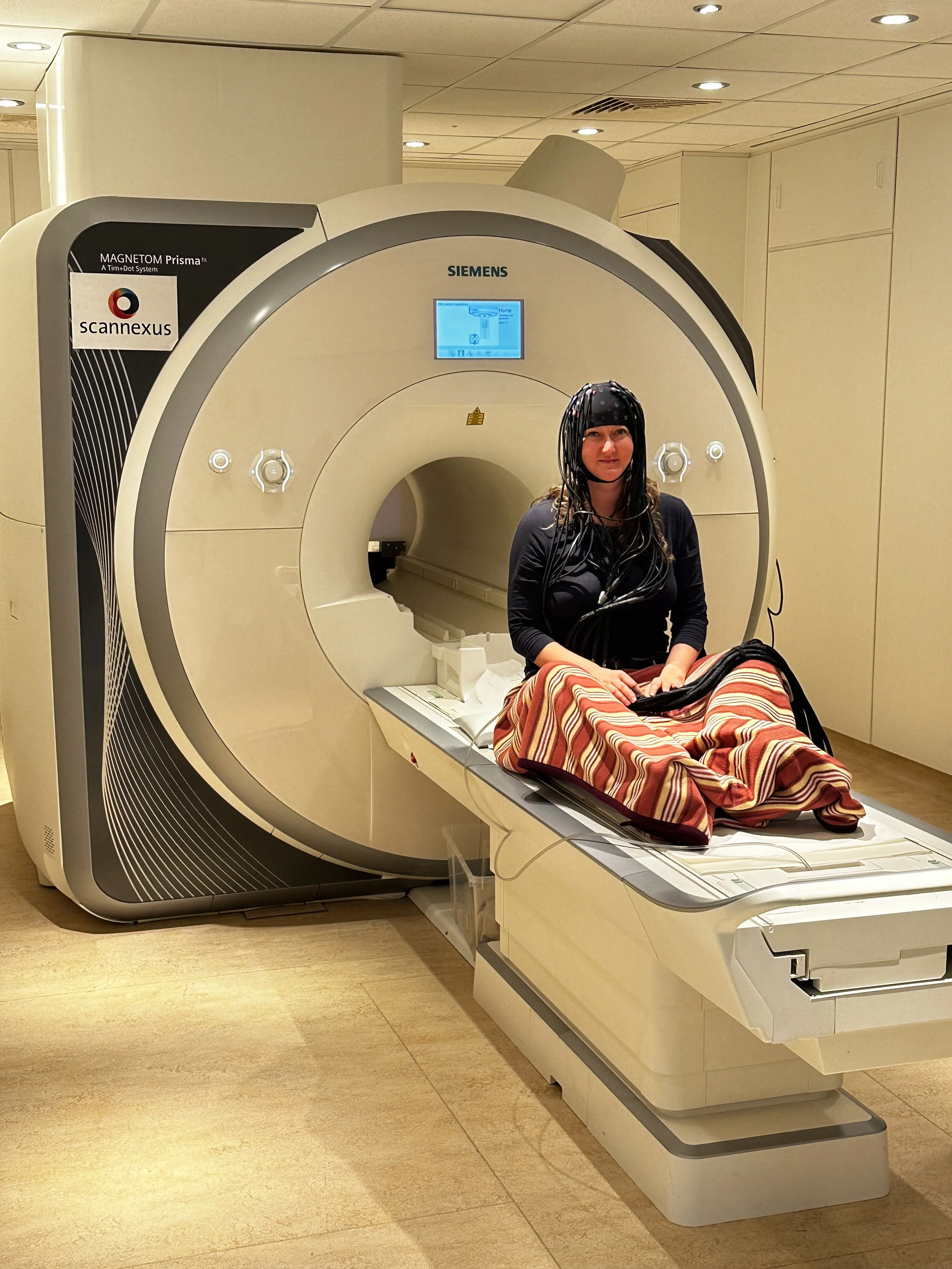
Evidence for the motor theory of speech perception
✓ (fMRI): Passive listening to meaningless monosyllables activates motor and premotor areas
✓ (TMS): TMS over premotor areas interferes with phoneme discrimination in noise but not colour discrimination

Evidence against the motor theory of speech perception
Categorical perception is not unique to speech: Also occurs for non-speech sounds (e.g., musical intervals).
Chinchillas: With training, show the same phoneme boundary for a /da/–/ta/ continuum as humans → challenges the idea of a specialised, uniquely human speech module.
Patient AD:55-year-old man with motor cortex damage following a stroke retained the ability to discriminate phonemes despite being unable to speak → suggests speech perception does not require intact speech production mechanisms.
Modern view of the motor theory of speech perception
Most researchers believe that the motor system contributes to speech perception, particularly in noise or difficult conditions, but is not necessary for it


Classic model of speech perception
‘Classic’ model from 19th century neurologists (Broca, Wernicke, Lichtheim)
Superior temporal gyrus for speech perception (Wernicke’s area)
Inferior frontal gyrus for speech production
(Broca’s area)
Left hemisphere dominant

Modern dual streams model
A ventral stream for mapping sound onto meaning.
“What word am I hearing and what does it mean?”
Involves both hemispheres
Supports speech recognition and comprehension in everyday listening
A dorsal stream for mapping sound onto articulation.
“How would I say this?”
Left hemisphere dominant.
Engaged by tasks that require explicit attention to speech sounds (e.g. phoneme identification)
Supports learning new words and verbal working memory
Modern dual streams model - evidence for ventral and dorsal streams
Evidence for ventral stream:
Anterior temporal damage associated with semantic impairment
Inferior temporal damage associated with comprehension deficits
Evidence for dorsal stream:
Listening to syllables activates motor and premotor areas
TMS over premotor areas interferes with phoneme discrimination in noise but not colour discrimination
Explains why some aphasics can’t tell apart speech sounds but can recognise words (and vice versa)
Cohort model
Words are activated immediately upon minimal input
Multiple words are activated
Words compete for recognition (‘lexical competition’)

Cohort model - Uniqueness point (UP)
When only one word becomes consistent with the speech input
Word recognised at the UP, even before the whole word has been heard.

Evidence for the cohort model
Evidence from shadowing task:
Average response latency is approx. 250ms
Average duration of words is 375ms
→ Implies that listeners recognise words even before they hear the ends of words
Learning new words slows down recognition of existing words.
TRACE model
Within-layer inhibitory connections (for lexical competition)
Bi-directional excitatory connections


Evidence for the TRACE model
Evidence from eye tracking:Eye tracking data and TRACE model behaviour are similar
Explains context effects:
Context influences speech perception – “Ganong effect”
TRACE’s explanation of Ganong effect:
Word-level activity ‘feeds back’ to influence lower-level phoneme activity through top-down connections
Although this explanation has been strongly challenged.