F2 - Random Stuff We Gotta Know
 Call Kai
 Learn
 Practice Test
 Spaced Repetition
 Match
 Flashcards
 Knowt Play
1/99

There's no tags or description
Looks like no tags are added yet.
100 Terms
Fibroblasts
secrete ground substance, fibers, MMPs, GFs
Myofibroblasts
fibroblasts containing contractile fibers (actin) that are the mechanism of wound contraction
Needed for secondary intention
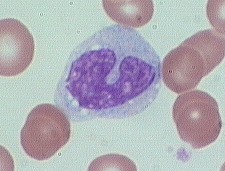
Macrophages
Innate and Adaptive Immunity, phagocytize foreign stuff, present antigens,
If you see this in histology () then it is no longer acute babes.
Mast Cells
Have granules with histamine and heparin
Marked by tryptase activity, key in type I hypersensitivity -> allergen binds IGE antibodies expressed on cell surface
First cells to respond -> immediate; release histamine needed to activate weibel palade bodies for the upregulation of P selectins in neutrophil rolling
Natural Killer Cells
Kill cells expressing MIC ligands and no MHC-1 via release of lytic granules -> virally infected or tumor cells are killed
Can be activated by interferon cytokines
only innate immunity to be derived from common lymphoid progenitor cell
Dendritic Cell
Professional antigen presenting cell via MHC-II
travels to the lymph nodes to present
Often is used by HIV to get to other cells (langerhaans)
Neutrophil
Express membrane receptors (toll-like) respond to bacteria, engulf bacteria, kill with granules containing toxic substance; DOES NOT PRESENT ANTIGENS
Basophil
deal with parasites and allergens -> bind IgE
mediated by IL-4
Eosinophil
protect from fungi and parasites
Paneth Cells
Detect pathogens via TLRs and release defensins
found in the gut
Goblet Cell
Secretes Mucus in GI track.
In barret's esophagus metaplasia will turn esophageal ciliated cells into this due to GERD
CD8 T-Cell
Cytotoxic T-Cell; "Killer T-Cell"; kills target cells presenting pathogenic antigens
Very important for viral immunity and cancer cell destruction
CD4 T-Cell; th1
Helper T-Cell; ; release cytokines; activates macrophages to become microbicidal via IFN-gamma and IL-2 and CD40/40L interactions
CD4 T-Cel ; th2
Helper T-Cell; release cytokines; activates B-Cells via IL-4/5 and CD40/40L interactions
B Cells
binds to pathogens that respond to IgM antibody; C3d on pathogen activates CD19/CD2/CD81 complex on B cell to activate.
B-cell phagocytoses pathogens antigens and presents on MHC-II
Then a TH2 helper T-cell recognizes MHC-II on B-cell and binds and activates B-cell via IL-4/5 cytokines to make antibodies;
without activation can only make IgM -> activate classical complement pathway, NK cells, opsonization, virolysis
Gamma-delta T-Cell
Does not require MHC, traffics to inflammation via chemokines, bridge between innate and adaptive immunity
Memory T-Cells
Effector T-Cells that remain after infection acting as a memory allowing faster response
regulator T cell
used by tumor cells to inactivate adaptive immune response via IL-10
EGF
epidermal growth factor; Cell Proliferation; ErbB family, homolog with Her2/Neu; oncogene if mutated to be constitutively active; tyrosine kinase
FGF 1
angiogenesis & fibroblast proliferation/activity, involved in keratinocyte migration to cover wound with cells
FGF2
angiogenesis & fibroblast proliferation/activity, involved in keratinocyte migration to cover wound with cells,
FGF3
chondrocyte proliferation, if FGFR3 is mutated to be constitutively active achondroplasia
FGF7
epithelian cell proliferation re-epithelialization of the skin and regeneration of hepatocytes
PDGF
platelet derived growth factor; made by platelets and macrophages, Vascular remodeling via smooth muscle stimulation, fibroblast proliferation, production of type I and III collagen, formation of hypertrophic scars and keloids, tyrosine kinase
TGF-beta
produced by Platelets, leukocytes, macrophages, fibroblasts, keratinocytes; smad (serine threonine kinase);
angiogenesis, fibroblast proliferation, inhibits proliferation of other cells/inflammation -> also acts as anti-inflammatory cytokine
VEGF
Angiogenesis, negatively impacts embryo development and collateral circulation development
KGF
Keratinocyte Proliferation
TGF-alpha
Keratinocyte Proliferation; hepatic compensatory hyperplasia
HGF
Hepatic Compensatory Hyperplasia
TNF-α
Pro-Inflammation, pro-fibroblast actrivity -> increased collagen synthesis, cause fever; induces COX-2, induces NO in macrophage; over production systemically = septic shock; when produced by macrophages, it activates NK cells to produce IFNα/β which then activates NK cells
Interleukin-1 (IL-1)
Pro-Inflammation, pro-fibroblast actrivity -> increased collagen synthesis; induces COX-2, induces NO in macrophage, histamine release in mast cells, induces fever with IL-6
IL-4
Increased Collagen Synthesis, inflammatory in allergy response when released by basophils via IgE crosslinking; inhibits COX-2 in anti-inflammatory pathway; B-cell proliferation and differentiation (released by TH2-cell)
IL-13
Increased Collagen Synthesis
Erythropoetin (EPO)
promotes development of erythrocytes
thrombopoeitin (TPO)
promotes development of megakaryocytes
GM/M/G-CSF
promote myelopoisis
G-CSF
granulocyte colony-stimulating factor--promotes neutrophil production
IL-3
promote myelopoisis (specifically monocytes)
IL-2
Induces T-Cell proliferation by activating proto-oncogenes and cyclins (Jak-stat)
Released by T-cells to make macrophages microbicidal along IFN-gamma
All cytokines that are not chemokines use
Jak-Stat
Chemokines use
GCPR
IFN-γ
regulates antiviral/tumor and inflammatory responses by enhancing MHC expression for T-cell response, enhancing signaling for T-Cell differentiation, inducing isotype switching in B cells for antibody production (Jak-Stat)made by immune cells; induces NO in macrophage
Released by TH1-cells to make macrophages microbicidal alongside IL-2
IL-8
CXCL8; Produced by macrophages, directs neutrophils to infections (GCPR), histamine release in mast cells
IL-6
Inflammatory -> fever and acute phase protein production in liver; Hepatic Compensatory Hyperplasia
IFN-α
Type I, made by virally infected cells, protects other cells from infection; activates NK cells
IFN-β
Type I, made by virally infected cells, protects other cells from infection; activates NK cells
IL-12
produced by macrophages, it activates NK cells to produce IFNα/β which then activates NK cells
IL-7
T-cell differentiation; B-cell differentiation; if IL-7 or IL-7R is mutated -> SCID
CCL19
chemokine for T/B cell chemotaxis
CCL21
chemokine for T/B cell chemotaxis
IL-10
Anti-inflammatory - made by macrophages; made by T-regs to inactivate
be nice to yourself
or else
IL-5
Th2 releases to activate B cells alongside IL-4
Collagen
Synthesized by fibroblasts
Triple Helix, Gly-X-Y usually with proline or lysine and hydroxyproline and hydroxylysine (vitamin C required)
1: Bone, late wound healing, cornea 2: cartilage 3: blood vessels, early wound healing, 4: basement membrane, Lens, involved in goodpastures syndrome
Nucleus: transcription of preprocollagen, ER: translation, hydroxylation w vit C, glycosylation, formation of procollagen triple helix, ECM: cleavage of terminus to form tropocollagen, lysine-hydroxylysine cross linking via lysyl oxidase to form collagen fibrils with Copper
Associated with Scurvy (vit C), Osteogenesis Imperfecta, Ehlers-Danlos Syndrome, Good pastures Disease, Aging
Elastin
Produced by fibroblasts as tropo-elastin
Insoluble, desmosine, isodesmosine crosslinks
Flexibility in structure due to crosslinking
associated with Alpha-1 Antitrypsin Deficiency and Emphysema
Ground Substance
produced by fibroblasts
Proteoglycans (core protein + GAGS) and adhesive glycoproteins
Associated with Hurler and Hunter Syndrome
Fibrillin-1
produced by Fibroblast associated with FBN1 gene
It offers scaffolding for elastin
associated with Marfan Syndrome
Broken down by Elastase; binds and sequesters TGF-beta
Fibronectin
Cell adhesion to ECM, Binds to integrins, type IV collagen, heparin and fibrin
Adhesive Glycoprotein
Laminin
Attaches cell to basal membrane, Binds to integrins, type IV collagen, heparin and fibrin
Adhesive Glycoprotein
Tenascin
Modulates cell adhesion in ECM; Binds to fibronectin, integrins, CAMs, heparin and growth factors
Osteopontin
Binds to osteocytes and integrin receptor on osteoclasts; Binds calcium and hydroxyapatite
Reticular Fibers
Heavily Glycosylated Collagen I
Support vasculature
Defensins
antimicrobial peptides
Cox-1
Cyclooxygenase-1; constitutively expressed; functions in platelet aggregation via thromboxane, GI protection, Renal Protection
Cox-2
upregulated in inflammation; via IL-1, TNF-alpha,
Inhibited by IL-4
substance P
A neurotransmitter that is involved in the transmission of pain messages to the brain.
Neuropeptide, makes mast cells release histamine
C-reactive protein
Acute Phase Liver Protein released due to IL-6 interactions with hepatocytes
General inflammatory biomarker
Activates classical complement system
transudate
clear low protein fluid accumulation due to inflammation
exudate
cloudy, fibrin rich, purulent, fluid accumulation due to inflammation
NF-kB
transcription factor
activated to make shit for fever and inflammation
Makes IL-1, IL-6, TNFa, and IFNγ which then activate PGE2 which activates EP3 receptors in hypothalamus to increase set point
PAMPS
(pathogen-associated molecular patterns) Molecules associated with groups of pathogens, that are recognized by cells of the innate immune system via TLRs
DAMPS
Damage-associated molecular patterns: TLRs react with these non self antigens on damaged tissue, --> then release proinflammatory cytokines and chemokines
Derived from: plasma membrane, nucleus, ER, mitochondria, cytosol
CD40L/CD40
interaction through which helper T-Cells activate B-cells alongside cytokines; when occurs with macrophages in presence of IFN gamma (from Th1) makes macrophages microbicidal
CD28 - B7 (CD80/86)
interaction through which APCs activate T-cells alongside MHC2-TCR activation; stronger activation step
MHC2-TCR
interaction through which APCs activate T-cells alongside CD28 - B7 (CD80/86) activation; weaker first activation step
CTLA-4- B7 (CD80/86)
Interaction through which T-cells deactivate.
Activated T-cells express CTLA-4 which responds more strongly to B7 allowing for inactivation. Loss of CTLA-4 may lead to lymphoproliferative disease and autoimmunity
T-independent antigens
Stimulate the B cell without the help of T cells
Provoke a weak immune response, usually producing IgM
No memory cells generated
PD1L
upregulated by cancer to avoid immune detection acts as an off switch for T-cells via PD1 receptor
IgG
most abundant high affinity antibody; found in blood and tissues; crosses placenta
IgM
first made low affinity, pentameric antibody; primarily found in blood
IgA
monomeric in tissues/blood dimeric in mucosa/breast milk
IgE
low abundance in circulation, binds to FcεRI on the surface of mast cells. Cross-linking IgE on mast cells caused production of inflammatory mediators (IL-4) associated with allergies; found in connective tissues below epithelia associated with mast cells
XII/XIIa
XII: Inactive form of the Hageman factor, activates when exposed to negative charges (inflamation, platelets, basement membrane, etc.)
XIIa: active form of Hageman factor, activates prekallikrein to Kallikrein (kinin pathway); clotting factors leading to thrombin (clotting cascade);
Kallikrein
Converts HWMK to bradykinin (Kinin cascade), and plasminogen into plasmin (fibrinolytic cascade)
Bradykinin
Increases vascular permeability, dialation, bronchoconstriction and uterine contraction (smooth muscle contraction), pain, excess can cause chronic cough and angioedema;
binds to GPCRs -> B1 induced by cytokines IL-1/TNF-alpha/IFN-gamma; B2 constitutively expressed
Plasmin
Lyses fibrin clots, increases vascular permeability (fibrin split products and by activating C3a)
Thrombin
converts fibrinogen into fibrin making clots, promotes production of inflammatory mediators in endothelial cells
Fibrin
makes up clots
protein C
anticoagulant and anti-inflammatory
prostacyclin/PGI2
inhibits platelets
tPA
thrombolytic
Pro-Angiogenic Mediators
VEGF bFGF FGF-2 PDGF IL-8 HGF PIGF Inflammation Hypoxia Inducible Factor (HIF)
Anti-angiogenic Mediators
Thrombospondin Interferon a/b Angiostatin Endostatin Collagen IV fragments
vasoactive amines
histamine and serotonin
C3a
trigger release of histamine from mast cells, increases vascular permeability and vasodialation
recruits phagocyte, increases vascular permeability, anaphylactoxin
C5a
trigger release of histamine from mast cells; activates lipo-oxygenase pathway; strong role in chemotaxis!!; increases vascular permeability and vasodialation
recruits phagocyte, increases vascular permeability, anaphylactoxin
C4a
trigger release of histamine from mast cells
Arachidonic Acid
Normally esterified to membrane lipids, inflammatory mediators activate PLC to form DAG and IP3 (activates PKC and MAPK -> PLA2) ultimately releasing AA from the membrane so it can be converted into eicosanoids which bind GPCRs
Prostaglandins
Eicosanoid that activates GPCRs mediating inflammation -> vascular and systemic inflammation; made by cyclooxygenase (COX) in mast cells, macrophages, and endothelial cells
Leukotrines
Eicosanoid that activates GPCRs mediating inflammation; made by lipoxygenase, secreted by leukocytes; chemoattractants for leukocytes; inverse relationship with lipoxins