Equine Emergencies: Recognition and First Steps
 Call Kai
 Learn
Learn Practice Test
 Spaced Repetition
 Match
Match Flashcards
 Knowt Play
1/42

There's no tags or description
Looks like no tags are added yet.
Name | Mastery | Learn | Test | Matching | Spaced | Call with Kai | Chat |
|---|
No analytics yet
Send a link to your students to track their progress
43 Terms
What do we define as an emergency?
• It's all about time... - 'a serious, unexpected, and often dangerous situation requiring immediate action'
- 'An emergency is a situation that poses an immediate risk to health, life, property, or environment. Most emergencies require urgent intervention to prevent a worsening of the situation, although in some situations, mitigation may not be possible and agencies may only be able to offer palliative care for the aftermath'
Emergency vs Urgency
When to expect an equine emergency?
• First opinion practice
Day time
Out of hours
• Referral hospital
• On duty at a horse event
Racing, eventing, local show, endurance race
Specific role/experience/training
By body system, what are the most common emergencies seen?
• Alimentary and Liver
Emergency: Colic (1 in 10), abdominal trauma (eventration)
Urgent: Choke (oesophageal obstruction), colic (potentially), poison/toxins, concentrate overload
• Respiratory
Emergency: dyspnoea (obstruction), thoracic trauma (open thorax)
• Cardiovascular, spleen and blood
Emergency: severe haemorrhage - wound or guttural pouch mycosis
• Musculoskeletal
Emergency: fractures and some tendon and ligament injuries, wounds (laceration or puncture), atypical myopathy
Urgent: wounds (laceration or puncture), synovial contamination, foot penetration, myopathy, laminitis
• Integumentary
- Urgent: wounds, burns
• Endocrine
• Reproductive
Emergency: Dystocia, 'red bag' delivery
Urgent: Retained placenta, foal not sucking
How can you ensure you are prepared for an equine emergency?
• Support - phone numbers!
Colleagues/team
Information/contacts
Advice: referral centres/university hospitals
• Facilities
In house
Referral options
• Numbers for local referral centre(s)
Transportation contacts
Disposal options
• Local fallen stock
• Private cremation
• Preparing Car (See Slide)
• Prepare yourself!
• Be assertive
• Project confidence
• Best professional demeanour
• Do not panic
however bad things look initially many do very well as long as they receive the appropriate first aid

Describe the triage and prioritization step in an equine emergency.
• Over the phone
- Is this really an emergency?
Often have to prioritise calls
- Information - history and signalment
- Guidance whilst they wait
Remove all food from a colic/choke
If colic violent don't risk human safety *
Can walk in hand on a safe surface, if not
Nail in foot (do not remove), stop further trauma
Bleeding wound apply pressure and do not remove!
Red bag delivery talk through rupture
Reminder** what is triage?
Sorting out and classification of casualties, determining priority of need and proper place of treatment, treatment decisions are not dependent on diagnosis
Describe the initial assessment or primary survey when you arrive at the scene of an equine emergency.
• Is this really an emergency?
• Take in whole situation
assess risk, surroundings: don't get 'sucked in'
'Stand back' and observe the horse
• Are there humans at risk?
they are priority
• Horses are dangerous, unpredictable, panic
• Clinical exam
Patent airway?
Vital parameters: TPR (- more RPT)
Haemorrhage?
• Prioritise one animal over another?
• History
Describe the ABCD’s of cardiopulmonary resuscitation in equine emergency.
• Difficult due to size of patient
Rare to be in this situation
Rarely successful - more in a hospital/anaesthesia situation
More practical in foals
• Establish an Airway
• Breathing for the patient
• Establishing Circulation
Chest compressions - Right lateral recumbency
Knees in adults - behind elbow, widest point of chest
Hands in foals
• Drugs that should be administered
Describe upper airway obstruction difficulties in equines.
• Severe trauma/swelling/oedema of head/nasal passages
• Pharyngeal obstruction
Severe strangles - Streptococcus equi
• Severe laryngeal dysfunction
Laryngeal swelling/oedema
Bilateral laryngeal paralysis
Trauma, hepatic encephalopathy, primary neurological, idiopathic
• Bypass the upper respiratory tract
Emergency tracheostomy
Describe how an emergency (temporary) tracheostomy can be performed on equine patients.

Describe upper circulatory emergency issues in equines.

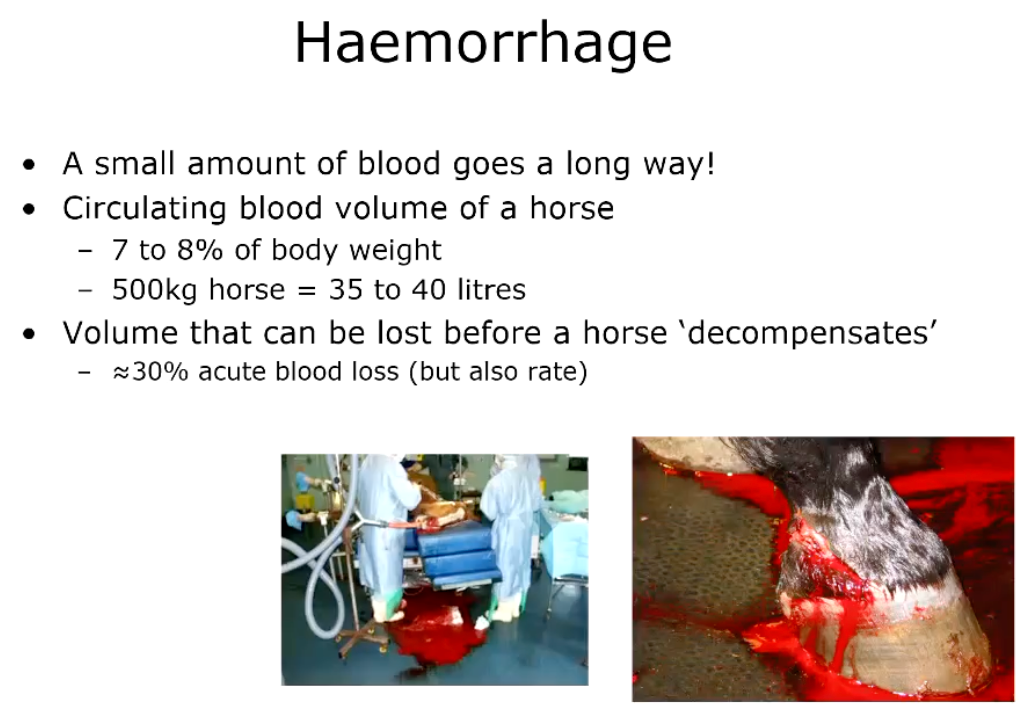
Describe the aspects of haemorrhage emergencies in equines.
• External
Wound
Dry bandage and apply pressure
Care if decide to 'clamp' arteries
Be careful of neurological structures
Guttural pouch mycosis
• Internal
Abdominal/thoracic
e.g. Broad ligament haematoma in mares post-parturition
• Clinical signs of significant loss
Depends on volume and rate of loss
Tachycardia
Tachypnoea & hyperpnoea indicative of significant hypovolaemia and hypoxaemia
Mucous membrane colour depends on severity of loss
Pale/white
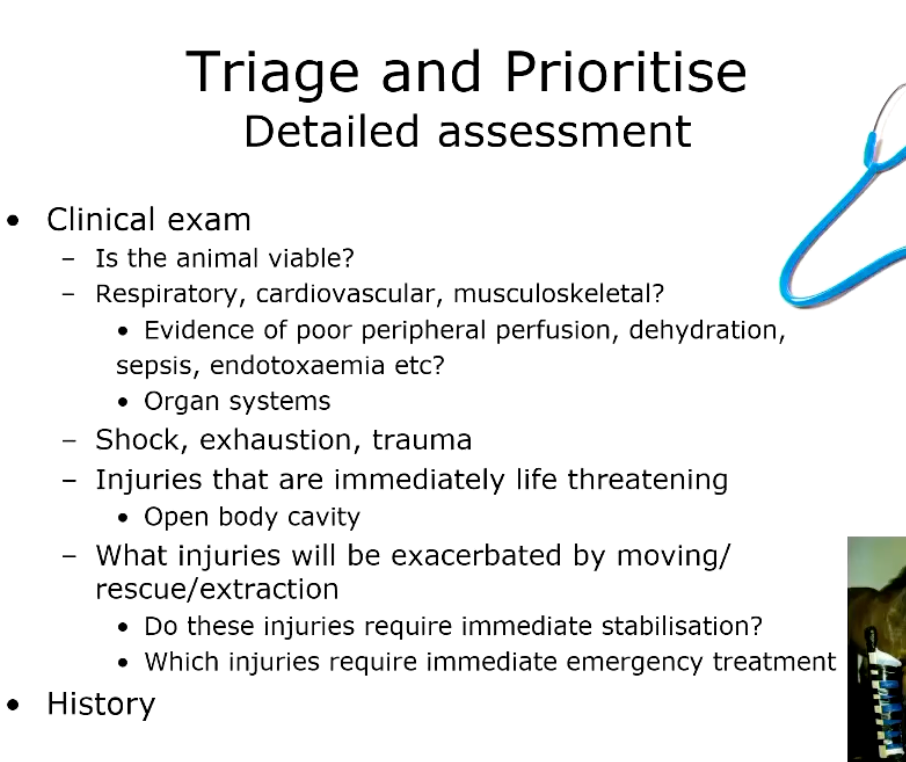
Describe the detailed or secondary survey - the clinical exam of an equine during an emergency
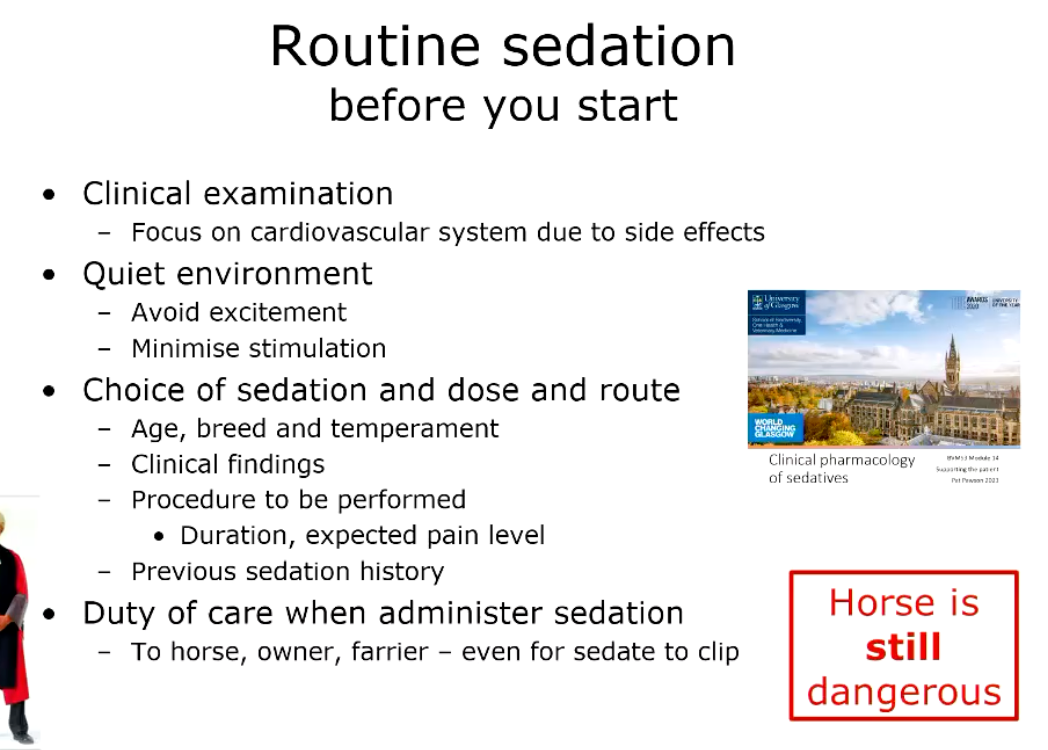
Why is it important to make the equine exam safe and why/when should sedation be considered?
• Human safety
Assess risk
Including your own
• Animal safety
• Calm and logical approach
Assess as far as possible
Don't rush to sedate
Take control
• Adequate restraint
Headcollar
Twitch?
• Then consider sedation
Describe how sedation can be given to horses and when it is used.
**Note: can we do anything else before sedating the horse?

What should we do before we sedate and what can guide us to choosing the proper sedation?
What drugs are typically used for equine sedation?

Describe the features of Xylazine for use in equine sedation.

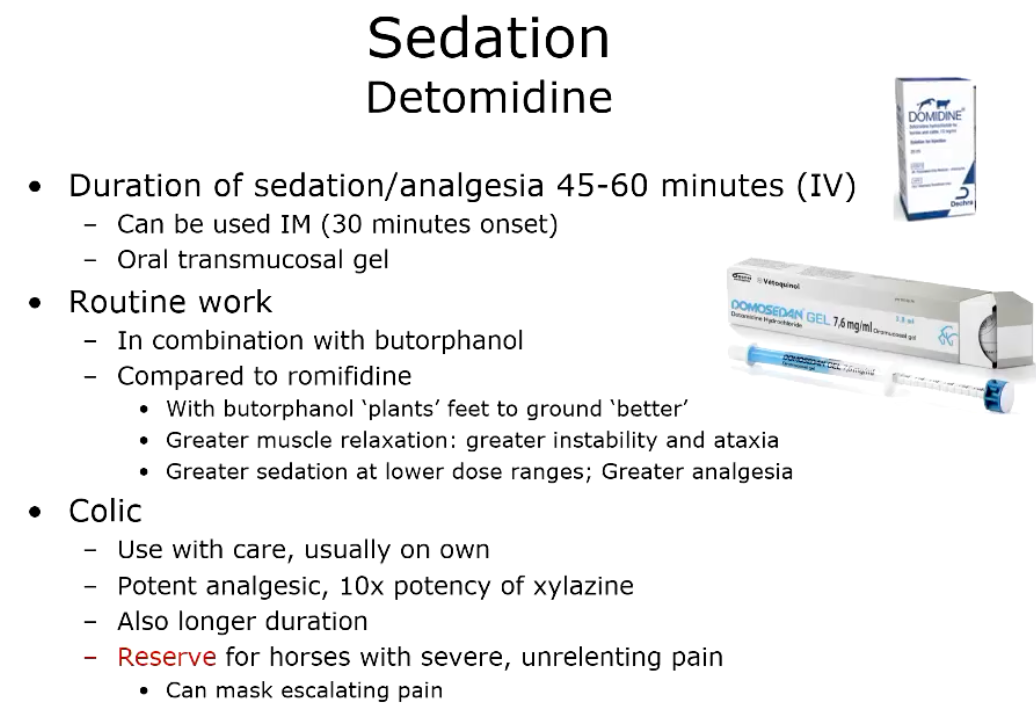
Describe the features of Detomidine for use in equine sedation.
Describe the features of Romifidine for use in equine sedation.
**Not a big analgesic

What is the main route of choice for sedation in equine patients?
• Route of choice is always intravenous
• Onset of peak action following IV = 2-5 minutes
Allow time to take effect
• 'Ceiling effect' for intensity of sedation
Further increasing dose increases duration, but has no effect on intensity
Improve intensity using a combination with opioid
What are the side effects or disadvantages of a2-adrenoreceptor agonists?
• Hyperglycaemia
• Diuresis - not clear why?:
Low renal threshold for glucose and this produces glucosuria (osmotic draw for water)?
Alpha 2 receptors on renal tubules antagonise Anti Diuretic Hormone?
• Sweating
Vasodilation, increased blood supply to skin
• Interpretation of bloods analyses
significant changes in some parameters
particularly decreases in PCV and total protein
Hyperglycaemia
• No food until 'awake'
Tendency to suffer oesophageal choke
• Bradycardia
reduce cardiac output and respiratory depressants (care in foals)
interpretation of colics - heart rate
• Arrhythmogenicity
• Reduce gastrointestinal motility (and secretions)
Impair assessment of colic
Repeated doses or continuous rate infusions
can cause colic e.g. large colon impactions
• Upper airway obstruction
Muscle relaxation, can exacerbate pre-existing obstruction
Impairs endoscopic assessment of upper respiratory tract
• Care in pyrexic horses
- Can induce tachypnoea (and can be antipyretic)
What opioids are often used in addition to sedatives in horses?
• Butorphanol - licensed for use in horses
- Sedation
Always in combination with a2-agonist
- Analgesia
Relatively poor analgesia, has claim for visceral analgesia
- Side effects
Reduces small intestinal activity but minimal effect on pelvic flexure
Cardiovascular and respiratory depression
• Alternatives include morphine and buprenorphine
Describe some routine sedation protocols used for equines.

Describe the dosage sedation protocols used for equines.

In horses which may requires alternatives or different sedatives, how can you provide a higher dose or alternative route?
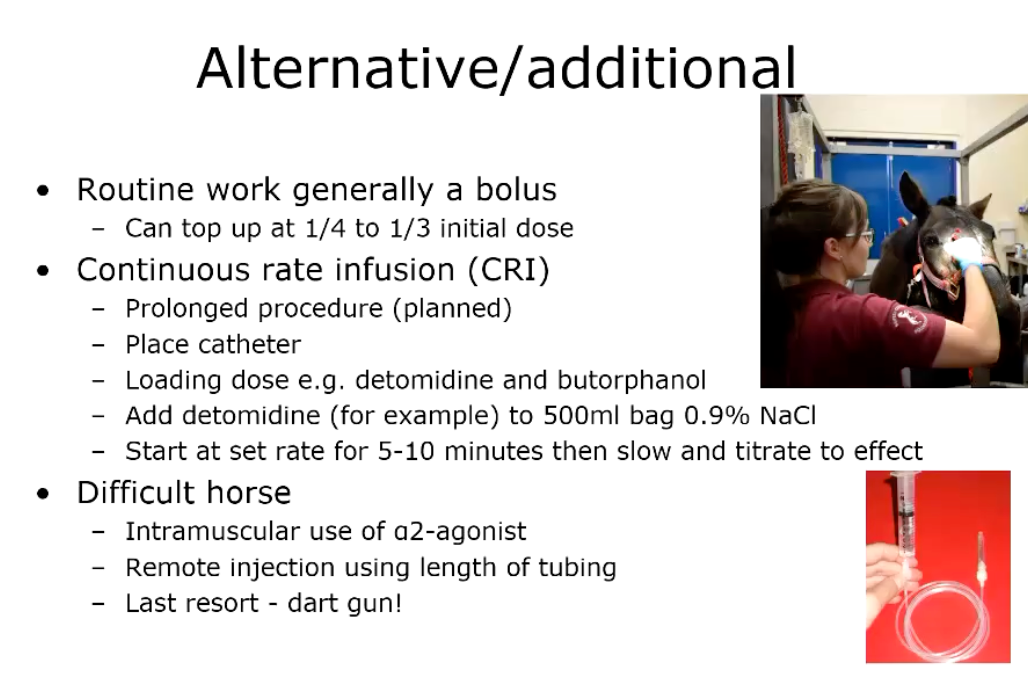
Describe the role of Phenothiazines in equine medicine.

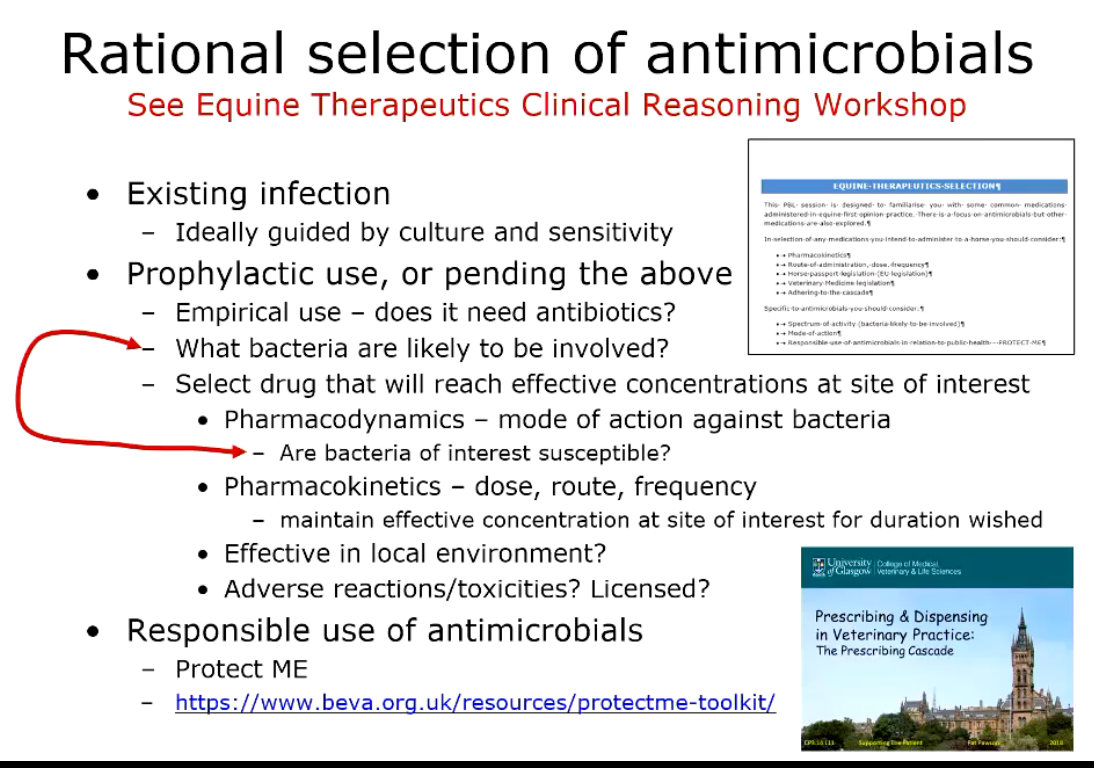
Describe the rational selection of antimicrobials.
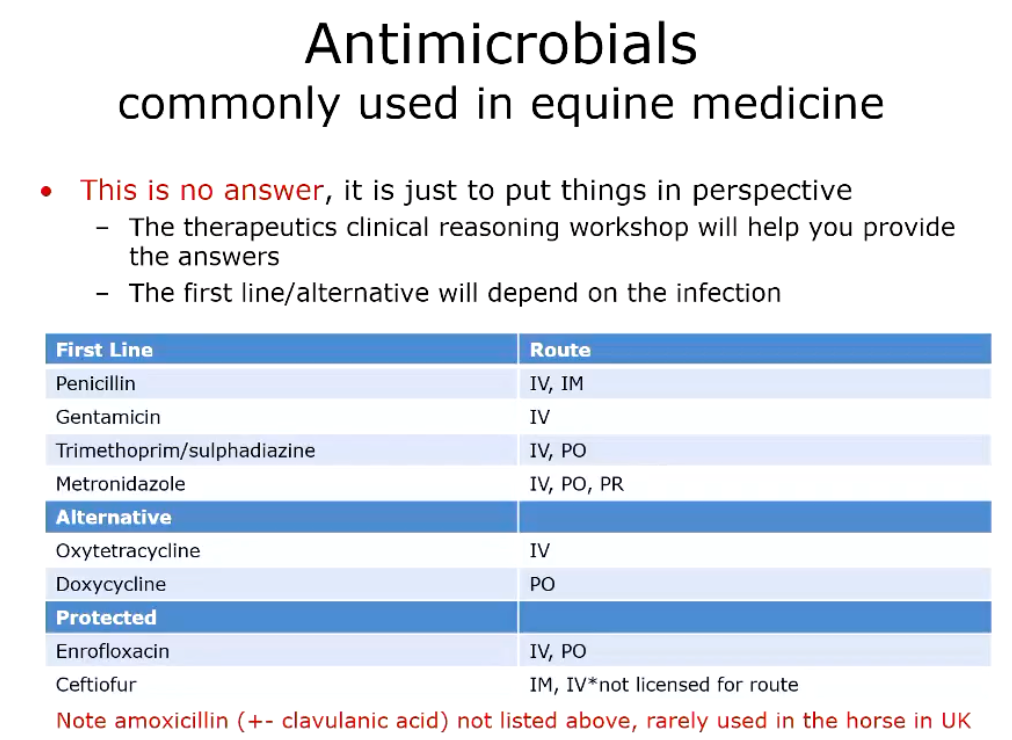
Describe common antimicrobials used in equine medicine.
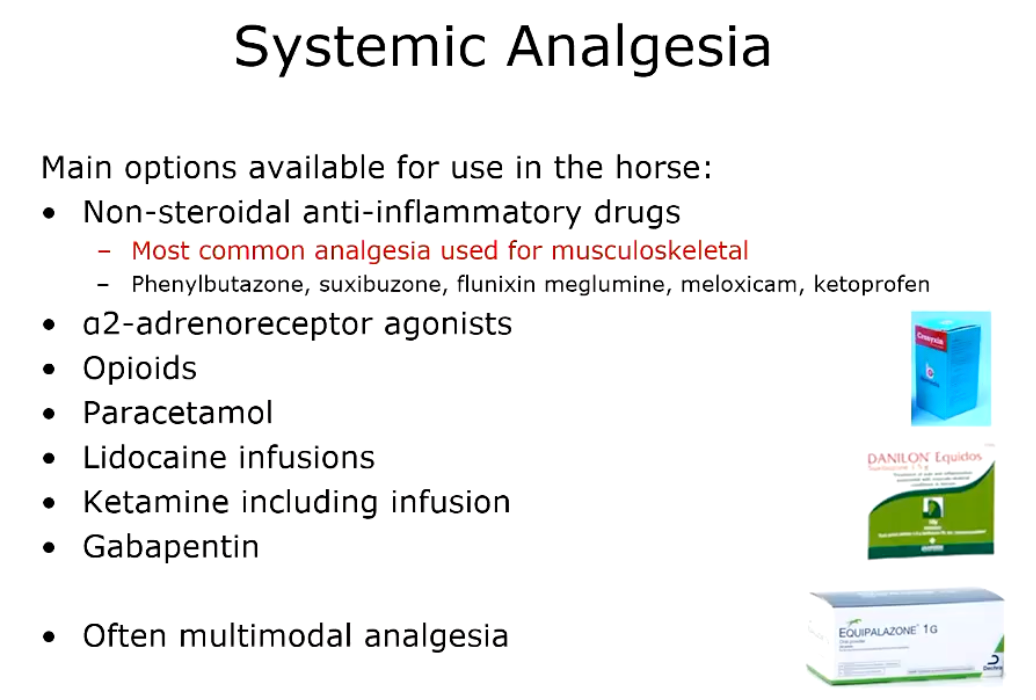
What are the main options for systemic analgesia in equines?
What is colic?
• Clinical syndrome associated with abdominal pain
Classical signs: pawing, flank watching, rolling
But also more generic signs: distressed, increased respiratory rate, sweating, odd stance, dull demeanour, not eating
Can be misinterpreted by owner, and you!
• Analgesia central to its management
What are possible causes of colic, and what are syndromes similar to colic (But are not)?

What tests might be critical to establishing a colic diagnosis?

What are the different classifications of colic?
**Often we do not get a diagnosis → finding obstruction is the key as they will always need surgery

What are the different types of intestinal obstruction contributing to colic?
Small Intestine
• Mechanical obstruction
- Simple obstruction
Intraluminal; Mural; Extraluminal
- Strangulating obstruction
Internal and external hernias
Pedunculated lipomas
Intussusception; volvulus; fibrous bands and adhesions; arterial thrombosis
• Paralytic ileus (functional obstruction)
Primary - grass sickness
Secondary - Post operative; Anterior enteritis; Peritonitis
Large Intestine
Simple or strangulating
Describe nasogastric intubation in horses.
Hitting ethmoid turbinate may cause nose bleed - warn owners

What analgesia can be provided for colic?
• Non-steroidal anti-inflammatory drugs
Phenylbutazone, flunixin meglumine, ketoprofen, meloxicam
• a2-adrenoreceptor agonists
Xylazine, detomidine (care 10 x potency), romifidine (least analgesia)
• Opioids
Butorphanol (relatively poor analgesia, duration~ 1.5 hours)
Pethidine (rarely used), morphine, buprenorphine (duration ~8-12hrs)
• Antispasmodics: anticholinergic - not true analgesia
Buscopan® (hyoscine butylbromide) ~
Buscopan Compositum® (butylscopolamine and metamizole)
Metamizole - moderate analgesia, antispasm, antipyretic
What are the possible adverse effects of NSAIDs and what are the main ones indicated in colic?
• Inhibit COX enzymes preventing prostaglandin synthesis
Peripheral effect
COX 1 vs COX 2
• Possible adverse effects
Nephrotoxicity
Right dorsal colitis
and yes gastric ulceration, but RDC a more significant morbidity in the horse

When making our treatment and management plan, what questions should you ask?
• Don't need a diagnosis
• Can you do it?
• Do you need additional resources?
• Best treatment option?
• Referral?
• Is the client on board?
communication
What owner factors might contribute to your management and treatment plans?
• Clear communication
• Offer options
• Finance
Insurance?
• Referral an option?
• What was/is this horse expected to do
Race
Retire in paddock
• Emotional attachment
When considering euthanasia in horses, what methods and procedures should you follow?
• Communicate clearly and obtain signed consent
- Empathy
- Discuss insurance
- Discuss what will happen during euthanasia and just after
- Discuss disposal and possible post mortem, mane, tail, shoes
• Consider location
- Privacy and noise
- Surface and hazards
- Extraction for disposal
• Adequate restraint
- Sedation?
• What could go wrong.......
- Spare bottle Somulose/bullet
- Catheter comes out?
- Bystanders?

What medication is used to perform equine euthanasias and what are the main safety considerations?

How are equine euthanasias performed?
