Progressive Era
 Call Kai
 Learn
Learn Practice Test
 Spaced Repetition
 Match
Match Flashcards
1/27

There's no tags or description
Looks like no tags are added yet.
Name | Mastery | Learn | Test | Matching | Spaced | Call with Kai | Chat |
|---|
No analytics yet
Send a link to your students to track their progress
28 Terms
Progressive Movement
an early 20th century reform movement seeking to return control of the government to the people, to restore economic opportunities, and to correct injustices in American life

Social Gospel Movement
a 19th century religious movement based on the belief that Christians have a responsibility to help improve working conditions and alleviate poverty.

Settlement House Movement
built as a place where immigrants came to live. Instruction was given in English and how to get a job. Hull House was the first settlement house founded by Jane Addams in Chicago in 1889.

16th Amendment
Established a federal income tax.

17th Amendment
1913, provides for the direct election of US senators by the people rather than by state legislatures.

Prohibition
the banning of the manufacture, sale, and possession of alcoholic beverages.
The 18th amendment made prohibition the law. The 21st amendment ended prohibition.

Muckrakers
journalists who exposed the corrupt side of business and public life in the early 1900s.

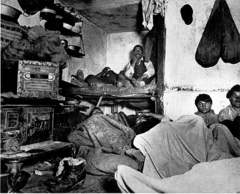
Jacob Riis
wrote "How the Other Half Lives" that told the public about the lives of the immigrants and those who lived in the tenement housing.
Upton Sinclair
wrote "The Jungle", that portrays the dangerous and unhealthy conditions prevalent in the meat packing industry at that time.

Populists
a movement that demanded that people have a greater voice in government and sought to advance the interests of farmers and laborers

National American Women's Suffrage Association (NAWSA)
An organization founded in 1890 to gain voting rights for women.

19th Amendment
1920, gives women the right to vote

Initiative
A procedure by which a law can be originated by the people rather than by legislatures

Referendum
A procedure by which a proposed law can be approved or denied by vote of the people.

Recall
A procedure for removing a public official from office by a vote of the people.

Secret Ballot
Allowed voters to cast a vote without election officials knowing who they voted for.

Direct primary
Voters, rather than politicians, would choose candidates for public office

"Trustbuster"
Teddy Roosevelt broke up many monopolies and trusts.

Sherman Anti-Trust Act (1890)
A law that was intended to prevent the creation of monopolies by making it illegal to establish trusts that interfered with free trade.

Pure Food and Drug Act & Meat Inspection Act
-Halted the sale of contaminated food and drugs and to ensure truth in labeling.
-established strict cleanliness requirements for meat-packers and created a federal meat-inspection program.

Plessy v. Ferguson
The supreme court ruled that separation of the races in public accommodations was legal, thus establishing the "separate but equal" doctrine.

"Jim Crow" Laws
Laws enacted by southern state and local governments to separate white and black people in public and private facilities.

Booker T. Washington
founded the Tuskegee Institute to equip African Americans with teaching diplomas and useful skills in the trades and agriculture.

W.E.B. DuBois
Co-founded the NAACP to help secure legal equality for minority citizens.

National Association of the Advancement of Colored People (NAACP)
An organization founded in 1909 to promote full racial equality.

Populist party platform (1892)
- unlimited coinage of silver to raise farm prices
- single term limit for presidents
- direct elections of senators
- secret ballots
- shorter work days

William Jennings Bryan
Democratic nominee for president in 1896 and 1900, supported by Populists and represented by the Cowardly Lion in the Wizard of Oz

Susan B. Anthony
arrested for voting in 1872, women's rights leader
