PSY2700 (Ch. 1) - Intro to Learning & Behavior
 Call Kai
 Learn
Learn Practice Test
 Spaced Repetition
 Match
Match Flashcards
 Knowt Play
1/40

There's no tags or description
Looks like no tags are added yet.
Name | Mastery | Learn | Test | Matching | Spaced | Call with Kai | Chat |
|---|
No analytics yet
Send a link to your students to track their progress
41 Terms
ARISTOTLE
a Greek philosopher (384-322 b.c.) who believed that knowledge is not inborn but instead is acquired through experience. (early example of an empiricist) He was taught by Plato, who was an early example of an nativist.
NATIVISM (NATURE)
a person’s abilities and tendencies are largely inborn.
EMPIRICISM (NURTURE)
a person’s abilities and tendencies are mostly learned.
ARISTOTLE’S 4 LAWS OF ASSOCIATION
Laws that allow ideas to be connected or associated with each other.
Law of Similarity
Law of Contrast
Law of Contiguity
Law of Frequency
LAW OF SIMILARITY
Events that are similar to each other are readily associated. Ex: cars and trucks are readily associated because they are similar in appearance (wheels, doors, headlights, etc.) and function (both carry passengers and materials along roadways).
These similarities enable us to learn to view cars and trucks as instances of a larger category of objects known as automobiles.
LAW OF CONTRAST
Events that are opposite from each other are readily associated.
Ex:
the word black often brings to mind the word white, and the word tall often brings to mind the word short
the sight of your unwashed car reminds you of how nice it would look if you washed it
an evening of studying reminds you of how enjoyable it would be to spend the evening not studying.
LAW OF CONTIGUITY (closeness)
Events that occur in close proximity to each other are readily associated.
Ex: a child quickly learns to associate thunder and lightning because the sound of thunder soon follows the flash of lightning.
LAW OF FREQUENCY
(A supplemental law of contiguity). The more frequently two items occur together, the more strongly they are associated.
Ex:
you will more strongly associate a friend with a certain perfume the more frequently you smell that perfume upon meeting them.
you will more strongly associate a term (such as the law of frequency) with its definition the more frequently you practice saying that definition whenever you encounter the term (as when using flash cards to help memorize basic terminology).
RENE DESCARTES
A French philosopher (1596–1650) who wrote the famous line “I think, therefore I am.” Proposed Mind-body Dualism.
MIND-BODY DUALISM
the philosophical view that the mind and body are distinct, fundamental kinds of substances or properties.
THE BRITISH EMPIRICISTS
Said that almost all knowledge is a function of experience and that the conscious mind is composed of a finite set of basic elements (specific colors, sounds, smells) that are combined through the principles of association into complex sensations and thought patterns.
(a sort of psychological version of the notion that all physical matter consists of various combinations of the basic elements).
JOHN LOCKE
one of the most famous British empiricists (1632–1704) that proposed that a newborn’s mind is a blank slate upon which environmental experiences are written.
STRUCTURALISM
The experimental study of human consciousness/the basic elements of the conscious mind and how they are combined to create more complex experiences.
WILHELM WUNDT
A German philosopher (1832–1920) who proposed using the scientific method to investigate the issue. This approach was strongly promoted by an American student of his, Edward Titchener (1867–1927), and became known as structuralism.
INSTROSPECTION
When a person attempts to accurately describe their conscious thoughts, emotions, and sensations.
FUNCTIONALISM
The study of the adaptive mind/the idea that the mind evolved to help us adapt to the world around us and that the focus of psychology should be the study of those adaptive processes.
THE THEORY OF EVOLUTION
A theory proposed by Charles Darwin that describes how species, including humans, change across generations in response to environmental pressures.
NATURAL SELECTION
The concept that organisms that are capable of adapting to environmental pressures are more likely to reproduce and pass along their adaptive characteristics than those that cannot adapt.
EVELUTIONARY ADAPTATION
A helpful genetic trait that evolves as a result of natural selection.
Ex: if you inadvertently place your hand over a flame, a flexion response will cause you automatically to pull your hand away from the damaging fire even before you consciously feel pain
ABILITY TO LEARN
A particularly important evolutionary adaptation. The ability to learn evolved because it conferred significant survival advantages on those who had this ability.
Trying to make a “nature versus nurture” distinction between learning and evolution is overly simplistic, because the ability to learn (nurture) is itself inherited (nature) and many of the processes of learning seem to be automatic or reflexive.
BEHAVIORISM
The study of observable behavior found by John B. Watson.
JOHN B. WATSON
(1913) a psychologist who proposed Methodological Behaviorism, and published a paper titled “psychology as the Behaviorist Views It.” In it, he laminated the lack of progress achieved by experimental psychologists up to that time, particularly the lack of findings that had any practical significance.
BEHAVIORISM
A natural science approach to psychology that emphasizes the study of environmental influences on observable behavior.
5 SCHOOLS OF BEHAVIORISM
Each based on a somewhat different set of assumptions about how best to study environmental influences on behavior.
METHODOLOGICAL BEHAVIORISM
(AKA: Classical Behaviorism).
Says that for methodological reasons, psychologists should study environmental influences only on those behaviors that can be directly observed.
Subjectively perceived activities, such as thinking and feeling, are methodologically too difficult to assess to be included in a scientific analysis of behavior.
STIMULUS-RESPONSE (S-R) THEORY
Says that learning consists of connection being formed between a specific stimulus and a specific response.
Complex behavior is presumed to involve extremely long chains of these S–R connections.
Clark L. Hull
Came up with the idea of neobehaviorism.
NEOBEHAVIORISM
Claimed that Watson’s rejection of unobservable events was scientifically unsound. Hull noted that both physicists and chemists make inferences about events they have never directly observed but that can nevertheless be operationalized.
EDWARD C. TOLMAN
Disagreed with Hull’s approach of neobehaviorism and said that it would be more useful to analyze behavior on a “broader” level.
COGNITIVE BEHAVIORISM (aka: purposive behaviorism)
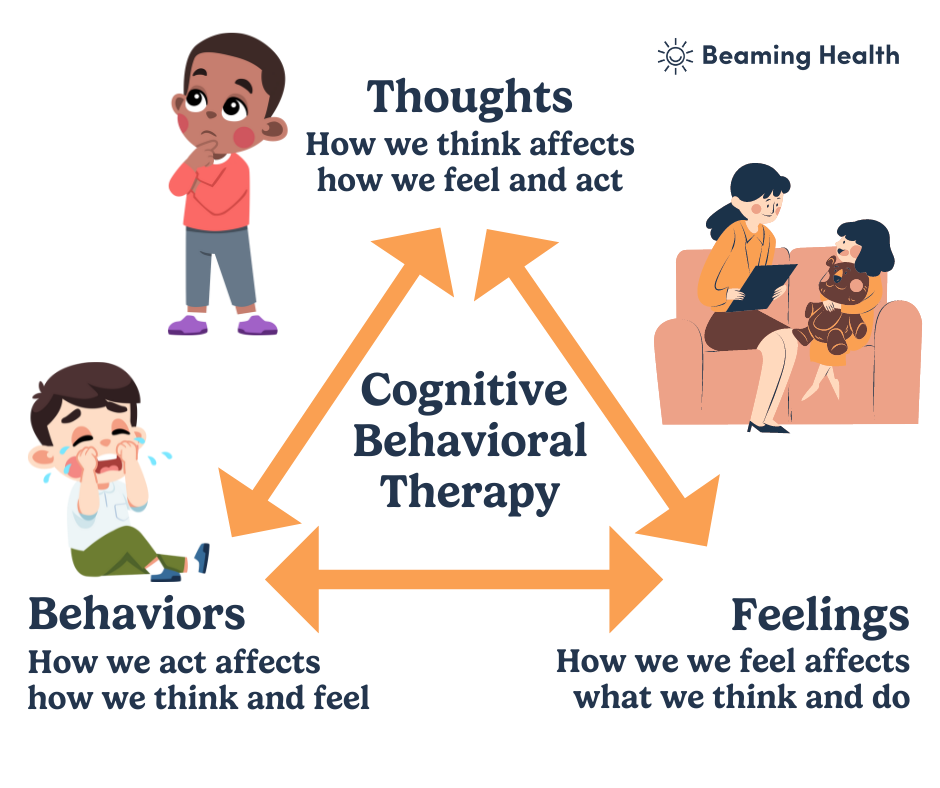
a psychological approach that combines classical behaviorism with cognitive psychology to explain mental processes and external environments jointly shape human behavior.
COGNITIVE MAP
A mental representation of one’s spatial surroundings
Evidence for this concept was provided by a study on “latent learning” by Tolman and Honzik (1930)
This experiment was conducted in an attempt to disprove Hull’s notion that behavior must be rewarded for learning to take place; that is, in the absence of some type of reward, nothing can be learned
LATENT LEARNING
When learning occurs despite the absence of any observable indication of learning at that time and only becomes apparent at a later time.
LEARNING VS. PERFORMANCE
Learning takes place even when the subjects showed no evidence of learning in their performance at that time.
ALBERT BANDURA
Canadian-American psychologist that came up with Social Learning Theory
SOCIAL LEARNING THEORY
an approach to psychology that strongly emphasizes the importance of observational learning and cognitive variables in explaining human behavior
RECIPROCAL DETERMINISM
The assumption that environmental events, observable behavior, and “person variables” (a person’s thoughts and feelings) reciprocally influence each other. (How we think and behave can influence oiru thoughts and feelings)
BURRHUS FREDERIC SKINNER
Argued for a return to a somewhat stricter form of behaviorism (Radical Behaviorism)
RADICAL BEHAVIORISM
Emphasizes the influence of the environment on observable (overt) behavior; rejects the use of internal events (including subjectively perceived thoughts and feelings) to explain behavior; and instead views these thoughts and feelings as “private” behaviors that need to be explained.
SKINNER’S VIEW OF INTERNAL EVENTS
Skinner viewed internal events (sensing, thinking, and feeling) as “covert” or “private” behaviors that are subject to the same laws of learning as “overt” or publicly observable behaviors.
BEHAVIOR ANALYSIS
The basic science that grew out of radical behaviorism and is concerned with investigating the basic principles of behavior, especially the principles of operant conditioning.
APPLIED BEHAVIROR ANALYSIS
A science and technology of behavior that is concerned with applying the basic principles of behavior toward the analysis and improvement of real-world issues.