Liver and Lung Digenea
 Call Kai
 Learn
 Practice Test
 Spaced Repetition
 Match
 Flashcards
 Knowt Play
1/132

Earn XP
Description and Tags
10/19/26
133 Terms
what are the four main examples of liver and lung digenea?
Fasciola hepatica
Dicrocoelium dendriticum
Clonorchis sinesis
Paragonimus westermani
what are the three species of liver flukes?
Fasciola hepatica
Dicrocoelium dendriticum
Clonorchis sinesis
what is the one species of lung flukes?
Paragonimus westermani
why do we study Dicrocoelium dendriticum?
humans becoming infected → rare in this species
unique life cycle
what is the infective stage of Digenea?
(humans, for ex.)
metacercaria → stage of infection that becomes encysted
(ends in gastrointestinal tract
liver and lung Digenea (especially) go through extensive migration to get to liver and lung)
what are the three stages of growth and metamorphosis for Digenetic trematodes?
egg
miracidium
sporocyst
what happens in egg stage of growth and metamorphosis for Digenetic trematodes?
(with eggshell)
organisms are produced
what happens in Miracidium stage of growth and metamorphosis for Digenetic trematodes?
(first stage in environment)
briefly free-living with cilia
hatches out to find intermediate host → often molluscs/snails
what happens in sporocyst stage of growth and metamorphosis for Digenetic trematodes?
(from Miracidium)
loses ciliated coat and left only with tegument
has ability to make more sporocysts (daughters)
what are the three paths of proliferation for Digenetic trematodes?
(after growth and metamorphosis)
daughter sporocyst → cercaria
(mother) redia → daughter redia → cercaria
redia → cercaria
what happens to cercaria stage after proliferation?
leaves intermediate host
sexual maturation in definitive host
what are the three paths of growth, metamorphosis, and sexual maturation for Digenetic trematodes?
(after proliferation into cercaria stage)
penetration of vertebrate definitive host without encystment → Adult Schistosoma spp. via schistosomules
penetration of second intermediate host followed by encystment → Metacercariae
encystment on vegetation → Metacercariae
what occurs during “penetration of vertebrate definitive host without encystment”?
(growth, metamorphosis, sexual maturation)
penetrates skin without becoming metacercariae
becomes Adult Schistosoma spp. via schistosomules
what types of vertebrates are used during “penetration of second intermediate host followed by encystment”?
(growth, metamorphosis, sexual maturation)
second intermediate hosts:
Fishes
Molluscs
Crustacea
what species of fishes are used as second intermediate hosts?
Clonorchis sinesis
Metagonimus yokagawai
Heterophyes heterophyes
what species of molluscs are used as second intermediate hosts?
Echinostoma revolutum
what species of Crustacea are used as second intermediate hosts?
Paragonimus westermani
what occurs during “encystment on vegetation”?
(growth, metamorphosis, sexual maturation)
cercaria is free in water or found on vegetation for definitive host to pick up
example species:
Fasciolopsis buski
Fasciola hepatica
what family are liver flukes under?
Family Fascioloidae (fasciolids)
how many people are infected worldwide with fasciolids?
2.4 million people
what is the economic impact of fasciolosis?
on livestock production:
nears $3 billion per year
what do the production losses of fasciolosis include?
decreased:
milk
wool
meat production
leads to mortality

what is shown in the image?
adult stage of fasciolids
(Fasciola hepatica)
what makes the Digenea hard to differentiate?
highly branched/dendritic structure → makes it difficult to distinguish structures within
differential staining helps with that
what are the key characteristics of Fasciola hepatica (morphology)?
length: 1.5-5.0 mm (large trematode)
tegumental spines
oral and ventral suckers (can see close together in anterior = distome body form)
cone-shaped structure at end (with oral sucker)

what does the image show/represent?
common host of Fasciola hepatica: sheep
in vicinity of water → snails (intermediate host) are present (no 2nd intermediate)
parasite encysts in vegetation and water (after development in snail)
gets into sheep (herbivores and drink water)
what does Fasciola hepatica cause?
causes:
sheep liver rot (so much necrosis → looks rotting)
fascioliasis/fasciolosis
what does Fasciola hepatica infect?
typically parasitizes sheep (herbivores) and cattle
(can infect humans)
does Fasciola hepatica use 2nd intermediate hosts?
no
metacercariae encysts on submerged objects or just in water (no need for secondary)
(need to be consumed by next host)
what are the main definitive hosts of Fasciola hepatica?
cattle
sheep
goat
water
buffalo
humans
wildlife
what are the intermediate hosts of Fasciola hepatica?
Lymnaeidae snails
(certain family/group preferred; specificity is shown)
how is Fasciola hepatica treated?
Triclabendazole
(muscle tightening of parasite → gets out of the body)
(lots of Digentic treatments use Praziquantol; F. hepatica uses Triclabendazole)

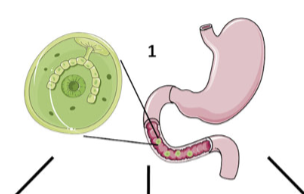
what happens in this stage of the life cycle of Fasciola hepatica?
metacercariae (encysted) on water plants → ingested by human, sheep, or cattle (definitive host)

what happens in this stage of the life cycle of Fasciola hepatica? (after consumption by human)
excyst in duodenum
penetrates gut wall
enters abdominal cavity
penetrates liver
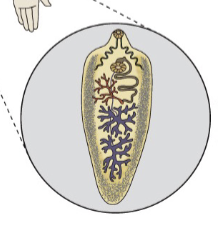
what happens in this stage of the life cycle of Fasciola hepatica? (second step after consumption by human)
adult in hepatic billiary ducts
(likes bile ducts in liver; eggs move through from bile duct → goes out through stool/feces)

what happens in this stage of the life cycle of Fasciola hepatica? (after stool secretion by definitive host)
unembryonated eggs passed in feces
(not fully developed into miracidium)

what happens in this stage of the life cycle of Fasciola hepatica? (after stool secretion by definitive host)
embryonated eggs in water
(need to spend time in water to become miracidium)

what happens in this stage of the life cycle of Fasciola hepatica? (after stool secretion by definitive host)
each egg hatches to release miracidium
(ciliated/briefly free-living)

what happens in this stage of the life cycle of Fasciola hepatica? (after stool secretion by definitive host)
miracidium penetrates snail tissue
(intermediate host)

what happens in this stage of the life cycle of Fasciola hepatica? (after stool secretion by definitive host)
sporocyst generation

what happens in this stage of the life cycle of Fasciola hepatica? (after stool secretion by definitive host)
rediae

what happens in this stage of the life cycle of Fasciola hepatica? (after stool secretion by definitive host)
free-swimming cercariae → attach to water plants
lose tail
encyst as metacercariae
what happens in environments where Fasciola hepatica is more common?
humans get infected through vegetation like lettuce → ingestion = infection
can also be acquired via liver consumption → eat young worms
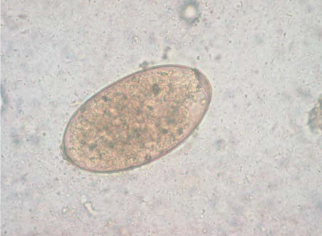
what is shown in the image?
Fasciola hepatica egg
(how it is commonly diagnosed)
what are the key characteristics of Fasciola hepatica eggs?
large (139-150 μm by 63-90 μm)
unembryonated, operculated
(operculum = small, distinct)
abopercular end → thickened/roughed
what is an operculum?
lid that is present in fully-developed Digenea egg
(present in one end)
what is an aboperculum?
(opposite to operculum) (other end)
looks knobby-shaped
what are the steps of migration in Fasciola hepatica?
metacercariae → reaches duodenum
bile → triggers activity patterns → worm exits cyst → penetrates intestine
in abdominal cavity → crawls around on mesenteries of viscera
migrates to liver → penetrates it
enters bile ducts of liver
what happens when metacercariae reaches duodenum? (migration of Fasciola hepatica)
metacercariae → comes from ingestion (cyst wall helps as they through digestive system)
likes to live elsewhere in body → extensive migration out of GI tract
what happens when bile triggers activity patterns? (migration of Fasciola hepatica)
bile → lets parasite become more active
exits as cyst and penetrates intestine as a result
what happens in the abdominal cavity? (migration of Fasciola hepatica)
after penetration of intestine; occurs outside
(while parasite goes from inside to outside, consumes tissues as they go to help out with energy)
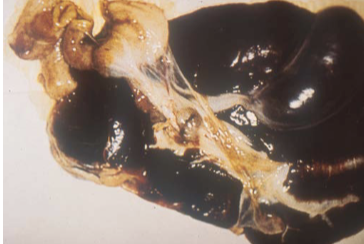
what is shown in the image?
(large Digenetic trematodes)
necrosis occurs
(lots of fibrosis; healthy tissue is replaced by non-functioning tissue (of liver))

what is shown in the image?
(large Digenetic trematodes)
white spots → indicates how worm moves around the liver
what affects the pathogenicity of Fascioliasis?
depends on parasite intensity in liver and bile duct
more parasites = more damage (more likely to show symptoms)
(feeds on tissue in the bile duct as it moves)
what causes necrosis in Fascioliasis?
due to fluke migration → through liver parenchyma
(parenchyma = essential tissue; epithelial tissue)
what do flukes feed on in Fasciola hepatica? (in humans)
feed on liver and blood cells
(causes liver cirrhosis; damage to healthy tissue)
anemia can occur in heavy infections
what do flukes feed on in Fasciola hepatica? (in sheep)
(similar to humans)
tens of thousands of parasite found in liver
what does Fasciola hepatica cause (in humans)?
causes:
inflammation
edema of bile duct
(damages lining of bile duct and feeds on epithelial lining)
what does Fasciola hepatica cause (in sheep)?
causes:
weight loss, lethargy, anemia
depending on number of parasites → can die from infection
sheep liver rot → killing liver
what are the two phases of Fasciolosis? (with human infection)
acute phase
chronic phase
what occurs during acute phase of Fasciolosis?
associated with migration of immature stages through hepatic parenchyma
causes extensive tissue damage and hemorrhage
(liver → acute migration → causing acute damage to the liver while moving to bile ducts)
what occurs during chronic phase of Fasciolosis?
adults present in bile ducts
cause liver fibrosis, blood loss, and inflammation
(worms → very large, causes more damage)
what family is Dicrocoelium dendriticum under?
Family Dicrocoeliidae
(also called Dicrocoelium lanceolatum)
what does Dicrocoelium dendriticum cause?
dicrocoeliasis
where does Dicrocoelium dendriticum occur?
occurs in:
Europe
Asia
North Africa
North America
where does Dicrocoelium dendriticum live in the body?
(adult) lives in the bile ducts of liver and gallbladder
(common name = lancet fluke)
why is Dicrocoelium dendriticum called a “lancet” fluke?
based on the shape overall
looks like a blood lancet
(Fasciola hepatica → sheep liver fluke (in contrast))
does Dicrocoelium dendriticum infect humans?
rarely
what is the 1st intermediate host of Dicrocoelium dendriticum?
land snail (ex. Cionella)
(in genus → prefers it; eggs have to be ingected by snail)
what is the 2nd intermediate host of Dicrocoelium dendriticum?
ant
(common genus of ant it uses → Formica)
what are vitelline glands in Dicrocoelium dendriticum?
(darkly stained)
important part of female reproductive system in Digenea
provides nutrient source for embryo
ducts that connect with ootype → yolk gets packaged with it

what is shown in the image?
cercaria in Dicrocoelium dendriticum

what is shown in the image?
expelling of mucus balls (from snail; Zebrina detrica)
cercaria is released due to being inside the mucus balls
ants ingest mucus balls → become infected
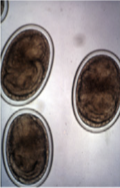
what is shown in the image?
metacercaria of Dicrocoelium dendriticum
(infective stage of parasite)
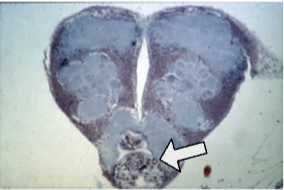
what is shown in the image? (for Dicrocoelium dendriticum)
brain worm in the subesophageal ganglion of a Formica ant
(parasite → causes lockjaw in ants (parasite migrates to nervous tissue to control mandibles of ant)
ant clamps down on vegetation and doesn’t release for some time
ensures definitive host will consume it)
what are the treatments for Dicrocoelium dendriticum?
albendazole
praziquantel (common treatment)
trichlabendazole

what is happening in the life cycle of Dicrocoelium dendriticum?
snail ingests eggs (from feces of infected host)
(land snail needs to ingest parasitic eggs)

what is happening in the life cycle of Dicrocoelium dendriticum?
after ingestion → miracidia hatches from egg

what is happening in the life cycle of Dicrocoelium dendriticum?
after miracidia → mother sporocyst

what is happening in the life cycle of Dicrocoelium dendriticum?
mother sporocyst → daughter sporocyst

what is happening in the life cycle of Dicrocoelium dendriticum?
daughter sporocysts → cercaria
(leaves snail through envelopment by mucus packets (what snails leave behind))

what is happening in the life cycle of Dicrocoelium dendriticum?
slime balls containing cercariae are deposited by snail
ant eats slime balls → become infected

what is happening in the life cycle of Dicrocoelium dendriticum?
after ingestion of cercariae by ant → metacercariae are encysted in ant
(in body cavity of ant)
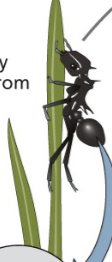
what is happening in the life cycle of Dicrocoelium dendriticum?
after metacercariae are encysted in ant → ant hangs by mandibles from tip of grass
(will hang until temperature rises the next day; available to grazing animals)
(gives metacercariae to definitive host → infected)

what is happening in the life cycle of Dicrocoelium dendriticum?
after accidental ingestion of ant on grass → adult found in bile duct of plant-eating animal
(metacercariae encysts and goes to preferred habitat of liver and gallbladder)
what is Clonorchis sinesis?
liver fluke
(compared to other two → more common in people)
what family is Clonorchis sinensis under?
Family Opisthorchiidae
who and where are infected by Clonorchis sinesis?
~15 million people infected
found in:
China
South Korea
Northern Vietnam
far east of Russia

what is shown in the image?
Clonorchis sinensis (in adult stage)
what are the treatments for Clonorchis sinensis?
praziquantel (recommended)
albendazole also used

what is happening in the life cycle of Clonorchis sinensis?
metacercariae in flesh or skin of freshwater fish → ingested by human host
(in tissue that is raw or that is not cooked properly)

what is happening in the life cycle of Clonorchis sinensis?
(after ingestion by human host)
excyst in duodenum
migrates to and enters bile duct
(all liver flukes like bile duct like F. hepatica)

what is happening in the life cycle of Clonorchis sinensis?
(after migrating to bile duct)
adults in bile duct

what is happening in the life cycle of Clonorchis sinensis?
(after adults in bile duct)
embryonated eggs passed in feces

what is happening in the life cycle of Clonorchis sinensis?
(after eggs are passed in feces)
eggs are ingested by the snail

what is happening in the life cycle of Clonorchis sinensis?
(after ingestion by snail)
miracidia hatch from egg in snail gut (ciliated/briefly free-living)
penetrates gut

what is happening in the life cycle of Clonorchis sinensis?
(after miradicia penetrates gut)
miracidium → sporocyst
sporocyst → mother rediae

what is happening in the life cycle of Clonorchis sinensis?
(after sporocyst gives rise to mother rediae)
rediae → daughter rediae
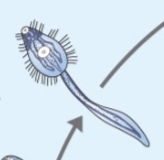
what is happening in the life cycle of Clonorchis sinensis?
(after rediae gives rise to daughter rediae)
cercariae → released from daughter rediae
leaves snail

what is happening in the life cycle of Clonorchis sinensis?
(after cercariae leaves snail)
free-swimming cercariae → encysts in skin/flesh of freshwater fish