AA Unit 1: Who invented "African Art?"
 Call Kai
 Learn
Learn Practice Test
 Spaced Repetition
 Match
Match Flashcards
 Knowt Play
1/3

There's no tags or description
Looks like no tags are added yet.
Name | Mastery | Learn | Test | Matching | Spaced | Call with Kai | Chat |
|---|
No analytics yet
Send a link to your students to track their progress
4 Terms

Four Studies of a Head of a Moor|Peter Paul Rubens, c. 1614–1616
A European study of one African model. The sitter is seen through European eyes.

Pablo Picasso, Les Demoiselles d’Avignon, 1907. Oil on canvas
The key example of PRIMITIVISM. Mask-like faces borrow from African (and Iberian) objects while framing them as “primitive.”
African forms feed European modernism

Sapi-Portuguese Saltcellar, Bullom or Temne artist, Sierra Leone, c. 1490–1530. Carved elephant ivory, 23.5 × 14 × 15
Made by African carvers for Portugese buyers, so it’s export art mixing Sapi and European imagery. It ended up in European curosity cabinets and is hard to classify as only African or only European.
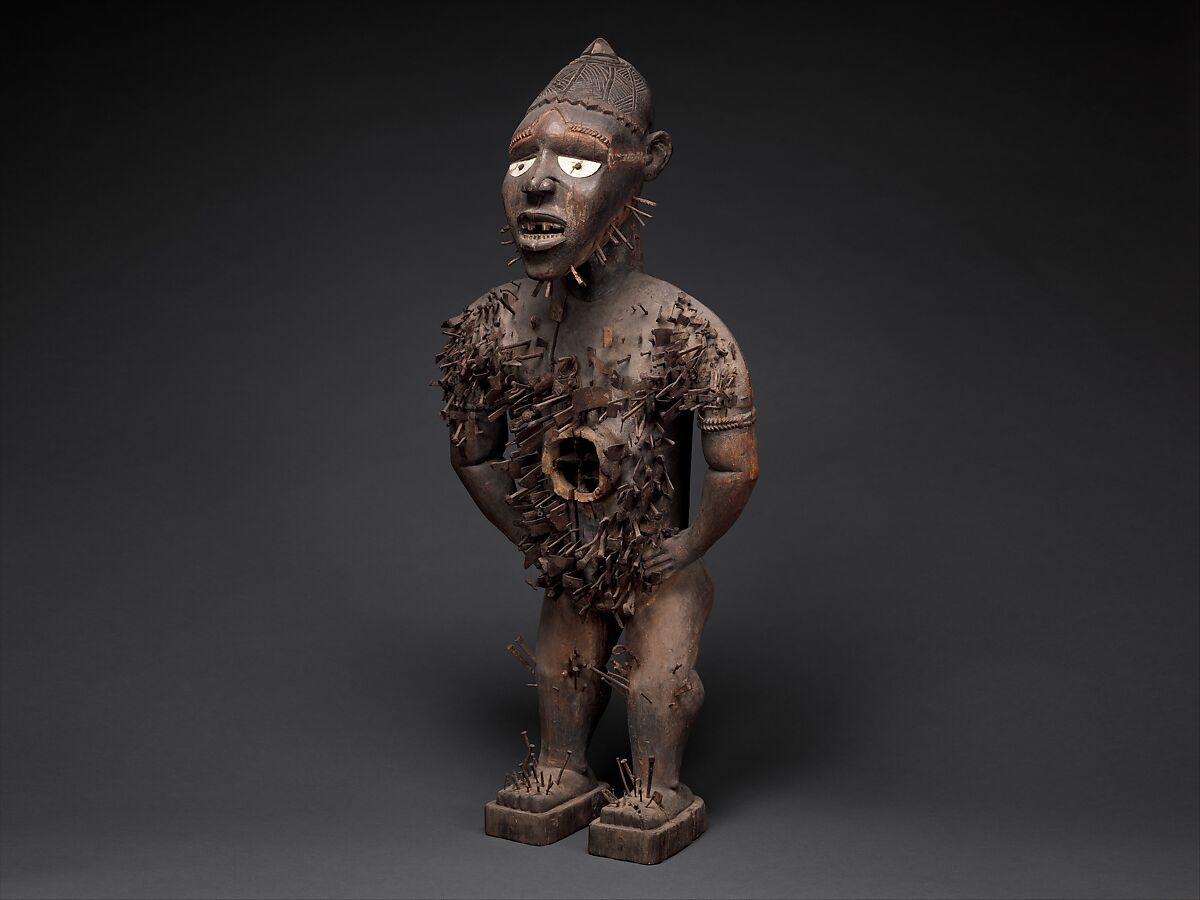
Power Figure (Nikisi N’Kondi Mangaaka), Kongo peoples, Cabinda or Republic of the Congo
Europeans called objects like this '“fetishes”, nails and baldes were driven in to seal oaths and agreements