Languages of the world
 Call Kai
 Learn
 Practice Test
 Spaced Repetition
 Match
 Flashcards
 Knowt Play
1/77

Earn XP
Description and Tags
phili
78 Terms
variety
specific form of a language or language cluster
Dialect
Dialects are a variety of spoken languages by a particular group of people.
Language family
A group of languages that are genealogically related to one another.
Isolate
Languages with no relatives.
Cognates
Words with a common etymological origin.
Intransitive verb
One-place verbs that never occur with a direct object.
ex:
I arrived …
Transitive verb
Two-place verbs that (obligatorily) carry an object.
ex:
Robin hugged me.
I reached Leiden
Ditransitive verb
Three-place verbs that (obligatorily) have two objects (direct object and indirect object).
ex:
Robin gave me the book
I showed her my driver's license.
Valency
The verb selects 1, 2, or 3 arguments.
One-place → monovalent
Two-place → divalent
Three-place → trivalent
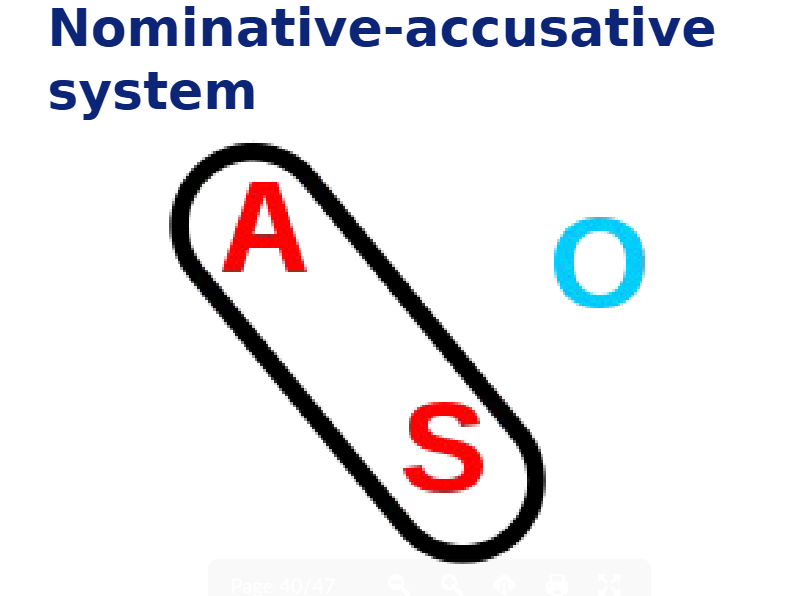
Nominative-accusative system
The object of a transitive verb is marked.
The A and S are treated the same
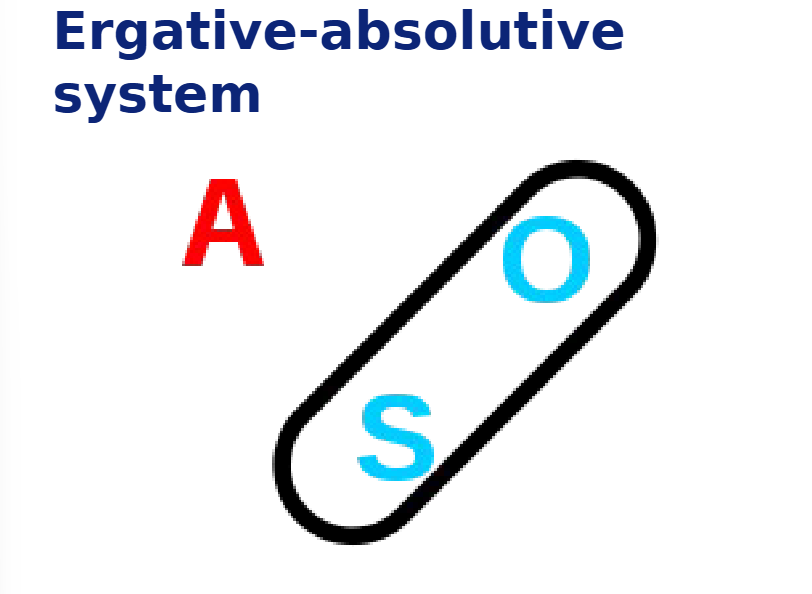
Ergative-absolutive system
The agent of a transitive verb is marked.
The S and O are treated the same
Declension classes
Class markers of verbs and nouns, including affixes and particles.
Differential Object Marking (DOM)
Marking direct objects differently (through differenct case markers or different agreement markers on the verb), depending on such properties of the object as animacy, definiteness, etc.
definite vs. indefinite
Specific objects (definite)
Non-specific objects (indefinite)
Animate vs. inanimate
Distinctive grammatical treatment based on levels of agency.
animate → inanimate
human → animal → plant → object → abstract
Evidentiality
The nature of evidence for a given statement.
'I am said to give difficult exams.'
Agglutinative
A type of language structure where words are formed by stringing together morphemes, each adding a specific meaning.
Vowel Harmony
A phonological phenomenon in which vowels within a word harmonize to share certain features.
Dependent-marking
A grammatical system where case marking is applied to arguments (NP) rather than on the verb.
Head-marking
the grammatical relationships between words in a phrase are primarily shown by marking the "head" (VERB) of the phrase, not the dependents
Case
A system of marking dependent nouns for the type of relationship they bear to their heads.
Non-concatenative Morphology
A morphological system where the structure of words is formed by altering the internal structure rather than by adding affixes.
ie. infixes
Concatenative Morphology
A morphological system where words are formed by adding affixes in a linear sequence.
Gender/Noun Classes
The division of nouns into classes based on sex or other characteristics.
Gender = agreement (congruence, concord).
Gender must be expressed on other words than the noun itself
Language families of Europe
- Indo-European languages
- Finno-Ugric languages (Hun., Esto, Finn)
- Basque (isolate)
- Maltese (Semitic)
- Turkish (Turkic)
Indo-European Language Families
Germanic
Italic
Celtic
Bato-Slavic
Hellenic
Armenian
Albanian
Indo-Iranian
languages of Iran and South Asia
- Dravidian languages (Tamil, Telugu)
- Austro-Asiatic languages (Vietnamese)
- Tibeto-Burman languages
- Burushaski (isolate)
Indo-Iranian
languages of northern Eurasia
Slavic
Finno-Ugric
Samoyedic (Nenets)
Turkic
o Yukaghir languages (proposed as part of Uralic)
o Tungusic languages (Manchu, Evenki, Oroqen etc.)
o Mongolic languages (Mogholi, Kalmyk, Khalkha-Mongolian)
o Chukotko-Kam-Chatkan languages (Chukot, Kerek etc.)
languages of the Caucasus
Northwest Caucasian (Abkhazo-Adyghian) (Abkhaz, Circassian)
Northeast Caucasian (Nakho-Dagestian) (Lak, Dagri)
South Caucasian (Kartvelian) (Georgian, Svan, Laz)
languages of the Greater Middle East
Afroasiatic
Indo-Iranian
Afroasiatic lannguages
Semitic (Arabic)
Berber (Siwa)
Egyptian (r.i.p)
Omotic ( Wolaytta)
Chadic (Hausa)
Cushitic (Somali)
languages of Sub-Saharan Africa
- Nilo-Saharan languages (Koman, Fur)
- Niger-Congo languages (Kiswahili, Xhosa, Zulu, Yoruba, Igbo, Wolof)
- Khoisan languages
languages of Eastern Asia
Sino-Tibetan
Sinitic (Manderin Chinese)
Tibeto-Burman (Burmese)
Austro-Asiatic
Mon Khmer
Vietnamese, Khmer (Cambodja)
Mon
Munda
Tai-Kedai
Ong Be (Hainan)
Kra
Kam-Sui
Hlai
Tai (Thai, Lao)
Hmong-Mien
Korean
Japonic
Philippines-style topic marking
the Direct object us used with the topicalized argument
the verb form changes
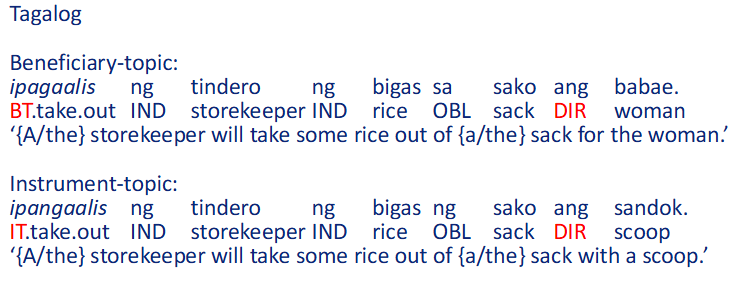
What can be topicalized
agent, theme, befinicary, instunent, direction, location, reason, and reciprocal topic
Word classes
Many languages have stricy syntatic distincion between nouns and verbs (NP & VP)
words forms which semantically apperar to be verbs occur easily and w/out further morphological modification in nominal functions and vice versa
Pitch
Pitch is the rate of vibration of the vocal folds
Higher vibration → high tone
Low vibration → low tibe
Tone languages
Pitch
is often of the acoustic correlates of stress
is the main acoustic correlate of tone and intonation
Intonation: pitch is used ro express emotional and other paralingustic information and to convey emphasis, contrast etc.
Grammatical tone
used to distinguish verb tense
Lexical tone
lexical function
used to distinguish words from each other
Level vs. Contour tones
A level tone:
➢maintains the same height
A contour tone or tone contour:
➢goes from one pitch to another in the course of a syllable or
word.
Contour tones especially occur a lot in East- and Southeast Asia but are also found elsewhere (e.g. Kru languages of Liberia and Ju languages of Namibia)
Measure terms
Nouns that don’t have plural form (usually bc it in itself contains a multitude)
A pound of rice
a cup of sugar
a piece of chalk
Noun Classifiers
A classifier is a word (or an affix) that in certain grammatical
contexts obligatorily accompanies a noun and usually
provides a certain conceptual classification of that noun.
▪ For example, a language can have a classifier for nouns that
refer to people, another for flat objects, another for time
units, etc.
▪ In short, a classifier is a word or an affix that is used in some
languages to ‘classify’ the noun to which it refers in terms of
size, form, consistency, etc
Noun classifiers vs. noun classes
Noun classes are expressed through agreement, classifiers are not.
▪ Noun classes are generally semantically more opaque than classifiers
▪ Classifier inventories tend to be much larger than noun class inventories
▪ Noun classes are generally more rigidly associated with a particular group of nouns than classifiers
Numeral classifers vs. measure terms
A (numeral) classifier categorizes a class of nouns by highlighting some salient perceptual properties; a measure term does not categorize but denotes the unit of quantity of the entity named by noun.
- Measure terms are only required for concepts that are considered non-countable (mass nouns), numeral classifiers classify all nouns in quantifying constructions
Languages families of the Pacific
Austronesian
1. Atayalic (Taiwan)
2. East Formosan (Taiwan)
3. Puyuma (Taiwan)
4. Paiwan (Taiwan)
5. Rukai (Taiwan)
6. Tsouic (Taiwan)¡
7. Bunun (Taiwan)
8. Western Plains (Taiwan)
9. Northwest Formosan (Taiwan)
10. Malayo-Polynesian (Extra-Formosan
Languages of Malayo- Polynesian
Western Malayo-Polynesian
Central-Eastern Malayp-Polynesian
Central Malayo-Polynesian
Eouth Halmahera-West New Guimea
Oceanic
Languages families of Australis and New Guinea
Pama-Nyungan
Non-Pama-Nyungan
Papuan languages (
Pama-Nyungan
Torres Strait Islands
Yuulngu
Paman
Dyirbal
Warlpiri
Western Desert
Arandic
Other South-West
Non-Pama-Nyungan
Tiwi
Nunggubyu
Anindily akwa
Lardil
Other non-pama-nyungan
Papuan Languages
There is no convincing proof of an overarching
“Papuan” genealogical unit.
Despite some attempts to group Papuan languages
genetically (even beyond New Guinea), most
linguist believe that some Papuan languages are
related to each other, not all of them are
Lexical & Morphological Reduplication
lexical reduplication: word only occurs in a reduplicated form
example: kupu-kupu ‘butterfly’; *kupu does not occur by itself and does not mean anything
Morphological/grammatical reduplication: reduplicated form derived through regular process from existing base form
example: jalan-jalan ‘take a walk’ is transparantly derived from the base jalan ‘walk
Full & Partial Reduplication
Except for full reduplication, as in the previous examples, you also find partial reduplication in the languages of the world.
Languae ownership
language ownership sign of clan membership, status, and land affiliation
right to be called ‘speaker’ of a language related to clan membership or land tenure
‘language owners’ are not necessarily what linguists would call the best speakers
politics play a role in ‘language ownership’, the right to speak the language, etc
Taboo Language/ Avoidance register
self explantiory just remember
dificult to study because a large number of different conversation situations need to be recorded and documented
first social relationships in a community need to be assessed meticulously
taboo languages tend to be the first to disappear when a speech community becomes smaller
Avoidance register: Social meaning
Taboo or avoidance speech tells us a lot about the social relations in a speech community:
speaker of a taboo language shows respect for his/her taboo relation
Therefore, taboo languages can be seen as an
extreme form of polite language use
Counting System
All languages of the Greater Awyu family have elaborate ‘body part systems‘ that are not based on differences between base and derived numbers.
▪ closed systems: 23, 25, 27 as highest numbe
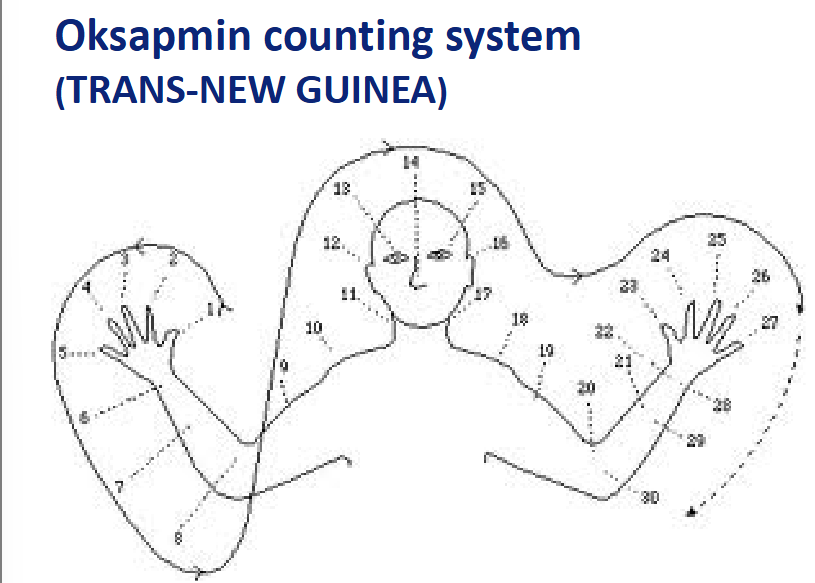
Conclusions De Vries (2014)
gender-specific counting systems: some Papuan languages: penis, testicles (Yupna) and breasts (Alamblak) had numeral meanings and men and women accordingly have separate numeral systems
▪ closed systems: typologically very rare
▪ possible but unconfirmed upward extensions of closed systems: multiple rounds??
▪ universals: use of body parts in numeral formation found on all continents but this concerns mostly hand-and-feet systems
▪ diversity: part of New Guinea took the unique turn up the arm after the fingers and not the jump to the hand and fingers of the other arm
Split-S
Instransitive Verbs
S (in control) marked like A
S= A NP
5a
active verb ( S in control of the action)
Ex: Ingo-i
— enter-1s.NOM
S (not in control) marked like O
S= ONP
So
static verb (S not in cotrol of the action)
Ex: bala-mi
— weep-1s.ABS
Fluid - S system
S is marked like A or O dependeing on the agentivity of S on that particular sentence
Only applies to intransitive
case marking vs verbal agreement
slip vs slide
Ex. Txo maixdra kkxitra
ABS-we to.ground fell
Ex: Atxo aizdrax kxtra
NOM-we to.ground fell
Greenberg: Amerind
Greenberg used “mass cpmparison”, which followed a not well described, and not replicable methodology. His conclusionswere also based on scanty (and sometimes faulty) data
The (South) American paradox
How is it possinle that the Americans, the last continent to be inhabited by humans, displays such a great amount of genealogical diversity
Three answers (undecided):
• The peopling of the continent must have happened longer ago than we think
• The initial groups must have already contained a significant amount of diversity
• Diversification goes faster when peopling new, pristine land with low population numbers
Nominal Incorporation
The embedding of a nominal lexeme in a verb stem
The most common type of nominal incorporation is the one in which the incorporated noun funtions as the object of the verb
Sometimes this results in a valency reduction
babysit:
I babysit
She babysits
we have babysat
Polysynthetic Languages
languages with a very high morpheme-per.word ratio:
often many afficed and nominal incorporation
Language families of Mesoamerica
Mayan
- Oto-Mangue
- Mixe-Zoque
- Totonacan
- Uto-Aztecan
- Chibchan
Languages famillies of North America
Algic
Iroquoian
Muskogean
Siouan
Uto-Aztecan
Salishan
Eskimo-Aleut
Mayan
Mesoamerica as a linguistic area Sprachbund
Not many shared features but very clear ones
relational nouns to express spatial and other relations
base 20 (vigesimal) counting system
never V-final
no switch reference
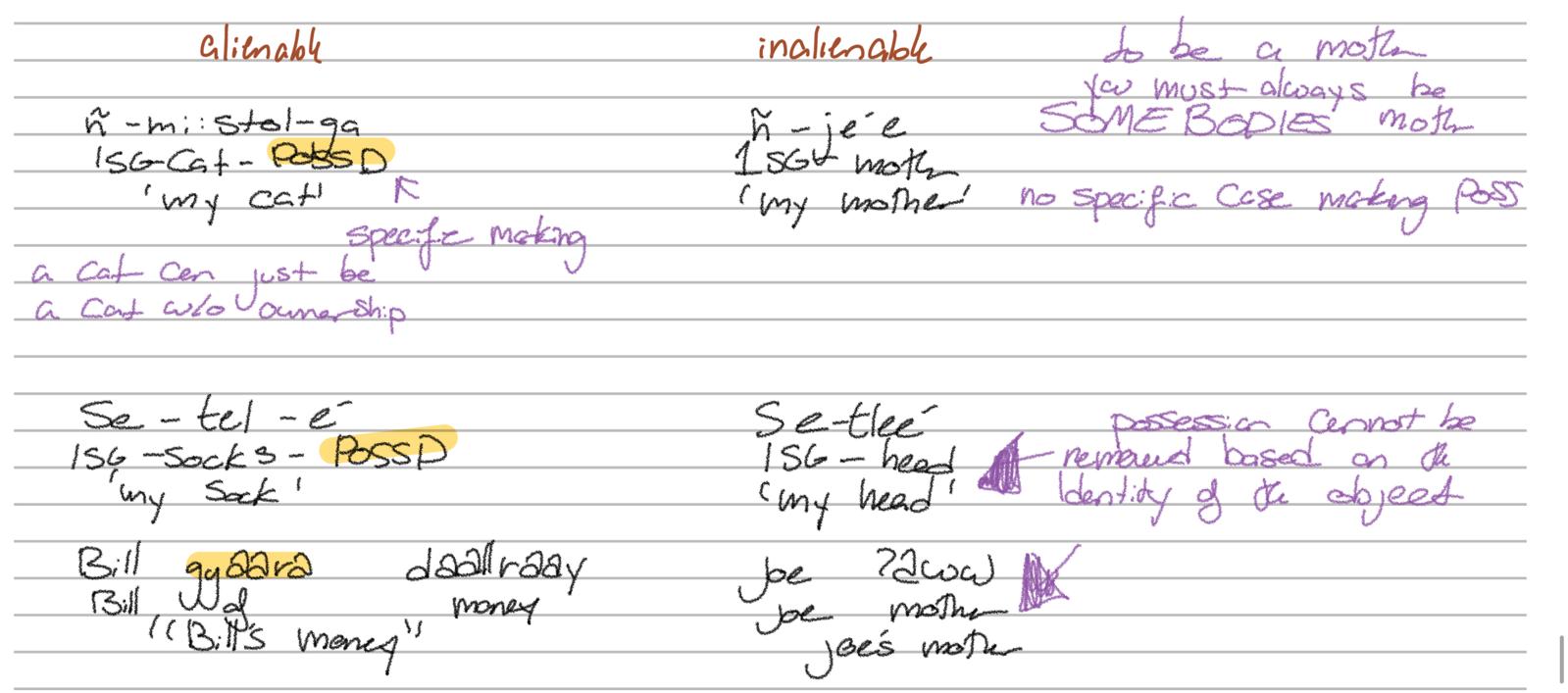
Recurring ( and typologically unusual) structure to express nominal possession
Alienable vs. inalienable possession
Obligatory vs. non-obligatory possession
Language families of South America
Aymara
Quechuan
Arawaken
Cariban
Tupian(-Guaraní)
Tukanoan
Pano-Takanan
Evidentuality (Direct and indirect)
Direct
Genitive
S has direct acces to information
Visual
S has visual access to information
Non-Visual
S has non-visual access to information
Indirect
Gennitive
no direct access to infp
Inferental
the power of deduction
Assumed
S reasoned info w/ common knowledge
Reportive
S was told the info
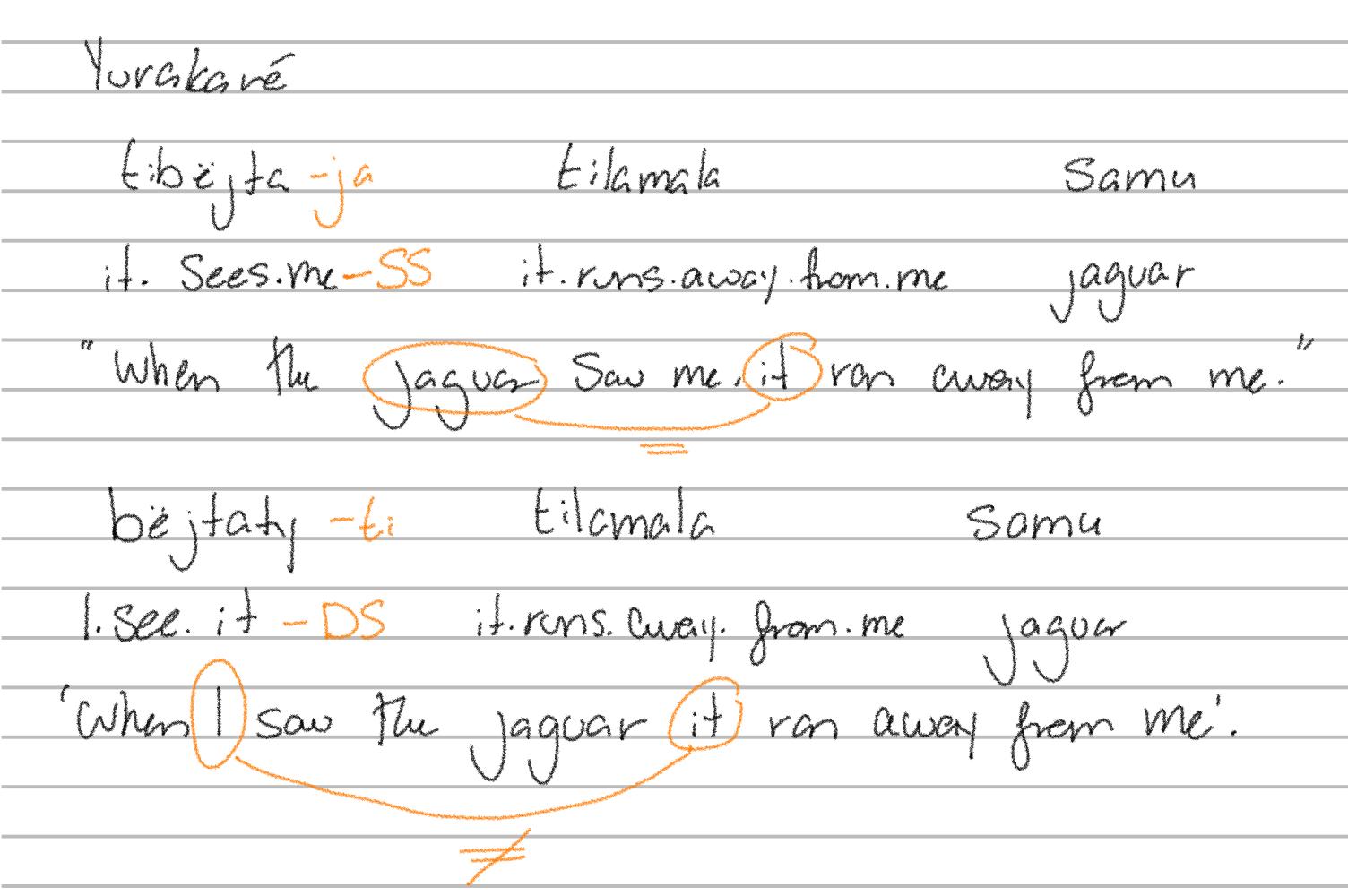
Switch refrence
Classifiers
Nominal categories of bouns or refrenced of a noun, highlights the properties or aspect og the refrence
Noun
Saw CLF:man John CLF:animal snake
Verb
dog 1sg-CLF:domestic.animal-have
Numeral
pencile two-CLF:long.thin
Genitive
CLF:transport-1sg-POS boat
Multilocus
classiferiers can apper equaly with any host (noun, verb, numerl, adj, etc.)
Agglutinative
Every morpheme was its own meaning
Fusional
More than one meaning shoved into one morpheme
Polysynthetic
A whole sentence of meaning into one word
its a scale
Isolating/Analytic
Every word is one morpheme and has one meaning
Argument
Subject and Object