Bio Unit 2 Concept 2: P.L.
 Call Kai
 Learn
Learn Practice Test
 Spaced Repetition
 Match
Match Flashcards
1/17

Earn XP
Description and Tags
A set of vocabulary flashcards covering key topics in homeostasis, feedback mechanisms, cell membrane transport, and solution tonicity.
Name | Mastery | Learn | Test | Matching | Spaced | Call with Kai | Chat |
|---|
No analytics yet
Send a link to your students to track their progress
18 Terms

Static Equilibrium
A state in which there is absolutely no change happening within a system, and everything is at a complete standstill.
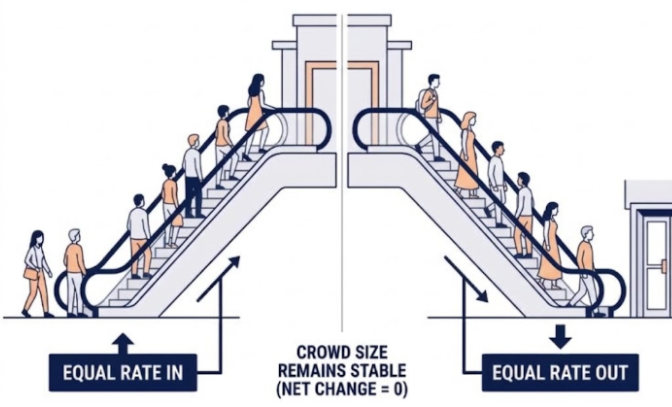
Dynamic Equilibrium
A state in which changes are constantly occurring, but the overall system stays within a balanced, stable range.
Homeostasis
A state of dynamic equilibrium in which an organism constantly adjusts internal conditions to keep them within a narrow, healthy target range.
Stimulus
Any change in the internal or external environment (such as a drop in outside temperature) that is detected by receptors to trigger a response.
Negative Feedback Loop
A control mechanism where the body responds to a stimulus by reversing or counteracting the change to bring conditions back to a normal set point (e.g., thermoregulation, blood sugar regulation).
Positive Feedback Loop
A control mechanism where the body responds to a stimulus by amplifying or increasing the change, pushing the system further away from its starting state until a specific biological event is completed (e.g., childbirth, blood clotting).
Cell Membrane
A selectively permeable structure that acts as a gatekeeper, tightly controlling which molecules enter and leave the cell to maintain homeostasis.

Passive Transport
A category of cellular transport that does not require cellular energy (ATP) and moves substances 'down' their concentration gradient from high to low concentration.

Active Transport
A category of cellular transport that requires cellular energy (ATP) to push substances 'against' their concentration gradient from low to high concentration.
Simple Diffusion
A type of passive transport in which small, nonpolar molecules slip directly through the lipid bilayer (e.g., Oxygen, Carbon dioxide).
Facilitated Diffusion
A type of passive transport in which larger or charged molecules pass through specific protein channels (e.g., Glucose, Sodium ions).
Osmosis
A type of passive transport defined as the specific diffusion of water molecules across the cell membrane through aquaporins.
Protein Pumps
A type of active transport in which transport proteins use ATP to actively pump specific molecules across the membrane (e.g., Sodium-Potassium pump).
Endocytosis
A type of active transport where the cell membrane folds inward to engulf large materials via a vesicle (e.g., White blood cells engulfing bacteria).
Exocytosis
A type of active transport where a vesicle fuses with the cell membrane to force large materials out of the cell (e.g., Releasing hormones).

Hypotonic Solution
A solution with a lower solute concentration outside the cell, causing water to rush into the cell so that it swells and bursts (lyse).

Isotonic Solution
A solution with an equal solute concentration relative to the inside of the cell, where water moves in and out at an equal rate and cell size remains normal.

Hypertonic Solution
A solution with a higher solute concentration outside the cell, causing water to rush out of the cell so that it shrinks and shrivels (crenate).