simple liquid dosage forms
 Call Kai
 Learn
 Practice Test
 Spaced Repetition
 Match
 Flashcards
 Knowt Play
1/39

There's no tags or description
Looks like no tags are added yet.
40 Terms
what is simple (monophasic) liquid dosage forms?
homogenous (single-phase) preparations where the active drug is completely dissolved in a liquid vehicle. commonly used for oral administration, as well as topical and specialized uses.
what is complex (multiphasic) liquid dosage forms?
pharmaceutical preparations containing two or more immiscible (unmixable) phases, where one phase is dispersed throughout the other.
unlike single-phase solutions, multiphasic liquids contain insoluble active ingredients
require special stabilizing agents to ensure the active ingredients are evenly distributed, at least temporarily, before administration
why would we use a non-aq solution?
if the drug has poor solubility in water
what are suspensions, emulsions, and colloids?
suspensions - particles in water
emulsions - oil in water
colloids - extremely fine particles in liquid (hard to see)
how are monophasic solutions used? (dosage forms-wise)
topical, oral, ophthalmic, nasal…
how to classify monophasic solutions based on composition?
syrups
elixirs
tinctures
spirits
aromatic waters
liniments
collodions
how to classify monophasic solutions based on pharmaceutical solution?
contains drug in a suitable solvent, and
other inactive ingredients: color, flavors, sweeteners, stability enhancers etc.
what are the advantages of solutions?
compliance: improved compliance (by using flavors and colors)
bioavailability problems: less bioavailability problems compared to many other dosage forms
for liquid solutions, the drug is already dissolved, so it is immediately available for absorption
no bioavailability issues (because there’s no dissolution/solubility issues of the drug)
enteral feeding is provided in solution or emulsion forms
ease of administration: ease to those individuals with difficulty swallowing solid dosage forms (pediatric or geriatric)
dose variation: homogenous, therefore, less dose variation compared to suspension and emulsion
what are the disadvantages of solutions?
stability: least stable of all dosage forms
this is because the drug is dissolved in water
chemical reactions in liquid are highly favorable, so there is a higher chance of things dissolving quickly, making it more prone to reactions like hydrolysis in water
microbial growth: usually preservation is required
solubility: some drugs are poorly soluble
light sensitivity: often need to protect solutions from light
transport & storage: bulky, not easily transportable
manufacturing: often more expensive to manufacture
when trying to formulate solutions, what do you need?
drug
solvent
preservative
sweetener
thickener, viscosity enhancer
color
flavor
antioxidant
buffer
surface active agent (surfactants)
tonicity modifier (NaCl)
what is tonicity modifier?
hypertonic solution: the cell shrinks
hypotonic solution: the cell swells
isotonic solution: normal cell
to choose the right things for a solution, what needs to be in a solvent?
dissolution power
must have the right power to dissolve the drug
clarity
when drug dissolves, it must be clear (no cloudiness)
toxicity
compatibility
compatible to physiological fluids in the body
palatability, color, odor
price
not too expensive
what are the solvents for pharmaceutical use?
water is commonly used
auxiliary solvents (alcohol, glycerin and propylene glycol) may be added
if the drug is not dissolvable in water, we use the auxiliary solvents to help dissolve the drug in water
organic solvents - acetone, isopropyl alcohol - too toxic for internal use
useful as solvents in drug development research
fixed oils - corn oil, cotton seed oil, peanut oil and sesame oil may be used as solvents, particularly for oleaginous injections
fixed oils mean that when kept at room temp, it will not evaporate
what is the list of solvents for pharmaceutical use?
purified water, USP
alcohol, USP
diluted alcohol, NF
rubbing alcohol
isopropyl rubbing alcohol
glycerin, USP
what are oral solutions?
drug is completely dissolved, usually contains sweetener, colorant, flavoring agent and preservative
for extemporaneous preparation, information about solubility and stability is crucial
sometimes supplied as dry mixtures to be reconstituted, for ingredients with poor aq stability e.g. Penicillin V Potassium for Oral Solution

what are syrups?
concentrated aq preparations of sugar or sugar substitute with or without medicinal agent and flavoring agent
sweet and viscous
because sugar amount is so high, it makes it thick
sucrose (60-80% maximum 85%)
flavored or unflavored (cherry, cocoa, simple)
used to mask taste and odor of liquid medications
what are the components of syrups?
purified water, USP
sugar (sucrose) or substitutes
substitutes: sorbitol and glycerin, dextrose, non-glycogenic methylcellulose (sweetness + viscosity)
antimicrobial preservative if needed:
benzoic acid 0.1-0.2%
methylparaben, propylparaben 0.1%
flavorants: FDA approved, volatile oil, vanillin
colorant: FDA approved, water soluble, non-reactive, stable
simple syrup NF syrup (stable, crystallization resistant) - sucrose 85% w/v
no preservative required because the sugar amount is so high (85% sugar), whatever water was added was all taken up by sugar
what is the role of alcohol in antihistamine syrup?
a) co-solvent
b) solvent
c) sweetening agent
d) preservative
a
antihistamine syrup
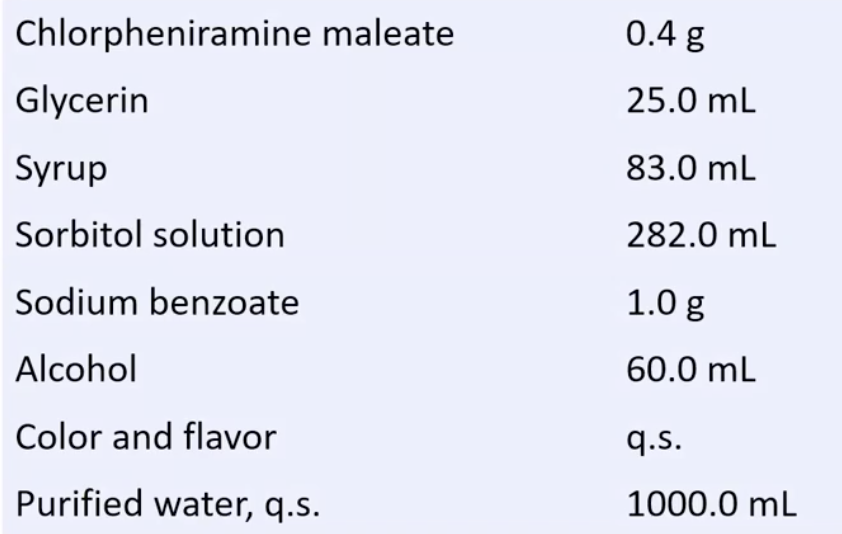
what is sodium benzoate considered?
preservative
antihistamine syrup
what is syrup considered?
sweetening agent
antihistamine soup
what is sorbitol solution considered?
sweetening agent
antihistamine syrup
what is purified water considered?
solvent
antihistamine soup
what is chlorpheniramine maleate considered?
drug
antihistamine syrup
what is glycerin considered?
sweetening agent and does viscosity
antihistamine syrup
what is alcohol considered?
co-solvent
what are the methods of syrup preparation?
solution with the aid of heat
agitation without heat
addition of sucrose to a prepared medicated liquid
percolation of medication or sucrose
solution with the aid of heat
quickest method of preparation
used for thermostable medications and non-volatile materials
sugar is generally added to the purified water, and heat is applied until the sugar is dissolved
then, other heat-stable components are added to the hot syrup
the mixture is allowed to cool, and its volume is adjusted to the proper level by the addition of purified water
what are the disadvantages with the method: solution with the aid of heat?
sugar inversion: excessive heat should not be used to avoid inversion
i.e. hydrolysis of sugar - a disaccharide, into monosaccharides, dextrose (glucose) and fructose (levulose)
darkening in color due to invert sugar (caramelization)
makes it more sweet (but degraded sugar)
sugar decomposed due to excessive heat is susceptible to microbial growth
syrups cannot be sterilized by autoclaving
autoclaving is putting the material inside a stainless steel tank filled with water and heat the water with a high pressure so that the steam generated will kill the microbes
agitation without heat
place all ingredients in a vessel larger than the volume of the syrup
then agitate the mixture
at room temp
time consuming but maximum stability
medication dissolved in the minimum solvent then incorporated into the syrup
minimum solvent can be alcohol or glycerin and then add dissolved drug into syrup
disadvantage: slower than the solution with the aid of heat
addition of sucrose to a prepared medicated liquid
used if medicated syrup is to be prepared from a tincture or a fluid extract
a) sucrose is added to the above medicated liquids and syrup is prepared
b) if the medicated liquid is soluble in water, then it is directly added to simple syrup or flavored syrup
caution: alcohol-soluble components may precipitate upon addition to syrup
heat is not required, hence produces a stable syrup
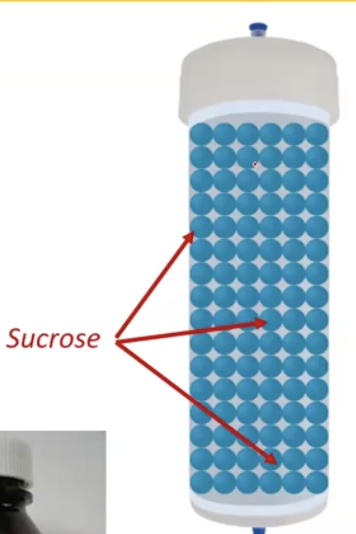
percolation
purified water or the source of the medicinal component is passed slowly (percolated) through a bed of crystalline sucrose
sucrose dissolves and forms a medicated syrup
cylindrical or semi-cylindrical shaped percolator and course granular sucrose are used
this cylinder is packed with sugar crystals
the medicinal extract will flow through the cylinder. when it flows through the cylinder, it percolates into sugars. when it is percolating, some of the sugars will dissolve. once dissolved to bottom, you can add it back in and keep percolating until it dissolves into syrup.
useful method when the source of the drug is a naturally occurring or plant based product
ex: Ipecac Syrup
which of the following is the quickest method for preparation of a syrup involving a heat labile drug?
a) solution with the aid of heat
b) agitation without heat
c) addition of sucrose to a prepared medicated liquid
d) percolation
c
heat labile means that the drug cannot handle heat so option a is out
it says quickest
mixing without heat will take a long time
percolation involves having to make the “syrup” go through it multiple times to get it right
what does it mean for a drug to be heat labile?
it means that the drug is not stable to heat
what are elixirs?
clear, sweetened, hydroalcoholic solutions intended for oral use and are usually flavored to enhance their palatability
elixirs are less sweet and less viscous than syrups
main ingredients
alcohol, water, co-solvents (glycerin)
flavoring/sweetening agent (sucrose, glycerin, saccharin, volatile oils)
elixirs are less efficient in masking taste than syrups
elixirs have higher stability and are easier to prepare
what are the methods to prepare elixirs?
simple agitation
prepare alcoholic solution and aq solution then add aq to alcoholic
filter if needed
elixirs have two components: water and alcohol.
what is in elixirs?
their alcohol content ranges from 5% - 40%
self-preserving if alcohol content is more than 12%
no preservatives needed to be added is more than 12%
alcohol content is a disadvantage for children

small quantities of water and keep stirring into alcohol, and keep doing the process until appropriate amount has been added
incorrect: adding alcohol into water. the components of alcohol is exposed to water and if it happens to be insoluble in water, the alcohol will precipitate out
what are the types of elixirs?
medicated
for therapeutic benefit
nonmedicated
flavored vehicle for extemporaneous compounding or dilution of medicated elixirs
what are medicated elixirs?
usually has one therapeutic agent for the ease of dose adjustment
antihistaminic elixirs
basic amine prepared as salt (by interaction with acid)
pH is critical when diluted
ex: diphenhydramine HCl elixir
what are tinctures?
alcoholic or hydroalcholic solutions prepared from vegetable materials or chemicals
contain alcohol 15 - 80% (for dissolution and preservation)
tinctures differ by:
methods of preservation (percolation vs maceration)
maceration: the process of softening, breaking down, or extracting components from a substance by soaking it in a liquid
strength of drug
very high
alcoholic content
mixing with other solutions may cause precipitation
high alcoholic content - should be stopped and protected from high temps
may contain light sensitive materials - should be stored in light resistant containers
which of the following dosage forms typically does not require a preservative?
a) tinctures
b) elixirs
c) syrups
d) oral solutions
a
if over 12% alcoholic content, no need for preservative
is 15-80%