applied animal health and welfare 1- part 2 digestive system- liver, gall bladder, pancreas , small and large intestine and rectum
 Call Kai
 Learn
 Practice Test
 Spaced Repetition
 Match
 Flashcards
 Knowt Play
1/74

There's no tags or description
Looks like no tags are added yet.
75 Terms
what is the function of small intestines?
enzymatic digestion of food
absorption of nutrient
Start absorption
How many sections do small intestine have?(divided into)
duodenum, ileum and jejunum
how many layers does small intestine have and their names?
4 layers
mucosa , submucosa, muscle layers and serosa

what feature suspends the small intestine?
suspended in the mesentery ( fan shaped part of peritoneum
what is the peritoneum ?
a serous membrane forming the lining of abdominal cavity
what is does the mesentery consist of?
consists of continuous layer of peritoneum which covers part of small and large intestine and attaches to stomach
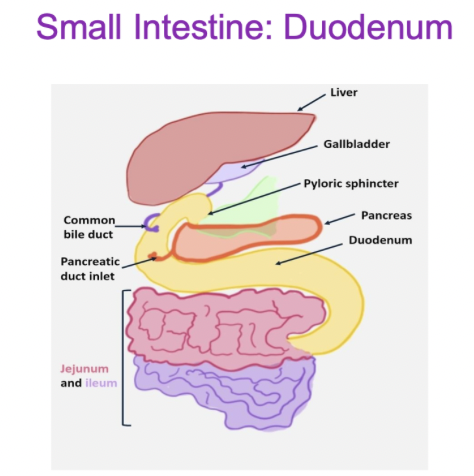
what is the duodenum
first part of the small intestine leading to the jejunum
takes form of u shaped loop with the pancreas lying within it
what is duodenum involved in?
and what does it receive?
involved in chemical digestion
receive chyme and gastric juices from stomach via pyloric sphincter
receives bile from liver and gallbladder via a common bile duct
receives enzymes and bicarbonate from pancreas via pancreatic duct
what is the jejunum ?size?
part of small intestine between duodenum and ileum
jejunum is a narrow tube which has no fixed position
longest section - fills ventral abdomen in lops
advantage of jejunum being longest section?
maximises surface area for absorption
what process does it happen here (majority) in jejunum?
majority of chemical digestion and absorption
What features does jejunum that facilitate a great range of motion?
long mesentery
what is the ileum ?
what is the texture?
also a narrow mobile tube and determines where jejunum ends and ileum begins
more muscular and firmer than duodenum and jejunum
what does the ileum join?
joins large intestine and ileocaecal and then into caecum which is part of large intestine
what molecules does the ileum absorbed ?
vitamins A, B12 , D , E and K
FATS
CHOLESTEROL
BILE SALTS
what are peyer’s patches?
clusters of lymphoid tissue which initiate immune responses
what is the intestinal mucosa made up of?
finger-like projections called villi
what is the mucous membrane
an epithelial tissue which secretes mucus and lines many body cavities including gut and respiratory passages
what is the function/advantage of villi
increase surface membrane of surface area of lume of intestine for absorption of products of digestion
what there is between each singular villus
Exists crypts of Langerhans - which contain undifferentiated cells which can go on to replace the tips of villi after they are worn down
what does each villus have?
extensive network of capillaries
what does the villus allow to travel?
transport nutrient from GI tract to liver

what does the lymph lacteals transport ?
transport lipids as they are too large to travel in blood capillaries
what are function of the liver ?
For metabolism of carbohydrates, protein and fat absorbed from the intestines
- excess glucose is stored as glycogen and is released when the body needs extra energy
what does the liver regulate?
regulates glucose
what does the liver produces ?
produces bile to digest fat
produces , breakdown and regulation of hormones
produces enzymes and proteins (eg. albumin )
what does the liver store ?
storage of iron and vitamins A,D,E and K
WHAT DOES THE LIVER REMOVE?
Removal of old red blood cells from circulation
what does the liver breakdown?
breakdown of drugs and toxins
where does the liver sits/locate?
liver sits on cranial abdomen on right side - close to diaphragm
which ligament attaches liver to diaphragm?
Falciform
what types of ribs protect the river?
protected by caudal ribs
what type of artery and vein does the liver receive blood from?
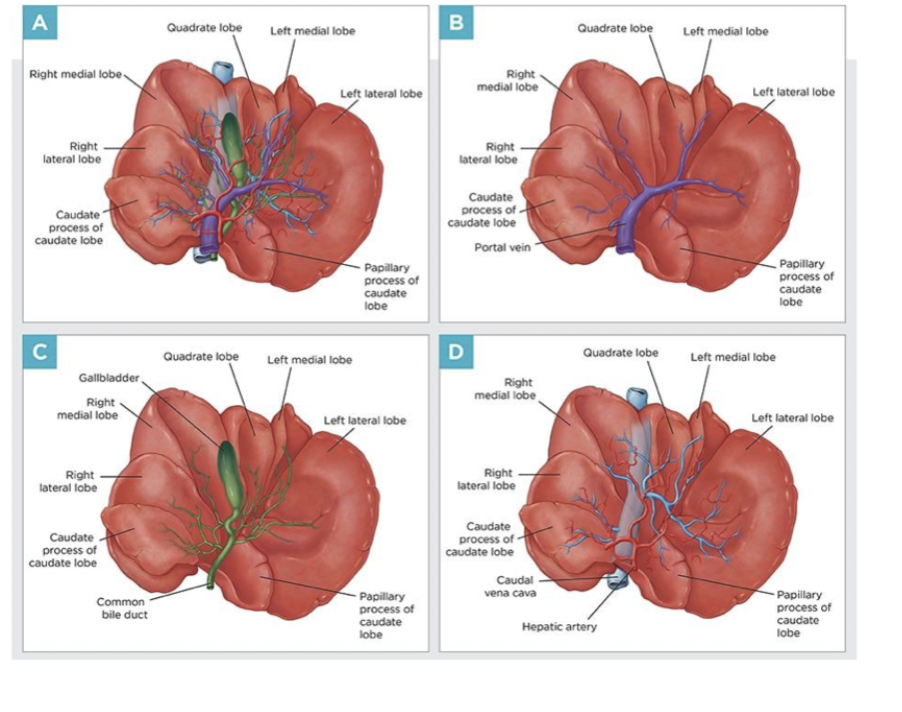
receives blood from hepatic portal vein and hepatic artery
what is the hepatic artery and brings what type of blood?
supplies oxygenated blood to liver
what is hepatic portal vein ?
blood vessel that carries blood from the gastrointestinal tract/digestive tract ,gallbladder , pancreas and spleen to liver

how many globes does liver have? name?
left , right , medial and quadrate
what type of cells are responsible for functions of liver?
hepatocytes (liver cells)

how are hepatocytes arrange?
arranged into lobules - hexagonal shape
what does the hepatic portal system do?
nutrients absorbed across capillaries in lining of intestines
how do nutrients/blood travel to liver?
Travel via the hepatic portal vein
what does also the portal vein transport?
transports blood from stomach , spleen , caudal oesophagus and rectum.

what does the gallbladder store?
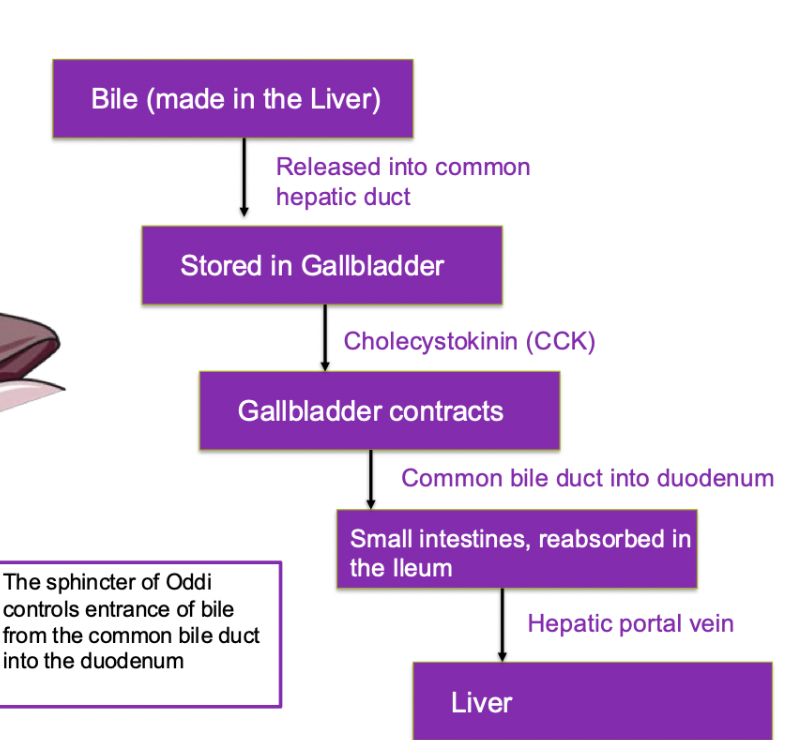
store and concentrate bile

where is the bile made?
made in liver
Where is the bile released into so is store in gallbladder?
released into common hepatic duct
what two functions have bile salts ?
Emulsification of fats prior to their digestion in the small intestine
Neutralisation of the acid chymecreated and released within the stomach
what hormone that is produced in small intestine trigger an action to happen to gallbladder?
CHOLECYSTOKININ (CKK) TRUGGERS
GALLBLADDER AND PANCREAS TO CONTRACT
What happens after when gallbladder contracts due to CKK hormone
bile travels through the common bile duct into the duodenum (small intestine) and then is reabsorbed in the ileum
what two functions do pancreas have?
endocrine(hormones ) and exocrine (bicarbonate and enzymes) function
where does the endocrine functions take place?
in pancreatic islets (islets of langerhans
what does it mean endocrine
The endocrine part secretes hormones from the Islets of Langerhans into the bloodstream.
Beta (ß) cells secrete insulin, which controls the levels of glucose in the blood.
Alpha (α) cells secrete glucagon, which promotes conversion of glycogen stored in the liver to glucose.
Delta (δ) cells secrete somatostatin, which inhibits the secretion of insulin and glucagon, thereby preventing swings in blood glucose levels, from very high to very low levels.

exocrine what does it mean ?
The exocrine part of the pancreas secretes digestive enzymes and bicarbonate into the lumen of the duodenum via the pancreatic duct.
what does the islets of langerhans secrete?
insulin
glucagon
somatostatin
what does insulin do in blood?
Lower blood glucose levels
what does glucagon do increases o decrease?
increase blood glucose levels

what does the somatostatin do to insulin and glucagon
inhibits excessive insulin and glucagon secretions
where does the chyme and gastric juices enter and via ?
enter duodenum via pyloric sphincter of stomach
what does the duodenum receives and what hormone is involved?
receives bile, digestive enzymes and bicarbonate from liver and pancreas. Stimulated by hormone CKK cholecystokinin
where does the bulk of chemical digestion and absorption occur?
occur in jejunum and ileum
where does the undigested food and fluids enter
large intestine
what is the caecum ?
Straight away after ileum
what consist of large intestine
Caecum(appendix in humans), colon , rectum and anus
what is the role of caecum ?
plays a role in hindgut fermentation in herbivores
which valve separates small and large intestine?
ileocaecal colic valve - limit reflux of colonic contents into ileum

what 3 part does colon have?
ascending , transverse and descending
what happens in rectum
movement of faeces out of
what is the function of colon
main function of the colon is the absorption of water, vitamins and electrolytes. Absorption of the water ensures that the body does not lose excessive water and that the faeces are firm and formed.
movement of faece is controlled by ?
anal sphincter
where are anal glands located?
located on either side of the sphincter are anal glands
what does sacs release
sacs release fluid for scent marking
what does the sac do each time an animal defecate
should empty each time the animal defecate due to pressure exerted when faeces passes through sphincter

what are anal sacs?
to coat the faeces with the secretion as they pass through the anal ring. This is seen in wild dogs and domestic dogs possess the same glands. The coated faeces are used as territorial markers, and can be identified by other dogs, as coming from a particular dog.
scending colon, which runs
cranially from the caudal abdomen towards the diaphragm
Transverse colon, which runs across the abdomen
Descending colon, which runs towards the caudal abdomen
Transverse colon,
Which runs across the abdomen
Descending colon,
which runs towards the caudal abdomen