Professor Messor 3.3 | High Availability & High Availability
 Call Kai
 Learn
 Practice Test
 Spaced Repetition
 Match
 Flashcards
 Knowt Play
1/12

There's no tags or description
Looks like no tags are added yet.
13 Terms
Fault tolerance
Involves implementing strategies to keep systems operational even if a failure occurs. Ensures continuity. Can be achieved at different levels.
For single devices, this may involve using RAID, redundant power supplies, or redundant network interface cards (NICs). For multiple devices, server farms with load balancing distribute traffic so that if one server fails, the load balancer directs traffic to functioning servers. Additionally, multiple network paths can be implemented to maintain internet connectivity even if one provider fails.
Although can be costly and complex.
Redundancy and fault tolerance
Go hand in hand as essential strategies for maintaining network and system availability. Redundancy ensures that backup resources are available if primary components fail, providing fault tolerance.
Examples include redundant hardware components like power supplies and multiple devices for load balancing. RAID (Redundant Array of Independent Disks) allows the system to keep running even if a drive fails by distributing data across multiple disks. Uninterruptible power supplies (UPS) help prepare for power outages by keeping systems running during disconnections.
Clustering, which is a logical grouping of servers, allows for continued uptime if one server fails. Load balancing shares the service load across multiple components; if one server goes down, the others take over the additional load to maintain service availability.
Building fault tolerant networks
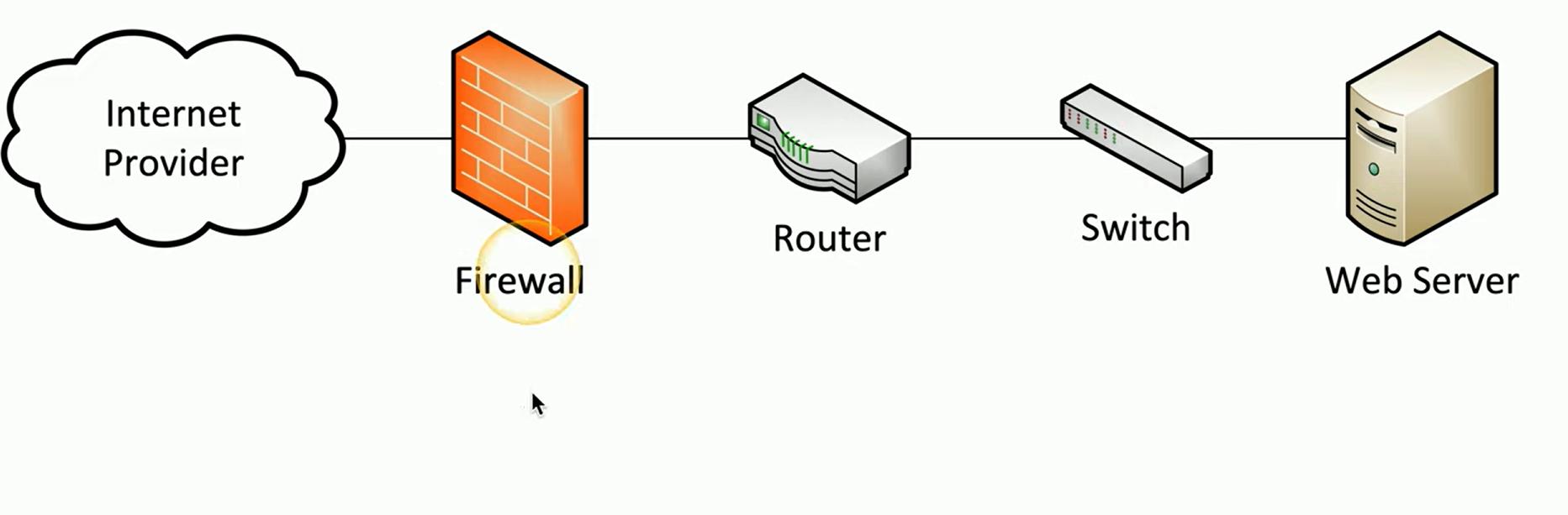
For example, in a typical network setup, you may have a single internet connection linked to a firewall, which then connects to a router, a switch, and finally a web server. This setup, while functional, is vulnerable: if any component, like the firewall, fails, the entire network could become inaccessible. However, with fault tolerance, you would have a spare firewall ready to activate. If the primary firewall goes down, the backup unit can be immediately powered on and replace the failed one, restoring network functionality.
High availability
This concept focuses on a nearly instantaneous switch from a failed system to a functioning one. While redundancy is an important aspect of fault tolerance, it doesn’t always guarantee immediate availability—some redundant systems might need to be manually activated. Is designed to be "always on" and typically includes multiple components working together seamlessly to avoid single points of failure. Achieving high availability often comes with increased costs, as it may require upgraded power supplies, premium server components, and additional contingency plans.
Load Balancing example
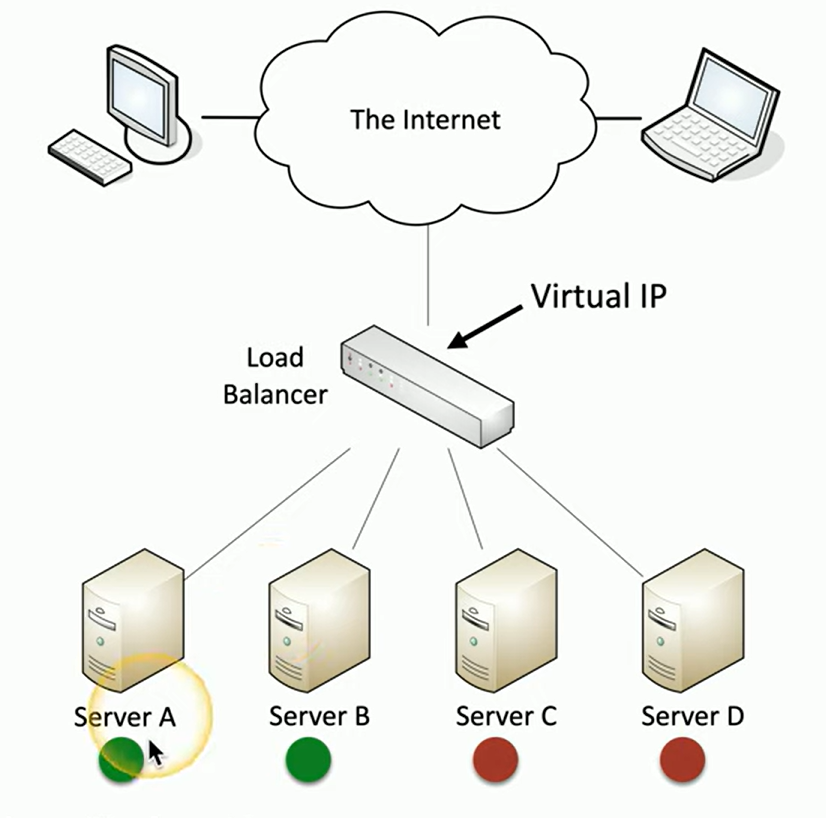
The load balancer assigns a Virtual IP (VIP) that users connect to as a single access point. Internally, the load balancer manages multiple servers, each with its own unique IP address, which is hidden from the users. If one of the servers, like Server A, fails, the load balancer detects the failure and automatically reroutes traffic to another available server, such as Server C.
Building HA networks:
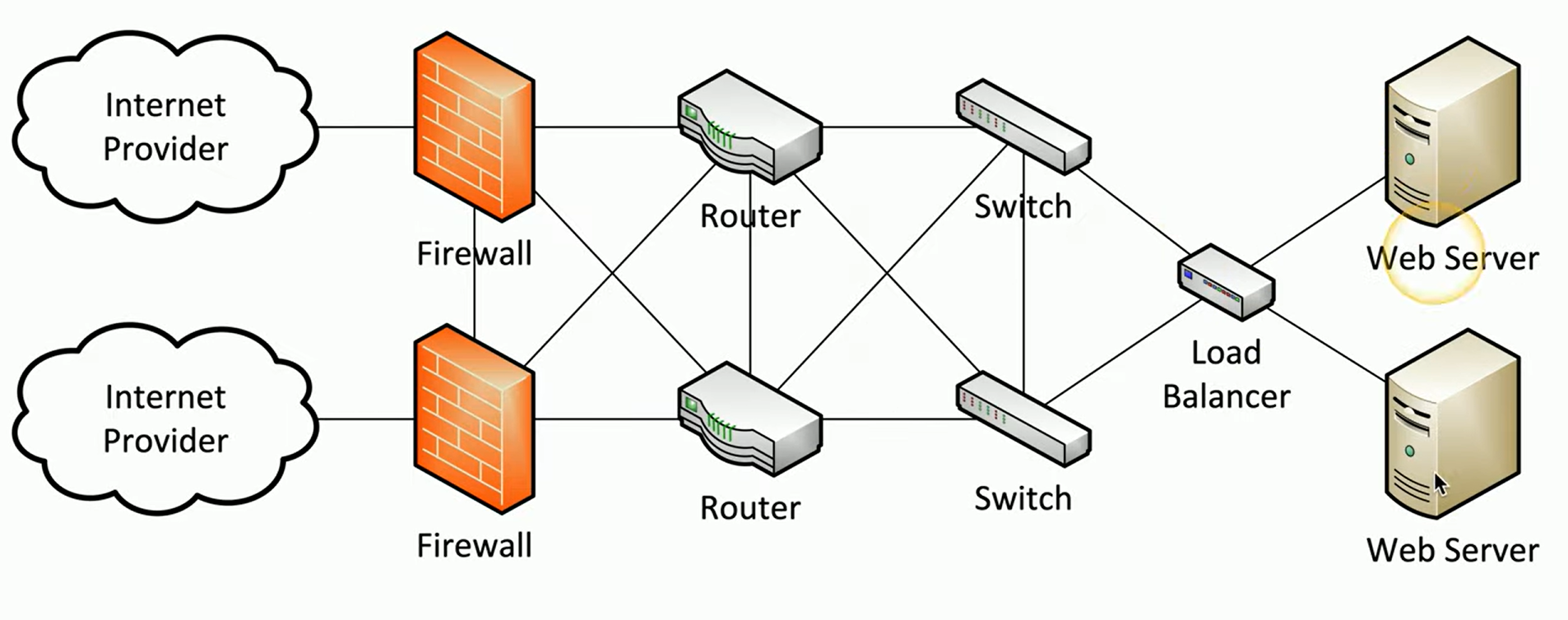
We take the original design and enhance it for redundancy and resilience. This might involve adding an additional firewall so both operate simultaneously, allowing one to take over if the other fails. Similarly, a secondary router can provide backup if the primary router goes down. The same redundancy can be applied to switches and back-end web servers. Including a load balancer helps distribute traffic across multiple web servers, ensuring high availability.
To further increase reliability, an additional internet provider can be integrated, offering a backup if the primary connection fails. While these improvements significantly boost the network’s resilience, they also introduce more complexity and higher costs in both setup and maintenance.
NIC teaming
Is a technique that combines multiple network cards into a single logical network device called a bond. This is done to improve performance, redundancy, and load balancing. Is also known as Load Balancing FailOver (LBFO)
Is particularly valuable in virtual environments, where multiple NICs are bound together to appear as a single, larger interface. This setup integrates seamlessly with switches, with the NICs communicating through multicast.
Are constantly exchanging "hello" messages to monitor connectivity. If one NIC fails to respond, it’s taken offline while the remaining NICs continue to operate, maintaining seamless network performance.
Port aggregation
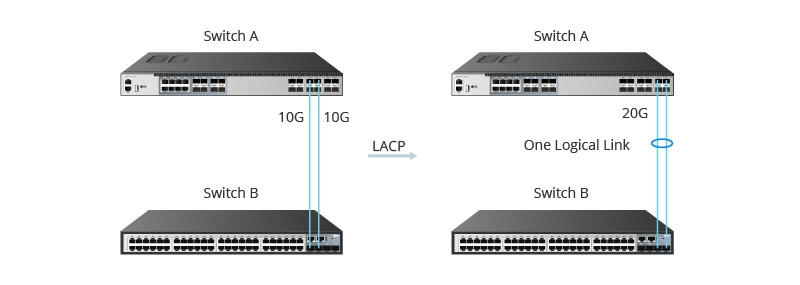
Allows you to combine multiple links to a single switch, effectively increasing bandwidth and providing redundancy. For example, instead of relying on a single 1-gigabit connection, you can have two separate links, giving you 2 gigabits of combined bandwidth. This setup also ensures high availability—if one connection fails or a cable is disconnected, the other connection remains active, maintaining network connectivity.
This concept can be further enhanced with multipathing, where multiple network interface cards (NICs) in a server connect to separate switches. In this setup, even if one switch fails, the other switch and NIC can still provide uninterrupted service
Uninterruptible Power Supply
Provides short-term backup power during blackouts, brownouts, and surges. There are different types.
Offline/Standby: The most affordable and commonly used in homes. It switches to battery power during an outage.
Line-Interactive: Offers extra voltage during low voltage events and additional surge protection against high voltage levels.
On-Line/Double-Conversion Continuously powers devices from the inverter, ensuring no delay in switching during an outage.
Important features include auto shutdown, battery capacity, outlet options, and phone line suppression.
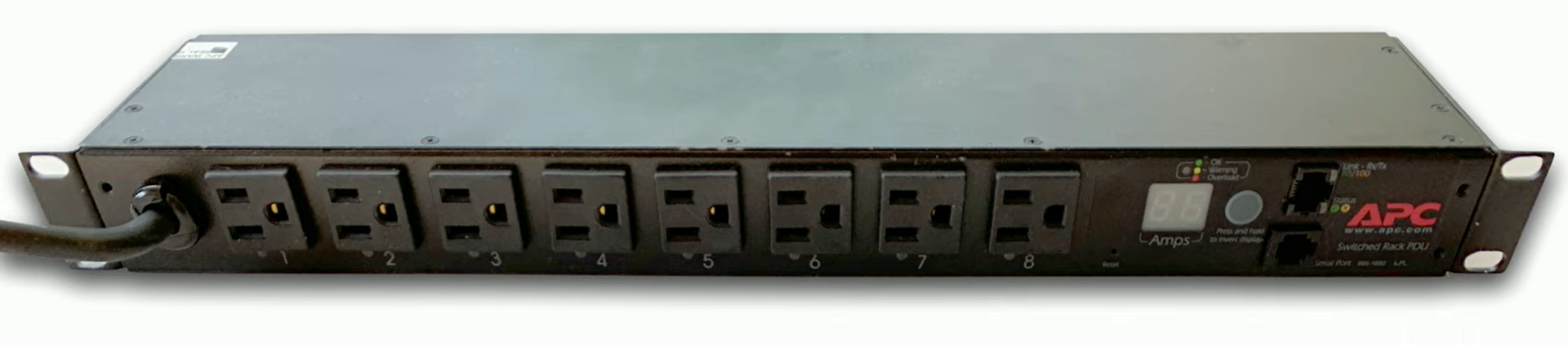
Power Distribution Units (PDUs)
Provide multiple power outlets, typically used in server racks. They often include features for monitoring and control, allowing administrators to manage power capacity and remotely enable or disable individual outlets.
Generators
Provide long-term power backup and can power an entire building during extended outages. They require fuel storage and may take a few minutes to become operational. During this startup period, a battery UPS can supply power, but the UPS battery will eventually deplete. Some power outlets may be specifically marked as generator-powered.
HVAC (Heating, Ventilation, and Air Conditioning)
Involves thermodynamics, fluid mechanics, and heat transfer and is a complex science that requires professional design. It must be integrated with the fire system to prevent additional oxygen from being supplied to a fire when an alarm is triggered. Could be managed by a PC that makes cooling and heating decisions for both workspaces and data centers.
Critical to maintain equipment performance and ensure a comfortable environment for people.
Fire suppression
Water is generally avoided as a suppression method because it can damage sensitive equipment. Instead, inert gases and chemical agents are commonly used. These agents are typically stored in tanks within the equipment room and are dispersed through nozzles throughout the data center. Integrated with the HVAC system to manage air flow and temperature. Warning signs are prominently displayed, and the system monitors for hazards like carbon monoxide. Air handlers can be enabled or disabled