immunology test 2
 Call Kai
 Learn
 Practice Test
 Spaced Repetition
 Match
 Flashcards
 Knowt Play
1/60

There's no tags or description
Looks like no tags are added yet.
61 Terms
antibody
secreted form of b-cell receptor
where antibodies circulate
in the blood and lymph
type of surface where antibodies always cover
mucosal surfaces
what kinds of antigens do antibodies recognize the most
protein and carbohydrate antigens
what do antibodies do to antigens once they bind
disable/neutralize them
make them susceptible to destruction
each antibody only binds to…
one antigen or a few structurally related antigens
antibody diversity
antibodies can recognize large amounts of antigens
antibody repetoire
the total number of distinct antibodies that the body can produce
approximately 10^9 in humans
approximate antibody repetoire in humans
10^9
agammaglobulinemia
inability to make antibodies
very susceptible to infection
what is responsible for XLA
BTK, a kinase
it’s present on the x-chromosome
immunoglobulin
antibodies and b-cell antigen receptors
naive mature b cells
mature b cells that have not made contact with an antigen yet
have membrane-bound immunoglobulin

1) mature naive b cell
2) b cell encounters antigen
3) stimulated b cells produce antibody secreting plasma cells
plasma cell
effector b lymphocytes that produce and secrete antibodies
clonal selection
when stimulated b cells produce plasma cells that produce identical antibodies specific towards the antigen bound
heavy chain
50kda
form the stem of antibody and part of the arms on the y
light chain
two identical 25kda polypeptide chain
antibody composition
2 heavy chains
2 light chains
carbohydrate attached to heavy chain
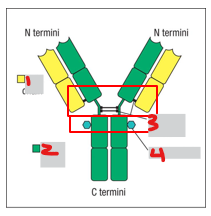
1) light chain
2) heavy chain
3) disulfide bond
4) carbohydrate
variable regions of antibody
amino terminal regions of heavy chain
amino terminal of light chain
constant regions of antibody
everything that is not the amino terminus of heavy/light chain
what are variable regions
domains with sequence diversity
determine antigen specificity
what are constant regions
domains with limited variation
provide structural stability and effector function
what is the antigen binding site
region within variable region that directly binds to antigen
determines specificity
flexible hinge region
bendable part of antibody
connects antigen binding arms to stem
lets arm adjust angles to bind to antigens in many different positions
the 5 different antibody isotopes
IgG
IgM
IgD
IgA
IgE
the light chain isotopes
kappa
lambda

IgG

IgM
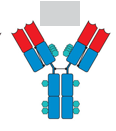
IgD
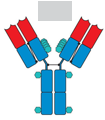
IgA
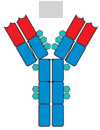
IgE
the differences in antibody isotopes
the length of constant heavy chain regions
locations of disulfide bonds linking chains
presence of hinge region
distribution of carb groups
antibody isotopes that have a hinge region
IgG, IgA, IgD
antibody isotopes that don’t have hinge region
IgM, IgE
what form do all immunoglobulin classes exist as when membrane bound
monomers
what form is IgD when secreted
monomer
what form is IgE when secreted
monomer
what form is IgG when secreted
monomer
which immunoglobulins are only monomers when secreted
IgG, IgE, IgD
what form is IgA when secreted
monomer and dimer
what form is IgM when secreted
pentamer
how many new b cells do bone marrow stem cells produce daily
more than 60 billion
what do b cells go through before becoming a plasma cell or a memory b cell
defined developmental stages
what do the first three stages of b cell development do
development of b cells in bone marrow
first elimination based on b cell receptor formation
what do the last three phases of b cell development correspond with
development of b cells in secondary lymphoid tissue
and the binding and attacking pathogen
list the phases of b cell development in order
1) repetoire assembly
2) negative selection
3) positive selection
4) searching for infection
5) finding infection
6) attacking infection
what happens in repetoire assembly and what number stage is it
first stage
b cell receptors are developed and clonally expressed in the bone marrow
what happens in negative selection and what number phase is it
second phase
b cell receptors that bind to human body are altered/eliminated/inactivated
what happens during positive selection and what number phase is it
third phase
some immature b cells are sent to secondary lymphoid tissues to mature
what happens during search of infection and what number phase is it
fourth phase
mature b cells circulate in blood, lymph, and secondary lymphoid tissue
what happens during finding infection and what number phase is it
fifth phase
antigens from pathogens activate b cells, stimulating clonal expansion
what happens during attacking infection and what number phase is it
sixth phase
b cells differentiate into plasma cells and memory b cells
where do b cells go after leaving bone marrow
lymph nodes, spleen, peyer’s patches, and other secondary lymphoid tissue in the respiratory tract
b cell receptor formation is dependent on what type of cell
stromal
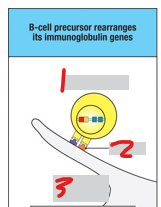
1 b cell precursor
2 cytokines
3 stromal cell

1 hematopoetic stem cell
2 lymphoid progenitor
3 b cell precursor
4 pro-b cell
pro b cell
earliest cell in b cell lineage
have some capacity of cell renewal
divide to produce more pro b cells
go onto further stages for differentiation
how can the exact phase of b cell development be identified
the different combinations of cd proteins on surface