QOD's & Map
0.0(0)Studied by 3 people
 Note
NoteBuild your Mastery score
 Multiple Choice & FRQ
 Call Kai
Card Sorting
1/45

Earn XP
Description and Tags
Last updated 3:34 PM on 9/16/22
Name | Mastery | Learn | Test | Matching | Spaced | Call with Kai | Chat |
|---|
No analytics yet
Send a link to your students to track their progress
46 Terms
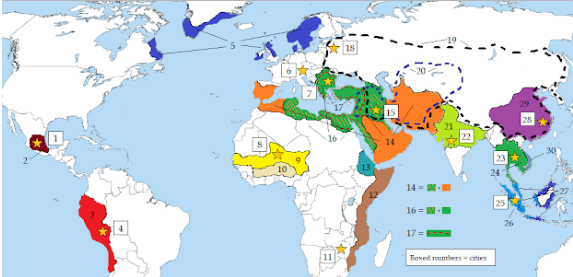
1
New cards
1
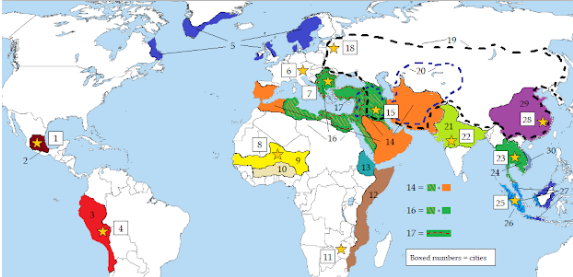
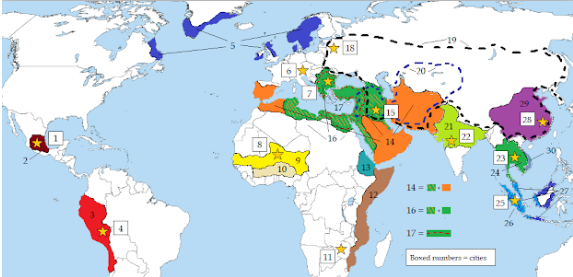
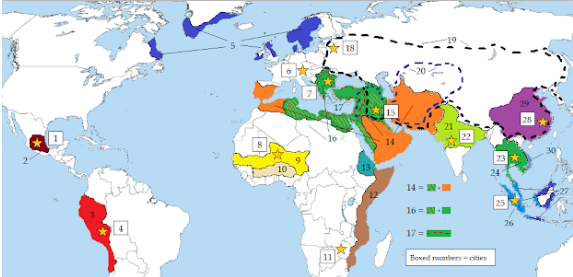
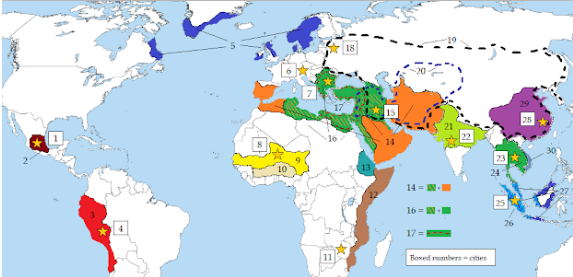
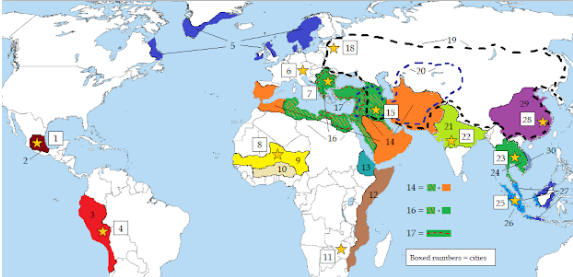
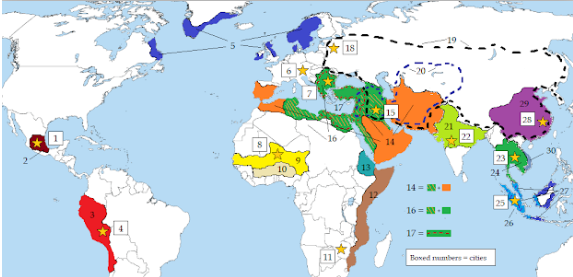
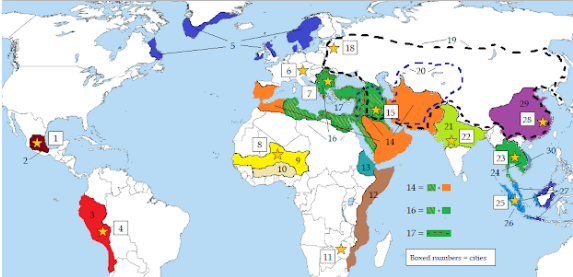
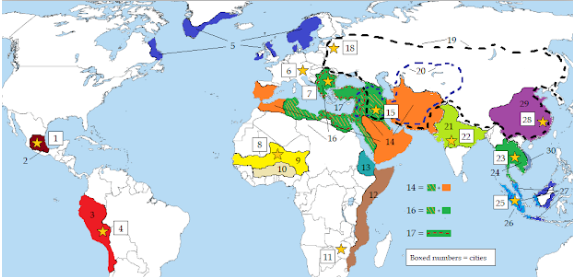
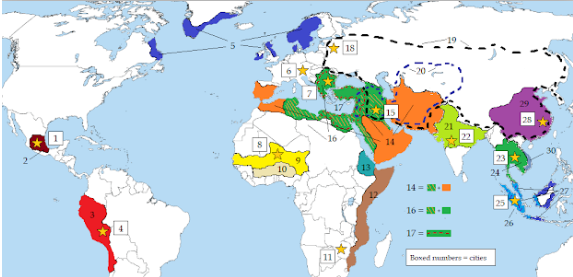
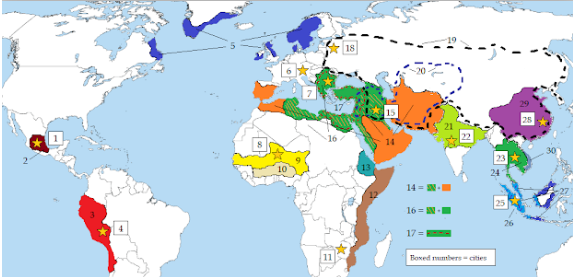
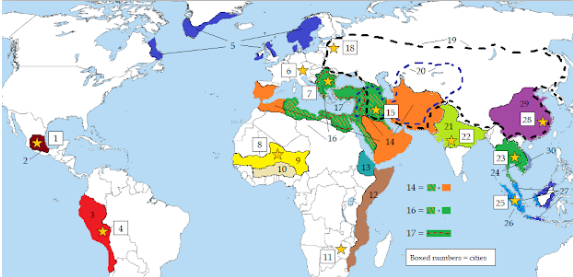
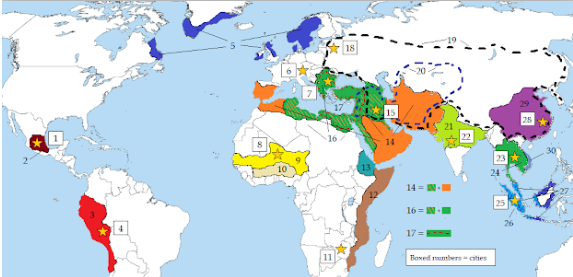
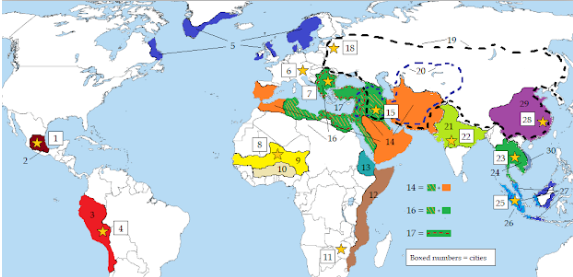
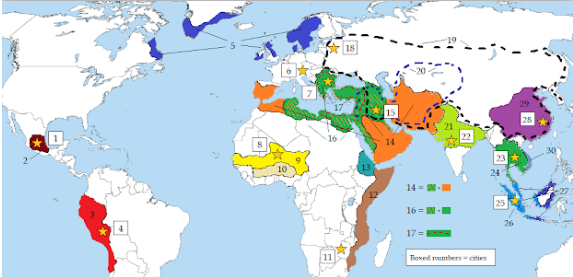
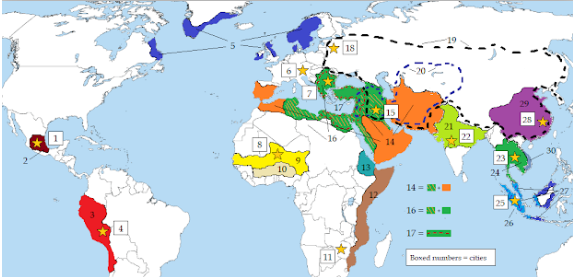
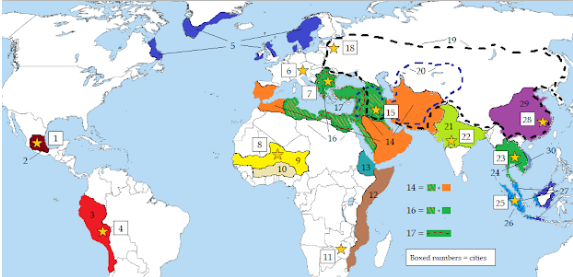
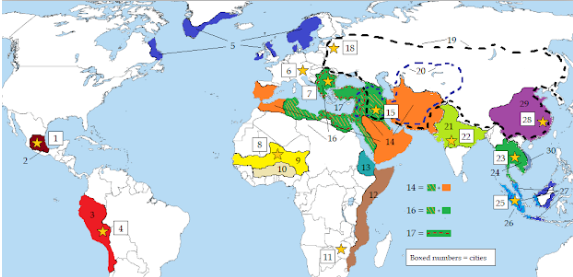
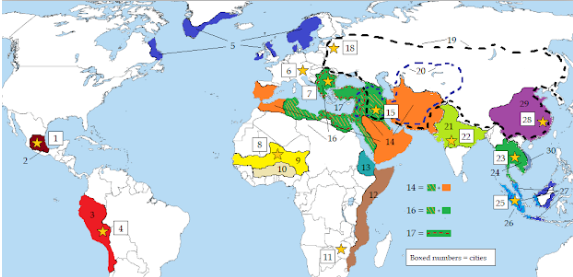
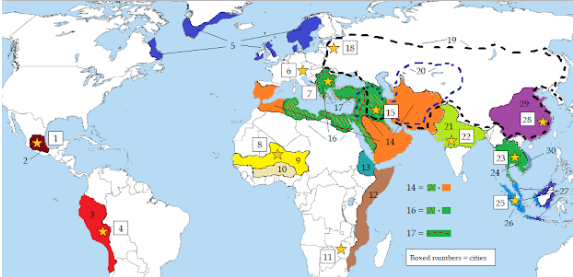
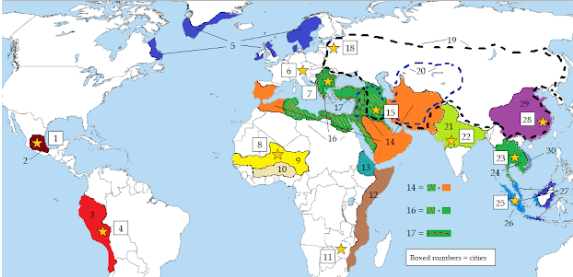
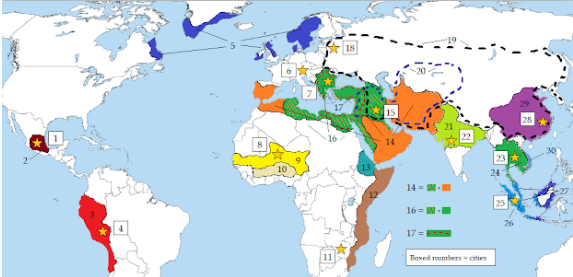
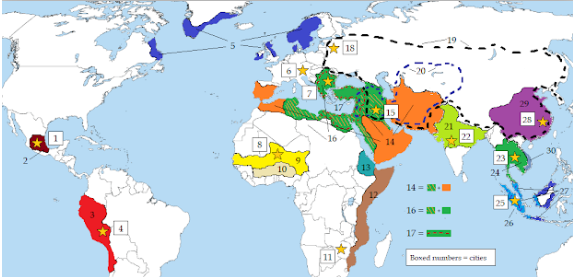
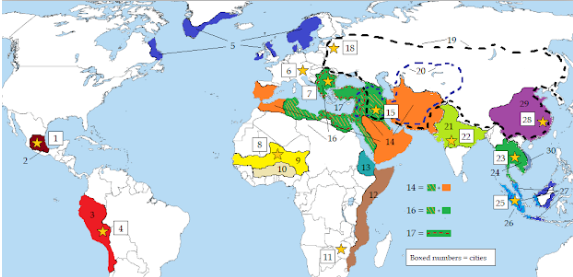
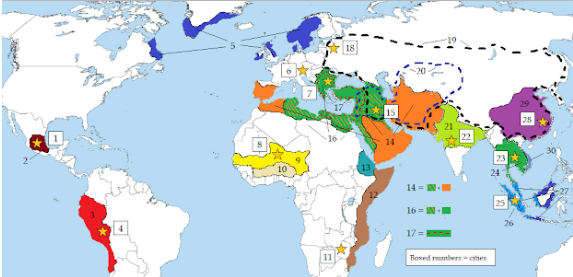
Tenochtitlan
2
New cards
2
Aztec Empire
3
New cards
3
Inca Empire
4
New cards
4
Cuzco
5
New cards
5
Vikings
6
New cards
6
Venice
7
New cards
7
Constantinople
8
New cards
8
Timbuktu
9
New cards
9
Mali
10
New cards
10
Hausa Kingdoms
11
New cards
11
Great Zimbabwe
12
New cards
12
Swahili City-States
13
New cards
13
Solomonic Dynasty
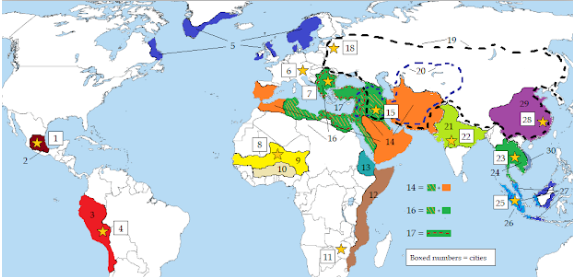
14
New cards
14
Arab caliphates
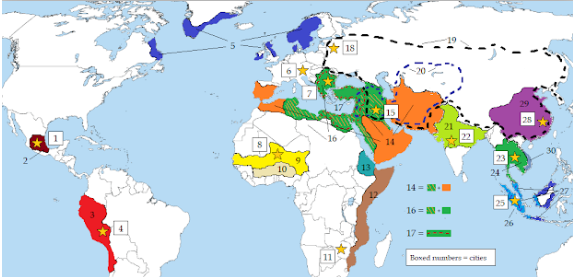
15
New cards
15
Bagdad
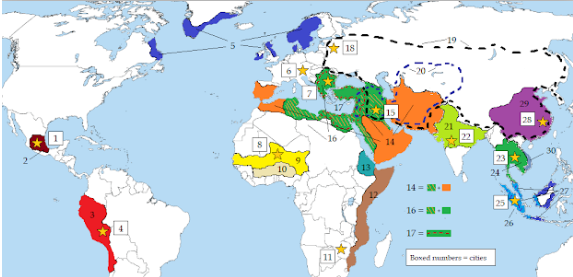
16
New cards
16
Ottoman Empire
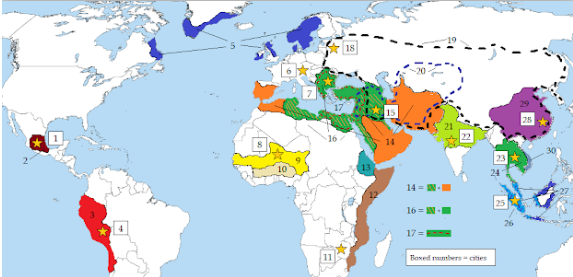
17
New cards
17
Byzantine Empire
18
New cards
18
Novgorod
19
New cards
19
Mongol Empire
20
New cards
20
Seljuk Empire
21
New cards
21
Delhi Sultanate
22
New cards
22
Calicut
23
New cards
23
Angkor Wat
24
New cards
24
Khmer Empire
25
New cards
25
Melaka
26
New cards
26
Srivijaya Empire
27
New cards
27
Majapahit Empire
28
New cards
28
hangzhou
29
New cards
29
Song Dynasty
30
New cards
30
Champa Empire?
31
New cards
people who suffer or die for their beliefs.
Martyr
32
New cards
more people joined the christen church because the members were willing to die for it
What was the impact of martyrs?
33
New cards
a sovereign state whose citizens or subjects are relatively homogeneous in factors such as language or common descent.
Nation-state
34
New cards
England, France, Spain, Russia
What are 4 examples of nation states in Europe during the Middle Ages?
35
New cards
series of religious wars initiated, supported, and sometimes directed by the Roman Catholic Church(Pope) in the medieval period.
Crusades
36
New cards
to secure control of the holy sites considered sacred by both groups (christens and Muslims)
What was the purpose of the crusades? Explain.
37
New cards
founder of the Mongol Empire. He ruled from 1206-1227. The Mongol Empire expanded to cover most of Eurasia, thanks to advanced technology and a massive horde of nomadic warriors.
Genghis Khan
38
New cards
Horses. They go 300 miles a day and they had rest points every 30 miles to regain energy
What is 1 technological advantage the Mongols used to conquer such an enormous territory? Explain.
39
New cards
a civil and religious leader who determined state and religious policy under the Islamic State.
Caliph
40
New cards
Abbasids- invented algebra and charged tax to anyone who was not a Muslim
Under which caliphate was the Golden Age of Islam? Explain & provide contextualization.
41
New cards
The Muslim pilgrimmage to Mecca in the last month of the year, and that all Muslims are expected to make at least once during their lifetime.
Hajj
42
New cards
Mosque
Missionaries work by the christens
Missionaries work by the christens
What is the name of a place of Muslim worship AND what is 1 piece of evidence that demonstrates the spread of religious ideas in the period 1200-1450CE?
43
New cards
The Majority of Muslims worldwide belong to this branch of Islam.
Sunni
44
New cards
Dhimmi Status- Dhimmi were exempt from certain duties assigned specifically to Muslims if they paid the poll tax (jizya) but were otherwise equal under the laws of property, contract, and obligation.
Code of Justinian- Justinian made it a point to add new laws to protect the people and even gave rights to women and slaves (two groups that had not had many rights in the past). Over time, four books of law were created, and together they made up the Justinian Code. The Justinian Code was the foundation for the Byzantine legal system for nearly nine hundred years. It served its purpose and brought law and order back to the Byzantines.The body of laws created by Justinian and his experts, in one form or another, lasted for almost a millennium until the fall of the Byzantine Empire in 1453 CE. New Byzantine laws were, of course, added to it over the centuries as each emperor issued their own edicts and society evolved.
Code of Justinian- Justinian made it a point to add new laws to protect the people and even gave rights to women and slaves (two groups that had not had many rights in the past). Over time, four books of law were created, and together they made up the Justinian Code. The Justinian Code was the foundation for the Byzantine legal system for nearly nine hundred years. It served its purpose and brought law and order back to the Byzantines.The body of laws created by Justinian and his experts, in one form or another, lasted for almost a millennium until the fall of the Byzantine Empire in 1453 CE. New Byzantine laws were, of course, added to it over the centuries as each emperor issued their own edicts and society evolved.
What is 1 piece of evidence that demonstrates a legal innovation in the period 1200-1450CE?
45
New cards
believed to start in China in 1334, being the most fatal pandemic recorded in human history.
Black Death
46
New cards
In the 1st outbreak, 2/3 of the population contracted the illness and died; in the next, 1/2 the population became ill; by the third outbreak, a 1/10 were affected and many survived; while by the 4th occurrence, only 1 in 20 people were sickened.
Did the Black Death have a high death rate?