Neurons and Intro to Electrical Signaling
 Call Kai
 Learn
Learn Practice Test
 Spaced Repetition
 Match
Match Flashcards
 Knowt Play
1/58

There's no tags or description
Looks like no tags are added yet.
Name | Mastery | Learn | Test | Matching | Spaced | Call with Kai | Chat |
|---|
No analytics yet
Send a link to your students to track their progress
59 Terms
size and scale (from largest to smallest)
cells
organelles
nucleus, mitochondria, etc/
viruses
proteins (macromolecules) - membrane proteins
molecules
amino acids, neurotransmitters, etc
ions
Na+, K+, Ca+2, Cl-

parts of a neuron
dendrites - receive signals
branched structures from the soma
each neuron has many
axon - transfers signal (to the next neuron)
one large extension from the cell body
the signal starts off as electrical within the neuron but becomes chemical when released at the synapse

pathway of signal in a neuron
electrical signal travels through the pre-synaptic neuron.
at the end of it, the signal changes to chemical with the vesicle releasing of a neurotransmitter (now we’re on the post-synaptic side).
the neurotransmitter activates the next neuron making the signal electrical

synapse
the space between the pre- and post-synaptic neurons
where vesicles release neurotransmitters, where a neuron communicates with its partner
can be between
neuron
axo-dendritic
axo-axonic
axo-somatic
glands (neuroglandular junction)
muscles (neuromuscular junction)
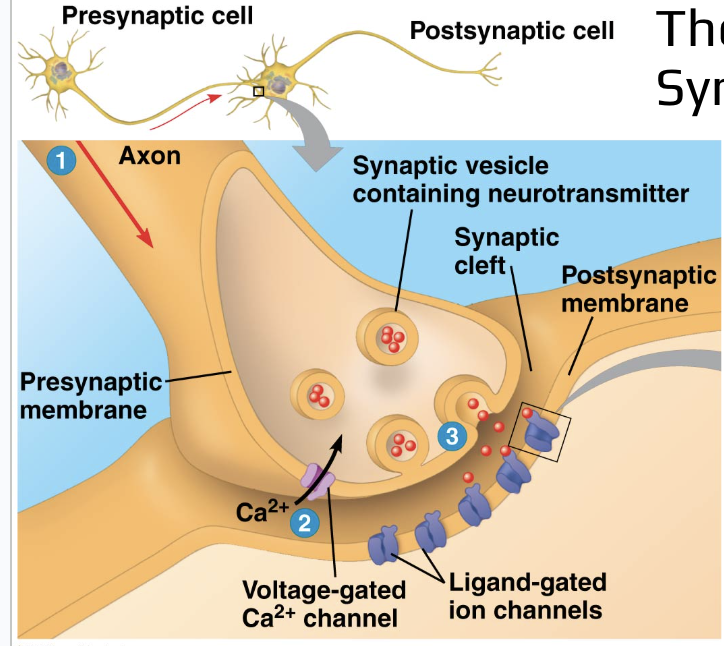
chemical signal
neurotransmitters are released at the synapse and bind to proteins on the post-synaptic cell
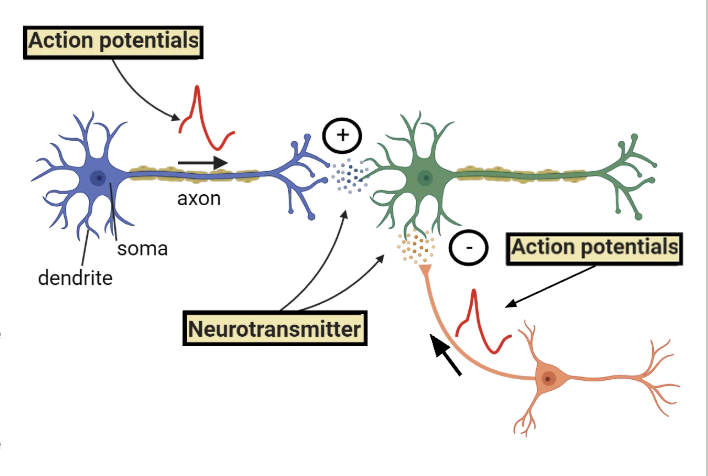
neurotransmitters can … or … action potentials in the recieving neuron
excite or inhibit

EPSP
excitatory post-synaptic potential
moves to the membrane potential CLOSER to threshold for triggering an AP
neurotransmitters that let Na+ enter chemically-gated channels helps with that
if they’re not sufficient to reach threshold, an AP will not occur

IPSP
inhibitory post-synaptic potential
moves to the membrane potential FURTHER from threshold for triggering an AP
neurotransmitters that move K+ out or let Cl- in
summation
EPSPs and IPSPs are integrated/totaled in the receiving cell
if these reach threshold (if there’s enough net (+) being inputted), an AP will fire
types:
temporal
spatial
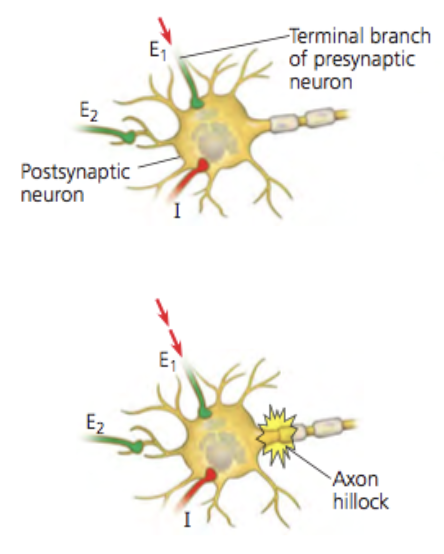
temporal summation
a single neuron sends multiple APs close together
ex. neuron receives multiple EPSPs from Neuron E1 at around the same time, triggering an AP

spatial summation
summation of EPSPs and IPSPs from multiple different neurons
ex. the neuron receives an EPSP from Neuron E1 AND E2 around the same time, triggering an AP
ex. the neuron receives an EPSP from Neuron E1 and an IPSP from Neuron I around the same time
the EPSP and IPSP cancel each other out. no AP is triggered

explain action potential
whether the signal is (+) or (-) depends on whether the cell itself is (+) or (-)
Na+ ions rush into the cell, increasing membrane potential
K+ ions rush out of the cell, decreasing membrane potential

action potential
spike in the membrane potential (voltage) that travels like a wave down the axon
membrane potential
the cell membrane does not allow large, polar, or charged (ions) particles across the membrane
if the inside and outside of the cell have different amounts of charged particles, then the cell has membrane potential
this difference in charge produces an electrical potential across the membrane, which is measured in volts

potential voltage
the difference in electrical charge between the outside and inside of the cell
inside of the cell has higher amounts of potassium (+), proteins, DNA, and other negatively charged objects (-)
outside of the cell has higher levels of sodium (+)
what does this mean?
according to diffusion, would Na+ want to move in or out of the cell?
the outside is defined as 0 mV, so the inside is -70 mV compared to the outside
Na+ would want to move in the cell because it’s (-) and follow the electrochemical gradient

resting membrane potential (RMP)
the membrane potential of a cell at rest
it’s not changing (no IPSPs, EPSPs, or AP) for a resting neuron
a neuron’s RMP is -70 mV
so by default it has more negative charges than positive charges
what happens to the neuron when membrane potential INCREASES
the neuron has either gained positive charges or lost negative charges
ex. sodium (Na+) is moving into the cell due to the electrochemical gradient
what happens to the neuron when membrane potential DECREASES
the neuron has either gained negative charges or lost positive charges
ex. potassium (K+) is moving out of the cell due to the electrochemical gradient
how do ions pass through the membrane?
ions cannot pass directly through the membrane, but only through protein channels (border checkpoints specific to the ion) when they’re open

what happens if protein channels remain open? how do cells delay this?
Na+ and K+ will continue to move in/out of the cell until a balance of concentration and electrical charge is achieved (equilibrium)
this means there will be no more electrochemical gradient, which means the neuron can’t send APs
this is why protein channels will only open for fractions of a second at a time, only letting tiny amounts of Na+ and K+ move in/out of the cell… but that still only makes equilibrium happen slower
how do cells specifically prevent concentration/electrical equilibrium
ion pumps use ATP to physically move ions against the concentration gradient (from areas of low concentration to high concentration)
needs ATP because you are putting in that physical effort of going against natural flow of particles
Na+/K+ pump move 3 Na+ out for every 2 K+ in
ensures the outside will be guaranteed more (+) to keep concentration gradient
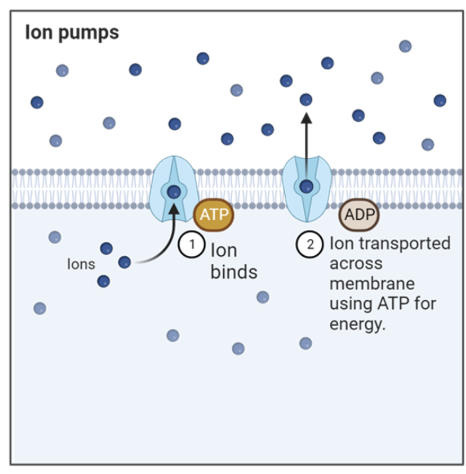
Na+/K+ pump steps
three Na+ bind inside the pump
2-3. ATP provides the energy to change the shape of the protein, moving Na+ outside the cell
K+ binds to the protein
5-6. protein opens inside the cell and K+ is released into the cell

protein ion channels
protein machines that allow specific ions to diffuse through
can be always open (leak channels) or opened by specific triggers
named based on the trigger and the ion allowed to through
“[trigger] gated [ion]”
types of triggers
ligand (specific molecule binds to the receptor which opens the gate, like a key)
temperature (capsaicin and mint), pressure, voltage, etc
the trigger will change the shape of the protein causing it to open
![<ul><li><p>protein machines that allow specific ions to diffuse through</p></li><li><p>can be always open (<strong>leak channels</strong>) or opened by specific triggers</p></li><li><p>named based on the trigger and the ion allowed to through</p><ul><li><p>“[trigger] gated [ion]”</p></li></ul></li><li><p>types of triggers</p><ul><li><p><strong>ligand</strong> (specific molecule binds to the receptor which opens the gate, like a key)</p></li><li><p><strong>temperature </strong>(capsaicin and mint)<strong>, pressure, voltage</strong>, etc</p></li></ul></li><li><p>the trigger will change the shape of the protein causing it to open</p></li></ul><p></p>](https://assets.knowt.com/user-attachments/c8c6d69c-47b6-43ce-bebe-4f9c75d9d7e1.png)
neuron
basic unit of the nervous system
take info in from the surroundings and respond to it
interconnected with billions of other neurons
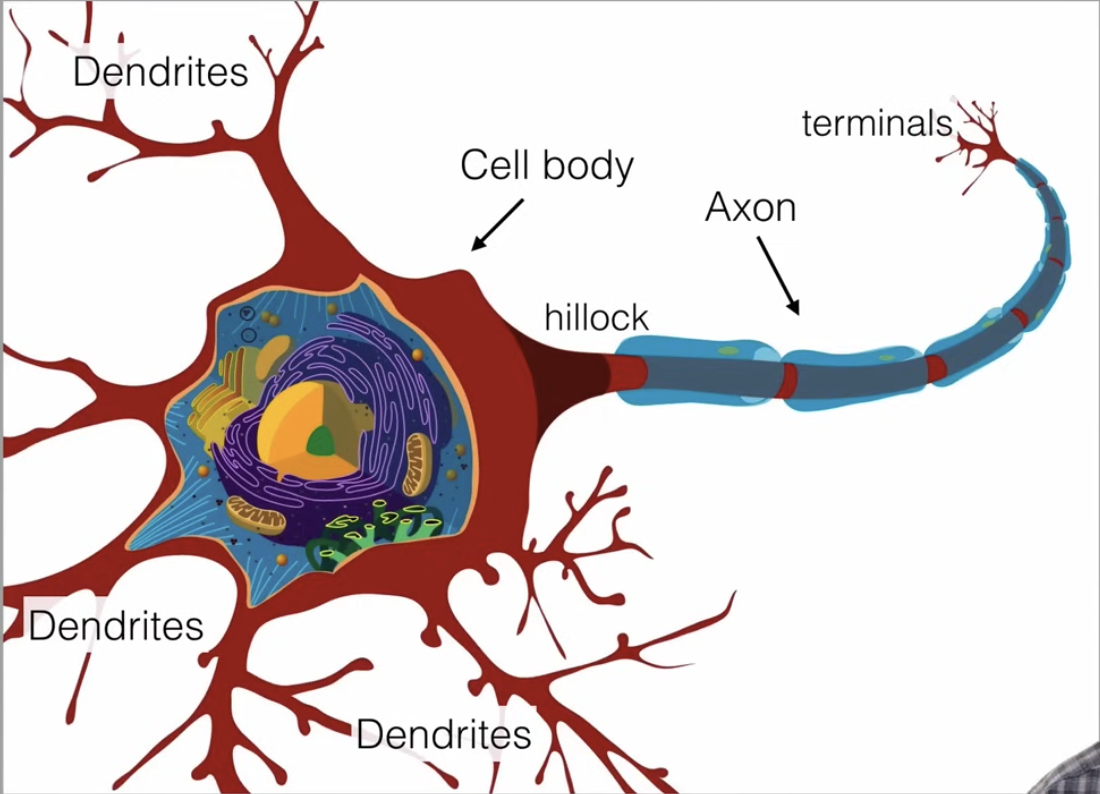
cell body/soma
the part of the cell with all other organelles (nucleus, golgi apparatus, etc)
metabolizes, takes in/uses energy, does normal cell funcitons

dendrites
extensions from the cell body
connected to other neurons and receive information in the form of neurotransmitters
have dendritic spines which store special synapses and important for learning/memory

axon
where information is transferred
begins at axon hillock and moves to terminals
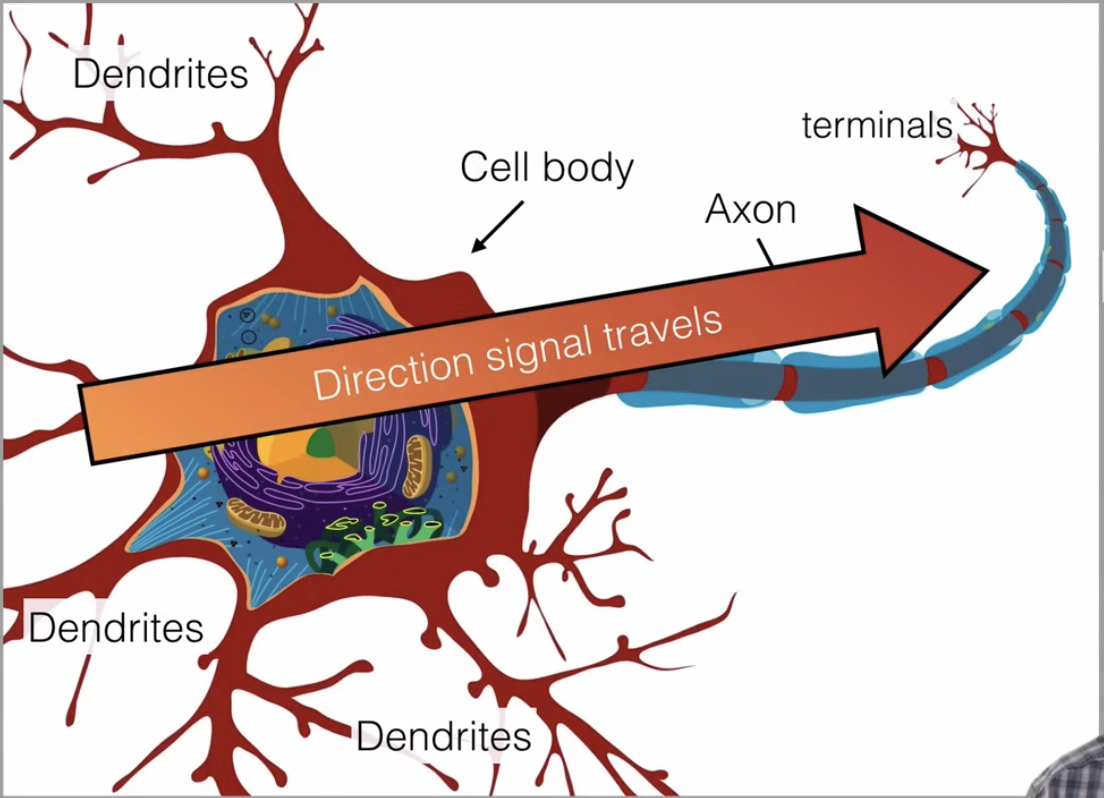
what is the direction of a signal in a neuron
dendrite, axon, terminals
myelin sheath
oligodendrocyte or schwann cell mylenating the axon if the signal needs to travel over a long distance
lets information travel faster
not in all neurons, esp in shorter distance

nerve fiber
an axon wrapped around a myelin sheath

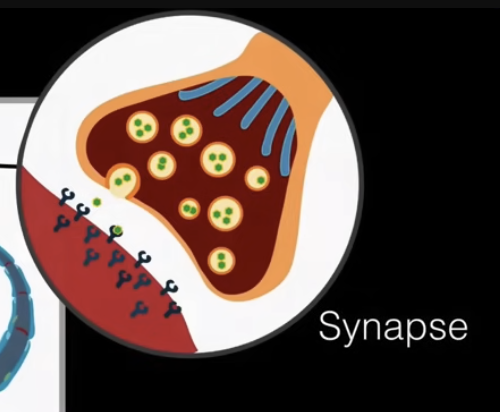
synapse
connection between neurons
neurons never physically touch
neuron structure
ask yourself how many poles are coming off of the cell body?
give clues to function
multipolar (most common)
bipolar
unipolar
anaxonic (no axon)

afferent/sensory neurons
transfer information towards the CNS

efferent/motor neurons
transfer information AWAY the CNS

interneurons
connect afferent/efferent neurons
chemical synapse
AP moves down the neuron
triggers the release of neurotransmitters into the gap that dock with receptors on the other side
electrical synapse
AP moves down the neuron and is triggered by voltage gated channels
opens more voltage gated channels at the synapse
pros: fast
cons: no control
synaptic vesicles
carry neurotransmitters

dendrites
soma/cell body
nucleus
myelin sheaths
axon
axon terminals
what happens in a chemical synapse
AP moves down the axon
triggers the release of neurotransmitters into the synaptic cleft (what makes it chemical)
the neurotransmitters dock to chemically gated channels/receptors on the other side which can lead to an AP on the other side

what happens in an electrical synapse
AP moves down the axon
travels directly to the other neuron through channel proteins, still electrical
pros: fast
con: no control

vesicles
filled with neurotransmitters
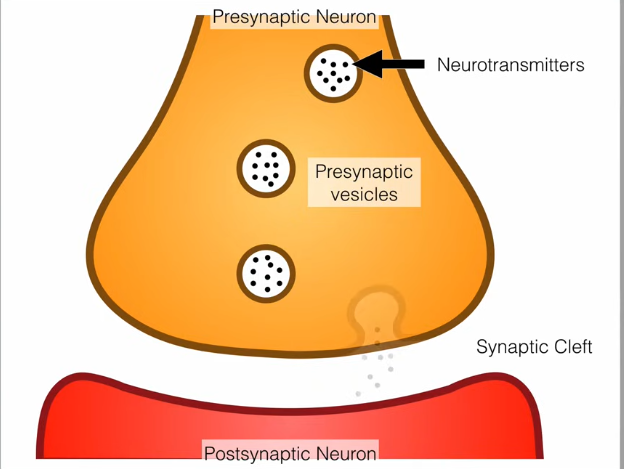
what happens in chemical synapse (more detailed)
AP moves down the axon
the depolarization of the neuron opens up the calcium (+) voltage-gated channels, letting Ca2+ enter and dock with chemicals in the vesicles
this lets the vesicles dock with proteins at the end of the presynaptic side and release the neurotransmitters in the cleft where they can dock with chemically gated channels on the other side

types of channels
leak channels
voltage-gated channels
chemically-gated channels


leak channels
for sodium (Na+) and potassium (K+)
establish resting potential
constantly open
help with AP transmissions

voltage-gated channels
closed or opened by changes in membrane potential
depends on whether potential was reached or not, or at the default -70 mV

chemically/ligand-gated channels
when neurotransmitters gap with it, they open up (closed otherwise)
can move the neuron towards or away from action potential (-55 mV)
long-term potentiation
if you keep firing the same neurons (if you keep remembering something), the cell will actually build more receptors/channel proteins to be better adapted to recieve it

what the fucking kind of neuron is this
multipolar

what the fucking kind of neuron is this
unipolar
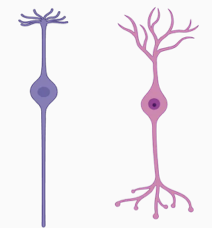
what the fucking kind of neuron is this
bipolar

what the fucking kind of neuron is this
anaxonic

also say what direction the signal is going
nucleus
soma
dendrites
axon
axon hillock
myelin sheath
dendrites
it is going from the dendrites to the axon collaterals
default voltage of a cell/resting membrane potential
-70 mV compared to the outside (0 mV)
inside of the cell has higher amounts of potassium (+), proteins, DNA, and other negatively charged objects (-)
outside of the cell has higher levels of sodium (+)
voltage needed to reach potential
-55 mV

why would Na+ want to flow inside a neuron
diffusion (concentration/chemical gradient) - there is less Na+ on the inside
make the electrical charge 0 (electrical gradiet)
Na+ goes to -70 mV cell
electrochemical gradient
electrochemical gradient principles
when the concentration and electrical agree, the molecule moves
if the concentration and electrical disagree, the molecule doesn’t move

would K+ go in or out of the cell
there is more K+ on the inside, so by the chemical gradient it would go outside
but the inside is (-) so by the electrical gradient it would go inside
because they conflict it doesnt move at all