Lec 22 Small intestine
 Call Kai
 Learn
 Practice Test
 Spaced Repetition
 Match
 Flashcards
 Knowt Play
1/15

There's no tags or description
Looks like no tags are added yet.
16 Terms
What are three accessory glands ithat contribute to digestion in small intestine
liver, gallbladder (bile) pancreas(enzymes for macros and HCO3-)
segmental vs peristaltic contrations, what are I,S,K cells triggered by then what do they release?

surface area, villi vs crypts, where do most nutrients go, what bout fats?
Villi (Projections outward)
Structure: Finger-like projections extending up/out from the mucosal surface into the intestinal lumen (and topped with absorptive enterocytes bearing microvilli).
Main Role: Maximize surface area for nutrient, water, and ion absorption from chyme passing through the lumen.
Crypts (Invaginations inward)
Structure: Tubular indentations/pockets dipping down/inward from the mucosal surface between the bases of villi.
Main Role: Also add surface area and serve as glandular/secretory and epithelial renewal zones (such as fluid/ion secretion and stem/progenitor cell turnover).

where are i s and k cells found, what do crypts secret vs endocrine cells? what is role of stem cells?
I cells, S cells, and K cells are enteroendocrine cells located in the mucosal epithelium of the small intestine—primarily in the duodenum and jejunum.
Each cell type senses specific luminal contents entering the small intestine and releases a key GI hormone into circulation:
I cells: Found mainly in the mucosa of the duodenum and jejunum; they release cholecystokinin (CCK) in response to fatty acids and amino acids.
S cells: Found predominantly in the mucosa of the duodenum (and upper jejunum); they release secretin in response to acid (low pH) entering the small intestine.
K cells: Found mainly in the mucosa of the duodenum and jejunum; they release gastric inhibitory peptide (GIP)in response to glucose, fatty acids, and amino acids in the small intestine.
STEM: intestinal stem cells can differentiate into I cells, S cells, and K cells
hepatic portal sys: where does liver receive blood , where does it get most of its oxygenated blood?

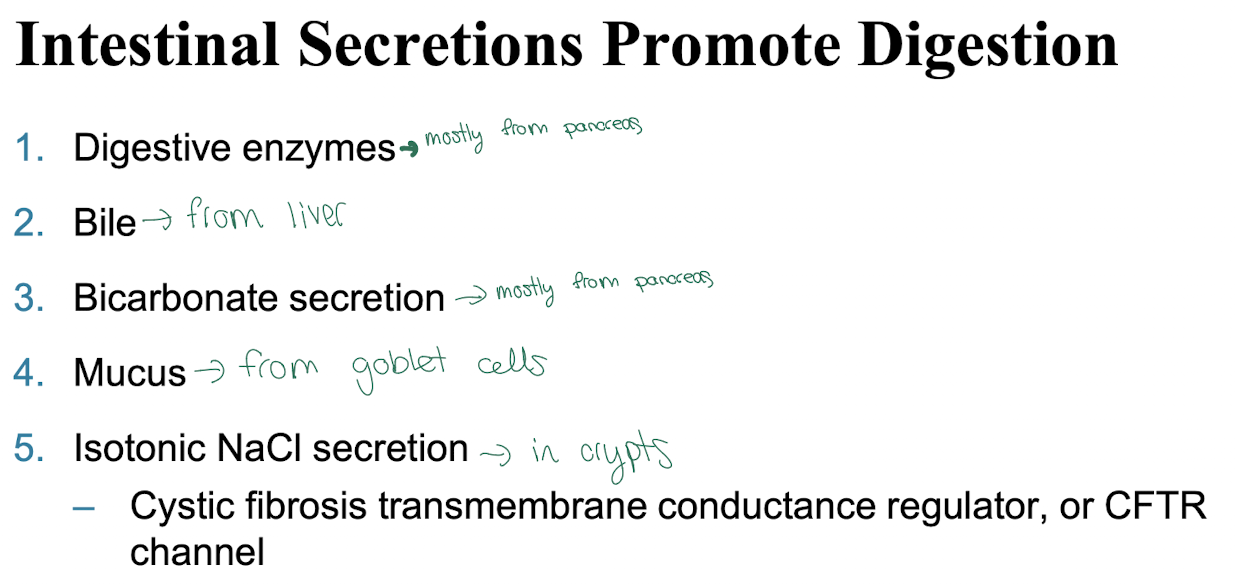
WHAT ARE 5 KEY SECRETIONS, WHAT SECRETES THEM?
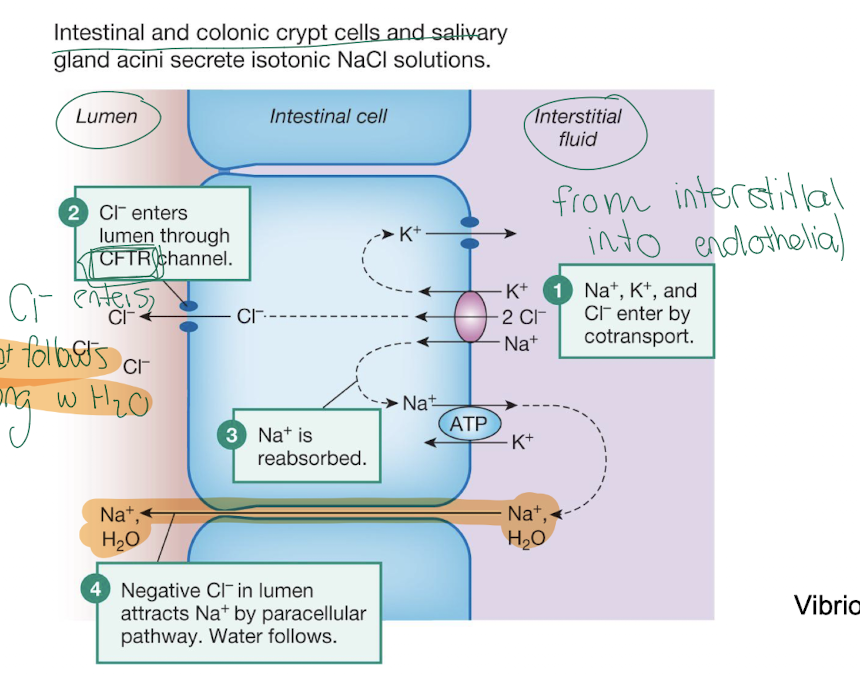
WHATARE ENDOCRINE SECRETIONS (ALPHA AND BETA CELLS) VS EXOCRINE SECRETIONS (ACINI AND DUCT) OF PANCREAS?
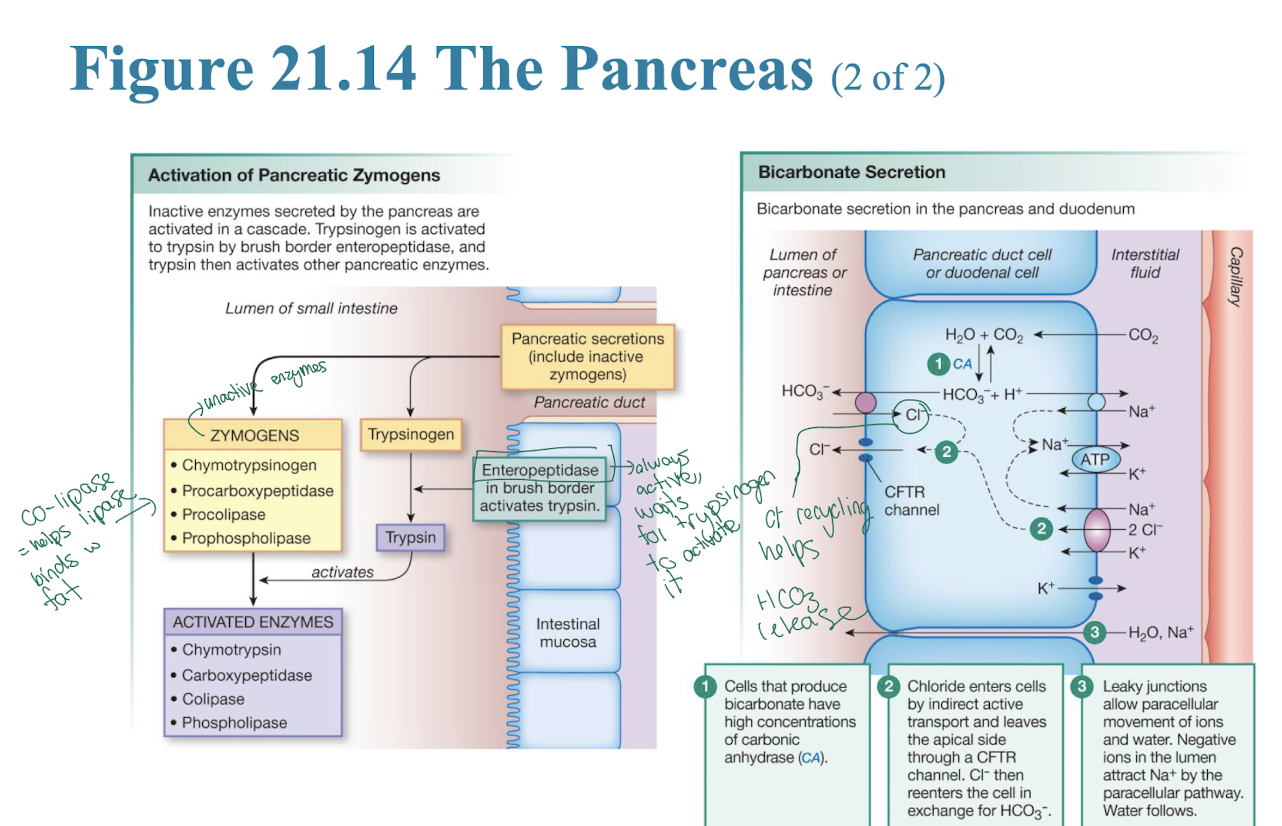
Endocrine pancreatic islets release hormones—insulin (beta cells) and glucagon (alpha cells)—directly into the bloodstream to regulate blood glucose. Exocrine pancreatic acini secrete digestive enzymes (like trypsinogen, activated to trypsin by brush-border enteropeptidase) while duct cells secrete sodium bicarbonate (HCO3−HCO3−) into ducts leading to the small intestine to aid digestion and neutralize gastric acid. The key difference is simply delivery route: hormones enter blood (endocrine) for systemic signaling, whereas enzymes and bicarbonate enter ducts/the gut lumen(exocrine) for local digestion.

PANCREAS ACINI , DUCTS, ISLETS,HOW ARE PANCREATIC ZYMOGENS ACTIVATED?

WHAT SECRETES BILE, WHAT IS IT’S COMPOSITION? WHTA IS SPNHICTER OF ODDI?
SPHINCTE OF ODDI CONTROLS RELEASE OF BLOOD AND PANCREATIC SECRETIONS INTO DUODENUM

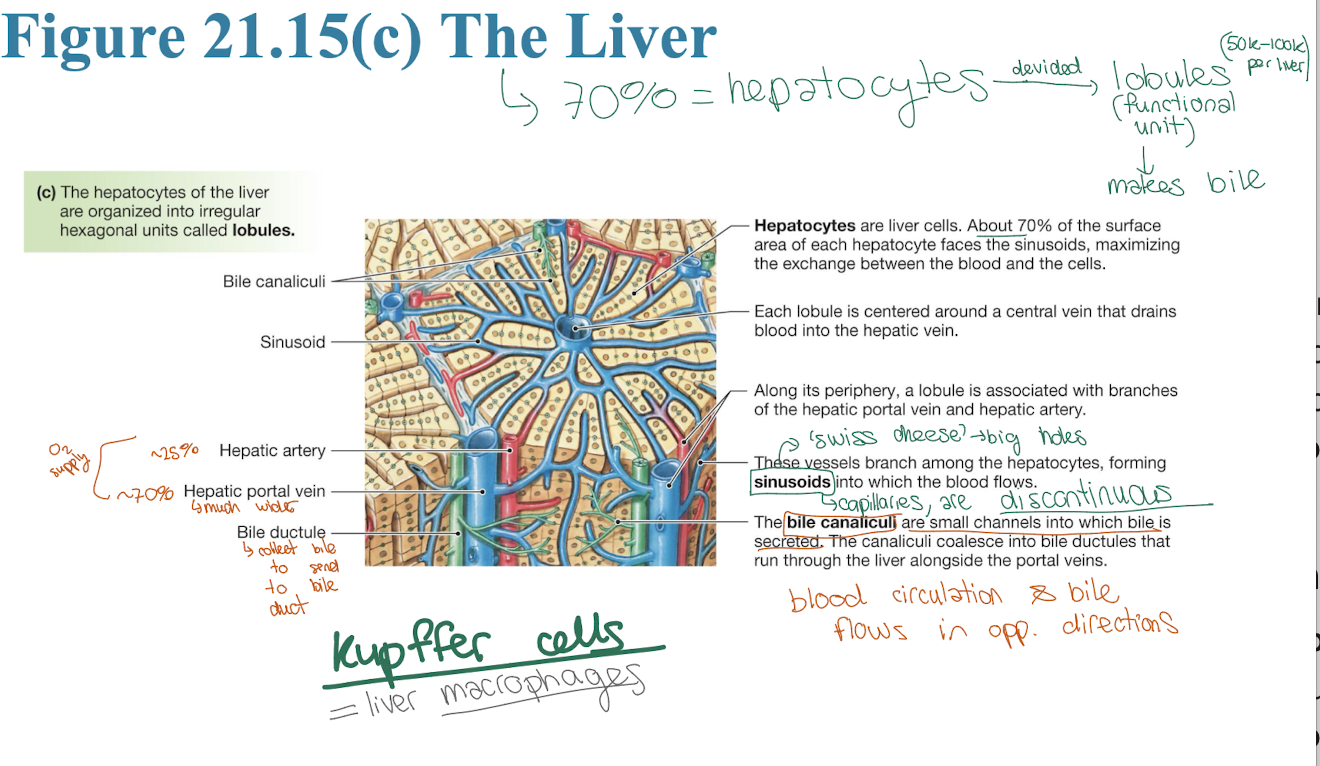
HOW ARE LIVER CELLS DIVIDED, SINUSOIDS? WHERE DOES IT SEND ITS BLOOD, WHERE DOES IT SEND IT’S BILE
Hepatic sinusoids are the specialized, wide, leaky capillaries inside the liver lobules where those two blood supplies mixand flow past rows of hepatocytes (liver cells).
Unlike standard tight capillaries, sinusoids have:
Fenestrations (pores) and a discontinuous basement membrane, allowing large molecules (like proteins,lipoproteins, and chylomicrons) to pass easily into the space of Disse right next to hepatocytes.
Kupffer cells (resident macrophages) lining the walls to clear bacteria, old red blood cells, and debris.
As blood moves slowly through the sinusoids, hepatocytes extract nutrients and toxins, synthesize/secrete proteins and bile, and metabolize substances—all while getting oxygen from the hepatic arterial blood mixed in.
****The liver doesn't send venous blood directly out to peripheral body tissues—it funnels it back to the heart first so it can be redistributed systemically. (The one exception is bile, which leaves via bile ducts to the gallbladder/duodenum rather than the bloodstream.
WHAT IS ENTEROHEPATIC CIRCULATION?
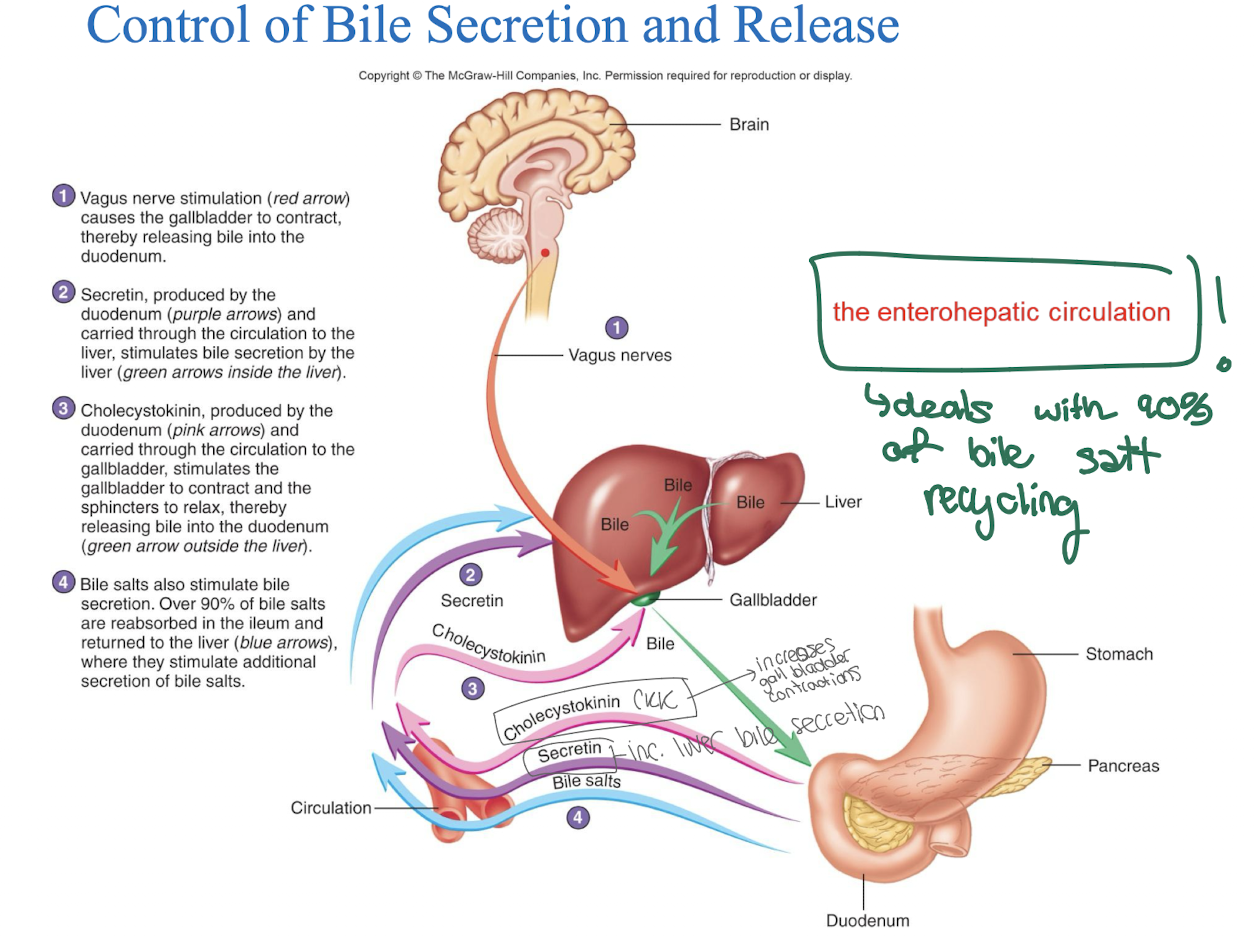
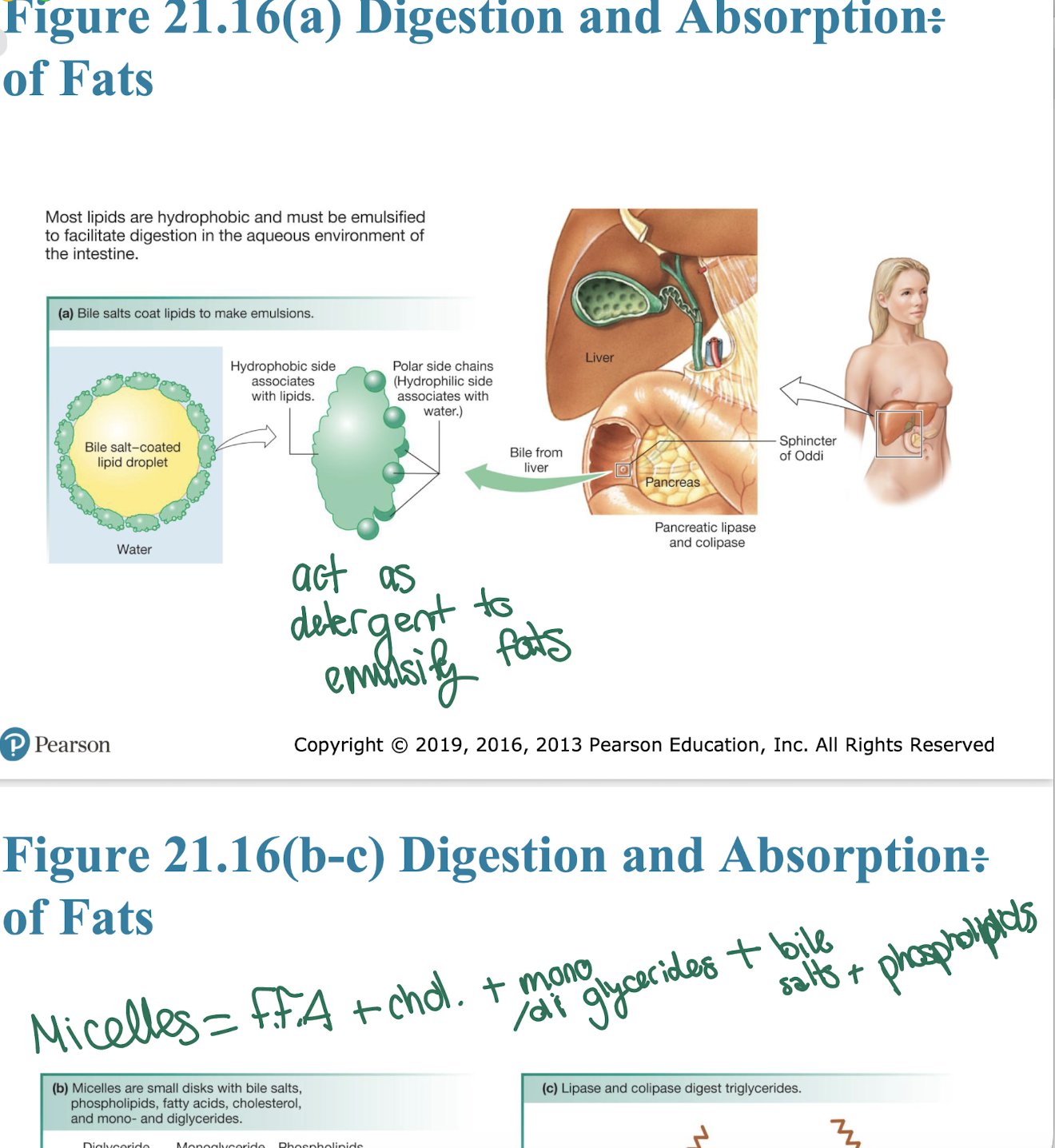
WHAT DOES BILE ASSIST W?
Bile salts facilitate fat digestion
– Lipases and colipase
– Micelles
– Fat absorption with chylomicrons
• Carbohydrates are absorbed as monosaccharides
– Pancreatic enzymes and brush border enzymes
– Digestion of carbohydrates polymers (starch, glycogen) &
disaccharides (sucrose, maltose, lactose) → monosaccharides
(galactose, glucose, fructose)
– Lactose intolerance
– Carbohydrate absorption –SGLT, GLUT2, GLUT5
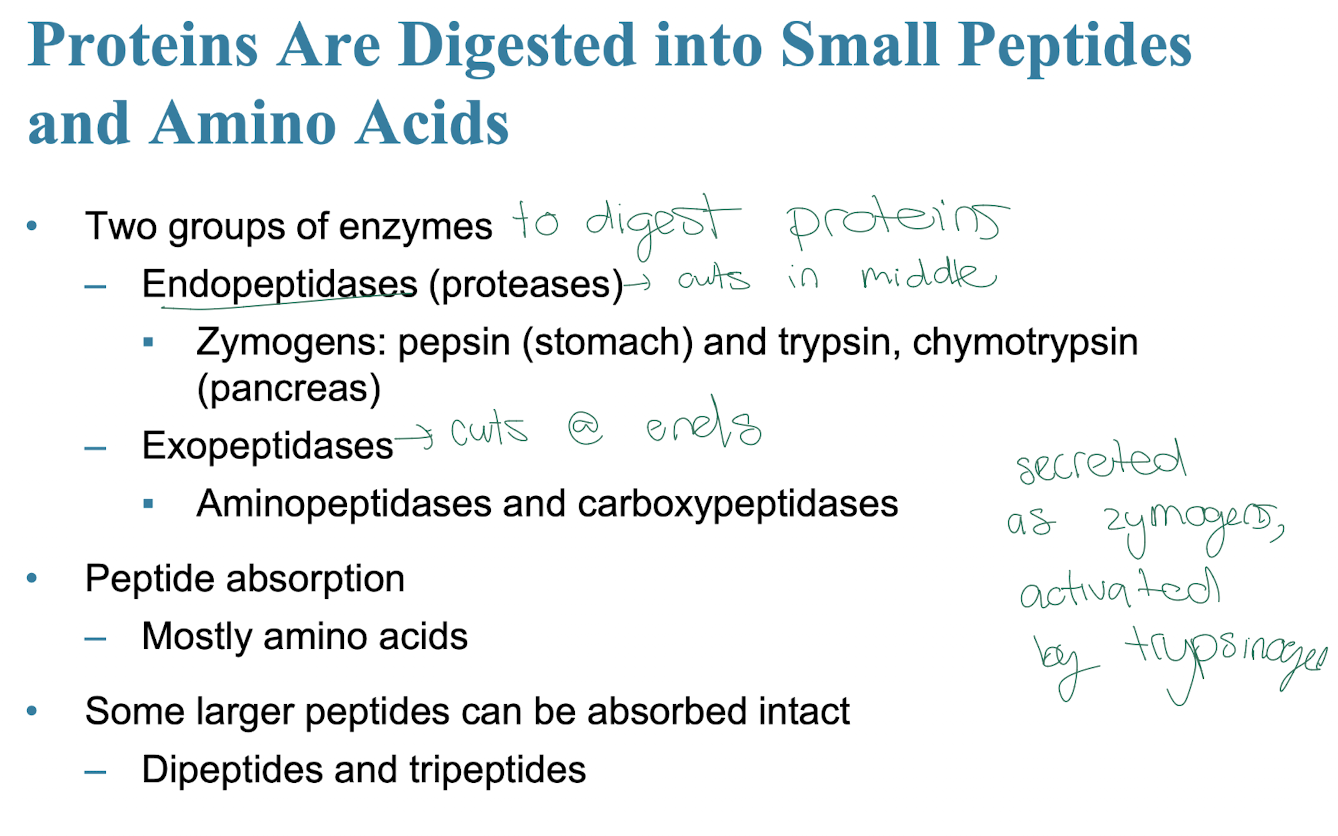
WHAT ARE 2 GROUPS OF PROTEINS THAT DIGEST PROTEINS? WHAT ARE THEY SECRETED BY, WHAT ARE THOSE SECRETIONS ACTIVATED BY?
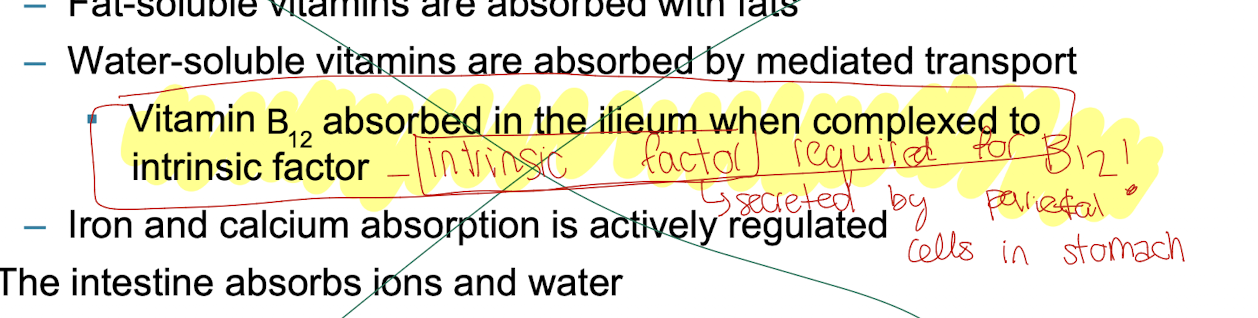
WHAT IS REQUIRED FOR B12 ABSORPTION? HOW ARE MOOST MINERAL ABSORBED VS Ca and Fe?

what is role of M cells in intestine?

overall digestion, key enzymes?
