Section 1) a i. Procedural v Substantive Democracy
 Call Kai
 Learn
 Practice Test
 Spaced Repetition
 Match
 Flashcards
 Knowt Play
1/14

There's no tags or description
Looks like no tags are added yet.
15 Terms
Procedural Democracy
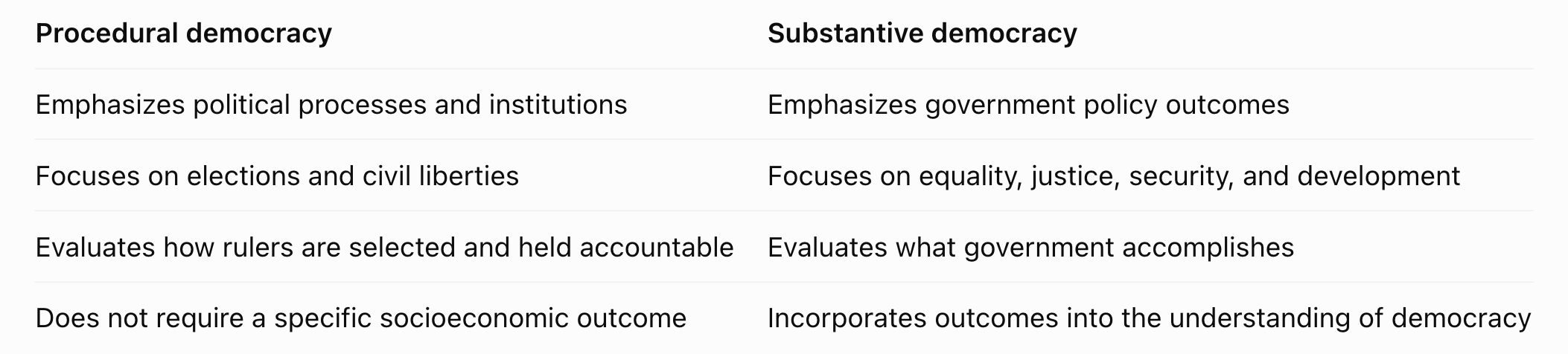
a polit regime in which citizens participate in free, fair, and periodic elections for office and have civil liberties
Emphasis of procedural democracy
how political authority is acquired and exercised
requirements for procedural democracy
free and fair periodic elections
political participation
political competition
civil liberties
meaningful opportunities to hold political leaders accountable
Focus of procedural democracy
rules, processes, and institutions of democracy instead of requiring particular government policy outcomes
Substantive democracy
this approach classifies regimes based on the policy outcomes they produce
Requirements for substantive democracy
equality and justice
peace, unity, and personal security
socioeconomic development
Emphasis of substantive democracy
democracy is evaluated partly through the outcomes a political system produces
Compare procedural democracy and substantive democracy table
Challenges of substantive democracy
less agreement exists about what democracy should entail
policy outcomes are casually related to regime type, hard to separate democracy itself from democracy’s effects
Challenges of Procedural Democracy
can lead to fallacy of electoralism if elections are treated as sufficient evidence of democracy
elections CANNOT be meaningful without political competition and civil liberties
fallacy of electoralism
equating democracy with multiparty elections while ignoring other dimensions of democracy
Procedural democracy needs… (3)
political participation
political competition
civil liberties
political participation
citizens involvement in political activities and decision-making, including voting etc
political competition
ability of parties and candidates to compete meaningfully for political power and challenge incumbents
civil liberties
individual freedom that make democratic participation possible