Muscles of the Head and Neck
 Call Kai
 Learn
Learn Practice Test
 Spaced Repetition
 Match
Match Flashcards
 Knowt Play
1/16

There's no tags or description
Looks like no tags are added yet.
Name | Mastery | Learn | Test | Matching | Spaced | Call with Kai | Chat |
|---|
No analytics yet
Send a link to your students to track their progress
17 Terms
Masseter
Action: elevates the mandible
Origin: zygomatic arch
Insertion: mandible
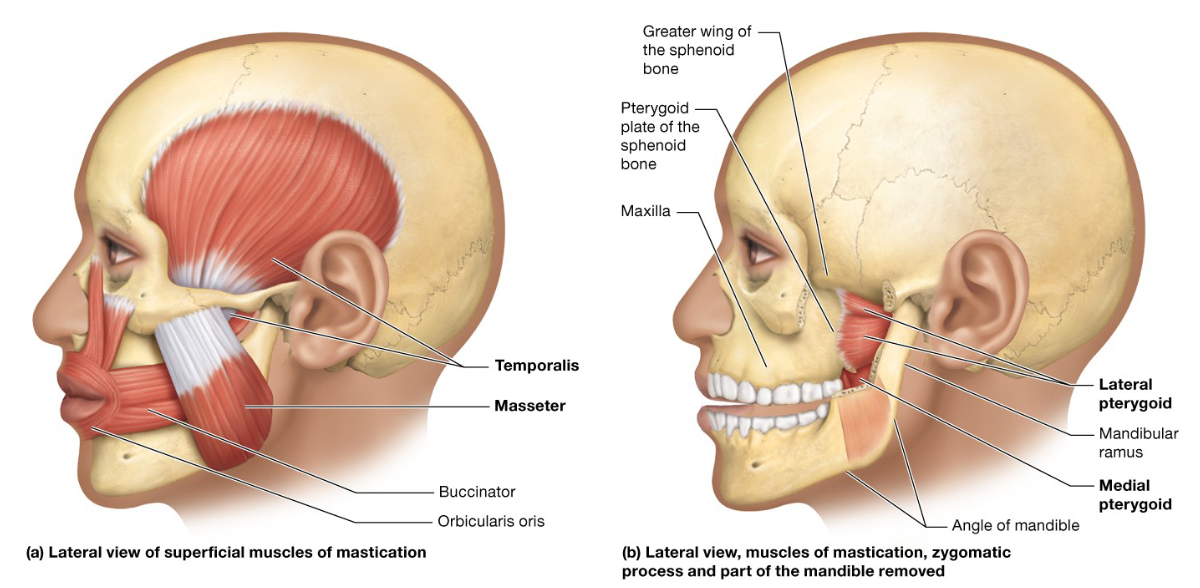
Temporalis
Action: elevates and retracts the mandible
Origin: temporal fossa
Insertion: coronoid process of mandible

Medial pterygoid
Elevates and protracts the mandible and assists with side-to-side movement during mastication
Elevates the mandible as a synergist to the masseter and temporalis

Lateral pterygoid
Depresses and protracts the mandible
works with the medial pterygoid to produce side-to-side movements for grinding food during mastication

What muscles elevate the mandible during mastication (chewing)?
Masseter, temporalis, and medial pterygoid
What muscle depresses the mandible during mastication?
Lateral pterygoid
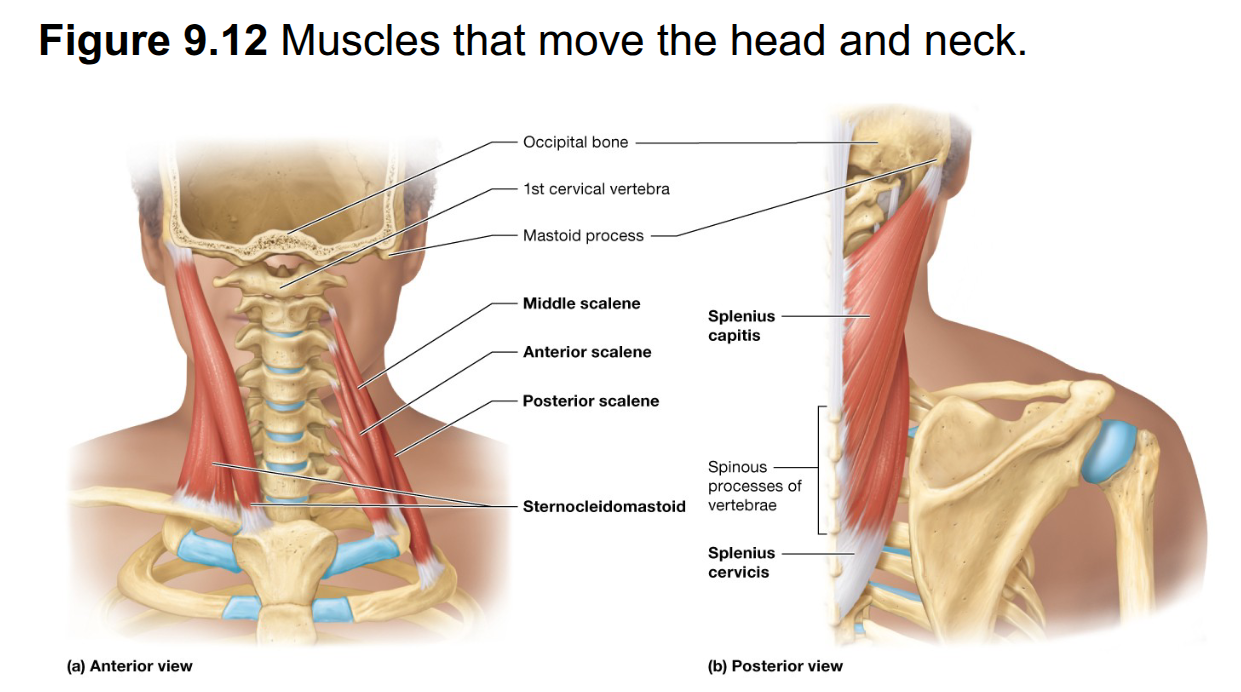
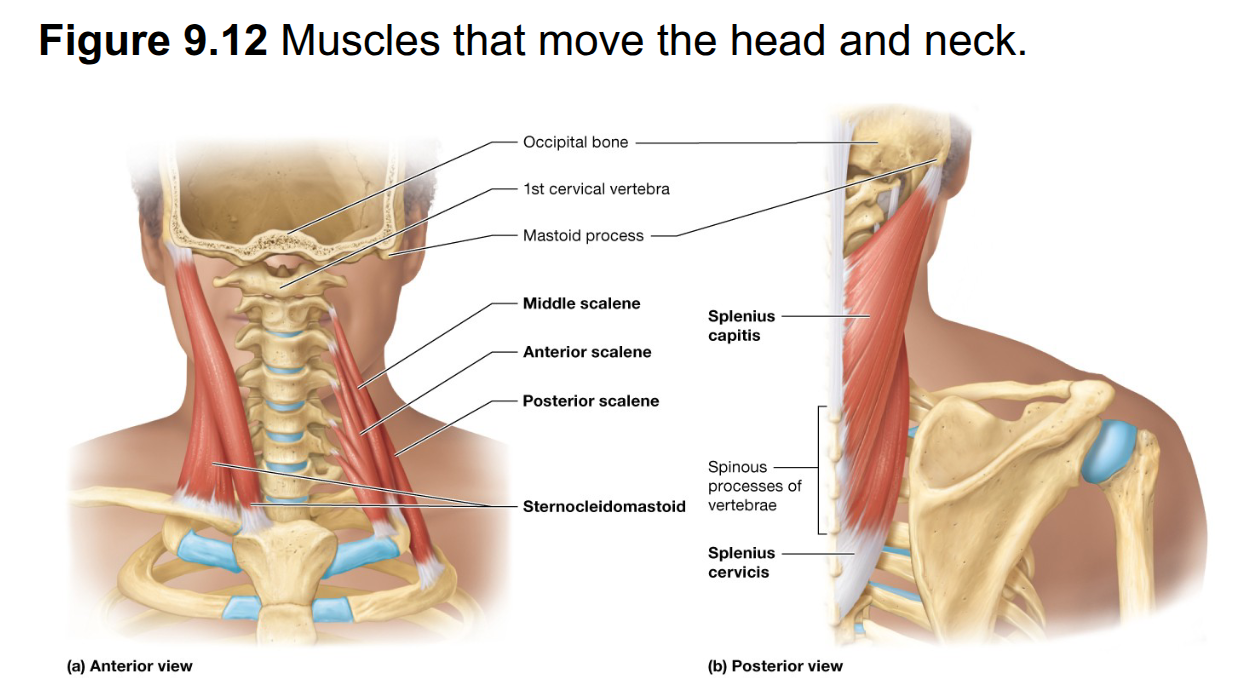
Sternocleidomastoid
Action: flexes the neck when both sides contract/both muscles act together
individually rotates the head toward the opposite shoulder when acting individually
Origin: sternum and clavicle
Insertion: mastoid process of temporal bone

Scalene muscles
Anterior, middle, and posterior scalenes laterally flex the head/neck when acting individually
When the head and neck are fixed, they elevate the ribs during deep breathing
Head is pulled laterally when acting individually
origin and insertion can switch
when fixators hold the head and neck in place and scalenes work together, ribs are elevated in deep breathing
Trapezius
head movement
The superior portion extends the head
has three parts; Superior part extends the head; other parts discussed later

Splenius capitis & cervicis muscles
Contracting on one side rotates the head and neck to the same side
contracting on both sides extends the head and neck
If contracting on one side, rotates the head and neck to the same side
when contracting on both sides, extends the head and neck
Digastric, stylohyoid, mylohyoid & geniohyoid
Elevate the hyoid bone and raise the tongue and floor of the mouth in preparation for swallowing

Genioglossus
Protrudes the tongue

Hyoglossus
Depresses the tongue
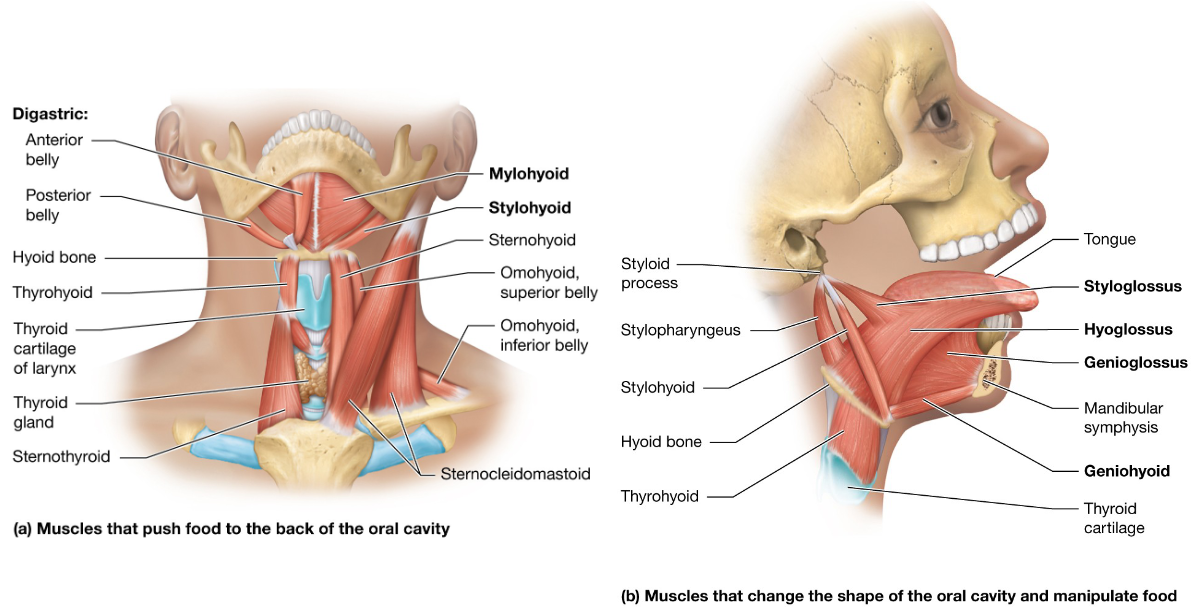
Styloglossus
Elevates and retracts the tongue
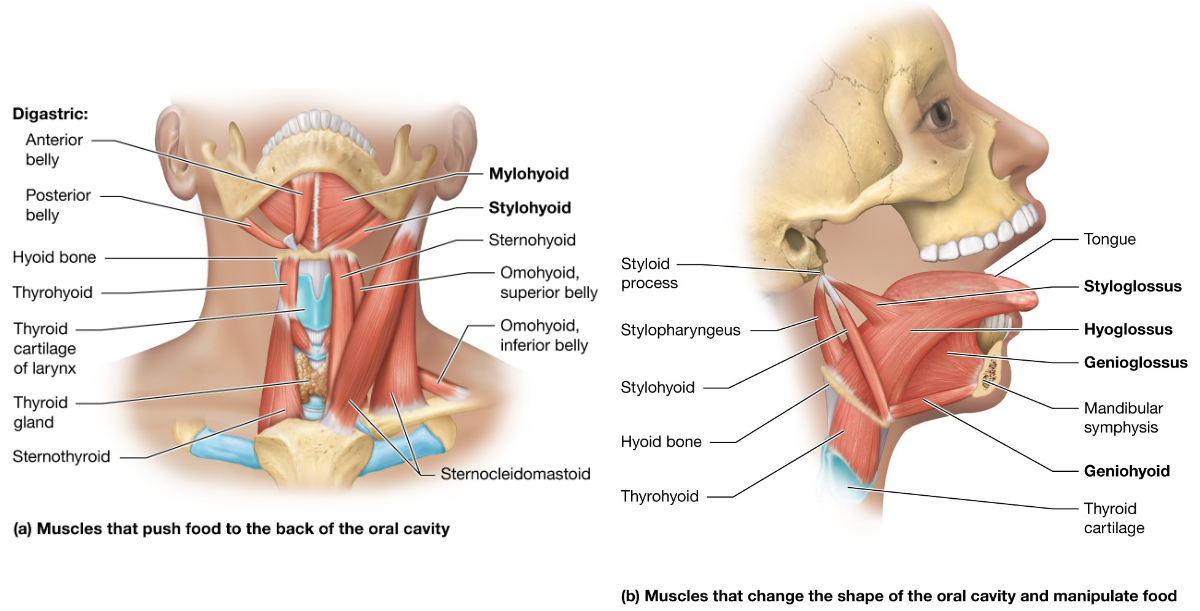
Sternohyoid, omohyoid, sternothyroid & thyrohyoid
Depress the pharynx after it is briefly elevated during swallowing, helping move food farther into the pharynx and preventing food from entering the respiratory tract

Pharyngeal constrictor
Contracts sequentially from superior to inferior to push food into the esophagus
What usually happens to the insertion when a muscle contracts?
The insertion is usually pulled toward the origin