Microbiology Chapter 9: Microbe Growth
 Call Kai
 Learn
Learn Practice Test
 Spaced Repetition
 Match
Match Flashcards
 Knowt Play
1/45

There's no tags or description
Looks like no tags are added yet.
Name | Mastery | Learn | Test | Matching | Spaced | Call with Kai | Chat |
|---|
No analytics yet
Send a link to your students to track their progress
46 Terms
Binary Fission
How bacteria cells turn into more bacterial cells
Not perfectly split division on matter between cells
Multistep process
- DNA replication
- Formation of division septum
- Cells separate
DNA replication
First step of the binary fission
DNA is copied through circular replication
Division septum
Necessary for the second binary fission
A membrane wall that divides the cell in half
Acts as the point of separation
Germination Time
How long it takes one bacterial cell to become 2
About 16 minutes to 2 weeks
- Most about 60 minutes
- Escherichia coli is 20 minutes
- Mycobacterium tuberculosis is 15-20 hours
Bacterial Growth Curve
Measures the growth of bacteria
Multi-phase process
- Lag phase
- Log phase
- Stationary phase
- Death or decline phase
Lag phase
First phase of the bacterial growth curve
The bacteria is new to the environment and isn't increasing or declining in number
Uses this time to determine necessary enzymes for survival and replication
- Makes them
Log phase
Second phase of the bacterial growth curve
Large increase in number of living bacterial cells
- Causes by presence of necessary enzymes
Cells are most vulnerable to manipulation at this point
Stationary phase
Third phase of the bacterial growth curve
Plateau in the number of living and nonliving cells
- Death and replication rate are roughly the same
Nutrients become scarce and waste builds up
- Sometimes secondary metabolites are made to survive
Death or decline phase
Fourth phase of the bacterial growth curve
Exponential decrease in number of living bacterial cells
- Caused by lack of nutrients and buildup of waste
Secondary Metabolites
Organic compounds produced by bacteria
Not eventual for growth or reproduction but mediate ecological interactions
Most needed in stationary phase of bacterial curve
Hemocytometer or Petroff-Hauser Chamber
Type of direct growth measurement of bacteria cells

Fluorescent staining
Type of direct growth measurement of bacteria cells
Coulter counter
Type of direct growth measurement of bacteria cell
Plate counting
Type of direct growth measurement of bacteria cells
Done by counting the number of bacterial colonies on an agar plate
- Uses naked eye
Spectrophotometer
Type of indirect growth measurement of bacteria cells
Done by shooting light through a sample of bacteria invested liquid medium
- Measures amount of colonies based on light refraction
Liquid medium is diluted in many steps before being put into the machine

Dry weight
Type of indirect growth measurement of bacteria cells
Direct Counting
Method of determining number of colonies in a sample
Counts the amount of colonies
Direct Counting
Method of determining number of colonies in a sample
Counts the amount of byproduct made by colonies and estimates how many are there
Fragmenting
Alternative form of bacteria growth
Cells break away
Used in Actinomyces
Budding
Alternative form of bacteria growth
Non-equal cellular material splits off
Biofilms
Created by large communities of organisms growing together
Made of extracellular polymeric substance
Very common
Very hardy
Located on airways tissue and teeth enamel
Extracellular Polymeric Substance (EPS)
A mixture of proteins and polysaccharides that make a gel like substance
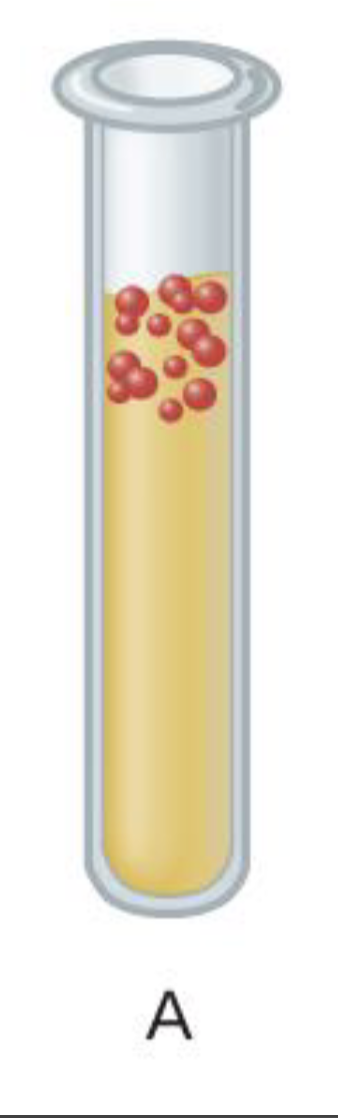
Obligate aerobe
Bacteria classification based on oxygen needs
Needs oxygen to survive
Obligate anaerobe
Bacteria classification based on oxygen needs
Oxygen is toxic to it

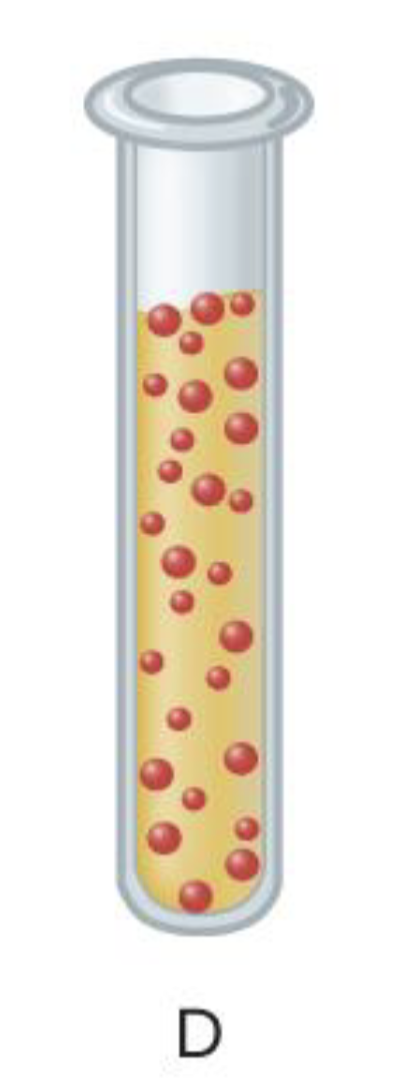
Facultative anaerobe
Bacteria classification based on oxygen needs
Uses oxygen when available but can survive without it
Grows better with O2

Aerotolerant
Bacteria classification based on oxygen needs
Doesn’t require oxygen but can survive in it’s presence
Microaerophile
Bacteria classification based on oxygen needs
Needs oxygen to survive but prefers it under atmospheric levels

Capnophile
Bacteria classification based on oxygen needs
Prefers high level of carbon dioxide
Optimum temperature
The temperature where the bacteria grows the best
Minimum temperature
The lowest possible temperature that bacteria can grow at
Doesn’t mean death for all bacteria
Maximum temperature
The highest possible temperature that bacteria can grow at
Bacteria dies because proteins denature
Psychrophiles
Classification of bacteria based off temperature growth ability
Grows best at cold temperature, 8 - 12 celsius
Mesophiles
Classification of bacteria based off temperature growth ability
Grows best at moderate temperature, 31 - 41 celsius
Thermophiles
Classification of bacteria based off temperature growth ability
Grows best at hot temperature, 62 - 72 celsius
Hyperthermophiles
Classification of bacteria based off temperature growth ability
Grows best at very hot temperature, 90 - 100 celsius
Halophiles
Bacteria the liked high salt content
Photosynthetic
An organism that requires light
Nutrient agar (NA)
Type of basic nutrient agar
Tryptic soy agar (TSA)
Type of basic nutrient agar
Complex media
Media that contains more material than just a basic nutrient agar
Selective media
A bacteria medium
Some bacteria are inhibited by properties
Differential media
A bacteria medium
Designed to distinguish between two organisms based off affinity for properties of the media
Anaerobic jar
Creates an environment with no O2 in it
Candle Jar
Creates environment with little O2 and a lot of CO2
Chemostat
A machine that keeps bacteria in a nutrient rich and limited waist environment
Measures amounts of waist and nutrients
Pulls excess waist from environment and adds necessary nutrients
Quorum Sensing
Communication method bacterial cells use to communicate with each other
Regulates growth rate and biofilm