Biochemistry Unit 3 Material
 Call Kai
 Learn
 Practice Test
 Spaced Repetition
 Match
 Flashcards
 Knowt Play
1/56

There's no tags or description
Looks like no tags are added yet.
57 Terms
gluconeogenesis
synthesis of new glucose from non-carbohydrate precursors
precursors: pyruvate, lactate, amino acid, glycerol
occurs primarily in the liver (90%) as well as the kidneys and small intestines
important during long intervals between meals, overnight sleep, longer fasts, and rigorous exercise (when blood glucose levels decrease)
2 molecules of pyruvate are used to synthesize 1 molecule of glucose—bypasses the 3 irreversible steps of glycolysis (1,3,10)
helped with enzymes:
pyruvate carboyxlase, PEP carboxykinase, fructose 1,6-bisphosphate, and glucose-6-phosphate
gluconeogenesis precursors
lactate, pyruvate, amino acids, glycerol
gluconeogenesis importance
occurs because blood glucose levels are low or hypoglycemic
the brain completely relies and depends upon glucose as a primary source, so if glucose levels drop, the brain becomes affected
when fasting for a long period of time, the brain takes fuel from ketones (secondary source)
gluconeogenesis enzymes
pyruvate carboxylase
PEP carboxykinase
fructose 1,6-bisphosphatase
glucose-6-phosphatase
carboxylation of pyruvate
converts to PEP catalyzed by enzyme pyruvate carboxylase
pyruvate carboxylase is present in mitochondria
pyruvate must be transported from cytoplasm to mitochondria via mitochondrial pyruvate carrier
within the mitochondria, pyruvate is converted to oxaloacetate by using the energy 2 molecules of ATP
the formation of PEP from pyruvate requires pyruvate carboxylase + phosphoenolpyruvate carboxylase
carboxylase
a ligase that catalyzes the formation of C-C bonds, typically involving the addition of a carboxyl group (CO2) to a molecule
oxaloacetate converted to malate
oxaloacetate has to be transported out of the mitochondria
mitochondria has a special gate to transfer malate with the help of malate-aspartate shuttle
oxaloacetate is converted to malate with the help of malate dehydrogenase and 2 molecules of NADH are oxidized to NAD+
malate is now transported out in the cytoplasm to be converted to phophoenolpyruvate
malate to PEP
2 malate in the cytosol are then converted back into oxaloacetate with the help of the cytosolic form of malate dehydrogenase enzyme
NAD+is reduced to 2 NADH
NADH enters ETC to synthesize ATP
oxaloacetate is converted to PEP with help of PEP carboxykinase enzyme
requires 2 GTP and releases CO2
conversion of F-1,6-BP
PEP, through a series of reactions, is then converted into fructose 1,6 bisphosphate, 2 molecules of ATP are being used
the fructose-1-6-bisphosphate is converted to F6P using fructose 1,6, bisphosphatase (allosteric enzyme)
irreversible step
generation of glucose from G6P
F6P → G6P → glucose
glucose-6-phosphatase (enzyme that releases free phosphate)
in most tissues, one G6P is generated and gluconeogenesis stops
it does not release glucose until its required (only when blood glucose is low)
would then by generated into glycogen (to store glucose until needed)
glucose is not generated in the cytosol
G6P must be transported into the lumen of smooth ER, then can be hydrolyzed into glucose and inorganic phosphate (by membrane bound G6P enzyme)
then the glucose will be shuttled back into the cytosol with transporters 2 and 3
free glucose level is highly maintained by liver and kidney
gluconeogenesis energy
4 ATP, 2 GTP, and 2 NADH are used to breakdown 2 pyruvate
net output: -6 ATP
triglyceride to glucose
triglycerides are broken down into glycerol and fatty acids (lipolysis)
releases energy for the body to use
glycerol is transported into liver cells
glycerol → glycerol-3-phosphate (via enzyme glycerol kinase)
glycerol-3-phosphate enters the glycolytic pathway at the step of DHAP by the enzyme glycerol-3-phosphate dehydrogenase by glycerol-3-phosphate shuttle
DHAP is converted to glucose through a series of steps in gluconeogenesis
glucogenic amino acids
an amino acid that breaks down into pyruvate or a citric acid cycle (TCA) intermediate, which can be used to synthesize glucose via gluconeogenesis in the liver. [1, 2]
they are deaminated (removal of amino group) producing pyruvate or other intermediates
intermediates enter TCA or glycolysis where they are converted to glucose
glucose is then released into bloodstream
low blood glucose
hormonal regulation of gluconeogenesis
level of glucagon hormone rises, which activates adenylate cyclase enzyme
catalyzes the conversion of ATP→ cAMP
cAMP activates protein kinase A enzyme, which adds a phosphate group to the pyruvate kinase enzyme
phosphorylation renders pyruvate kinase enzyme inactive → no PEP to pyruvate
pyruvate converts to oxaloacetate and PEP, followed by a series of reactions by gluconeogenesis
high blood glucose
hormonal regulation of gluconeogenesis
increases insulin level
activates the protein phosphatase enzyme, which removes the phosphate group from pyruvate kinase
this activates it, catalyzing the conversion of PEP to pyruvate, which can no longer be converted to oxaloacetate
activates the glycolysis pathway
breakdown of glucose
breakdown of carbs → glucose
once glucose is in the cell, hexokinase attaches 6th phosphate → G6P
from there, glycolysis can occur
If ATP is not needed, glucose can be used to make other useful products via the pentose phosphate pathway
pentose phosphate pathway
named for its products
pentose- 5C (ribose)
used to form nucleotides (building blocks for RNA/DNA)
phosphate- NADPH
rich in electrons, used in anabolic pathways. used in various pathways such as in the synthesis of fatty acids
alternative pathway when cells need ribose + NADPH
has no clear start/end
happens exclusively in the cytoplasm
can be divided into irreversible oxidative phase and reversible nonoxidative phase
role is serve as a cellular interchange for materials

oxidative phase
first phase of PPP
glucose-6-phosphate dehydrogenase snatches H from G6P and gives it to NADP+ → making NADPH + 6-phopho-gluconate [RATE DETERMINING STEP]
6-phosphogluconate dehydrogenase steals electron from 6-phosphogluconate and gives it to NADP+ → making another NADPH + ribulose-5-phosphate + CO2
end of phase = 2NADPH produced from 1 glucose
irreversible due to CO2 being released as a gas (hard to retrieve) and the cells wanting NADPH to be present (favorable)

nonoxidative phase
2nd phase of PPP
reversible
generates products due to cell needs
ribulose 5 phosphate gets converted to ribose-5-phosphate by an isomerase enzyme
ribose-5-phosphate is important in nucloetide synthesis, the
alternatively, ribulose-5-phosphate can be converted into 5C sugar, xylulose-5-phosphate by an epimerase enzyme [happens when the cell does not want to make RNA/DNA]
transketolase removes 2C from xylulose 5 phosphate and adds it to 5C ribose-5-phosphate → 7C sedoheptulose-7-phosphate and 3C G3P
transaldolase removes 3C from sedoheptulose-7-phosphate turning it into 4C erythose-4-phsohpate
the 3C go to G3P making F6P
both G3P and F6P are intermediates in glycolysis [so the cell can divert if needed]

epimerase
type of isomerase enzyme
ex: used in PPP (nonoxidative phase)
transketolase
type of transferase; the reversible transfer of a keto group from ketose to an aldolase
ex: used in PPP (nonoxidative phase)
hexose monophosphate shunt
if the cell is in the middle of glycolysis, but needs nucleotides instead, transketolase + transaldolase can convert G3P and F6P back to phosphate → ribose-5-phosphate
pathway allows for carbon atoms from G6P to take a detour before they proceed down the glycolytic pathway
PPP allows cells to use whatever sugar phosphate molecules they ned to make other compounds for cells
amino acid functions
building blocks of proteins [10-15% of energy]
synthesis of nucleic acids
synthesis of neurotransmitters
part of prosthetic group as porphyrins (ex: histadine)
fed state
high insulin, low glucagon
protein is broken down into amino acids in the intestine and transported via the blood to the liver
in the liver, the amino acids are used for protein synthesis or converted into glucose and fatty acids
glucose is stored as glycogen in liver
fatty acids are stored as triglycerides in adipose tissue
glucogenic AA
ketogenic AA
glucogenic amino acids
amino acids that can be converted into glucose through gluconeogenesis in the liver
ketogenic amino acids
amino acids that are directly degraded in acetyl-CoA or acetacetyl-CoA rather than glucose, making precursors for ketone bodies and fatty acids
fasted state
low insulin, high glucagon
fatty acids are released from adipose tissue and sent to the liver, where they are oxidized and ATP fuels the synthesis of glucose
amino acids are released from muscles to the liver and enter diverse arrays of metabolic pathways
glucogeneic amino acids are released, providing precursors for gluconeogenesis and helping produce glucose
essential amino acids
9 amino acids
body cannot create on own, must be obtained through foods
phenylalanine
valine
tryptophan
threonine
isoleucine
methionine
histidine
leucine
lysine
instead of body storing these, the body uses them regularly to make new proteins
nonessential amino acids
11 amino acids
synthesized in body
essential for protein synthesis and do not need to be included in diet
alanine
aspartate
glycine
serine
cysteine
glutamic
ornithine
proline
tyrosine
biosynthesis of amino acids
carbon skeleton comes from intermediates of glycolysis, citric acid cycle, or PPP
no single unifying pathway for synthesizing all amino acids
transamination reactions
reactions that contribute to formation of amino acids
transfers an amino group from 1 molecule to another
converts a keto acid into an amino acid
usually glutamate acts as a donor/acceptor
aspartate, alanine, glutamate are formed by addition of an amino group to an alpha-keto acid
oxidative deamination
glutamate is broken down by removing an amino group to produce ammonia (NH3) and a-ketglutarate
requires NADP+ being reduced to NADPH by glutamate dehydrogenase; in process NH4 is lost
ammonium is converted to urea via the urea cycle → later excreted by the kidneys
glutamate → a-ketoglutarate
amidation reactions
reactions that contribute to amino acid formation
directly adds an amide group to a molecule
glutamate → glutamine (via glutamine synthetase)
aspartate + NH3 + ATP → asparagine (via asparagine synthetase) + ADP + P
forms an adenylated intermediate
one carbon transfer reactions
3 phosphoglycerate (glycolysis) is the precursor of serine, cysteine, and glycine
serine + tetrahydrofolate → glycine
requires tetrahydrofolate (THF) is a derivative of vitamin B9 (folate)
biosynthesis of aromatic amino acids in plants
plants, bacteria, fungi
can produce tryptophan, tyrosine, and phenylalanine using Shikimate-Chorismate pathway
process begins with condensation of PEP (Glyc) and erythrose-4-phosphate (PPP) to form Chorismate
chorismate → anthranilate (condenses with PRPP) → tryptophan
chorismate → prephenate → tyrosine/phenylalanine
biosynthesis of aromatic amino acids in humans
phenylalanine (essential a.a.) is converted to tyrosine with phenylalanine hydroxylase
nitrogen fixation
few plants can partner with nitrogen fixing bacteria (symbiosis) to capture nitrogen
rhizobium bacteria invade the roots of leguminous plants and form root nodules to fix nitrogen
diazotrophic (nitrogen fixing) microorgansims fix ~60% of Earth’s nitrogen
nitrogenase complex
located inside nitrogen fixing bacteria (cytoplasm), carries out nitrogen fixation process, converting atmospheric nitrogen into ammonia
2 components:
reductase: funnels electrons from Fe-S protein to nitrogenase
nitrogenase: catalyzes the reduction of nitrogen to ammonia
inactivated by oxygen and need protection (leghemoglobin)
leghemoglobin
homolog of hemoglobin
binds with oxygen in nodules to lower free oxygen concentration in bacteria and allow nitrogenase to make NH3 (ammonia) or NH4 (ammonium) in water
resembles myogblobin
affinity of oxygen is very high, 10x that of hemoglobin
impossible foods
uses soy leghemoglobin in their impossible burger to give it meaty flavor and texture
non-legumes amino acid synthesis
cannot take up atmospheric nitrogen directly because it exists in a gaseous form with strong triple bonds between nitrogen atoms
instead, they absorb N in the form of nitrates/nitrites from the soil
nitrate is in the soil and taken up by plant roots and reduced to nitrite (nitrate reductase)
nitrite is stored in vacuoles of root cells or transported to the leaves
nitrite reductase catalyzes reduction of nitrite to ammonium
next step is assimilating N into biomolecules is the entry of NH4 into amino acids
glutamate and glutamine play pivotal roles in acting as nitrogen donors
nucleotides
nitrogenase base + pentose sugar + phosphate
Purine: N9 connects to C1 of sugar by glycosidic linkage (A and G)
Pyrimidine: N1 connects to C1 of sugar by glycosidic linkage (C,U and T)
both bases are flat in the ring plane
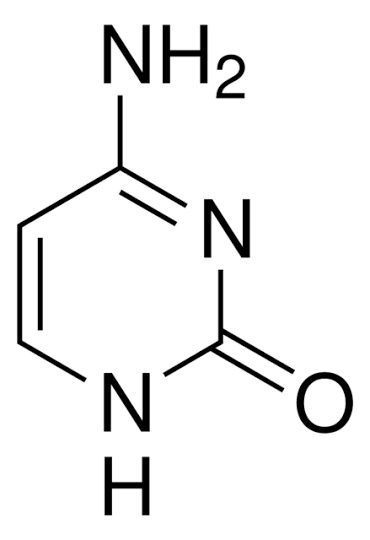
cytosine
2-oxy-4-aminopyrimidine
can be converted to uracil by the deamination process, releasing NH4+
uracil
2-4-dioxypyrimidine

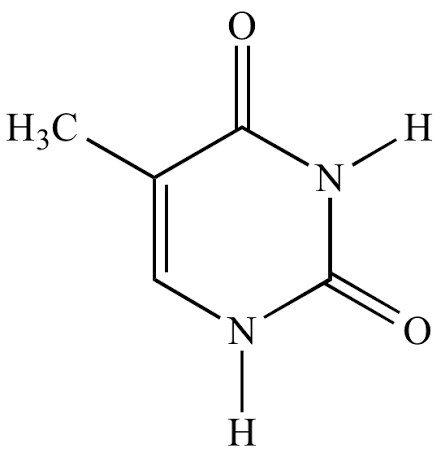
thymine
2-4-dioxy,5-methylpyrimidine
pyrimidine structure
nitrogenous base, 6 membered ring, single ring structure
presence at N at position 1 and 3
Used for DNA synthesis
Requires:
glutamine, aspartate, tetrahydrofolate (Vitamin B9)
occurs in cytoplasm
only anti form is allowed (oxygen points away from sugar)
crucial for genetic replication, transcription, and cell division
synthesis of PRPP
ribose-t-phosphate is converted to phosphoribosyl-a-pyrophosphate (PRPP)
enzyme: ribose phosphate pyrophosphokinase
ATP → AMP (takes 2 phosphates from ATP)
end produce is used for amino acid biosynthesis (purine/pyrimidine)

pyrimidine synthesis
starts with PRPP
key components: glutamine, bicarbonate, ATP, H2O lead to the formation of carbamoyl phosphate (CPS-2)
CPS-2 catalyzes the rate determining step, converting glutamine, CO2, and ATP into carbamoyl phosphate (critical regulatory step and is subject to feedback inhibition by UTP)
conversion of orotic acid: series of reactions, carbamoyl phosphate reacts with aspartate to from carbamoyl asparate, which is then cyclized to produce dihydroororate.
is subsequently oxidized by the enzyme dihydrooroate (DHODH) to form orotic acid
formation of UMP: orotic acid undergoes a phosphoribosylation step to from OMP.
OMP dicarboxylase then catalyzes the removal of a carboxyl gruop to make UMP *first nucletoide produced in pathway
once UMP is formed, it can be phosphorylated to form UDP and UTP, which can be further converted into other pyrimidine nucleotides, including CTP and, in DNA synthesis, dTTP

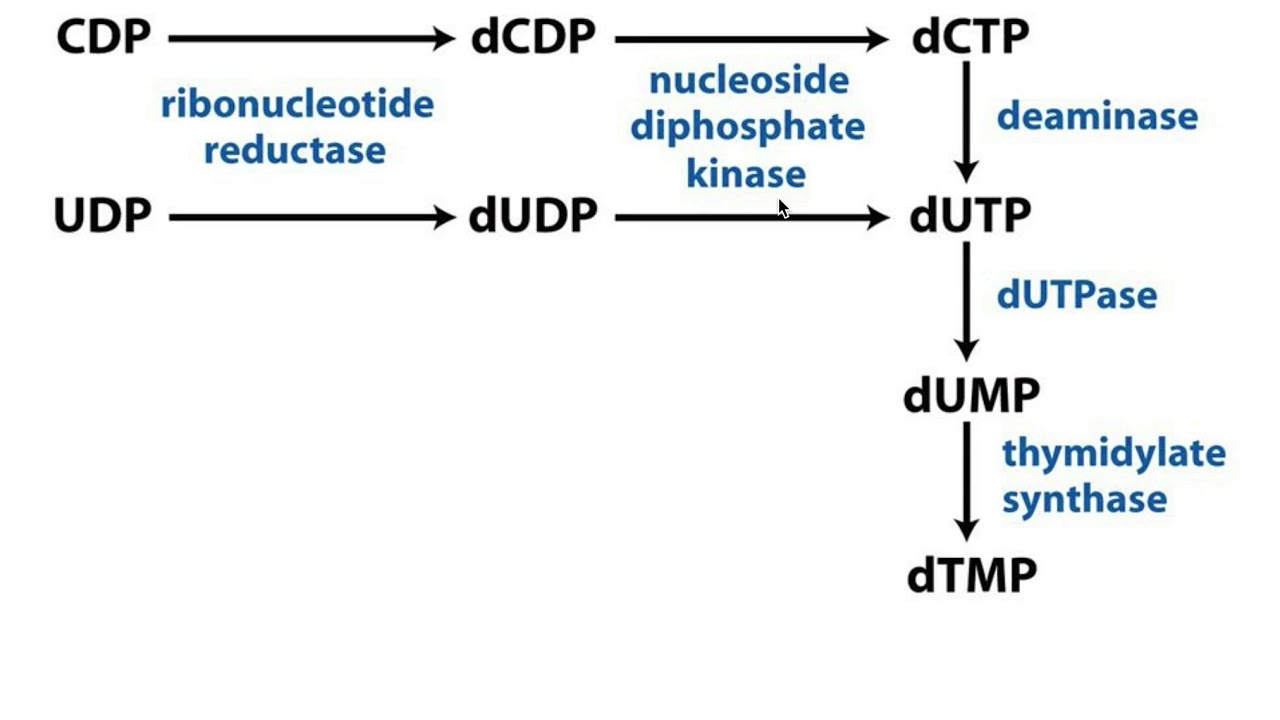
ribonucleotide reductase
converts the ribose to deoxyribose for converting UDP to dUDP
followed by kinase that adds to the phosphate to make dUTP.
dUTP is converted to dUMP by dUTPase and dUMP synthesizes dTMP with thymidylate synthase and tetrahydrofolate.
pyrimidine ring sources
Aspartate = N1, C4, C5, C6
Glutamine = N3
CO2= C1

purine structure
6 membered ring fused to a 5 membered ring
Glutamine and Adenine
form the energy carrier molecules: ATP and GTP
requires glutamine, glycine, aspartate, and tetrahydrofolate (vitamin B9)
can be synthesized using a de noro or salvage pathway
synthesis occurs in the cytoplasm

adenine
6-aminopurine

guanine
2-amino-6-oxypurine

purine synthesis
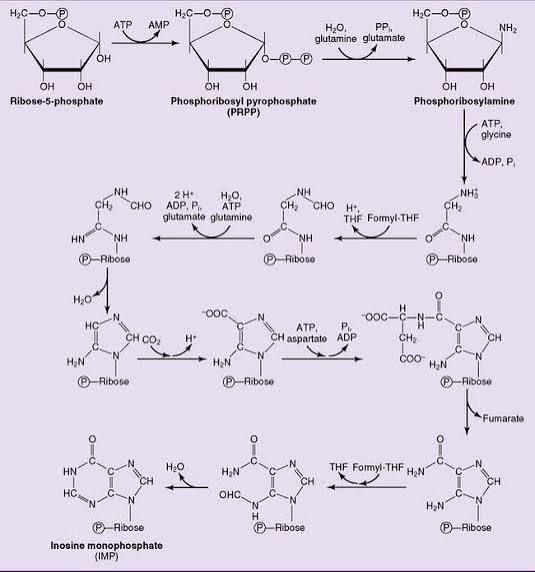
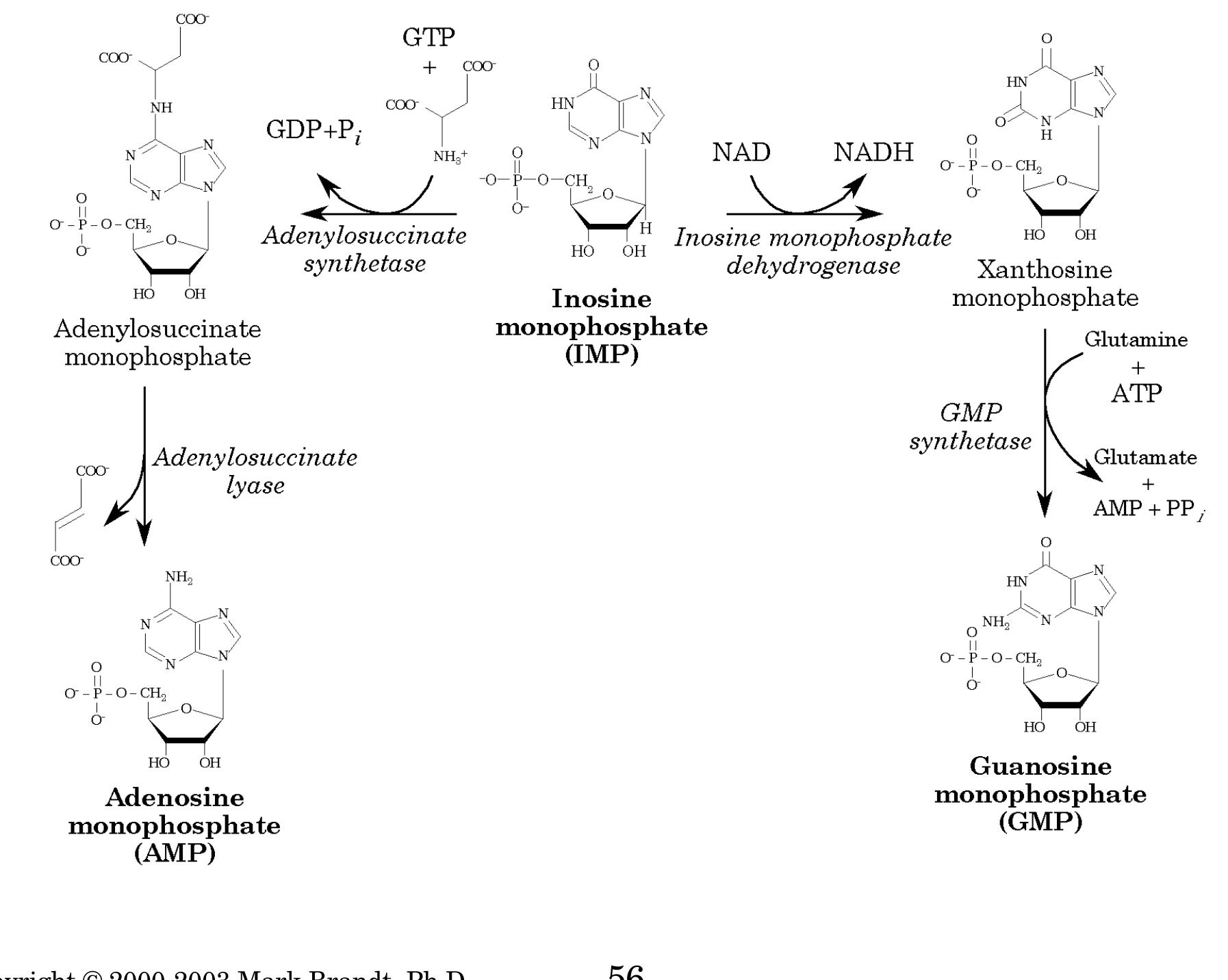
PRPP is converted to IMP with the help of glycine, tetrahydrofolate, glutamine, ATP, CO2, aspartate and ATP, and tetrahydrofolate molecule (10 steps)
IMP is the precursor for purine nucleotide AMP and GMP
further phosphate additions to generate diphosphate and triphosphate nucleosides may follow the completion of monophosphate synthesis (carried out by kinases)
both ATP and GTP are then converted to dATP and dGTP with ribonucletoide reductase that will be used for DNA synthesis
ATP synthesis
IMP is first converted to adenylosuccinate with the help of adenosuccinate synthetase
the adenylosuccinate is then converted to AMP with the release of fumarate.
AMP is converted to ADP with AMP kinase and further to ATP with ADP kinase
with ribonucleotide reductase, AMP is converted to dADP and then to dAMP

GTP synthesis
IMP forms XMP with enzyme IMP dehydrogenase
XMP converts to GMP using GMP synthase
with help of guanylate kinase, GMP is converted to GDP
with the help of GDP kinase, GDP is converetd to GTP
purine ring sources
aspartate: N1
THFA: C2 and C8
Glutamine: N3 and N9
Glycine: C4, C5, and C7
CO2: C6
