AQA A level Business - Unit 6
 Call Kai
 Learn
 Practice Test
 Spaced Repetition
 Match
 Flashcards
 Knowt Play
1/63

There's no tags or description
Looks like no tags are added yet.
64 Terms
Hard Human Resource Management
when managers treat the human resource in the same way they would treat any other resource. Employee relations likely strained and staff may see the need to get trade union involved.
Line Managers
Staff responsible for achieving specific business objectives, and with the resources to get things done.
Soft Human Resource Management
Treat workforce as a special strength of the business and therefore make sure that staff welfare and motivation are always top priority.
Staff Appraisal
A regular (perhaps annual) meeting between employee and line manager to discuss past performances and future business and career objectives.
Division of Labour
Subdividing a task into a number of activities, enabling workers to specialise and therefore become very efficient at completing what may be a small, repetitive task.
Hygiene Factors
'Everything that surrounds what you do in the job', such as pay, working conditions and social status; all are potential causes of dissatisfaction, according to Herzberg.
Job Satisfaction
Sense of well-being and achievement that stems from a satisfying job.
Piece Rate
Paying workers per piece they produce (for example, £2 per pair of jeans made).
Productivity
Output per person (that is, a measure of efficiency).
Trade Union
An organisation that represents the interests of staff at the workplace.
Motivation
Doing something because you want to do it. Most business leaders think of it as prompting people to work hard. (Herzberg)
Delayering
Removing a management layer from the organisational structure.
Span of Control
Number of staff who are answerable directly to a manager.
Matrix Management
Where staff work in project teams in addition to their responsibilities within their own department. Therefore, staff can be answerable to more than one boss.
Job Description
A statement of what the job tasks and duties are, that is, the job itself (rather than describing the right person for the job).
Induction Training
Familiarises newly appointed workers with key aspects of their job and their employer, such as health and safety policies, holiday entitlement and payment arrangements. The aim is to make employees fully productive as soon as possible.
Person Specification
An account of the qualifications, attributes and experience required from a successful candidate for the post.
Poaching
Persuading staff to leave the company that trained them, thereby getting fully trained staff without paying the training cost (premier league clubs accused of this by lower league clubs).
Soft Skills
Personal qualities such as warmth, openness, willingness to act on criticism and empathy.
Arbitration
When an independent person listens to the case put by both sides, then makes a judgement about the correct outcome.
Conciliation
Independent encourages both sides in a dispute to get together to talk through their differences. The conciliator helps the process but makes no judgement about the right outcome.
Feedback
Obtaining a response to a communication, perhaps including an element of judgement (e.g, praise for a job done well).
Vertical Communications
Messages passing freely from the bottom to the top of the organisation, and from the top to the bottom.
Culture
Accepted attitudes and behaviours of people within a workplace.
Labour Productivity
Output per person
Labour turnover
The rate at which people leave their jobs and need to be replaced.
Zero-hour Contracts
Employment contract that promises nothing more than a last minute offer of work for the following week. This is flexible for employers at the cost of uncertainty for employees.
Whistleblower
An employee who reveals unethical or risky practices that line managers have been trying to keep quiet. The secrets may be passes up the hierarchy or (if that has no effect) be revealed to the media/outside world.
Calculate for labour costs per unit
labour costs
--------------
unit of output
Calculation for employee costs as percentage of turnover
employee costs
----------------- x100
sales turnover
Calculation for labour productivity
output per time period
-------------------------
number of employees
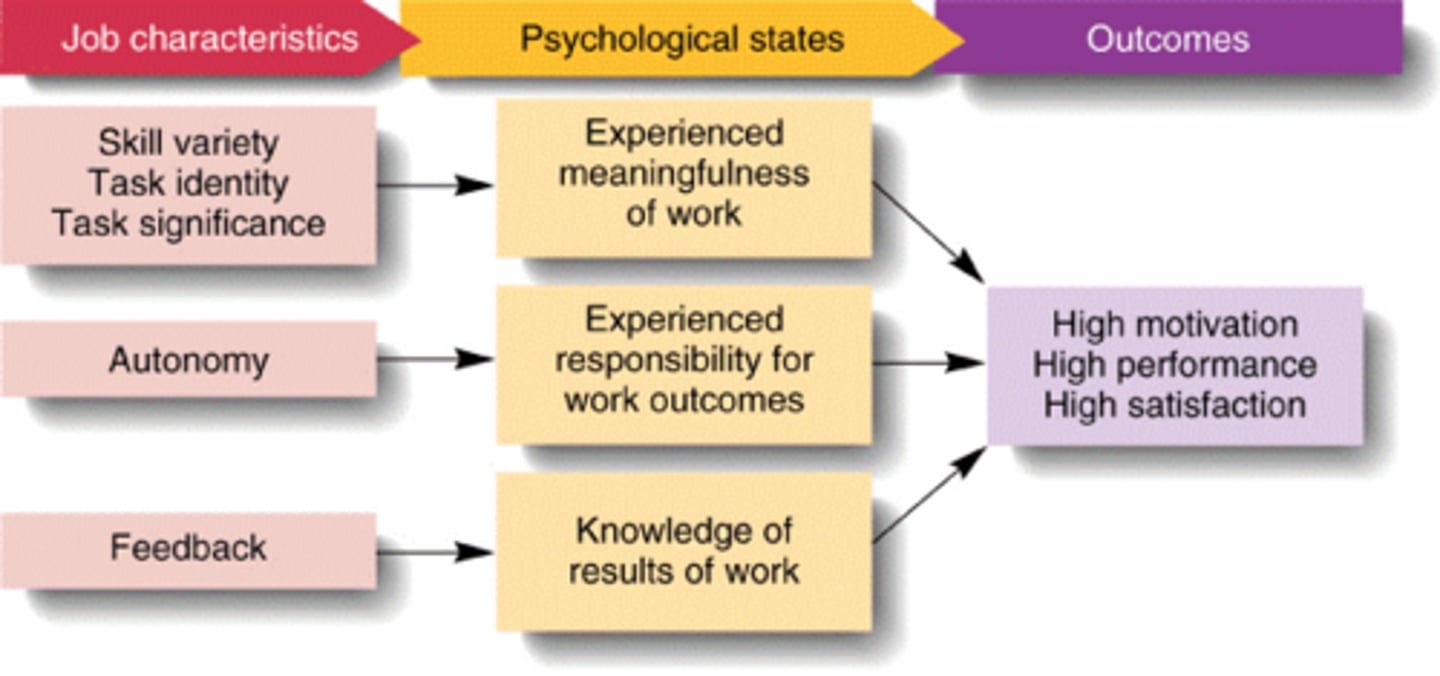
Hackman and Oldham
model based on the belief that the TASK itself is key to employee motivation.
Mayo
theory that states that employees are motivated far more by relational factors such as attention and camaraderie than by rewards.
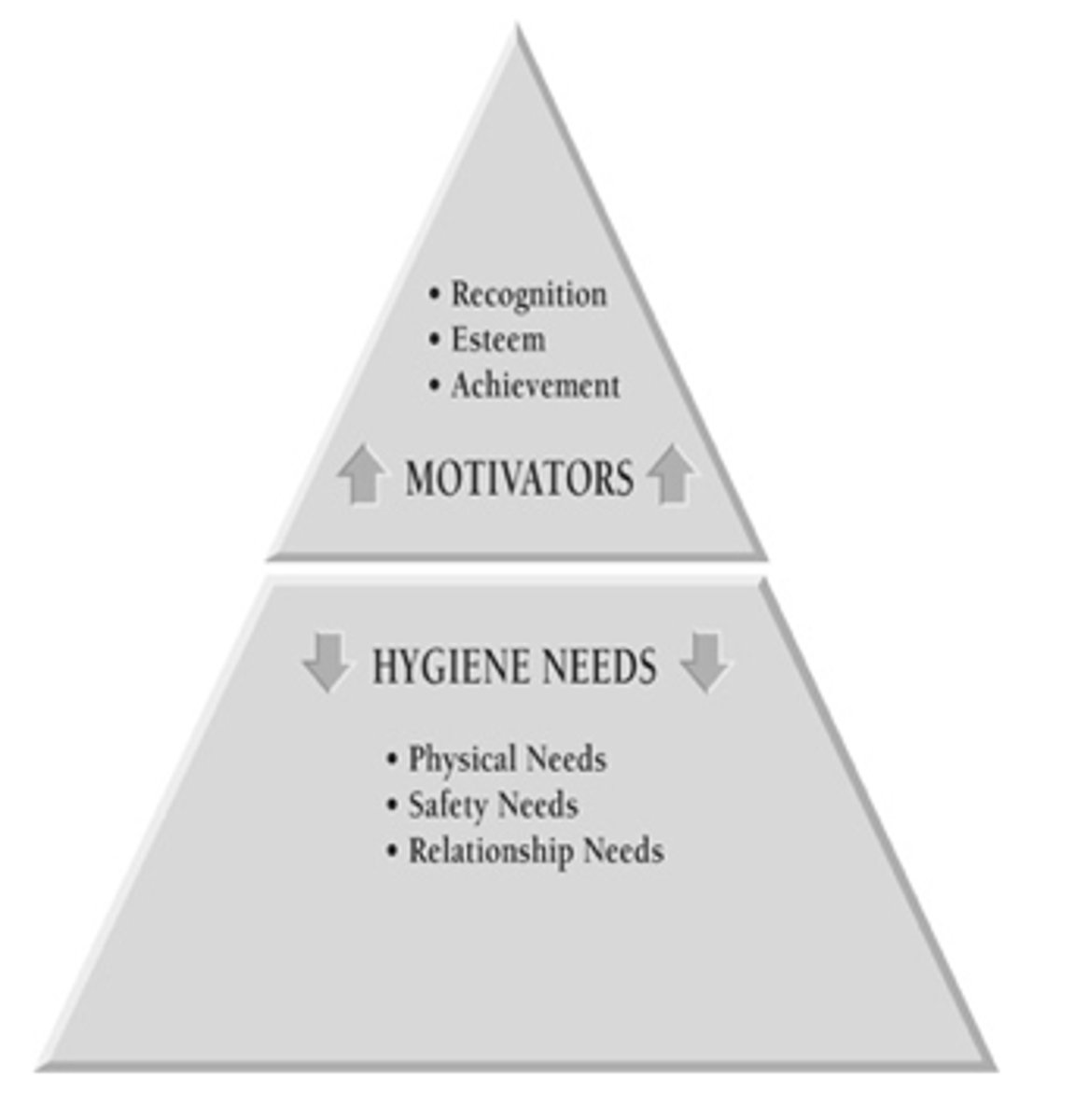
Herzberg
there are certain factors in the workplace that cause job satisfaction, while a separate set of factors cause dissatisfaction.
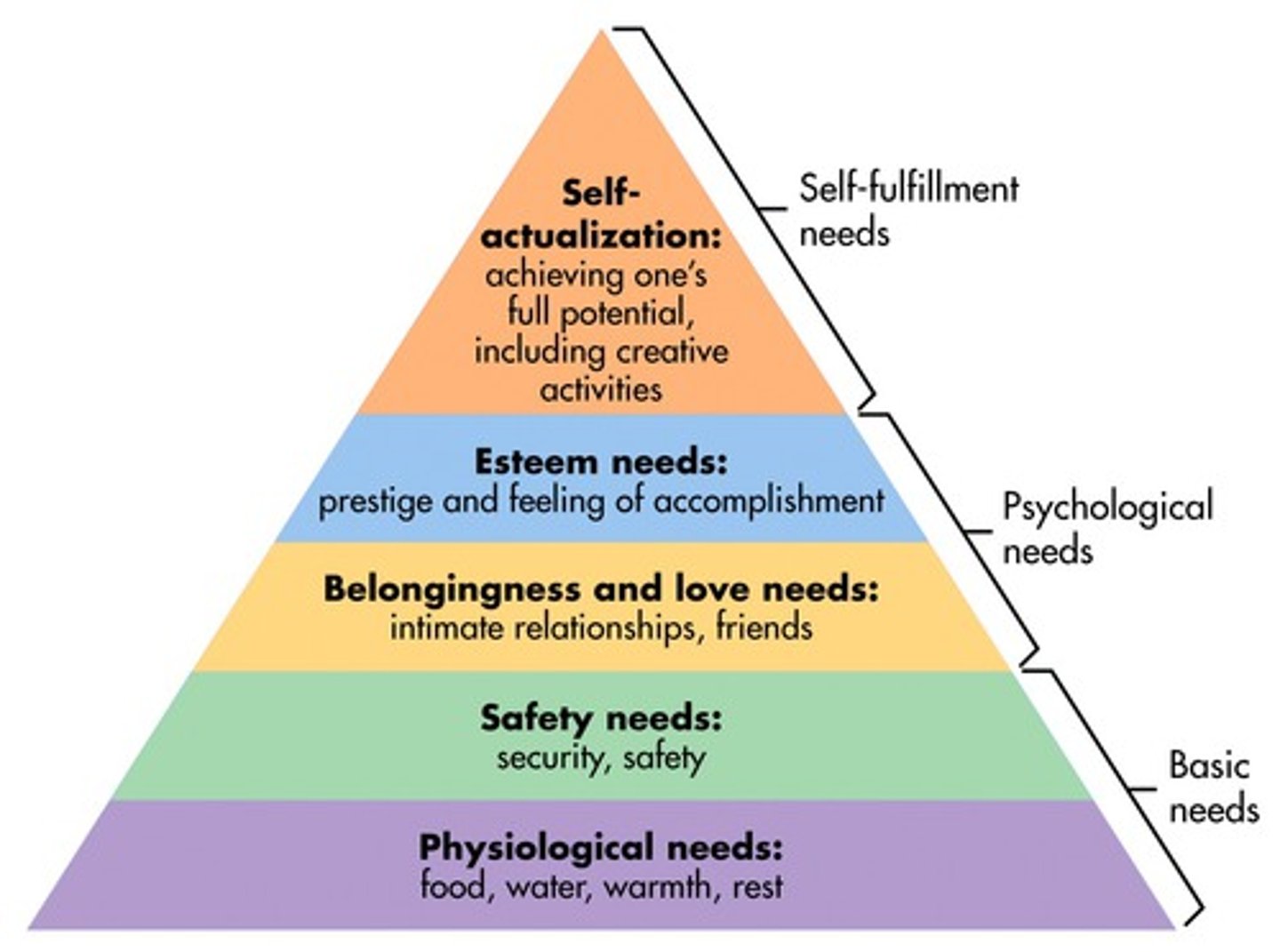
Maslow
motivational theory in psychology comprising a five-tier model of human needs, often depicted as hierarchical levels within a pyramid.
Taylor
workers are motivated mainly by pay. His Theory of Scientific Management argued the following: Workers do not naturally enjoy work and so need close supervision and control. Therefore managers should break down production into a series of small tasks.
human resource objectives
- talent management
- employee engagement and involvement
- training
- diversity
- alignment of values
- number, size and location of employees
benefits of fulfilling HR objectives
- low labour turnover
- motivated workforce
- high labour retention rates
- higher productivity
- full compliance with any UK legislation
external influences on HR objectives
+ economic cycle
+ political factors
+ technology
+ competitive environment
internal influences on HR objectives
+ Corporate objectives - expanding
+ Type of product or service
+ Style of management ( hard or soft approach )
Hard approach to HRM
managers see employees as another resource to be used a sufficiently as possible
- short term : [employees are hired and fired whenever]
- link to autocratic leadership style
- financial incentives are used as motivation or delegation
key features of hard approach to HRM
> pay is kept to a minimum
> little or no empowerment
> communication is mainly downwards
> emphasis is on the short term in recruiting & training employees
soft approach to HRM
employees are seen as a valuable asset that needs to be developed
+ employees are developed over a long period of time to help the firm complete its corporate objectives
+ links to democratic style of leadership
+ gives workers more control over their working life e.g : empowered teams
Key features of soft approach to HRM
> employees are empowered and encouraged to make decisions
> employees are encourage to extend their skills
> employees are consulted regularly by managers
> a long term relationship is developed with employees through internal recruitment and ongoing training programmes
labour turnover
(Number of staff leaving / average number of staff employed) x 100
labour retention
(Number of staff employed more than 1 year / average number of staff) X 100
- the proportion of employees with one or more years of service
labour productivity
Output per time period / number of employees
- measure output per worker over a given time period
Labour costs as a % of turnover
Employee costs / sales turnover x 100
labour costs per unit
Labour costs / units of output
internal data used for HR decisions
- productivity
- unit labour costs
- retention rates
- labour turnover
- skills
- age profile of workers
- corporate objectives
external data used for HR decisions
- wage rates
- sales forecasts
- market trends
- competitor actions
- unemployment rates
- skills available
- operational capacity
job design
The process by which managers decide how to divide tasks into specific jobs
factors affecting job design
> organisational factors : ergonomics , work practices , task characteristics , process or flow of work in organisation
> environmental factors : employee ability & availability , social and cultural expectations
> behavioural factors : feedback , autonomy , variety
methods of job design
Job enlargement,
job rotation,
job enrichment,
empowerment
job enrichment (vertical loading)
vertically loaded
job has more challenging tasks
gives employees more responsibility by increasing the range and complexity of the tasks
job enlargement
extends employees range of duties
horizontal loading
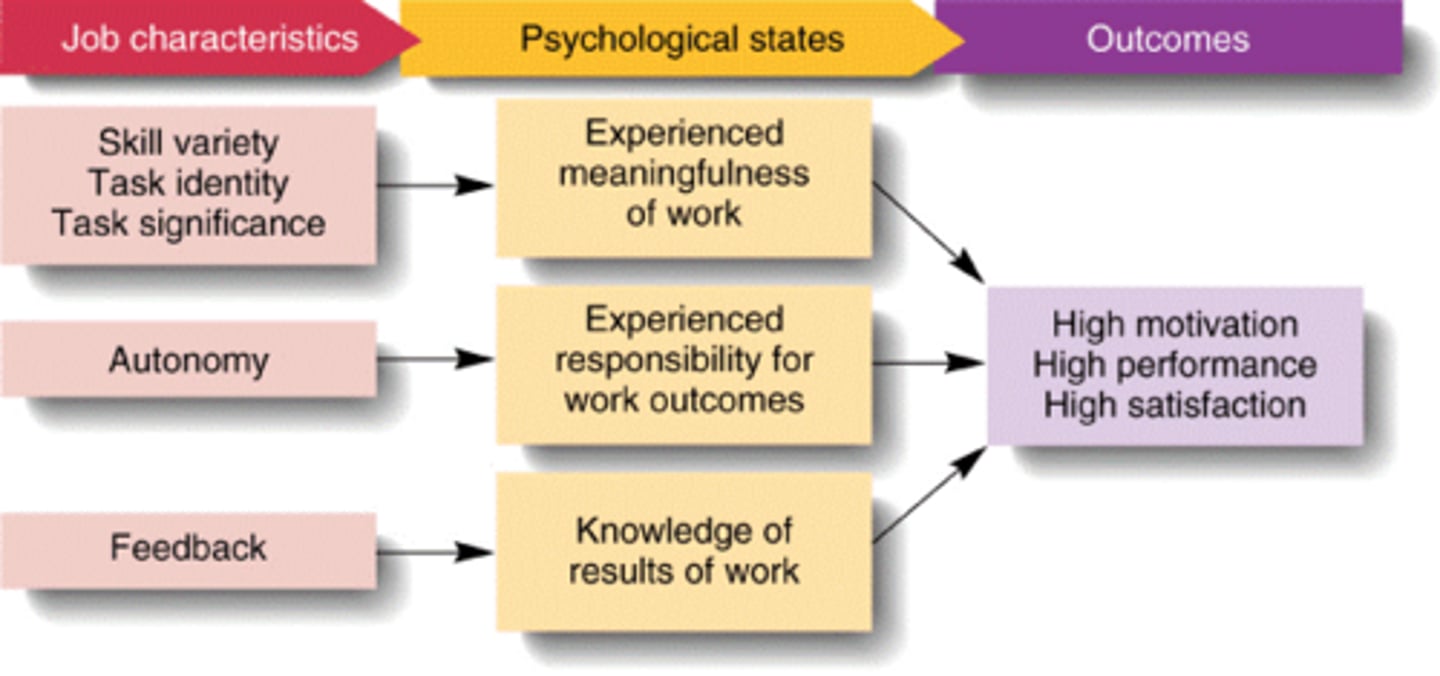
hackman and oldham model
influences of organisational design
- Levels of hierarchy (lots of levels = harder communication)
- Span of control (the number of people directly under supervision of a manager)
- Chain of command (The reporting system)
- Delegation (passing authority down the hierarchy)
- Centralisation and decentralisation (how much delegation happens)
factors influencing span of control
ability of the manager
the type of work
the skills of the employees
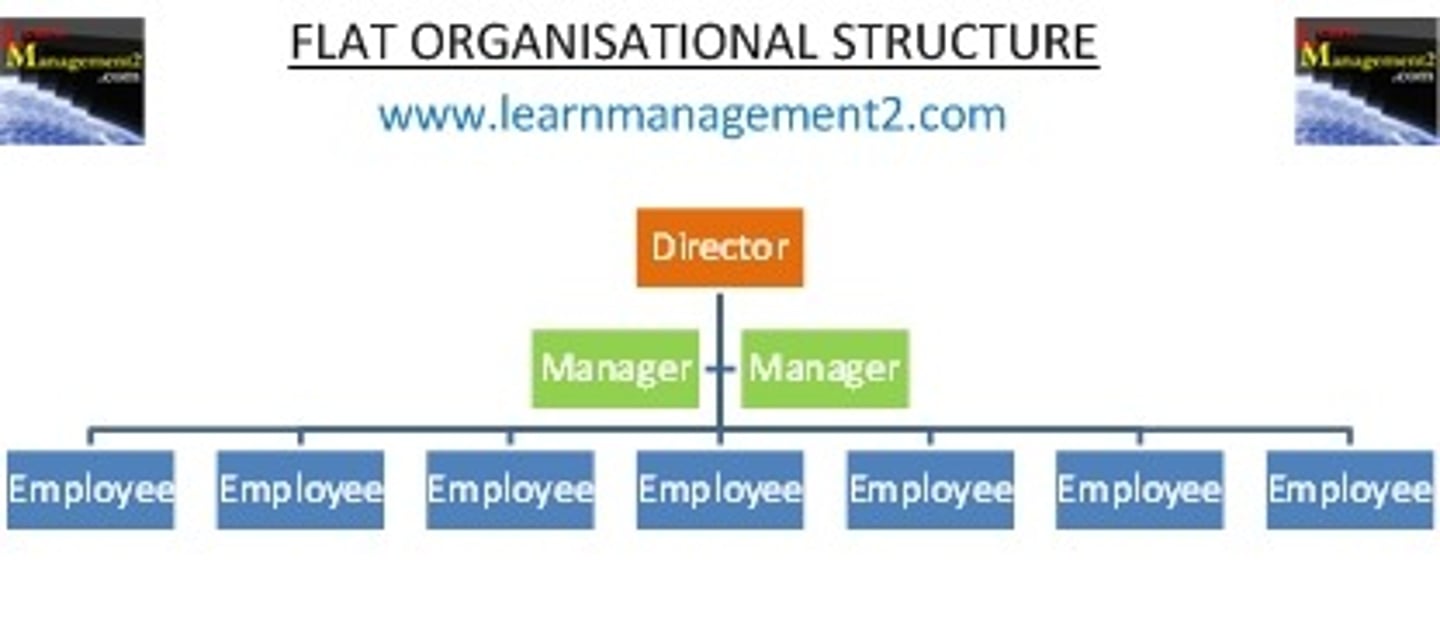
flat structure
has a wider span of control
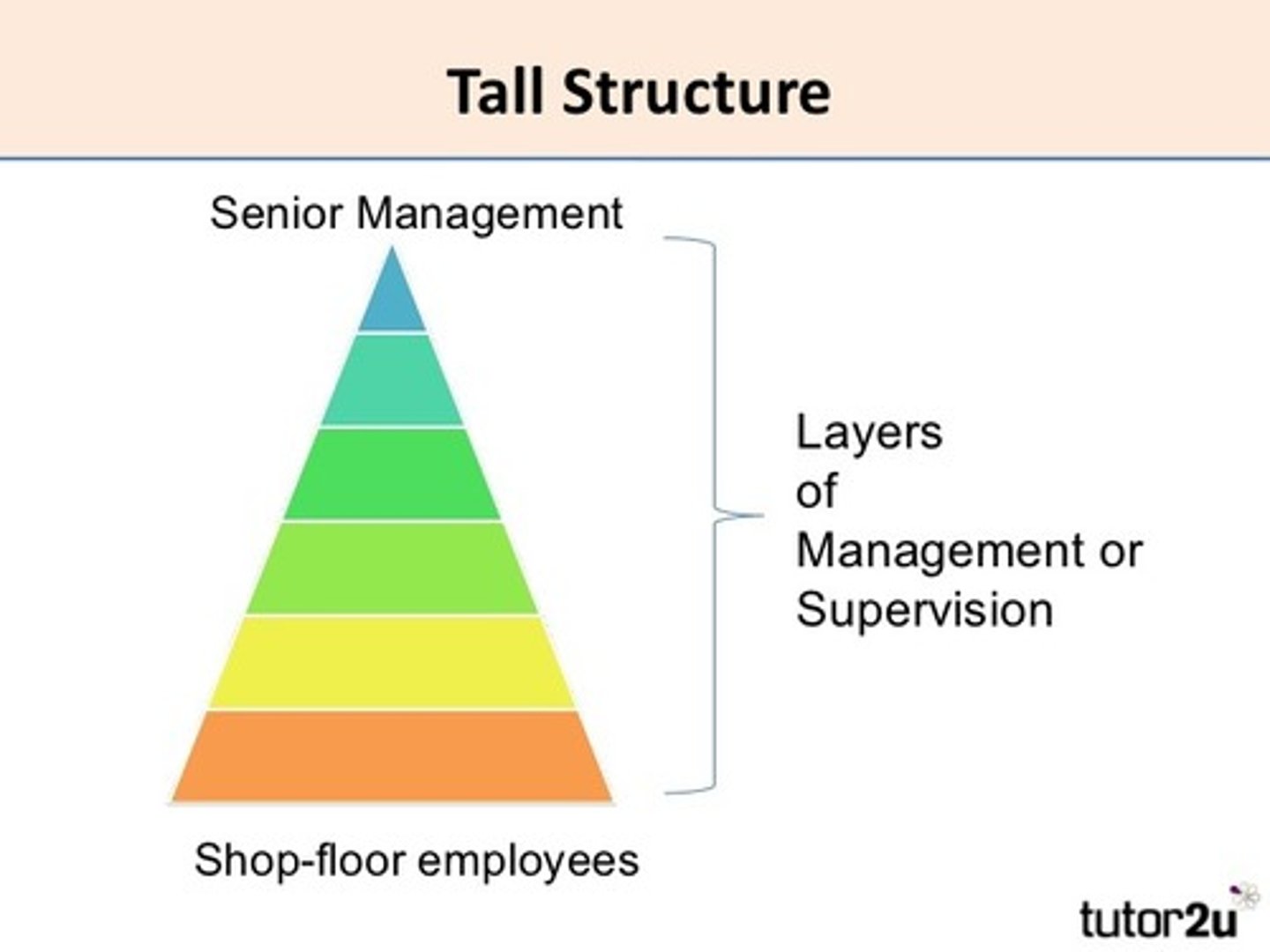
tall structure
has a narrower span of control
Influences on centralisation and decentralisation
+ uniformity of decision
+ management style
+ skills and ability of workforce
+ economic influences
+ technology
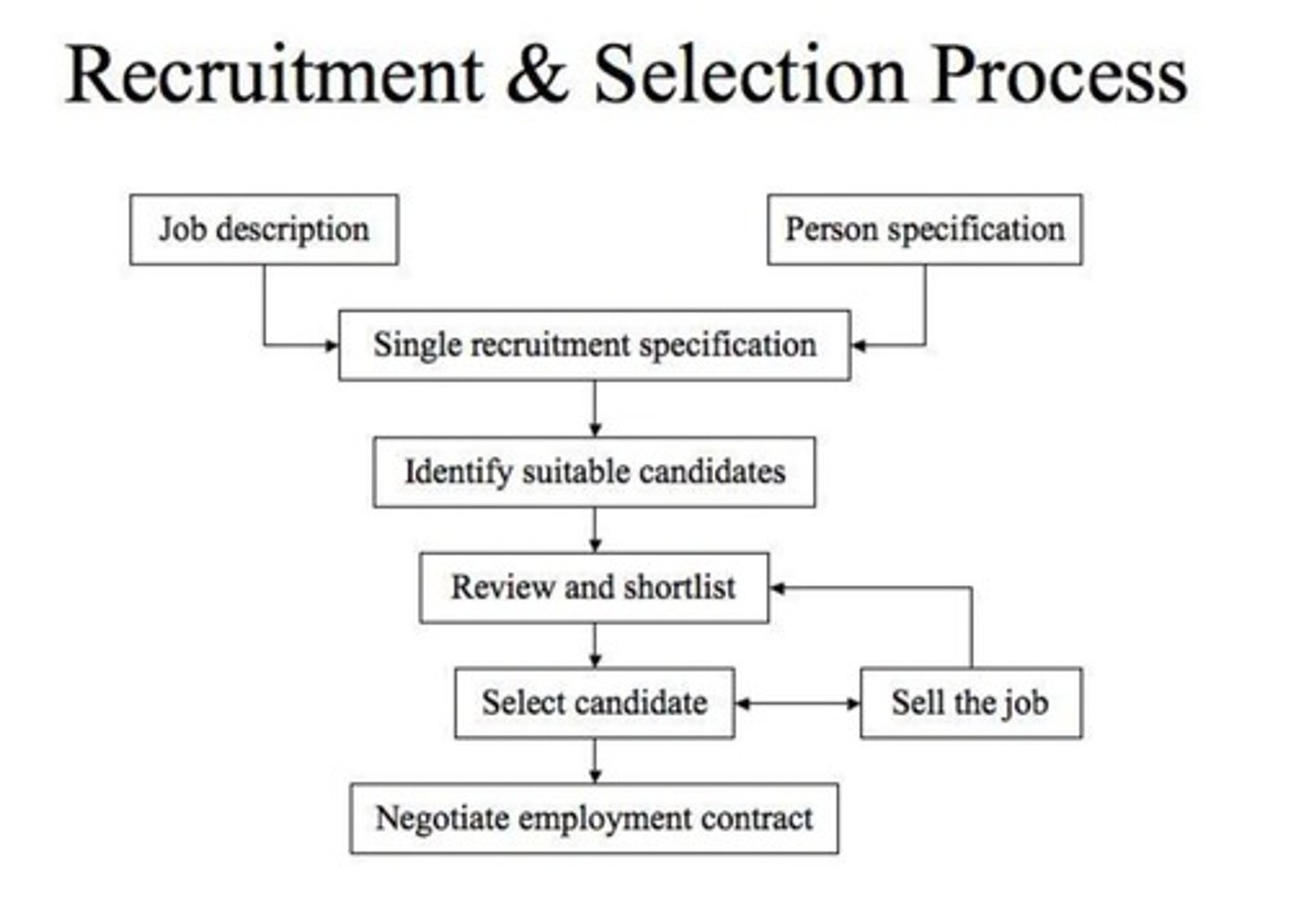
process of recruitment and selection
non financial motivation methods
+ meaningful work
+ involvement
+ responsibility and recognition