Micro: Immunology 1: innate, lecture 14

0.0(0)
Studied by 0 people
call kaiCall Kai
learnLearn
examPractice Test
spaced repetitionSpaced Repetition
heart puzzleMatch
flashcardsFlashcards
GameKnowt Play
Card Sorting

1/32

encourage image

There's no tags or description

Looks like no tags are added yet.

33 Terms

1
New cards

Innate immunity

  • Physical barriers, chemical barriers, cellular defense

  • immediate response, non-specific/no memory, always ready


<ul><li><p>Physical barriers, chemical barriers, cellular defense</p></li><li><p>immediate response, non-specific/no memory, always ready </p></li></ul><p></p>
2
New cards

Adaptive immunity

Active immunity: natural and vaccination

Passive immunity: maternal and artificial

<p>Active immunity: natural and vaccination </p><p>Passive immunity: maternal and artificial </p>
3
New cards

Barriers to infection: skin

  • protective shield covered w/ keratin made by keratinocytes

  • sebum(oily substance) covers and protects the skin

  • acidic pH inhibits bacterial growth

  • competition between species limits colonization by pathogens

  • constant shedding removes outer epithelial skin layers


<ul><li><p>protective shield covered w/ keratin made by keratinocytes </p></li><li><p>sebum(oily substance) covers and protects the skin</p></li><li><p>acidic pH inhibits bacterial growth</p></li><li><p>competition between species limits colonization by pathogens </p></li><li><p>constant shedding removes outer epithelial skin layers </p></li></ul><p></p>
4
New cards

Barriers to infection: mucus membranes

  • selectively permeable for nutrients and waste products

  • mucus coats epithelial surfaces and traps microbes

  • lysozyme: cleaves cell wall peptidoglycan


<ul><li><p>selectively permeable for nutrients and waste products</p></li><li><p>mucus coats epithelial surfaces and traps microbes </p></li><li><p>lysozyme: cleaves cell wall peptidoglycan </p></li></ul><p></p>
5
New cards

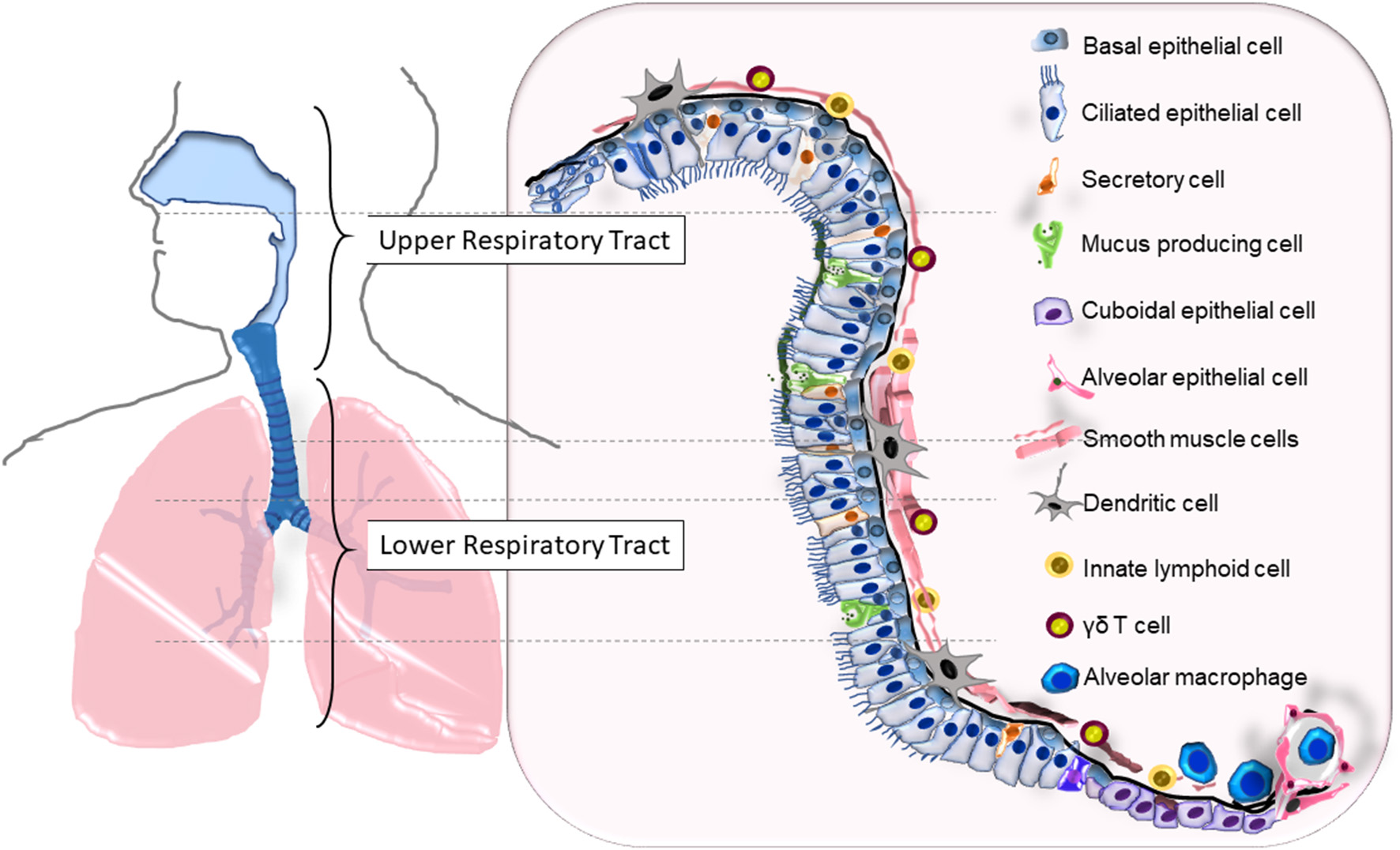
Barriers to infection: lungs

  • cilia lines the nasal cavity

  • sneezing/coughing

  • respiratory mucociliary escalator


<ul><li><p>cilia lines the nasal cavity</p></li><li><p>sneezing/coughing</p></li><li><p>respiratory mucociliary escalator </p></li></ul><p></p>
6
New cards

Chemical barriers to infection

  • acidic pH of the stomach is lethal to most bacteria

  • Enzymes, such as lysozyme in tears degrade bacterial cell walls

  • Defensins are antimicrobial peptides made by a variety of cells such as skin, lung, genitourinary tract, and gastrointestinal tract and kills by destroying microbial cytoplasmic membrane


<ul><li><p>acidic pH of the stomach is lethal to most bacteria</p></li><li><p>Enzymes, such as lysozyme in tears degrade bacterial cell walls</p></li><li><p>Defensins are antimicrobial peptides made by a variety of cells such as skin, lung, genitourinary tract, and gastrointestinal tract and kills by destroying microbial cytoplasmic membrane </p></li></ul><p></p>
7
New cards

Cells of the INNATE immune system

  • originate from bone marrow stem cells

  • leukocytes= white blood cells

  • Macrophage, dendritic cells, mast cells, neutrophil, eosinophil, basophil


<ul><li><p>originate from bone marrow stem cells</p></li><li><p>leukocytes= white blood cells</p></li><li><p>Macrophage, dendritic cells, mast cells, neutrophil, eosinophil, basophil </p></li></ul><p></p>
8
New cards

How are microbes detected?

  • Host and immune cells can recognize an infection or foreign agents through their microbe associated molecular patterns

  • Ex: Flagella, cell wall components, peptidoglycan, etc


<ul><li><p>Host and immune cells can recognize an infection or foreign agents through their microbe associated molecular patterns</p></li><li><p>Ex: Flagella, cell wall components, peptidoglycan, etc</p></li></ul><p></p>
9
New cards

Neutrophils

  • first responder to infection

  • make up majority of wbc in blood

  • can engulf by phagocytosis- eat cell

  • engulf pathogen in phagosome vacuole that kills microbes after merge with lysosome

1) phagocytic wbc engulf the microbes

2) microbes are internalized in phagosomes and broken down in phagolysosome

<ul><li><p>first responder to infection</p></li><li><p>make up majority of wbc in blood</p></li><li><p>can engulf by phagocytosis- eat cell</p></li><li><p>engulf pathogen in phagosome vacuole that kills microbes after merge with lysosome </p></li></ul><p>1) phagocytic wbc engulf the microbes</p><p>2) microbes are internalized in phagosomes and broken down in phagolysosome  </p>
10
New cards

Neutrophil NETosis

  • released to trap and neutralize pathogens

  • web-like networks of primarily DNA and antimicrobial enzymes

  • could be suicidal or vital NETosis


<ul><li><p>released to trap and neutralize pathogens </p></li><li><p>web-like networks of primarily DNA and antimicrobial enzymes</p></li><li><p>could be suicidal or vital NETosis  </p></li></ul><p></p>
11
New cards

Macrophages

  • widely distributed throughout the body

  • phagocytes (engulf bacteria)

  • “present” antigens


<ul><li><p>widely distributed throughout the body</p></li><li><p>phagocytes (engulf bacteria)</p></li><li><p>“present” antigens </p></li></ul><p></p>
12
New cards

Antigens

a piece of any enemy your immune system can recognize

<p>a piece of any enemy your immune system can recognize </p>
13
New cards

Dendritic cells

  • phagocytic

  • antigen-presenting, can use soluble (free-floating) antigens

  • common in skin, lungs, gut and can travel to lymph nodes


<ul><li><p>phagocytic </p></li><li><p>antigen-presenting, can use soluble (free-floating) antigens </p></li><li><p>common in skin, lungs, gut and can travel to lymph nodes </p></li></ul><p></p>
14
New cards

Eosinophils

  • not effective at phagocytosis

  • release toxins that target parasites, too large to phagocytose

  • also involved in allergic reactions

  • can contribute to asthma


<ul><li><p>not effective at phagocytosis </p></li><li><p>release toxins that target parasites, too large to phagocytose </p></li><li><p>also involved in allergic reactions</p></li><li><p>can contribute to asthma </p></li></ul><p></p>
15
New cards

Basophils

  • make up <1% of wbc

  • trigger allergic reactions

  • release histamine- drives vessel dilation and permeability


<ul><li><p>make up &lt;1% of wbc</p></li><li><p>trigger allergic reactions </p></li><li><p>release histamine- drives vessel dilation and permeability </p></li></ul><p></p>
16
New cards

Mast cells

  • similar to basophils in structure

  • contain many granules rich in histamine(causes vasodilation) and heparin which play a role in inflammatory response

  • reside in connective tissues and mucosa and do not circulate in the bloodstream


<ul><li><p>similar to basophils in structure </p></li><li><p>contain many granules rich in histamine(causes vasodilation) and heparin which play a role in inflammatory response </p></li><li><p>reside in connective tissues and mucosa and do not circulate in the bloodstream </p></li></ul><p></p>
17
New cards

How are all theses cell communicating?

  • signaling proteins or molecules allows the immune system to coordinate and calibrate to the appropriate threat

  • released by tissue or immune system


<ul><li><p>signaling proteins or molecules allows the immune system to coordinate and calibrate to the appropriate threat</p></li><li><p>released by tissue or immune system </p></li></ul><p></p>
18
New cards

Cytokines

  • inform immune cells to ramp up or down response, ex: interleukins or interferons


<ul><li><p>inform immune cells to ramp up or down response, ex: interleukins or interferons </p></li></ul><p></p>
19
New cards

chemokines

  • chemical attractants, ex: neutrophils migrate towards specific chemokines released by inflamed tissue


<ul><li><p>chemical attractants, ex: neutrophils migrate towards specific chemokines released by inflamed tissue  </p></li></ul><p></p>
20
New cards

What is inflammation?

  • a natural part of the body’s reaction to injury and infection, and is essential to body’s healing process

  • while it’s helpful in the short-term, inflammation is destructive to human cells, tissues, and organs


<ul><li><p>a natural part of the body’s reaction to injury and infection, and is essential to body’s healing process</p></li><li><p>while it’s helpful in the short-term, inflammation is destructive to human cells, tissues, and organs </p></li></ul><p></p>
21
New cards

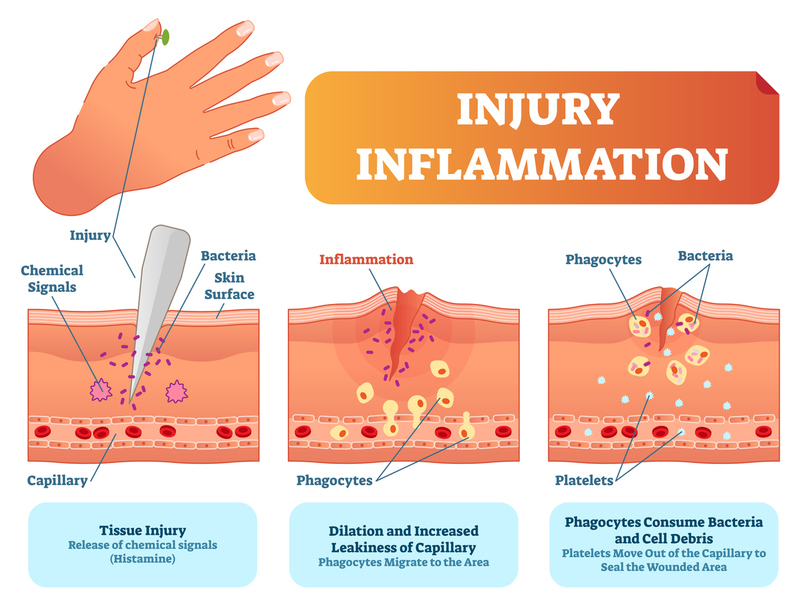
The inflammation response: infection, step 1

  • microorganisms grow and produce cell damaging compounds

<ul><li><p> microorganisms grow and produce cell damaging compounds </p></li></ul><p></p>
22
New cards

The inflammation response: macrophages at the site, step 2

  • phagocytosis and release signals like cytokines to communicate with other cells


<ul><li><p>phagocytosis and release signals like cytokines to communicate with other cells </p></li></ul><p></p>
23
New cards

The inflammation response: Vascular dilation and permeability, step 3

  • to allows more leukocytes to enter the infection site, signaling proteins like prostaglandins, bradykinin, and histamines make blood vessels widen and become permeable

  • more permeability= more swelling, redness, heat at infection site

  • These also stimulate pain receptors

  • stop prostaglandin=stop pain

  • Ex: NSAIDS: ibuprofen/aspirin


<ul><li><p>to allows more leukocytes to enter the infection site,  signaling proteins like prostaglandins, bradykinin, and histamines make blood vessels widen and become permeable</p></li><li><p>more permeability= more swelling, redness, heat at infection site</p></li><li><p>These also stimulate pain receptors </p></li><li><p>stop prostaglandin=stop pain</p></li><li><p>Ex: NSAIDS: ibuprofen/aspirin  </p></li></ul><p></p>
24
New cards

The inflammation process: neutrophil infiltration, step 4

  • neutrophils are often first recruits

  • neutrophils follow signals and enter the site through capillary walls


<ul><li><p>neutrophils are often first recruits </p></li><li><p>neutrophils follow signals and enter the site through capillary walls </p></li></ul><p></p>
25
New cards

The inflammation process: step 5

After pathogen is destroys, anti-inflammatory signals are released to resolve inflammation

<p>After pathogen is destroys, anti-inflammatory signals are released to resolve inflammation</p>
26
New cards

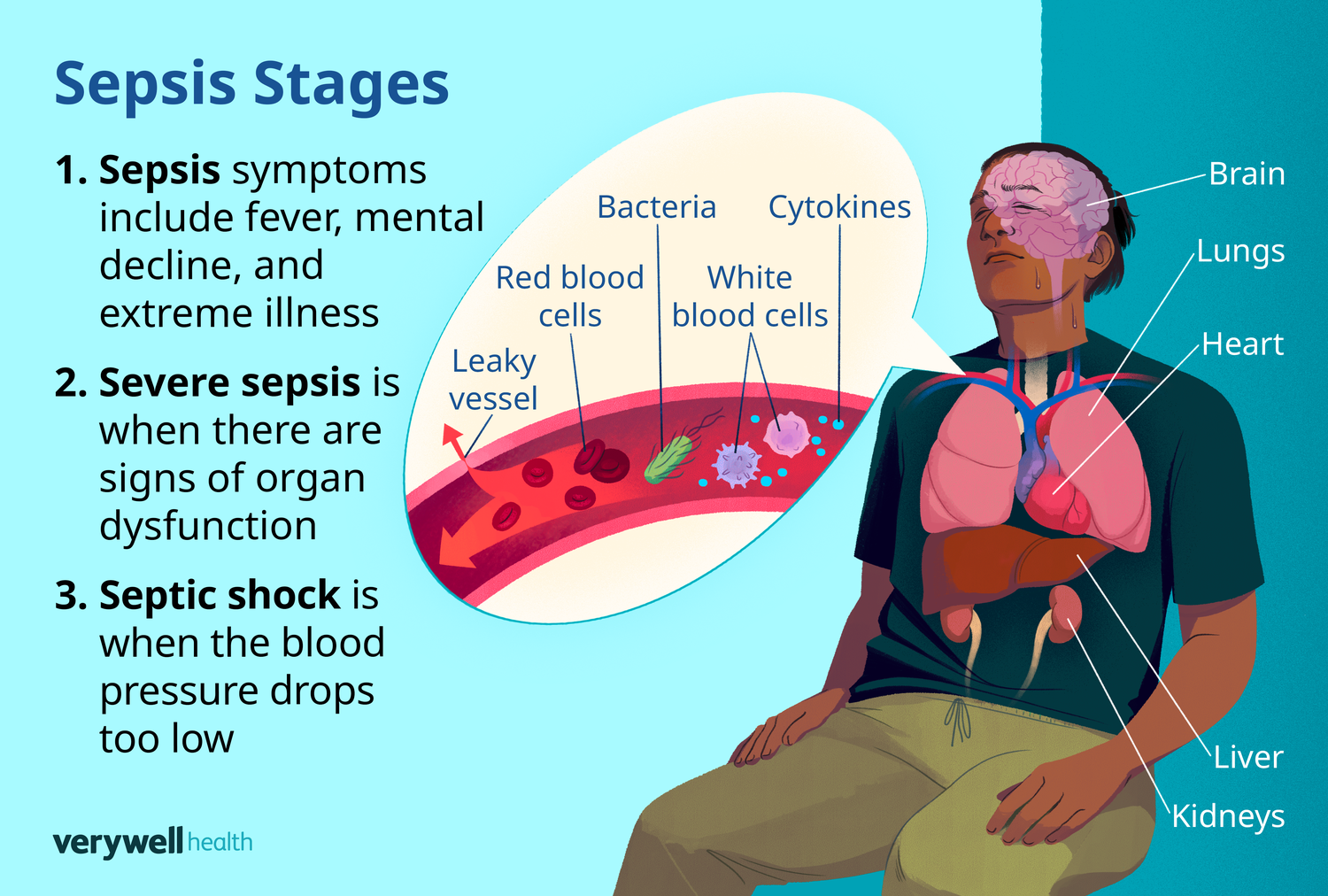
sepsis

  • a life-threatening, body-wide overreaction of the immune system to an infection

  • triggered when microbes or their body parts. Ex: LPSendotoxin set off inflammation throughout the body instead at one site

  • Ex: UTI, pneumonia, appendicitis


<ul><li><p>a life-threatening, body-wide overreaction of the immune system to an infection</p></li><li><p>triggered when microbes or their body parts. Ex: LPSendotoxin set off inflammation throughout the body instead at one site</p></li><li><p>Ex: UTI, pneumonia, appendicitis  </p></li></ul><p></p>
27
New cards

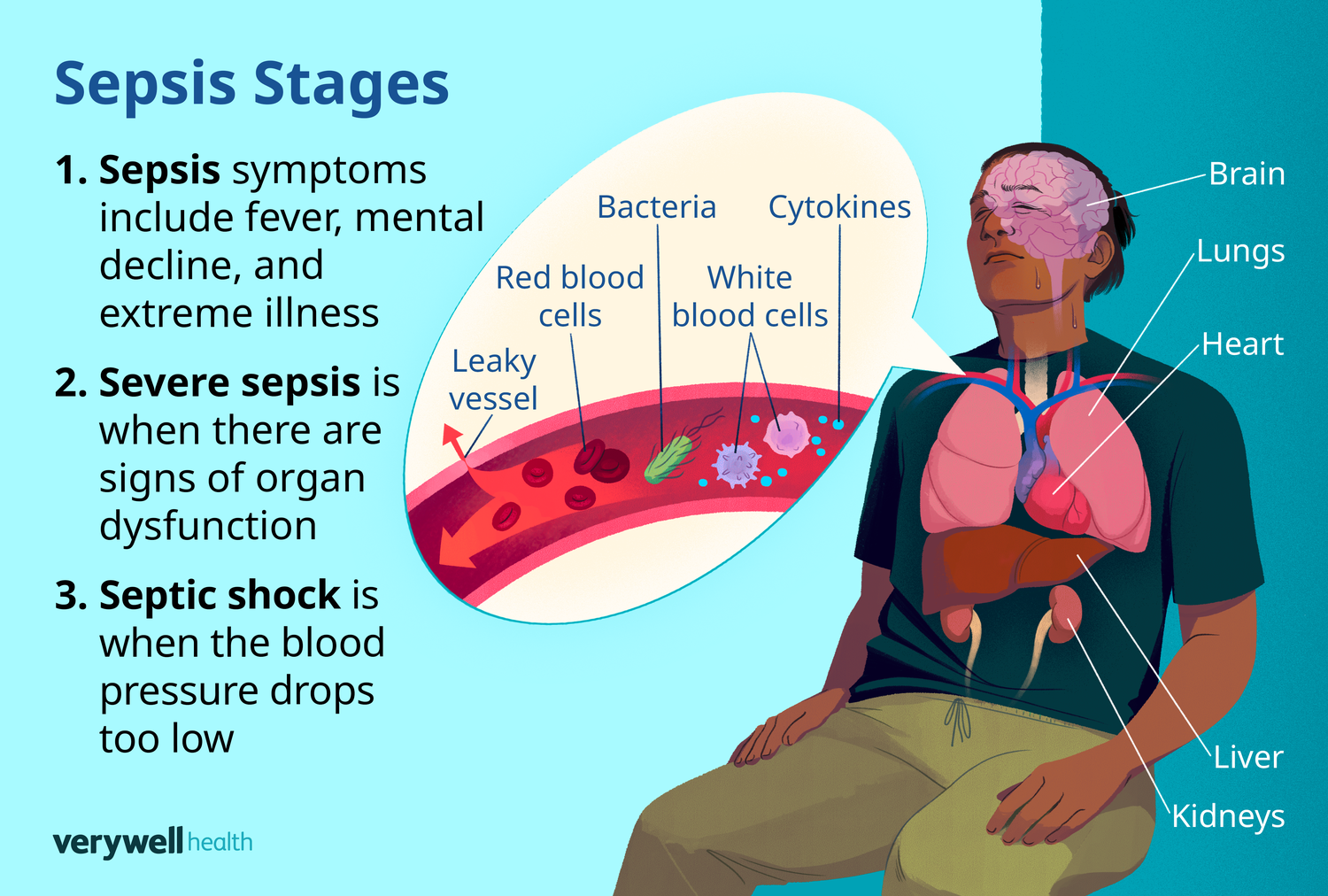
Early signs of sepsis

  • fever(or abnormally low temperature), fast breathing, fast heart rate, high( or sometimes low) WBC count

<ul><li><p>fever(or abnormally low temperature), fast breathing, fast heart rate, high( or sometimes low) WBC count </p></li></ul><p></p>
28
New cards

Severe signs of sepsis

  • confusion, kidney damage, abnormal blood clotting, which are signs that organs are starting to fail


<ul><li><p>confusion, kidney damage, abnormal blood clotting, which are signs that organs are starting to fail </p></li></ul><p></p>
29
New cards

septic shock

  • blood pressure drops dangerously low and stays low even with treatment

  • about 30-40% of patients with septic shock die

  • 1 in 3 patients who die in the hospital have sepsis


<ul><li><p>blood pressure drops dangerously low and stays low even with treatment </p></li><li><p>about 30-40% of patients with septic shock die </p></li><li><p>1 in 3 patients who die in the hospital have sepsis </p></li></ul><p></p>
30
New cards

Fever(pyrexia)

  • normal body temperature is 96.8 F-100.4F

  • Fever is greater than 100.4F (greater than 106.7F causes brain damage)

  • slows bacterial growth and stimulates inflammatory response


<ul><li><p>normal body temperature is 96.8 F-100.4F</p></li><li><p>Fever is greater than 100.4F (greater than 106.7F causes brain damage)</p></li><li><p>slows bacterial growth and stimulates inflammatory response </p></li></ul><p></p>
31
New cards

Pyrogens

  • substances that cause fever

  • Ex: bacterial toxins, immune signals(interferons, cytokines, etc

  • hypothalamus within the brain regulates temp in response to pyrogens

  • prostaglandins also regulate fever

  • NSAIDS=fever reducer


<ul><li><p>substances that cause fever</p></li><li><p>Ex: bacterial toxins, immune signals(interferons, cytokines, etc</p></li><li><p>hypothalamus within the brain regulates temp in response to pyrogens </p></li><li><p>prostaglandins also regulate fever</p></li><li><p>NSAIDS=fever reducer   </p></li></ul><p></p>
32
New cards

Chronic inflammation

  • a slow, long term inflammation lasting months or years

  • persistent presence of a foreign body, such as pathogens lingering in an unresolved infection, which may cause permanent tissue damage

  • Ex; TB(avoids host defense), protozoa

  • in some cases, infection could be walled off by leukocytes-granuloma

  • conditions such as inflammatory bowel disease CD/UC have perpetual stimulation of inflammation in the gut even in beneficial microbes


<ul><li><p>a slow, long term inflammation lasting months or years</p></li><li><p>persistent presence of a foreign body, such as pathogens lingering in an unresolved infection, which may cause permanent tissue damage </p></li><li><p>Ex; TB(avoids host defense), protozoa </p></li><li><p>in some cases, infection could be walled off by leukocytes-granuloma</p></li><li><p>conditions such as inflammatory bowel disease CD/UC have perpetual stimulation of inflammation in the gut even in beneficial microbes  </p></li></ul><p></p>
33
New cards

The complement system

  • A collection of over 50 proteins in the blood that help prevent blood infections

  • Produced in the liver

  • Triggering the complement cascade produces several outcomes:

  • destroys the membrane of the pathogen, forms pores

  • attracts WBC

  • Induces inflammation


<ul><li><p>A collection of over 50 proteins in the blood that help prevent blood infections</p></li><li><p>Produced in the liver</p></li><li><p>Triggering the complement cascade produces several outcomes: </p></li><li><p>destroys the membrane of the pathogen, forms pores </p></li><li><p>attracts WBC</p></li><li><p>Induces inflammation </p></li></ul><p></p>