Med Surg II Exam 3
 Call Kai
 Learn
 Practice Test
 Spaced Repetition
 Match
 Flashcards
 Knowt Play
1/515

There's no tags or description
Looks like no tags are added yet.
516 Terms
What are the 2 components of the CNS?
Brain
Spinal cord
What are the 3 components of the PNS?
Cranial nerves
Spinal nerves
Autonomic nervous system
What are dendrites?
The parts of the neuron that are branch-like and receive electrochemical messages.
What are axons?
The parts of the neuron that carry electrical impulses away from the cell.
What do myelinated sheaths do?
Increase the speed of conduction.
What are nerve cell bodies occurring in clusters called?
Ganglia/nuclei.
What is a center?
A cluster of cell bodies with the same function.
What neurotransmitter issue is seen in Parkinson’s disease?
Decreased dopamine.
What neurotransmitter issue is seen in Myasthenia gravis?
Decreased acetylcholine.
What 3 neurotransmitters can PET detect?
Dopamine
Serotonin
Acetylcholine
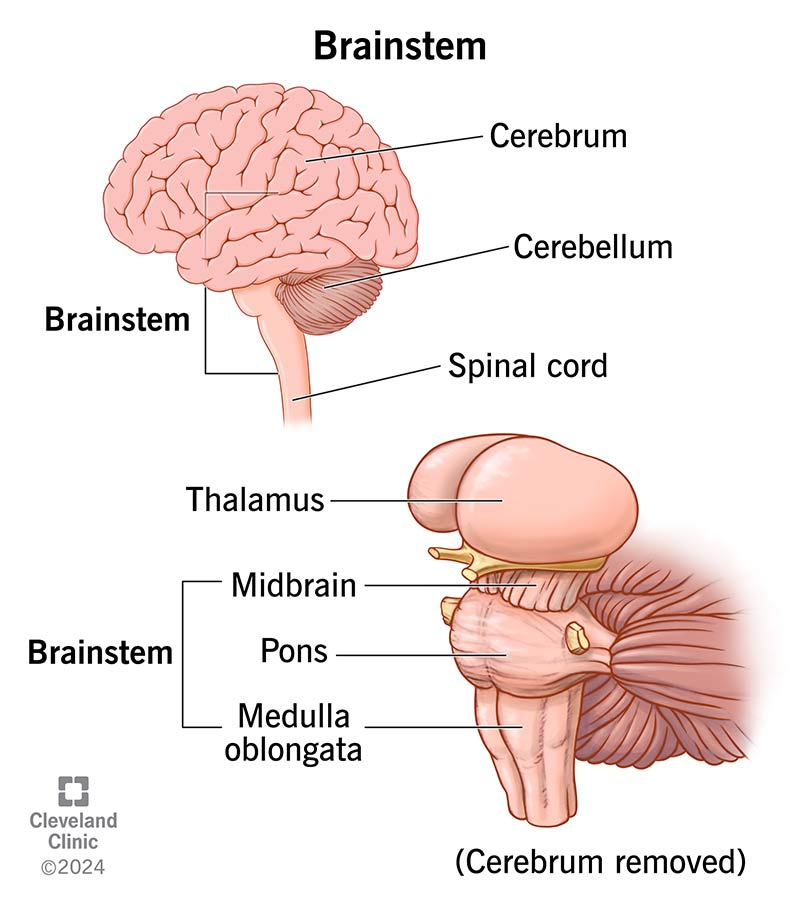
What are the 3 major areas of the brain?
Cerebrum
Brain stem
Cerebellum

What are the 5 components of the cerebrum?
Left hemisphere
Right hemisphere
Thalamus
Hypothalamus
Basal ganglia

What are the 3 components of the brain stem?
Midbrain
Pons
Medulla
What do gyri do?
Increase surface area of the brain.
What is the cerebral cortex composed of?
Gray matter.
Acetylcholine is the major transmitter of what nervous system?
Parasympathetic nervous system.
What are the 4 lobes of the brain?
Frontal
Parietal
Temporal
Occipital

What are the 6 functions of the frontal lobe?
Concentration
Abstract thought
Memory
Motor function
Speech
Affect
The Broca area is in what lobe and what does it do?
Left hemisphere and frontal lobe; motor control of speech.

What is the main function of the parietal lobe?
Process sensory information.
What are the 3 functions of the temporal lobe?
Hearing
Memory of sound
Language understanding
What is the function of the occipital lobe?
Vision.
What does the corpus callosum do?
Connect the two hemispheres of the brain.
What are the 7 functions of the hypothalamus?
Regulates pituitary hormones.
Hunger center/appetite control
Sleep-wake cycle
Aggressive behavior
Sexual behavior
Emotional responses (blushing, rage, etc.)
Regulates the autonomic nervous system.
What are the 2 functions of the midbrain?
Center for auditory and visual reflexes
Cranial nerves III and IV
What are the 2 functions of the pons?
Store cranial nerves V through VIII
Regulate respiration
What are the 3 functions of the medulla?
Store cranial nerves IX through XII
Control vitals
Control sneezing
What does the cerebellum do?
Control fine movement, balance, and position.
In what membrane is CSF stored?
The arachnoid membrane.
What does a laboratory analysis of CSF evaluate?
Color (should be clear)
Specific gravity (normal is 1.007)
Protein count
Cell count
Glucose
Electrolyte levels
What are the 3 sensory cranial nerves?
Cranial nerve I
Cranial nerve II
Cranial nerve VIII
What are the 5 motor cranial nerves?
Cranial nerve III
Cranial nerve IV
Cranial nerve VI
Cranial nerve XI
Cranial nerve XII
What are the 4 mixed sensory/motor cranial nerves?
Cranial nerve V
Cranial nerve VIII
Cranial nerve IX
Cranial nerve X
What are the 12 cranial nerves?
Olfactory
Optic
Oculomotor
Trochlear
Trigeminal
Abducens
Facial
Acoustic
Glossopharyngeal
Vagus
Accessory
Hypoglossal
What is the function of the optic nerve and how is it tested?
Sense of vision.
Test acuity and visual fields.
What is the function of the oculomotor nerve and how is it tested?
Pupil constriction/close eyes
Test pupillary reaction to light/ability to open and close eyelids.
What is the function of the trochlear nerve and how is it tested?
Downward, inward eye movement.
Test for this.
What is the function of the trigeminal nerve and how is it tested?
Jaw movements → chewing and mastication, sensation on face and neck.
Ask patient to open and clench jaws
What is the function of the abducens nerve and how is it tested?
Lateral eye movement
Test ocular movement in all directions
What are the 2 divisions of the autonomic nervous system?
Sympathetic (fight or flight)
Parasypmathetic
In neurologic disease, what is acute pain associated with?
Brain hemorrhage
Spinal disc disease
Trigeminal neuralgia
What are 6 autosomal dominant disorders that lead to neurologic impairment?
Cerebral arteriopathy
Alzheimer’s
Huntington
Myotonic dystrophies
Neurofibromatosis
Von Hippel-Lindau syndrome
What are 3 autosomal recessive genetic disorders associated with neurologic impairment?
Canavan disease
Familial dysautonomia
Friedreich ataxia
What brain area is involved with auditory receptive aphasia?
Temporal lobe.
What brain areas are involved with visual receptive aphasia?
Parietal and occipital lobes.
What brain areas are involved with expressive aphasia?
Inferior-posterior frontal areas.
What brain areas are involved with expressive writing?
Posterior frontal area.
What is agnosia?
The general loss of ability to recognize objects through a particular sensory system.
What part of the brain is associated with visual agnosia?
Occipital lobe.
What part of the brain is associated with auditory agnosia?
Temporal lobe.
What part of the brain is associated with tactile agnosia?
Parietal lobe.
What part of the brain is associated with agnosia related to body parts and relationships?
Parietal lobe.
What are 9 geriatric considerations for the neurologic system that are NORMAL?
Neuron loss
Temperature regulation less efficient
Visual and auditory nerves degenerate
Taste buds atrophy (elders love sweets)
DTR become decreased or absent
Muscles atrophy
Decreased tactile sensation → burn risk
Decreased peripheral vision → fall risk
Decreased sense of smell
Which is usually done first: CT w/o contrast or CT w/ contrast?
CT w/o contrast?
What is the benefit of a CT w/ contrast?
You can see differences further.
What are 4 nursing interventions when preparing a patient for a neuro CT?
Educate patient to lie quietly through the procedure.
Use sedation if needed.
Assess for an iodine/shellfish allergy if contrast dye is used.
Evaluate kidney function if contrast dye is used.
What are the nursing interventions for neuro PET scans?
Explain side effects of radiopharmaceuticals (dizziness, lightheadedness, headache)
Know creatinine level
If a creatinine level is too high for a PET/MRI/CT, what medication is used?
Mucomyst.
What is Single-Photon Emission Computed Tomography (SPECT)?
A radioactive isotope is injected via I.V. into the body and highlights body parts with inadequate perfusion.
What are 4 contraindications for SPECT?
Alcohol
Caffeine
Tobacco
Medications (benzodiazepines, vasodilators, vasoconstrictors, ACEs)
What is cerebral angiography?
Contrast dye is inserted into an artery to view blood vessels in the brain.
How are cerebral angiographies performed?
A catheter is inserted through the femoral artery or the radial artery up to the desired cerebral vessel.
What are the 5 nursing interventions for a cerebral angiography?
Check the patient’s BUN and creatinine.
Ensure patient is well hydrated.
Clear liquids are permitted up to the test.
Instruct patient to void immediately before the test.
Expect warmth in the face and a metallic taste.
What is a myelogram?
An x-ray of the spinal subarachnoid space taken after contrast dye is injected.
What are the 4 nursing interventions for a myelogram?
HOB elevated 30-45 degrees post procedure.
Instruct patient to remain in bed for 4 to 24 hours after testing.
Drink liberal amounts of fluid for rehydration.
Monitor vitals.
What are noninvasive carotid flow studies?
Studies that use ultrasound and doppler measurements of arterial blood flow to measure carotid and deep orbital cirtculation.
What is a transcranial doppler?
A study similar to noninvasive carotid flow studies that measures intracranial vessels.
What is an electroencephalogram (EEG)?
A record of the electrical activity generated in the brain. Electrodes are applied on the scalp.
Wha 5 things can a CT of the head detect?
Tumors/other masses
Infarction
Hemorrhage
Displacement of ventricles
Cortical atrophy
What 3 things can an MRI of the head detect?
Brain tumors
Stroke
Multiple sclerosis
What 4 things are PET scans of the head good at detecting?
Alzheimer disease
Brain tumors
Epileptogenic lesions
Blood flow
What 4 things are SPECT good at detecting?
Stroke extent
Seizure
Tumor progression
Blood perfusion
What 3 things do noninvasive carotid flow studies detect?
Arterial stenosis
Occlusion
Plaques
What 3 things are EEGs useful in diagnosing and evaluating?
Seizures
Coma
Organic brain syndrome
What 4 things can cause abnormal patterns in electrical activity on EEGs?
Tumors
Brain abscesses
Blood clots
Infection
What diagnostic tool makes a determination in brain death?
EEG.
What are the 5 nursing interventions for an EEG?
Ask patient to deprive sleep night before to increase the chances of seizure activity.
Withhold anticonvulsants, tranquilizers, stimulants, and depressants 24 to 48 hours before an EEG.
Withhold coffee, tea, chocolate, and cola drinks before the test.
There is no electrical shock.
How long does a standard EEG take?
45 to 60 minutes.
How long does a sleep EEG take?
12 hours.
What is an electromyogram (EMG)?
A diagnostic tool where needle electrodes are inserted into skeletal muscle to measure electrical potential.
What are EMGs useful in detecting?
Neuromuscular disorders and myopathies.
What is a lumbar puncture?
A process where a long spinal needle is inserted into the lumbar subarachnoid space to collect CSF.
What are the 4 reasons a lumbar puncture may be done?
Obtain CSF for examination.
Measure and reduce CSF pressure.
Determine blood in CSF
Administer medications
When would a lumbar puncture be risky?
If a patient has an intracranial mass lesion.
How should normal CSF look?
Clear and colorless.
Pink, blood-tinged, or grossly bloody CSF may indicate what?
A subarachnoid hemorrhage.
What 4 things are CSF specimens obtained and detected for?
Cell count
Culture
Glucose
Protein
How much CSF is taken from an LP?
1 to 10 mL
What is a common complication after an LP?
A post-LP headache that ranges from mild to severe.
What are the 4 characteristics of a post-LP headache?
Occurs for a few hours to a few days after the procedure.
Throbbing bifrontal or occipital area.
Deep and dull.
Worse when sitting or standing, better when lying.
What causes a post-LP headache?
CSF leakage leads to pressure changes in the brain.
Usage of what gauge needles can avoid a post-LP headache?
22 gauge.
How are post-LP headaches managed?
Analgesics
Encourage hydration
Encourage caffeine
Lie supine
What are the 8 complications of an LP?
Herniation
Spinal abscess
Spinal hematoma
Meningitis
Voiding problems
Slight temperature elevation
Backache/spasms
Stiffness of neck
How should a patient be positioned for an LP?
Knee to chest, arms tucked in, lying on their right side.
When monitoring CSF, glucose should be what percentage of serum blood glucose?
60%
CSF leak from an LP often presents with what symptoms?
Severe headache.
How are CSF leaks from an LP treated?
A blood patch → a patient’s own blood is injected into the epidural space.
What is the biggest risk of a blood patch?
INFECTION.
How are abscesses and hematomas from LP’s treated?
Evacuation → Abscess/hematoma is drained.