L4- Linguistics
 Call Kai
 Learn
Learn Practice Test
 Spaced Repetition
 Match
Match Flashcards
 Knowt Play
1/29

There's no tags or description
Looks like no tags are added yet.
Name | Mastery | Learn | Test | Matching | Spaced | Call with Kai | Chat |
|---|
No analytics yet
Send a link to your students to track their progress
30 Terms
Language properties
communicative
arbitrary
structured
generative
dynamic
communicative
production, transmission, comprehension of information
arbitrary
use of symbols
generative
large number of possible meanings
dynamic
changes over time
Sound symbolism
there seems to be a correlation between how words sound and how they look

Grammatical rules
Phonology
Morphology
Syntax
Semantics
Pragmatics
Phonology
rules governing sounds
Morphology
rules governing word structure
Syntax
rules for arranging words in sentences
semantics
rules for understanding meaning
pragmatics
rules for understanding what we really mean
Language processing time scales
short -phonology
medium -morphology
long- syntax, semantics, pragmatic
Phonems
smallest unit of speech without meaning
Morphemes
units of speech with meaning, words or word parts
McGurk effect
visual information affects speech perception
phrase structure
the hierarhical relationship between parts of a sentence

Transformational Grammar
the rules that allow us to rearrange a sentence to express new meaning (Chomsky)
Garden-path effect
misleading sentence that can change meaning with more context

The strong linguistic relativity hypothesis = linguistic determinism
thought and language are so similar it may be impossible to express thoughts from one language to another
The weak linguistic relativity hypothesis = linguistic relativity
language influences the way a person thinks
Does language determine how we think?
language influences how we think but does not necessarily determine how we think
Pragmatics- speech acts
assertives
directives
commissives
expressive
decleratives
Language Acquisition
1.Cooing stage
2.Babbling stage
3.one-word stage
4.two-word stage
Domain-specific mechanisms vs Domain-general mechanisms
process one type of information vs process more types
Universal Grammar
a hypothetical construct, captures properties shared by all natural language
Language deprivation
if linguistic experience is missing in the critical period, language ability is impaired

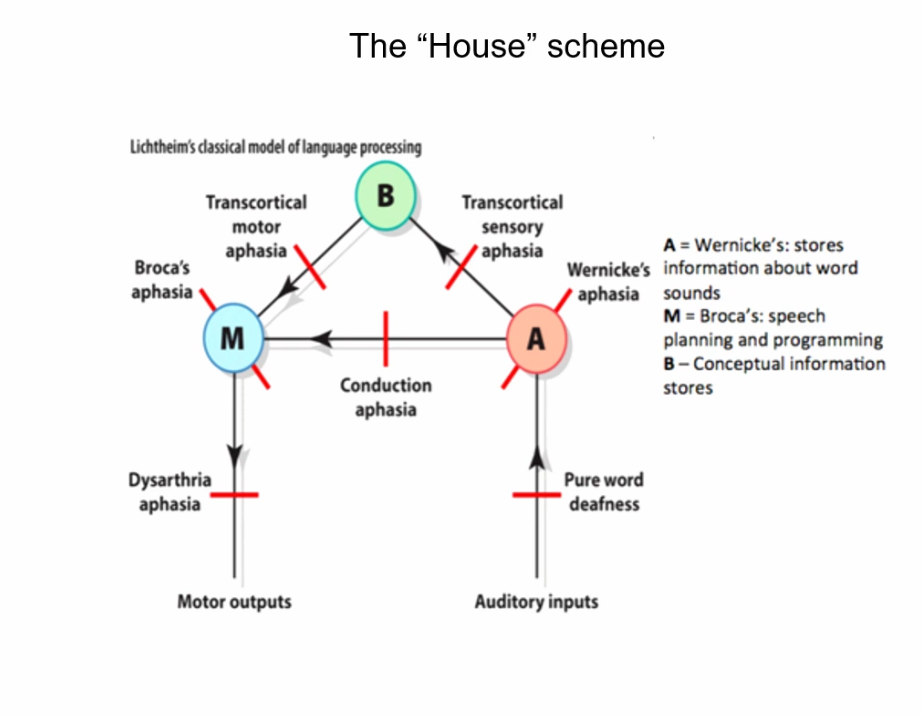
Aphasias
language disorder caused by brain damage
Broca’s aphasia
problems producing speech
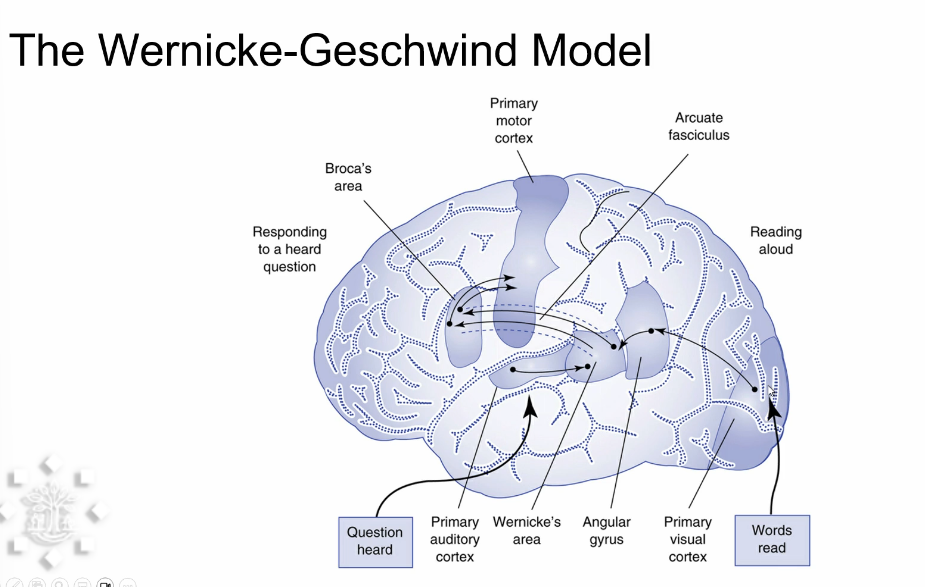
Wernicke’s aphasia
problems comprehending speech