AP Environmental Science Unit 2: Module 8 and 9
 Call Kai
 Learn
Learn Practice Test
 Spaced Repetition
 Match
Match Flashcards
 Knowt Play
1/21

Earn XP
Description and Tags
watch vid: https://www.youtube.com/watch?v=V0_LQ3RSuCo
Name | Mastery | Learn | Test | Matching | Spaced | Call with Kai | Chat |
|---|
No analytics yet
Send a link to your students to track their progress
22 Terms
Biodiversity
the variety of life in a particular habitat or ecosystem, including the diversity of species, genetic variation, and ecosystem diversity.
What is the four scales of biodiversity?
genetic diversity, ecosystem diversity, functional diversity, and habitat diversity
Genetic Diversity
a measure of genetic variation among individuals in a population
Species Diversity
the number of species in a region or in a particular ecosystem
Habitat Diversity
the variety of habitats that exist in a given ecosystem
Functional Diversity
the range of different functions or roles that organisms play within an ecosystem, including how they interact with each other and their environment.
Population Battleneck
when a large population declines in number, the amount of genetic diversity carried by the surviving individuals is greatly reduced
a sharp, sudden reduction in the size of a population; this can be caused by disasters

Generalists
Species that can adapt to a wide range of conditions and utilize various resources in their environment.
Ecosystem Diversity
the variety of ecosystems that exist in a given region
What does an increase in biodiversity improve in populations and ecosystems?
An increase in biodiversity improves resilience, stability, and productivity in populations and ecosystems. It enhances ecosystem services, allowing for better adaptation to environmental changes.
What happens when theres low genetic diversity?
there is an high like hood that the population will decline more when exposed to disease
When a region contains a high diversity of habitats what happens?
It supports various species, improving overall ecosystem health and resilience.
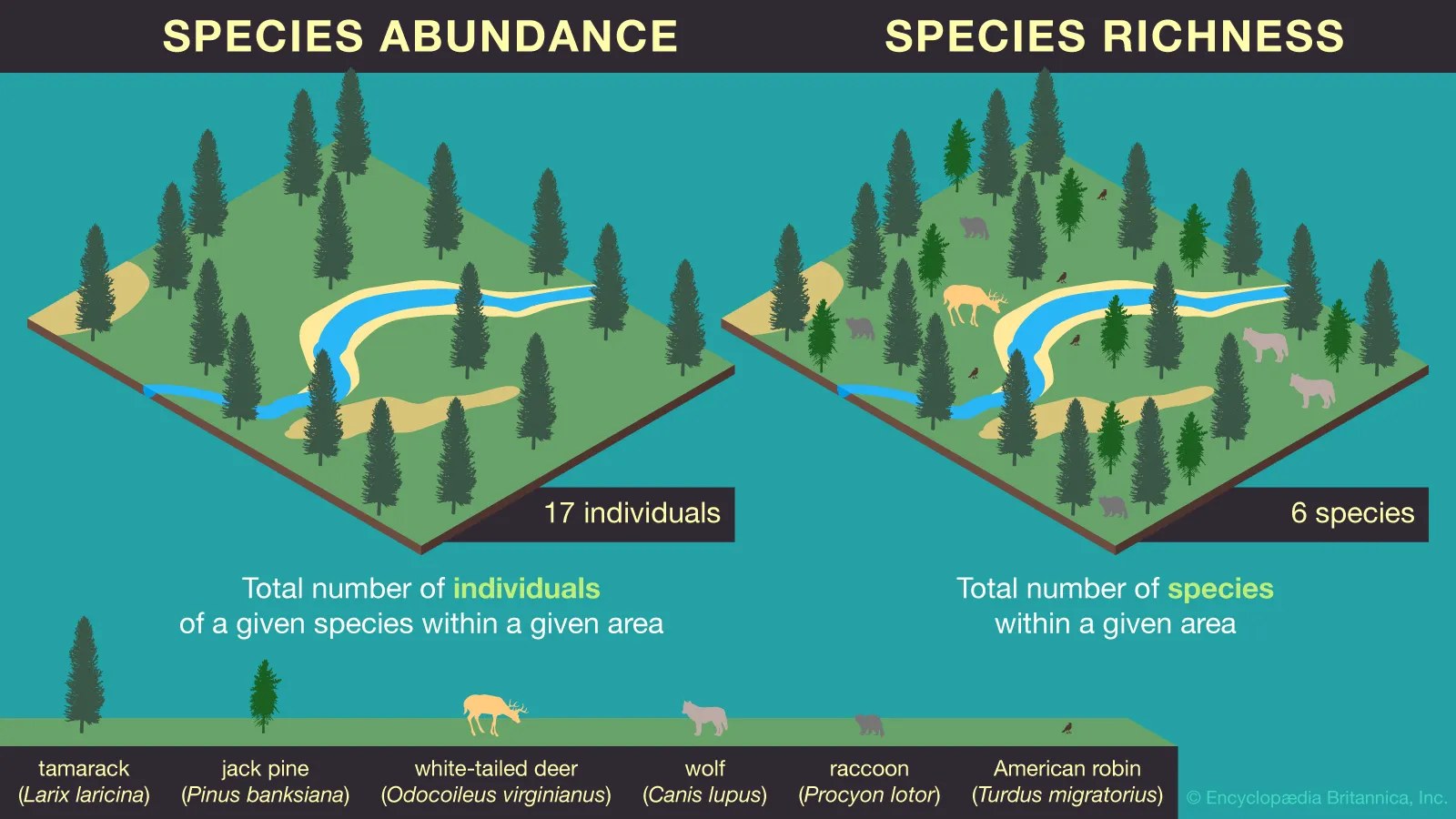
Species Richness
the number of different species in a given area
Species Evenness
the relative proportion of individual within the different species in a given area

Ecosystem Service
the processes by which life supporting resources such as clean water, timber, fisheries, and agricultural crops are produced
Provision
a good produced by an ecosystem that humans can use directly
Aquacuture
the farming of fish, shellfish, and seaweed
What do ecosystem services include?
provisione services, regulating services, support systems, and cultural services
Bottleneck
a sharp reduction in population size due to environmental events or human activities, leading to a loss of genetic diversity.
Regulating Services
Natural processes that maintain ecosystem health and stability by regulating climate, water quality, and other environmental factors.
Supporting Services
Natural processes that support ecosystems by providing habitat, maintaining biodiversity, and facilitating nutrient cycling.
Provide services that would be costly for humans to generate and include
Cultural Services
Natural processes that provide non-material benefits to people, such as spiritual enrichment, recreation, religion, and cultural heritage.