Topic 4
 Call Kai
 Learn
 Practice Test
 Spaced Repetition
 Match
 Flashcards
 Knowt Play
1/113

There's no tags or description
Looks like no tags are added yet.
114 Terms
Biodiversity
the variety/ mix of life in an ecosystem and the number of species that exist as a result of evolution
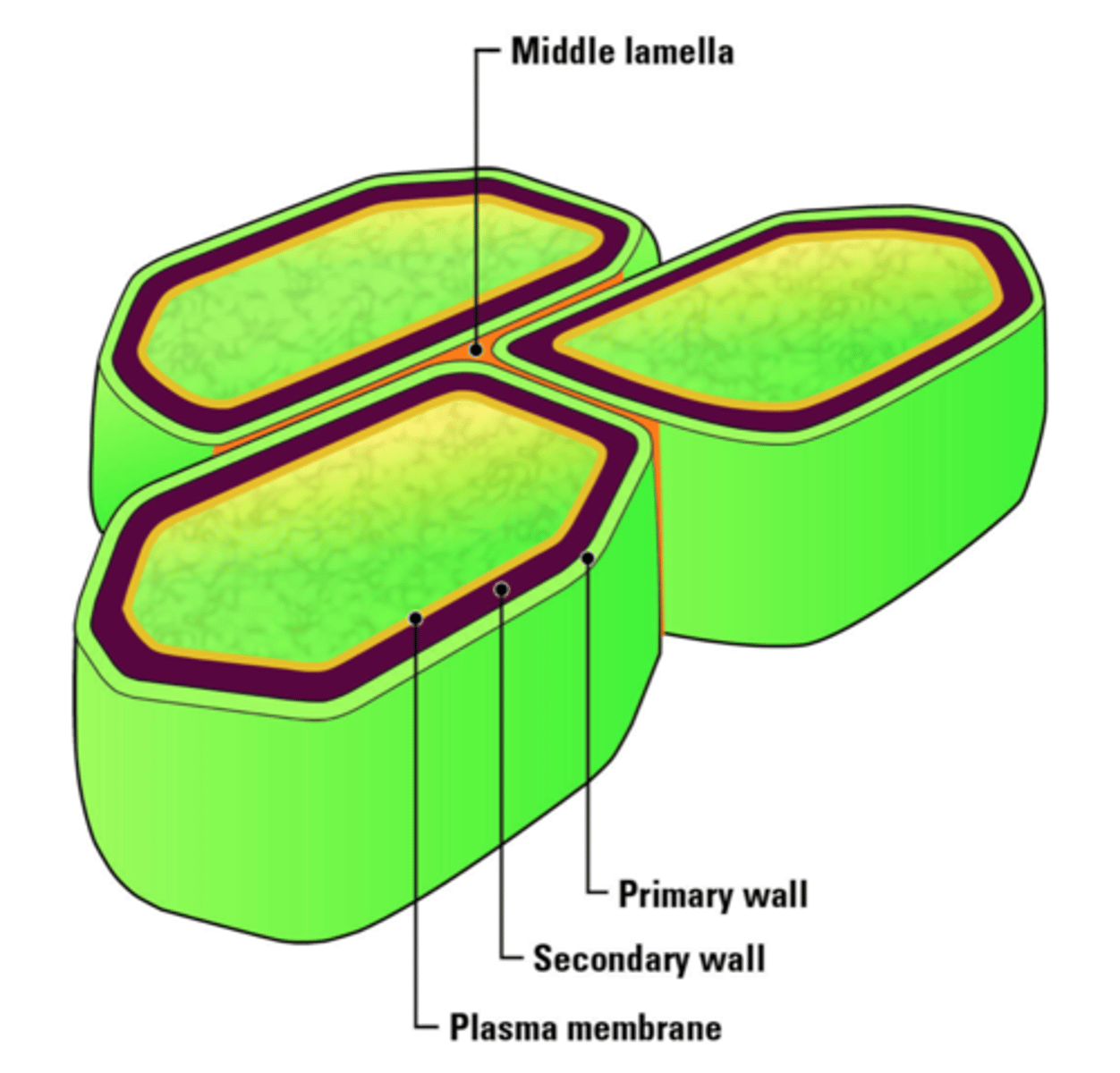
Middle lamella
This forms the outermost layer of the plant cell and acts like glue to stick adjacent plant cells together
It provides stability to the plant
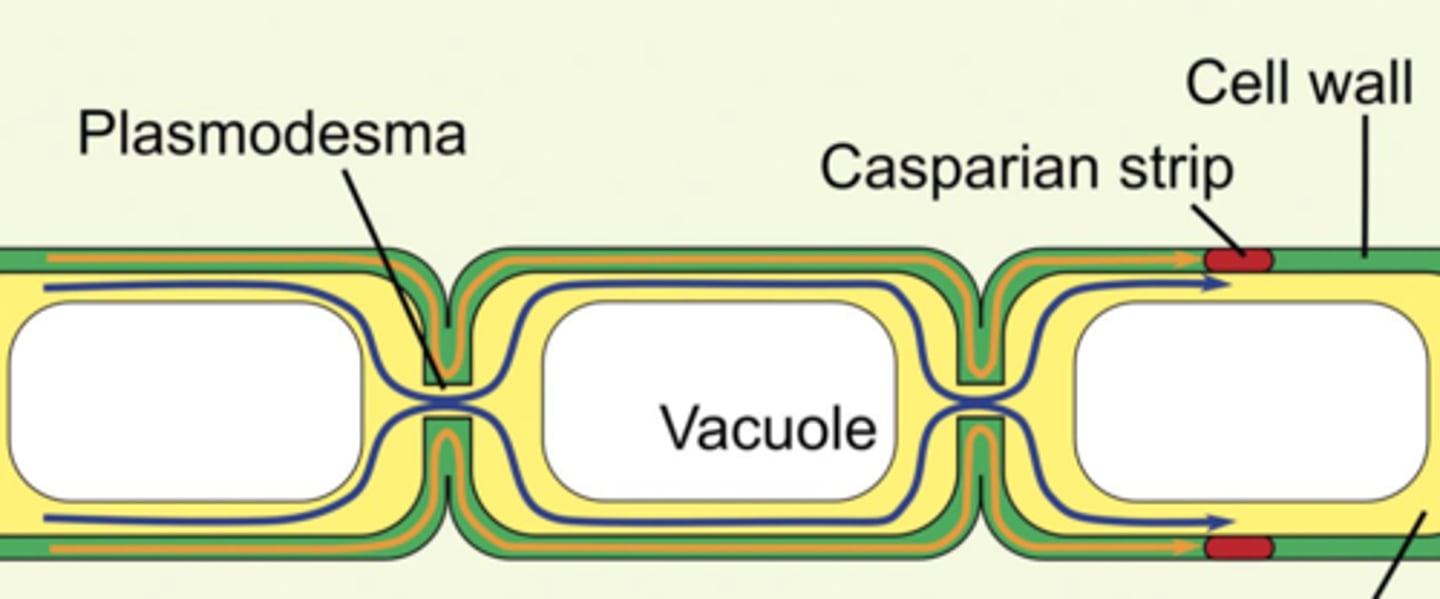
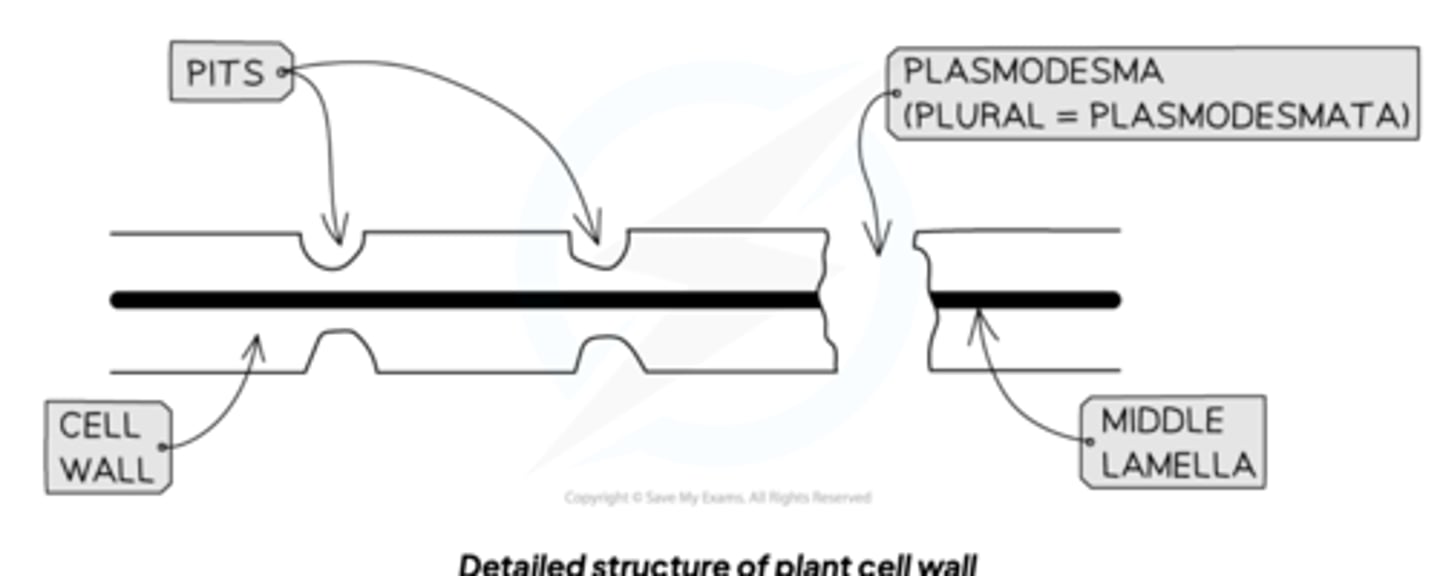
Plasmodesmata
Narrow threads of cytoplasm (surrounded by a cell membrane)
That allow substances to be transported between plant cells and facilitates cell to cell communication
Pits
These are very thin regions of the cell wall
The pits in adjacent plant cells are lined up in pairs
This facilitates transport of substances between cells
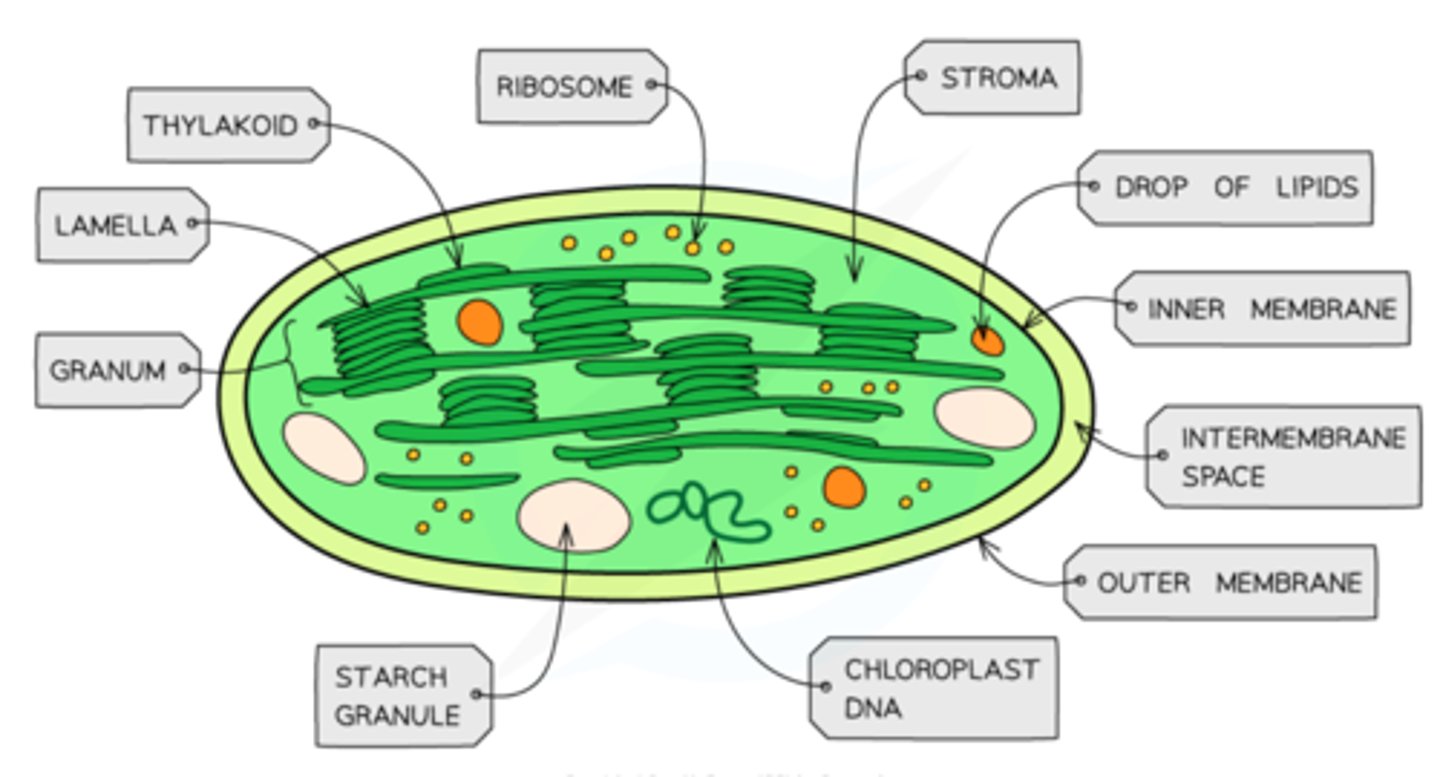
Chloroplasts
surrounded by a double-membrane
Membrane-bound compartments called thylakoids containing chlorophyll stack to form structures called grana (singular = granum)
Chloroplasts are the site of photosynthesis:
Certain parts of photosynthesis occur in thylakoid membranes, while other parts happen in the stroma
Chloroplasts also contain small circular pieces of DNA and ribosomes used to synthesise proteins needed in chloroplast replication and photosynthesis
Amyloplasts
Small, membrane bound organelle containing starch granules
They are responsible for storing starch in plants and converting it back to glucose when the plant needs it
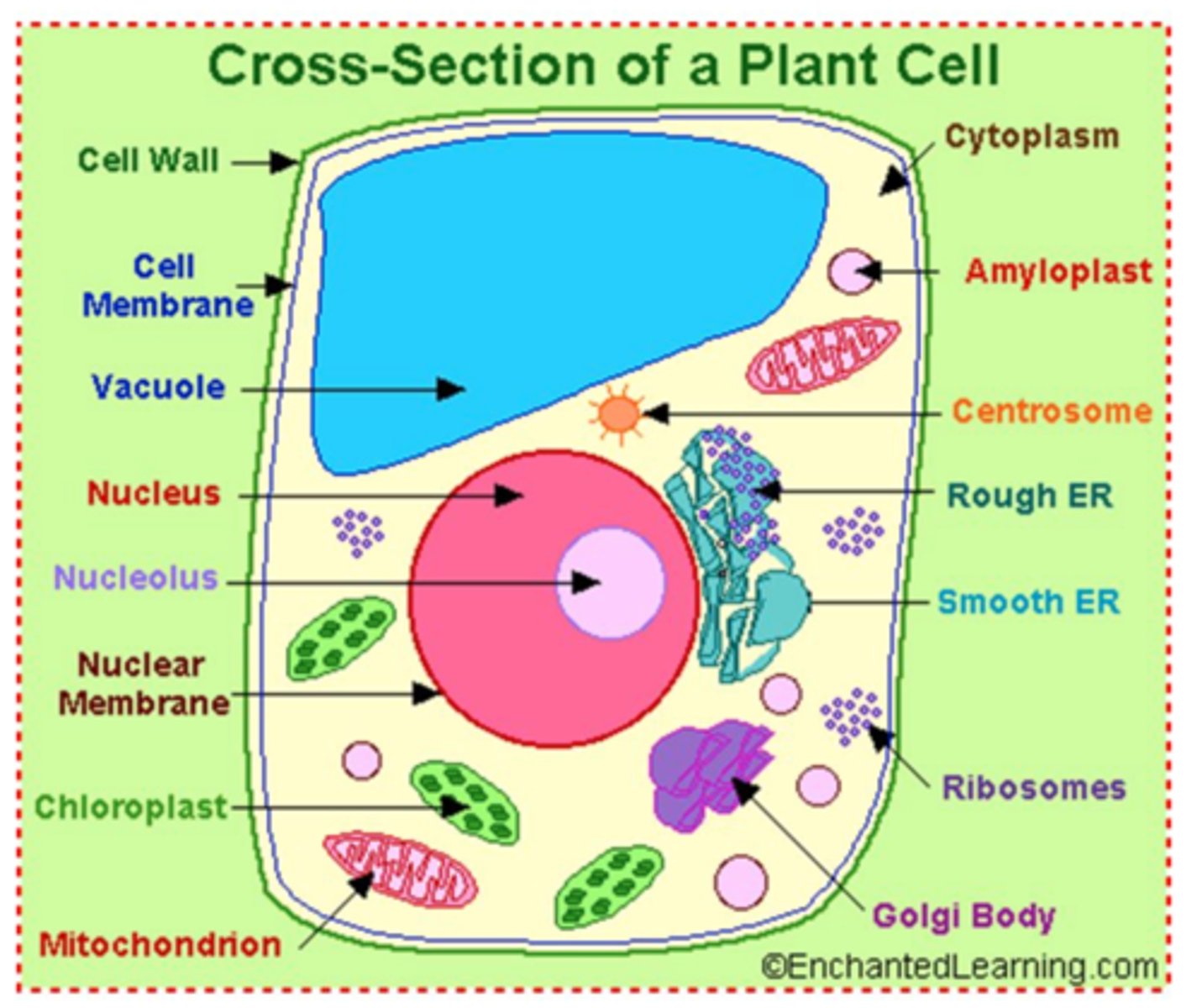
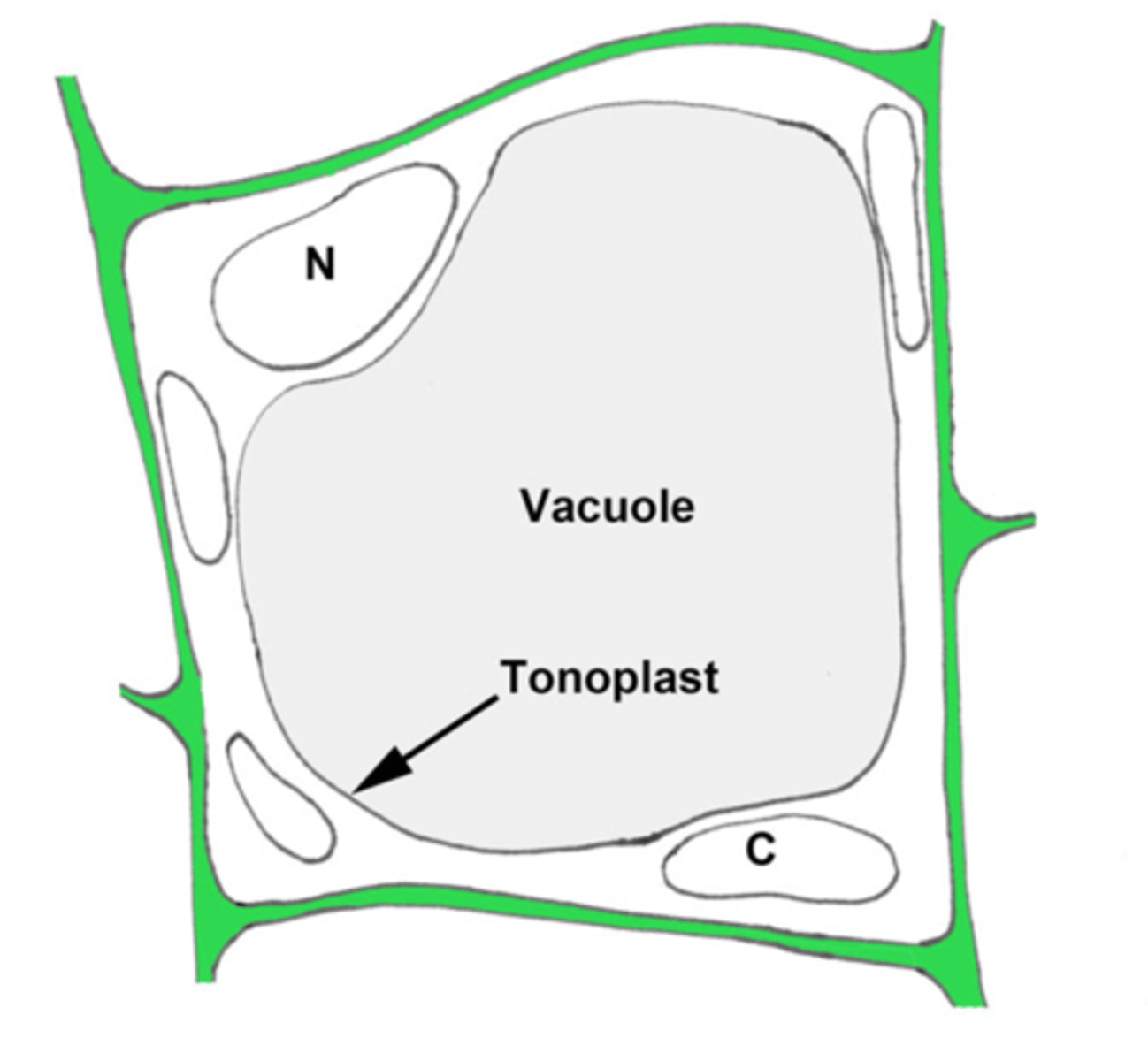
Vacuole and tonoplast
The vacuole is a sac in plant cells surrounded by the tonoplast (selectively permeable membrane)
Contains cell sap, which is a mixture of different substances such as water, minerals, waste and enzymes
Vacuoles have several functions in plant cell:They keep cells turgid, which stops the plant from wilting
They can break down and isolate unwanted chemicals in plant cellsThe tonoplast controls what can enter and leave
ecosystem
all living and non-living features in a particular area of the environment
abiotic factors
Nonliving components of environment.
biome
major regions with a certain climate and therefore dominant organism
species
a group of organisms which can interbreed and produce fertile off spring
Species
a group of organisms with similar morphologies, physiology and behaviour which can interbreed and produce fertile offspring and which are reproductively isolated from other species
Population
a group of interbreeding individuals of the same species found in an area
habitat
Place where a community of organism live
Microhabitat
A small part of an organisms environment where the conditions are suited to the animal
community
an interacting group of various species in a common location
niche
the way an organism exploits its environment
Endemism
When a species is unique to a single place
Species evenness
the size of the populations relative to each other
how many of each species are in a habitat
species richness
the number of species in a habitat
ecosystem diversity
the variety of different habitats within a given region
Genetic diversity
The difference in number and frequency of alleles in the gene pool of a population between a number of species.
Species diversity
the number of different species in a given area
keystone species
A species that influences the survival of many other species in an ecosystem
dominant organism
a very common species in a habitat
Heterozygosity Index
= number of heterozygotes÷ number of individuals in the population
Index of diversity
= N(N-1) ÷ ∑n(n-1)
Adaptation
A trait or feature that helps an organism survive and reproduce
behavioural adaptation
organisms actions to allow survival or reproduction, usually in response to stimuli
physiological adaptation
where the internal workings of the organism help survival or reproduction
anatomical adaptation
structures observed or seen in dissection enabling the organism to survive
Whats the competitive exclusion theory?
If two species are fighting for the same resources, they cannot co-exist if other ecological factors are present. Even the slightest advantage can lead to dominate int he long term. this leads to the extinction of the submissive species
Binomial system
the way in which species are named
a genus name + a definitive name
Taxonomy
the science of classifying organisms
Taxonomic groups
Kingdom
Phylum
Class
Order
Family
Genus
Species
Kingdoms
Animalia, Plantae, Fungi, Prokaryotae, Chromista, Protozoa
Animalia
multicellular eukaryotes
energy is obtained from ingesting material from other organisms
Plantae
multicellular eukaryotes
they are autotrophs, so make their own molecules by photosynthesis
Fungi
multicellular eukaryotes
absorb nutrients from decaying matter by external digestion
Protoctista
eukaryotes that are unicellular
they photosynthesise or feed on other matter
Prokaryotae
prokaryotic organisms
their cells do not have a membrane bound nucleus
Natural Selection
Struggle for existence results in winners and losers, winners survive as they, by chance, possess a characteristic that gives advantage
The mechanism by which species change over time
What's the process of natural selection?
1. Organisms within a species show variation in their characteristics that are caused by differences in their genes
2. Organisms whose characteristics are best adapted to a selection pressure have an increased chance of surviving and reproducing successfully. Less well adapted organisms die or fail to reproduce
3. Successful organisms pass the allele encoding the advantageous characteristic onto their offspring. Organisms that possess the non-advantageous characteristic are less likely to pass it on
4. This is repeated for every generation. Over time, the number with the advantageous adaptation increases. Therefore the frequency of the allele increases in gene pool
5. Over very long periods of time & many generations, this can lead to the evolution of a new species
Evolution
A change in allele frequency in a population over generations
Gene Pool
all the alleles of all the genes present in a population. Some genes will be common, some will be rare
Hardy-Weinberg equation
p² + 2pq + q² = 1
p + q = 1
p = dominant,
q= recessive
2pq = heterozygous individuals
p^2 = homozygous dominant
q^2 = homozygous recessive
limitation of Hardy-Weinburg
Only valid if:
population is large enough for no genetic drift
no mutations
random mating
no natural selection
the population is closed
Genetic drift
variation in the relative frequency of different genotypes in a population, owing to the chance disappearance of particular genes as individuals die or do not reproduce.
Archaea
more in common with eukaryotes
vacuole
Cell organelle that stores materials such as water, salts, proteins, and carbohydrates
Three domain classification
Archaea, Eukaryotes, Prokaryotes
Woese noticed a group of bacteria lacked RNA sequences typical of bacteria
What's continuous variation?
When the characteristic can have any value ( Length of hair)
controlled by a few genes
environment has little effect
Whats discontinuous variation?
When the characteristic can have only a limited set of values (Number of Legs)
Controlled by many genes
environment has significant effect
What causes genetic variation?
mutations (on nucleotides or loss or deletion of chromosome)
sexual reproduction problems (random fertilisation or crossing over or independent assortment)
What are the three types of selection
disruptive = Creates two modal number of species
Stabalising = Selection pressure toward centre increases number of individuals at modal value
directional = selection pressure toward one extreme moves the mode in this direction
Why is humanity a selection pressure?
AntiBiotics
building
cars etc
All these make organisms adapt or die to survive around our lifestyle
cellulose
made of only Beta glucose.
Its structure consists of every second monomer inverted
Parallel chains of cellulose are joined by hydrogen bonds
β-glucose
a glucose molecule with an upwards facing hydroxyl group on carbon 1
microfibrils
strong threads which are made of long cellulose chains running parallel to one another that are joined together by hydrogen bonds forming strong cross linkages
What are the biological identification methods?
Dichotomus keys = series of yes or no questions following though until you arrive at the genus
Multiple access keys = flexible dichotomous key users starts with whatever characteristics they prefer
Computer assisted taxonomy = online resources for identification of species
Classification
Arrangement of organisms into groups of various sizes
taxonomy
Placing organisms into groups which have one or more common features
Lower level grouped organisms are more closely related than higher grouped ones
morphology
study of internal form and structure of organisms
Phylogeny
Evolutionary relationship of a species
genotype
the alleles and organisms contains
Phenotype
Characteristic software an organism that result from the genes the organism possesses and the environment which it lives
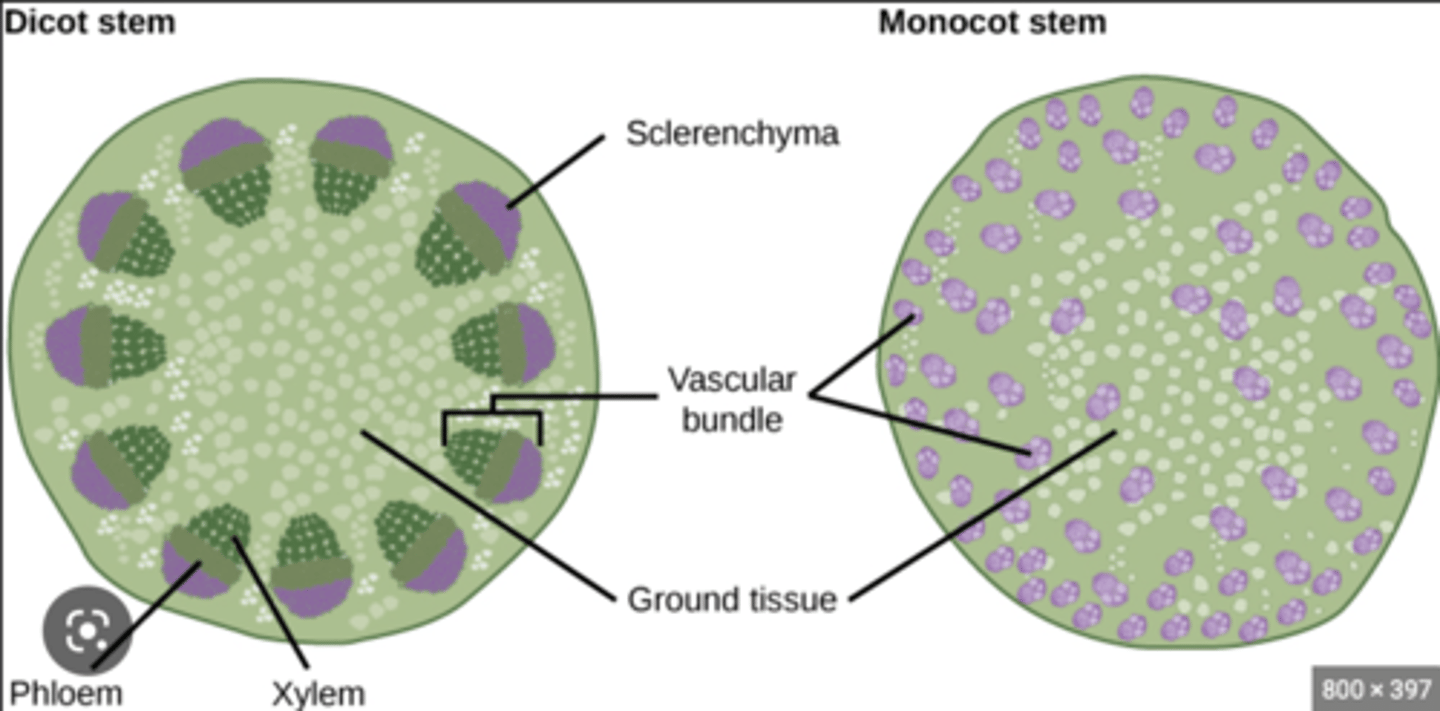
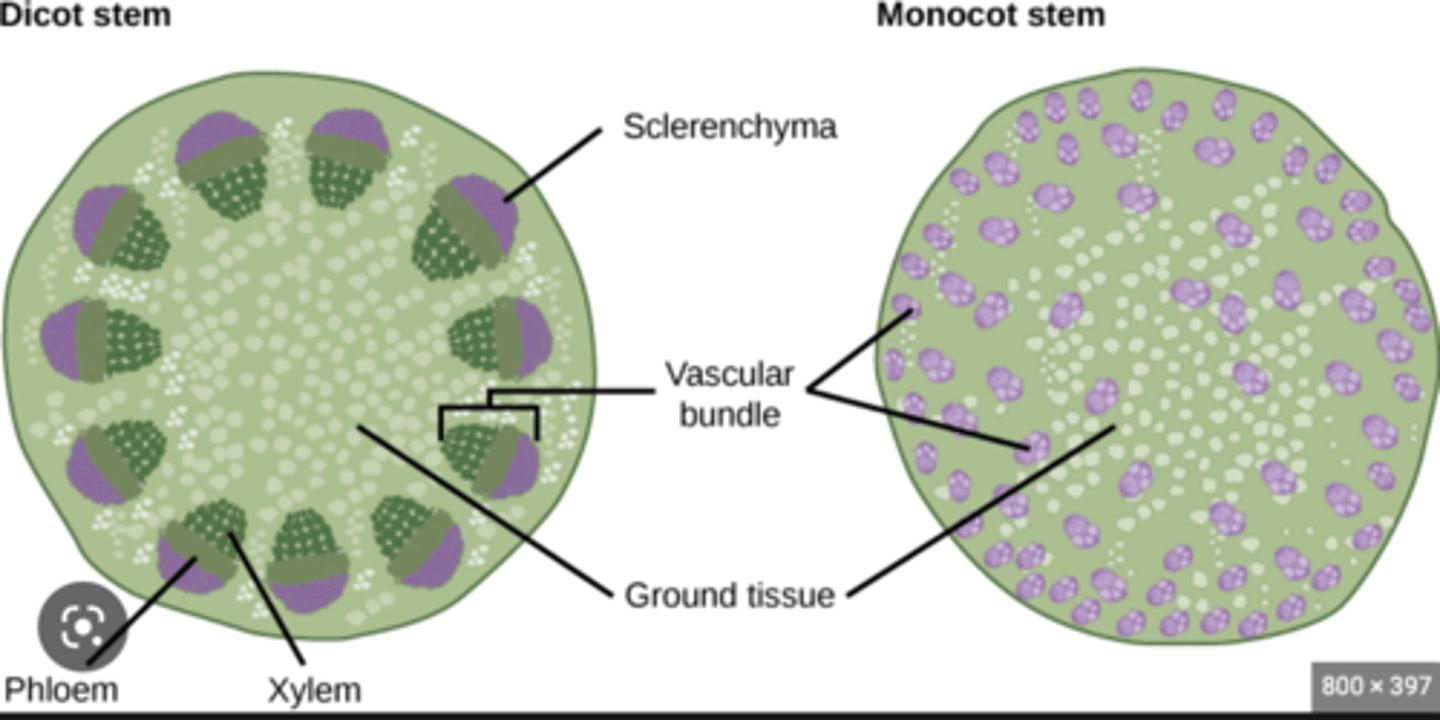
xylem
transports water and minerals from the roots up the plant stems into the leaves.
Made of long open-ended tubes with lignin deposited into the xylem vessels for added strength which can be deposited in different arrangements to vary xylem strength
Aids in support
Molecular phylogeny
analysis of the genetic material of organisms to establish their evolutionary relationships
Why measure biodiversity?
It allows for comparisons between biodiversity of two sections of an area with two sections of an area in a different location to see differences and if action needs to be taken somewhere
sclerenchyma
aids support and tensile strength to plants.
Sclernchyma fibres have closed tapered ends and made of lignin for added strength.
When dead they are fully lignified and impermeable to water
phloem sieve tubes
Transports carbohydrates from source to sinks through sieve elements.
Phloem sieve tube is the sieve element of the phloem and are long with regular sieve plates (wall with holes in them)
No nucleus but are considered alive due to companion cells associated with them
Small amount of cytoplasm at end of tubes
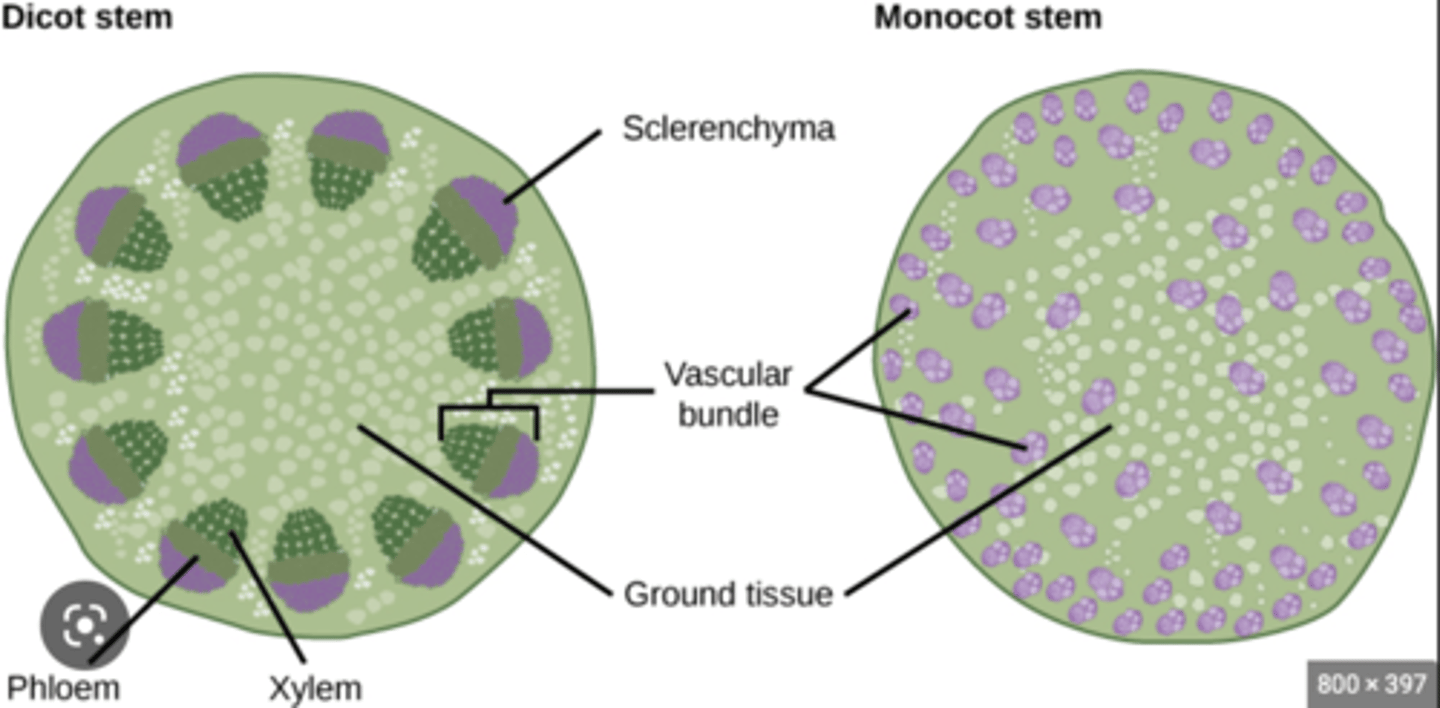
Phloem
The vascular tissue through which carbohydrates moves through in some plants
Aids in support
Translocation
the movement of dissolved substances, such as sucrose and amino acids, from parts of the plant where the substances are made to other parts of the plant where they're needed.
What process do bacteria use to reproduce? and is sexual or asexual?
Binary fission
Asexual
How does binary fission work?
1. Chromosome replication
2. Both sets of chromosomal DNA move to opposite poles of cell
3. Plasma membrane starts to grow inwards in the centre of the cell, and the cell wall begins to re-from
4. Daughter cell is formed as a result
What is bacterial growth dependent on?
Temperature
Sufficient nutrients
optimum PH
Oxygen (depending on bacteria type)
Access to water
nitrate ions
Used in amino acids, so is used for proteins
A component in the bases of DNA and RNA
insufficient nitrate leads to stunted plant growth
calcium ions
Found in middle lamella.
Combine with pectin to form calcium pectate which holds plant cells together
lack of calcium results in stunted growth and young leaves becoming yellow and crinkly
magnesium ions
component of green pigment in chlorophyll
Without magnesium leaves turn yellow and growth is reduced due to less photosynthesis
What are the stages of drug testing?
Pre-clininical testing = Animal and lab testing on isolated cells and tissue cultrues
Clinical trial phase 1 = tested don small group of healthy volunteers to confirm if compound is absorbed and distributed, metabolised and excreted as predicted
Clinical trial phase 2 = slightly bigger group of volunteers with the problem which the drug aims to fix, to see the effects
Clinical trial phase 3 = large group of volunteers (1000+) are split randomly into 2 groups for double blind randomised control trial. One group has the drug, the other group has a placebo. If successful results will show the drug give statistically significant improvements it what it was designed to do
After licensing = trial continue to collect data on effectiveness and safety of drug
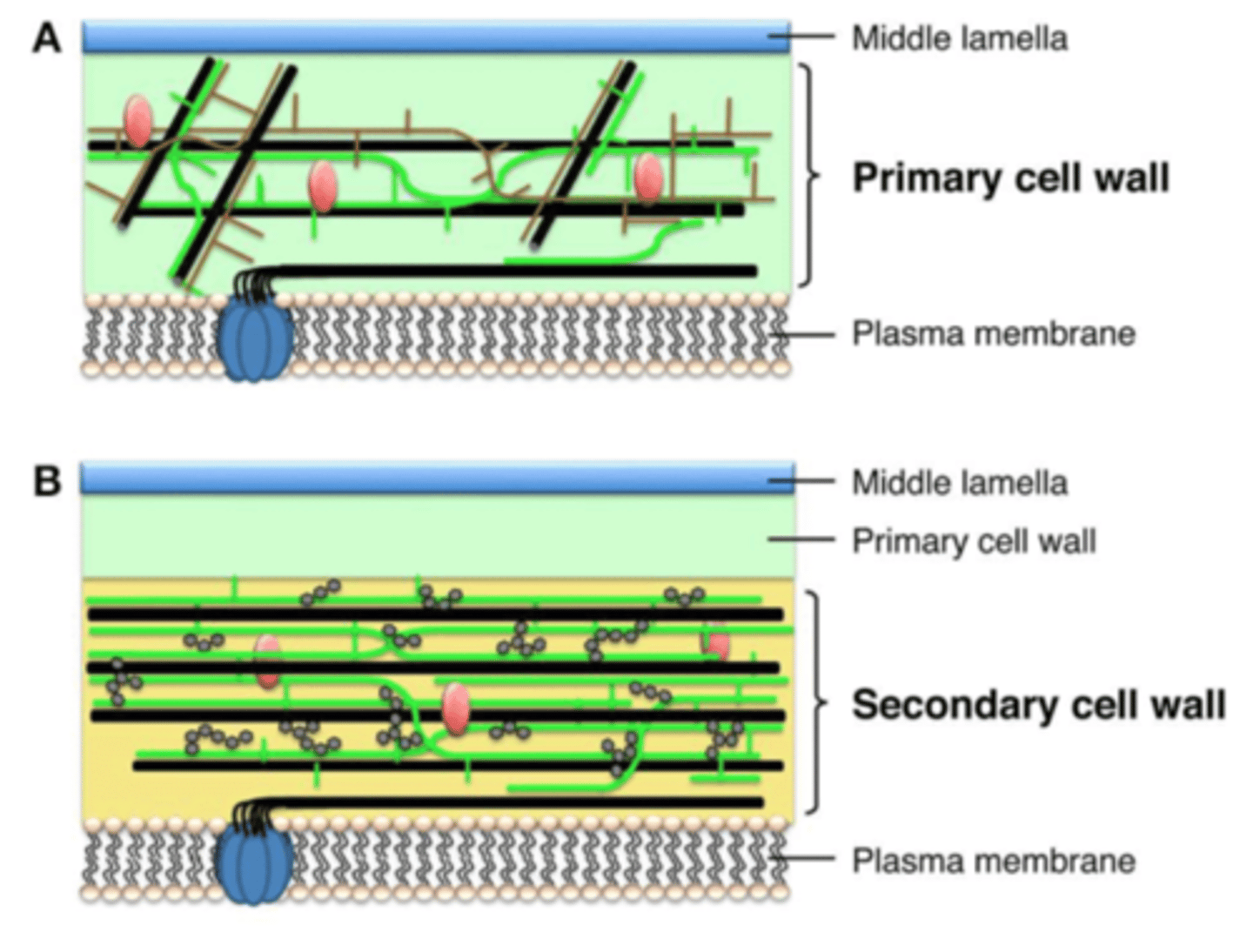
cell wall
Made of cellulose, and has two components:
Primary cell wall = cellulose containing layer laid down by cells that are dividing to allow for cell wall expansion. Thinner and less rigid than cell which have stopped growing (drawn in random lines in exam)
Secondary cell wall = provide additional protection to cells, as well as providing rigidity and strength to larger plants. Constructed of layers of sheath cellulose microfibrils. Very strong in all directions but cannot stretch (drawn in repeated pattern in exam)
mass flow
The movement of a fluid in response to a pressure gradient, from an area of high pressure to an area of low pressure
Attempts to explain how base cells are transported to inks through phloem of xylem
What is water necessary for in a plant?
Turgidity = controls if plant is placid or turgid (hard)
Component of chemical reactions (water is used in hydrolysis and photosynthesis)
Water is a large component of cytoplasm
solvent where biochemical reactions occur
Regulates temperature = as water is thermally stable as lot of energy required to break hydrogen bonds
Mineral ion transport
How does water affect turgidity
More water in vacuole = plant more turgid (Cell stiffens and retains shape)
Less water in vacuole = Cell body shrinks and pulls away from cell wall
What is a seed?
An ovule that has been fertilised by the nucleus from a pollen grain.
Why do plants produce seeds?
protect embryo
Aid dispersal
Provide nutrition for new plant
What terms when a pollen grain enters an ovule?
Endosperm nucleus and zygote
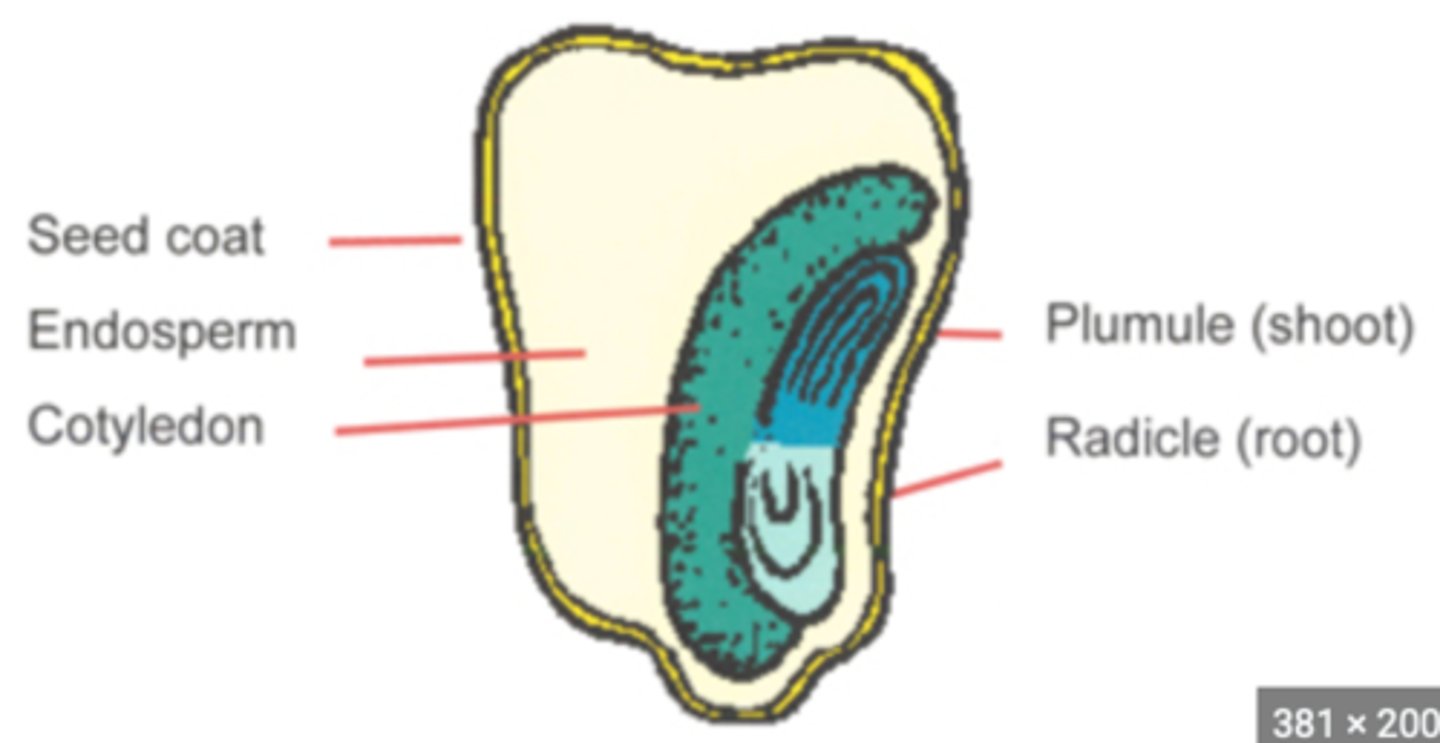
Whats in an endospermic seed?
Cotyledon
endosperm
plumule
radicle
testa (seed coat)
What's a cotyledon?
Cotyledons help supply the nutrition a plant embryo needs to germinate
Whats a dicotyledon?
A seed where the embryo absorbs the stored food which is stored in two cotyledons
What's a monocotyledon?
A seed where the food storage remains outside the embryo in tissue called endosperm
How is starch formed in plants?
Starch is manufactured in the green leaves of plants from excess glucose produced during photosynthesis
What is the use of starch?
When heated in water they swell and absorb the water and thicken (gelatinisation)
So are dried and used in nappies and other liquid absorbing products (e.g. nappies)
How is starch foam produced?
During the gelatinisation of starch, hot starch leaves through the leaves through a small hole. As the pressure has built up inside the leaf, when released is causes the starch to expand into foam as super heated water returns to the stem
Why are plant oil based products more sustainable than oil based products?
produces less sulfur dioxide
making it has a net 0 carbon dioxide change
Can be used in plastic bags as light and biodegradable
Why are oil based products less sustainable than plant oil based products?
oil will run out
oil produces a lot fo carbon dioxide
oil makes plastics which are non-biodegradable
gene pool
Combined genetic information of all the members of a particular breeding individuals in a pollution over time
Whats speciation?
when gene flow has effectively stopped between populations where it previously existed. this requires two populations of the same species to be reproductively isolated
Whats geographic isolation
a physical barrier separating species (e.g. river or mountain)
Whats ecological isolation?
when two species occupy same area but prefer different parts of it