Unit 1 AP Psych
 Call Kai
 Learn
 Practice Test
 Spaced Repetition
 Match
 Flashcards
 Knowt Play
1/53

There's no tags or description
Looks like no tags are added yet.
54 Terms
Evolutionary perspective
Examines how natural selection may have shaped behaviors and mental processes that helped our ancestors survive and reproduce
Nature (genes)
The inherent biological genetic factors that influence psychological development, traits, behaviors, and cognitive ability
Nurture (environment)
Influences and experiences that shape an individuals psychological development, behavior, and cognitive processes
Heredity
Transmission of genetic info from biological parents to offspring
Heritability
Helps determine how much of our traits come from genes and how much comes from our environment
Genetic predispositon
The inherited likelihood of developing specific traits or conditions due to genetic factors
Eugenics
The belief in improving the genetic quality of a human population by controlling reproduction to increase desirable traits and decrease undesirable ones.
Cerebral cortex
Outer layer of brain responsible for higher-level cognitive functions, including thinking, perceiving, and decision making

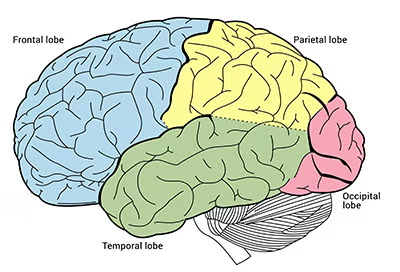
Lobes of the brain
The 4 main regions in which the cerebral cortex is divided
Association areas
Parts of the brain that take info from all over- like what we see, hear, smell, and touch- and put it together to help understand the world around us

Frontal lobe
Located at the front of the brain and is involved in higher-level cognitive functions, including decision-making, problem solving, planning, and personality expression
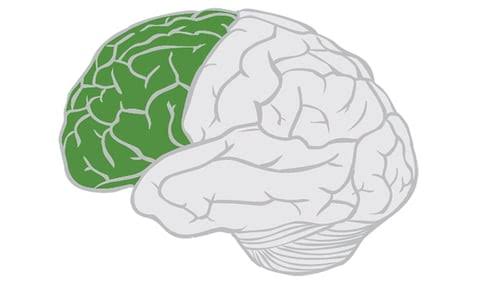
Prefrontal cortex
Located at the front of the frontal lobe, responsible for higher-level cognitive functions and executive functioning (planning, organizing, impulse control, regulating emotions, managing time, strategizing, and personality expression

Motor cortex
Located in back of frontal lobe, responsible for planning, controlling, and executing voluntary movements of the body (walking, talking, etc)
-Left side of motor cortex controls right side of body and vice-versa

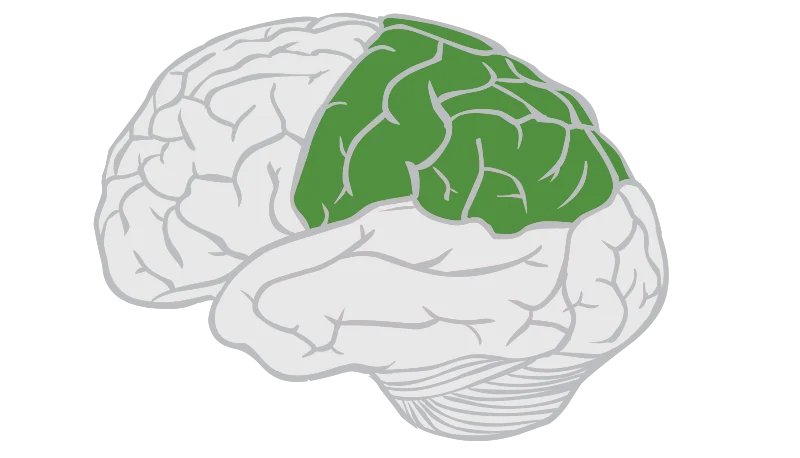
Parietal lobes
Located at top of brain and primarily responsible for processing sensory info from the body such as touch, temperature, and spatial recognition
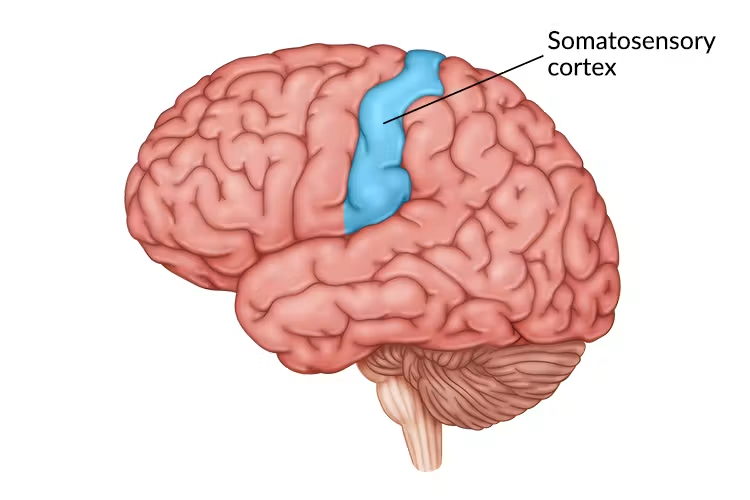
Somatosensory cortex
Located at front of parietal lobe, responsible for interpreting sensations from skin, muscles, and joints, such as touch, pressure, temperature, and pain
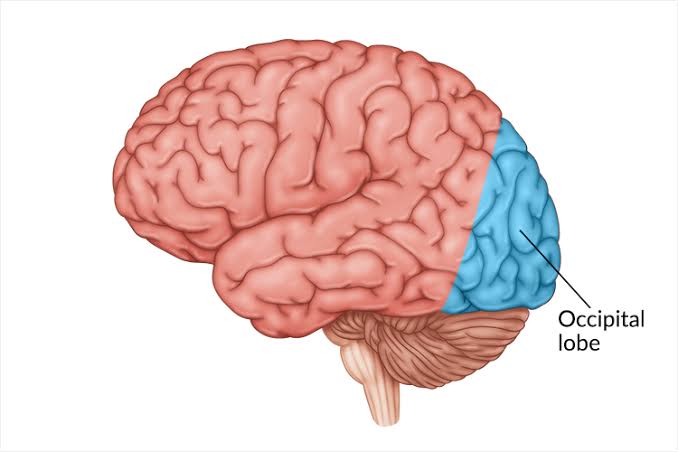
Occipital lobes
Located at back of brain and are responsible for processes visual info received from eyes
-contain primary visual cortex
Temporal lobes
Located on sides of brain, involved in processing auditory info, language comprehension, and memory formation
-Contain auditory cortex which interprets sound signals from ears

Corpus Collosum
Thick band of nerve fibers that connect the left and right hemispheres of brain, facilitating communication and info sharing between hemispheres
Brain stem
The oldest and most primative of the brain. Responsible for basic life-sustaining functions such as breathing, heart rate, and sleep-wake cycles

Reticular Activating System
A mesh-like network of neurons located within the brainstem. Regulates arousal, attention, and consciousness

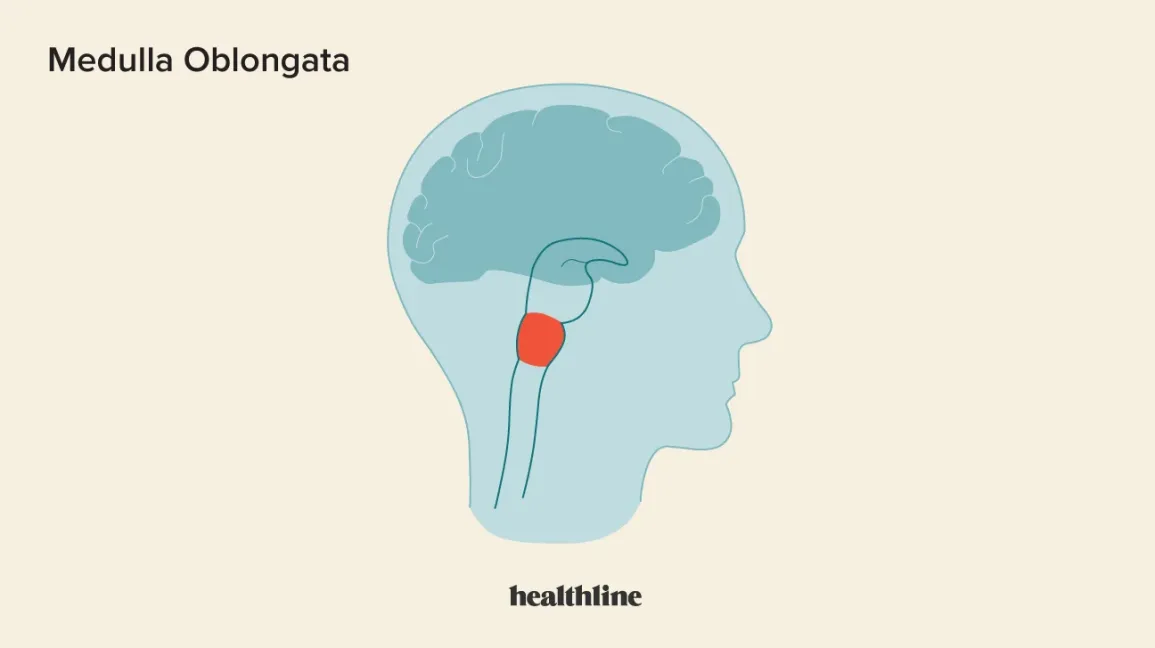
Medulla
Located at base of brainstem, regulating essential automatic functions such as heartbeat, breathing, and blood pressure
-Serves as a relay station for nerve signals, traveling between brain and spinal cord
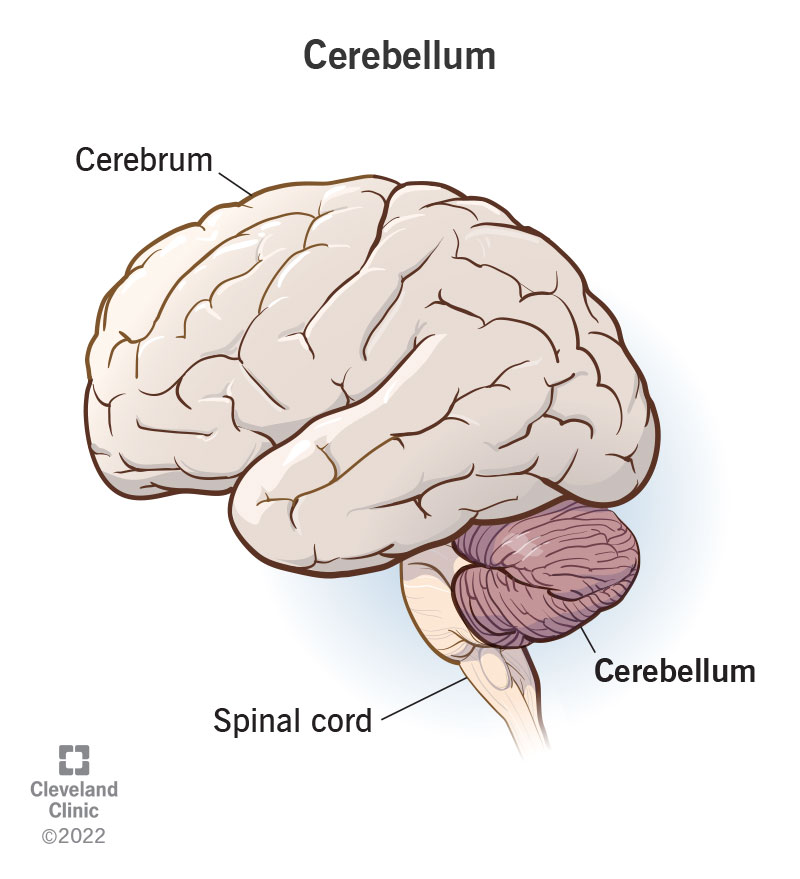
Cerebellum
Located at back of brain, responsible for coordinating voluntary movements, balance, and posture
Limbic system
Located beneath the cerebral cortex, is a set of brain structures involved in emotion, memory, and motivation

Reward center
Network of brain structures, primarily in limbic system, involved in pleasure and reinforcement. Makes rewarding behaviors more likely to happen again
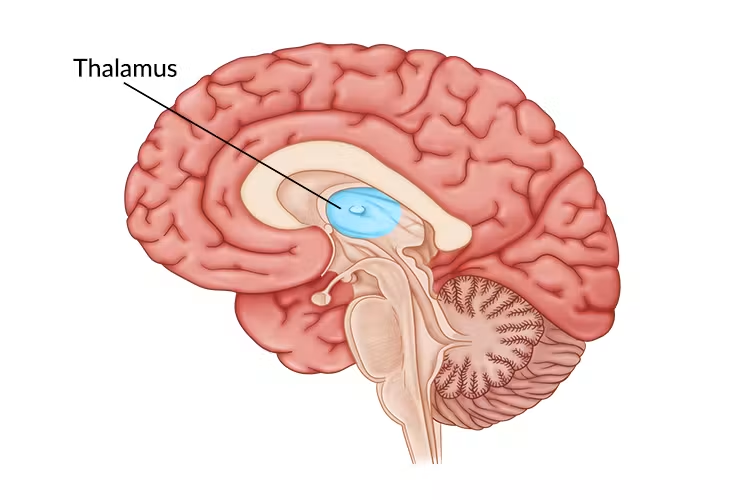
Thalamus
A relay station in the brain that processes and relays sensory info (sight, touch, sound, taste -no smell-) to cerebral cortex
-Serves as a gateway for sensory input, directing signals to appropriate area of brain for further processing
Hypothalamus
Small structure located below thalamus responsible for regulating various essential bodily functions, including hunger, thirst, body temperature, and sleep-wake cycle

Pituitary gland
Pea-size gland located at base of brain, often referred to as ‘master gland’ due to its central role in regulating hormone production and secretion in body

Hippocampus
Curved structure located within the brains temporal lobes, responsible for forming and consolidating how memories form
-If you saw a hippo on campus, you wouldn’t forget it

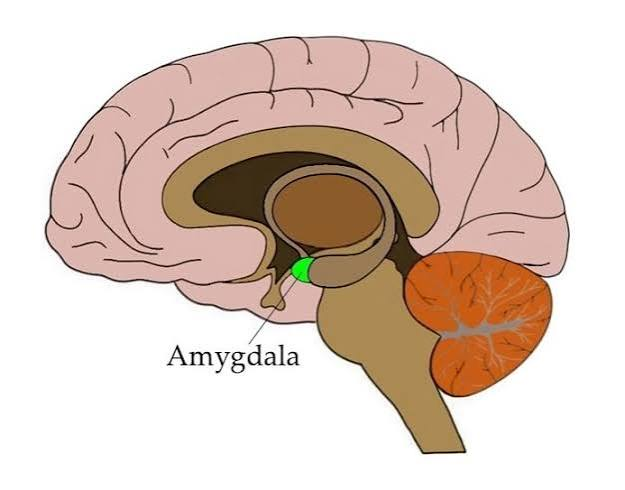
Amygdala
A small, almond-shaped structure, located deep in the temporal lobes, involved in processing emotion, particularly fear and aggression
-Central role in threat-detection (fight-or-flight)
The nervous system
the body's communication
network, consisting of
a complex system of
nerves, neurons, and
specialized cells.
The central nervous system
consists of the brain and spinal cord. It
serves as the command center of the body,
responsible for processing information,
coordinating responses, and regulating bodily
functions.
Peripheral nervous system
consists of all the nerves and ganglia outside
the brain and spinal cord.
Autonomic nervous system
division of the
peripheral nervous system that
regulates involuntary bodily
functions, It operates
automatically, without conscious
control.
Sympathetic nervous system
responsible for activating the body's "fight or
flight" response in times of stress or danger.
Parasympathetic nervous system
responsible for promoting relaxation and
restoring the body to a calm state after
experiencing stress or danger.
Somatic Nervous system
division of the
peripheral nervous system responsible for
controlling voluntary movements and
relaying sensory information from the body
to the central nervous system.
Nuerons
specialized cell that serves as the
building block of the nervous system,
transmitting electrical and chemical signals
throughout the body.
consists of three main parts: the cell
body (soma), dendrites, and axon.
Glial cells
the "support cells" of the
nervous system, provide structural support,
insulation, and nourishment to neurons.
Motor nuerons
nerve cells that transmit
signals from the central nervous system
(brain and spinal cord) to muscles, glands,
and organs, initiating and controlling
voluntary and involuntary movements
Sensory Nuerons
specialized nerve cells
that transmit sensory information from
sensory receptors, such as those in the skin,
muscles, and organs, to the central nervous
system (brain and spinal cord).
Internuerons
nerve cells that serve as
connectors within the central nervous
system, relaying signals between sensory
neurons and motor neurons.
Reflex acr
neural pathway that controls
reflex actions, allowing for rapid, automatic
responses to sensory stimuli without
conscious thought (primitive reflexes)
Homunculus mapper
A visual map
of the human body drawn over the brain's
cortex. The size of each body part is
proportional to its sensory or motor
connection density (resulting in giant hands
and lips).
Neural transmission
the process by
which neurons communicate with each
other through electrical and chemical
signals.
Threshold
the level of stimulation required
to trigger an action potential in a neuron. It
is the minimum amount of stimulation
necessary to produce a response.
Action Potential
brief electrical impulse
that travels along the axon of a neuron.
● It occurs when the neuron receives a
stimulus that causes the inside of the
cell to become more positively charged
than the outside.
All-or-None Principle
states that once a
neuron reaches its threshold of excitation, it
will fire an action potential at full strength.
● If the stimulus is strong enough to
trigger an action potential, the neuron
will respond with a full-strength
impulse.
● If the stimulus is below the threshold,
the neuron will not fire an action
potential at all.
Depolarization
phase of action potential
where the inside of the neuron becomes
less negative compared to the outside due
to the influx of positively charged ions, such
as sodium ions, through ion channels in the
cell membrane.
Refractory Period
brief period following
an action potential during which a neuron is
unable to generate another action potential.
Resting Potential
the stable, negative
electrical charge that exists across the cell
membrane of a neuron when it is not
actively transmitting signals.
Reuptake
process in which
neurotransmitters that have been released
into the synapse are reabsorbed by the
presynaptic neuron from which they were
originally released.
Multiple Sclerosis “MS”
chronic
autoimmune disease that affects the central
nervous system, including the brain and
spinal cord.
It occurs when the immune system
mistakenly attacks the protective myelin
sheath, a fatty substance that surrounds and
insulates nerve fibers, causing inflammation
and damage.
● Symptoms can be cognitive, sensory or
motor
Myasthenia Gravis
chronic
autoimmune disorder that affects the
neuromuscular junction, where nerve
impulses are transmitted to muscles.
● It occurs when the immune system
produces antibodies that block or
destroy the receptors for
acetylcholine, a neurotransmitter
that stimulates muscle contraction.
● Symptoms are muscle weakness