Diabetes Mellitus Pt 2: Metabolism and Pathophysiology, continued Clinical Trials and Nutrition Care
 Call Kai
 Learn
 Practice Test
 Spaced Repetition
 Match
 Flashcards
 Knowt Play
1/32

There's no tags or description
Looks like no tags are added yet.
33 Terms

B
C
B
Difference in microbiota profile in lean v. obese phenotypes.

What are the four approaches to manage/prevent diabetes?
weight optimization if needed
healthy diet
increased physical activity level
pharmacotherapy
What is the desired nutrition outcome of diabetes?
improve health status and quality of life, prevent/minimize longer term consequences of hyperglycemia
enhance diabetes sel-management
achieve healthy eating patterns and positive metabolic outcomes
What are two groups of long term consequences of insulin deficiency and hyperglycemia (complications of diabetes)?
macrovascular
microvascular
Describe the macrovascular consequence that can occur from insulin deficiency and hyperglycemia.
CVD (CHD and stroke)
atherosclerosis (development of plaque within the arteries)
HTN
What are three microvascular outcomes of insulin deficiency and hyperglycemia?
nephropathy → end stage renal disease, complications in the vascular system around and in the kidneys and the glomerulus
retinopathy → changes in capillaries of the retina causing blindness
neuropathy → peripheral neuropathy (loss of sensation), foot problems especially problematic
What are the cellular mechanisms of long term complications due to?
related to adverse effects of high glucose
What is the relationship between glycosylated hemoglobin (HbA1C) and average blood glucose?
HbA1C reflects the average blood glucose over the past 3 months

Why is our target for A1C < 7% and not below 5.5%?
super tight control can put the person at risk of hypoglycemia
In terms of metabolism, what happens when we have chronically high glucose?
acquire an accumulation of intermediate products of glycolysis (fructosasmine, glucosamine, etc.) and glucose molecules that are attached to proteins (advanced glycosylation end products aka AGE) → increased oxidative stress → cell and vascular damage → peripheral/autonomic neuropathy, nephropathy, retinopathy

What is the issue with advanced glycosylation end products (AGE)?
the og protein that the glucose is attached to does not function as well
also contribute to the macro and microvascular complications
In general, what are three things that hyperglycemia leads to the formation of?
systemic metabolic inflammation (seen through pro-inflammatory markers
elevated glycemic end products (AGE)
reactive oxygen species
results in macro and micro vascular complications in various organs (lipid peroxidation, oxidative stress, inflammation, endothelial dysfunction, and increased apoptosis)
What is the key point in reducing chronic DM complications?
keeping the blood glucose as close to normal as possible not just weight loss especially with those with T2
nutrition therapy is central and essential to management
What two studies have shown that preventing hyperglycemia prevents complications within diabetes?
DCCT (Diabetes Control and Complications Trial)
UKPDS (United Kingdom Prospective Diabetes Study)
What are three research studies that have shaped DM management practices?
UKPDS (United Kingdom Prospective Diabetes Study)
DCCT (Diabetes Control and Complications Trial)
DPP (Diabetes Prevention Program)
Describe the UKPDS (United Kingdom Prospective Diabetes Study).
found a risk reduction with every 1% decline in annual mean A1C

showed that there was a relationship between glycemia and the risk of complications of diabetes therefore, better glucose control = fewer complications
Describe the DCCT (Diabetes Control and Complications Trial) in terms of their sponsorship, study design, premise/objective question, experimental groups, and results.
Sponsor:
NIH
Study Design:
Long Term Study of T1 Diabetes (followed 1441 people with T1 for 10 years)
Premise:
Does good glycemic control reduce future complications?
Experimental Groups:
Intensive Treatment of Diabetes (multiple injections/d)
Conventional Treatment (1-2 injections/d)
Results:
intensive insulin therapy in newly diagnosed T1 or T2 resulted in lower levels of blood glycemia, and decreased chronic glycemia means a reduction in disease progression
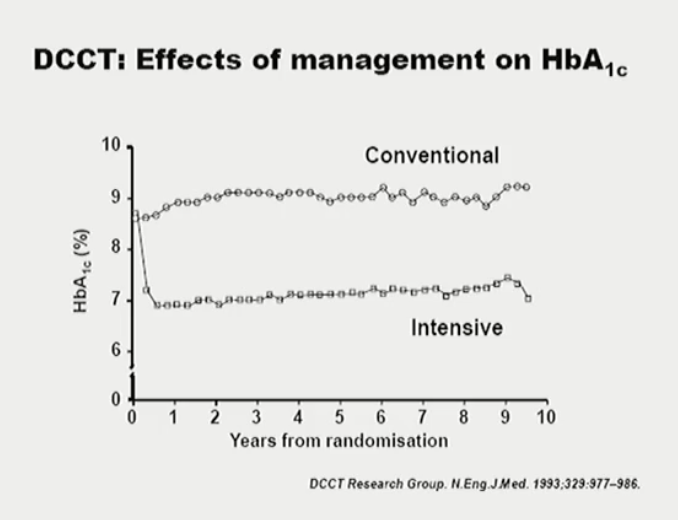
carried micro and macrovascular benefits
Give three specific things that we reduced as a result of the intensive therapy group from DCCT.
retinopathy incidence ↓ 76%
neuropathy incidence ↓ 63%
nephropathy incidence ↓ 50%
What is important to note regarding the results of the DCCT?
after doing a follow up ~10y after, those who did the intensive therapy still had a legacy effect (↓ 42% CVD risk and ↓ 57% in MI or stroke and ↓ renal disease)
What are the ABC’s of DM management?
want to manage these factors to reduce complications:
A = average blood glucose OR HbA1C
B = BP
C = CHOL, both total and LDL
What two things does metformin do?
reduces glucose output from the liver
increases insulin sensitivity at the peripheral
Describe the DPP (Diabetes Prevention Program) in terms of their study design, premise/objective question, experimental groups, and results.
Term
Study Design:
RCT
Premise:
Does modest wt loss via diet and exercise or treatment w/ metformin (glucophage) delay the onset of DM in individuals w/ pre-diabetes
Experimental Groups:
LIfestyle group: wt loss of 7% BW through exercising 150min/wk
Metformin 2x a day; conventional diet info
Placebo 2x a day; conventional diet info
Results:
lifestyle management decreased risk of diabetes by 58% whereas metformin decreased risk of diabetes by 34%
follow up 10 yrs later, saw a legacy effect too
Describe the legacy effects found 10 yrs later in the DPP study.

Describe the participant demographic in DPP.

What is the Look AHEAD trial. Describe in terms of premise, treatment/groups, and outcomes.
Premise: Does intensive lifestyle intervention have better results than conventional diabetes support and education in reducing CVD morbidity and mortality in adults w/ T2DM aged 45-74yrs?
Treatment:
lifestyle group: 7% wt loss at 1 yr and maintain wt loss; exercise 175 min/wk; achieved through intensive behavioral counseling and group support programs
control: conventional diabetes management and support
Results: intensive lifestyle management resulted in greater and significant changes in the ABCs of management but there was no significant difference in CVD morbidity or morality b/w the two groups
Does wt loss help to achieve partial or complete remission of T2DM?
DiRECT study showed that weight loss of > 10kg can achieve remission of T2DM in 46% of obese individuals
primarily effective when < 3 yrs since diagnosis
How does wt loss help to achieve partial or complete remission of T2DM?

Describe primary prevention of DM.

Describe secondary prevention of DM.

Describe tertiary prevention of DM.
