Ch-3; Mughal School
 Call Kai
 Learn
Learn Practice Test
 Spaced Repetition
 Match
Match Flashcards
 Knowt Play
1/23

Earn XP
Description and Tags
Class 12th, Ch-3, Mughal School, Painting
Name | Mastery | Learn | Test | Matching | Spaced | Call with Kai | Chat |
|---|
No analytics yet
Send a link to your students to track their progress
24 Terms
• The Mughal School of Miniature Painting is known for its refined aesthetics.
• It developed as a mixture of Rajasthani art and Persian art. It was not an entirely new style; rather, the Rajasthani school was refined and polished under Persian influence.
• Mughal art included calligraphy, bookmaking, book illustration and miniature painting.
• Paintings became an important medium for narrating the tall tales and achievements of Mughal emperors.
• Mughal miniatures were very small, often only a few square inches, and brightly coloured. Despite their small size, they were incredibly accurate, with some lines painted using a brush made of a single hair.
• The Mughal rulers of the Timurid dynasty encouraged Mughal art, which reached its peak during the 15th century.
• Behzad was the most famous Persian miniature painter of the period. He was regarded as the Raphael of the East and served as the chief artist.
• Jahangir's period is also known as the Golden Period of Mughal Painting.
• Mughal painting continued to grow during the reign of Jahangir.
• During his reign, Mughal painting flourished in both human and nature studies and reached its zenith.
• Since Jahangir was largely influenced by European painting, this gave a new perspective to Mughal painting.
• Jahangir also used European paintings that depicted images of kings and queens.
• He encouraged his painters. Daulat was one of the famous painters of Jahangir's time.
• Jahangir had a trained eye for pictures and a highly refined aesthetic sensibility.
• Ornamentation and border decoration were also characteristic features of the time, reflecting the Persian style.
• After the death of Jahangir, Shah Jahan became the emperor of the Mughal Empire in 1628.
The main features of the Mughal School of Miniature Painting are:
1. Historical Scenes: During Akbar's reign, many historical scenes were painted. Akbar gave great importance to manuscripts.
2. Linear Beauty: Mughal paintings show beautiful, thin, thick and fine lines. These lines are so delicate that even the minutest details are clearly visible.
3. Use of Brushes: A variety of brushes were manufactured using squirrel or kitten hair.
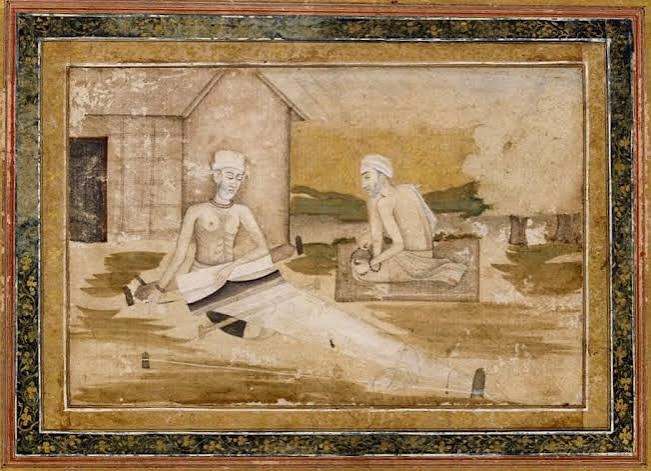
4. Border Decoration: Paintings are decorated with highly ornamented borders. In some paintings, the borders dominate the main painting.
5. Profile Faces: Profile faces are a main characteristic of the Mughal School. Almost all portraits are ek-chashm; even when figures are shown in frontal or side poses, their faces are generally depicted in profile.
6. Garments: Female figures wear transparent chunni, while male figures wear pyjamas and decorative turbans. Most garments represent the summer season.
7. Themes: Mughal paintings revolve around themes such as battles, mythological stories, hunting scenes, wildlife, royal life and mythology.
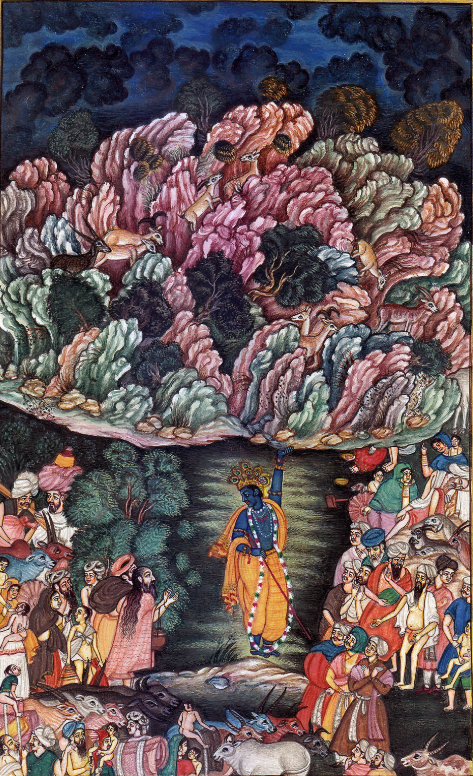
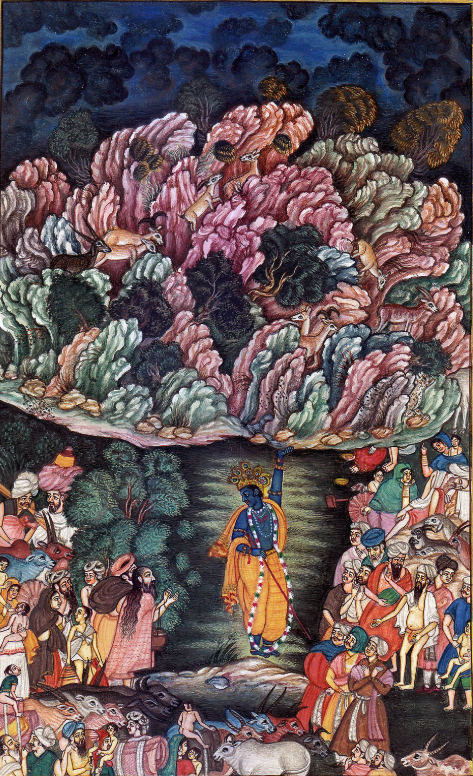
8. Depiction of Nature: Nature is beautifully depicted. Each leaf is painted differently, and trees, plants and leaves are shown gracefully.
9. Colour Scheme: Natural colours are used beautifully. The early paintings used flat colours, while later paintings showed depth through shading.
10. Gold and Silver Colours: Gold and silver powder were used to enhance the royal effect of the paintings.
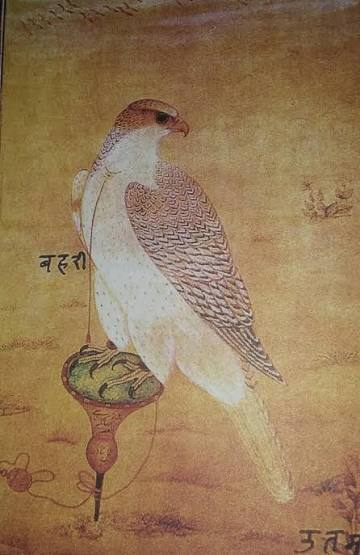
11. Use of Calligraphy: Most paintings contain calligraphy in black, sometimes along with the name of the artist.
12. Depiction of Animals and Birds: Animals and birds were beautifully depicted. Scenes of camel fights and elephant fights, along with animals such as goats, horses, tigers and lions, are commonly found.
13. Crowded Scenes: The Mughal School is famous for depicting crowded scenes involving a large number of figures and forms.