Chapter 3 (part of CH 3) +4 Microeconomics Exam 2
 Call Kai
 Learn
 Practice Test
 Spaced Repetition
 Match
 Flashcards
 Knowt Play
1/19

There's no tags or description
Looks like no tags are added yet.
20 Terms
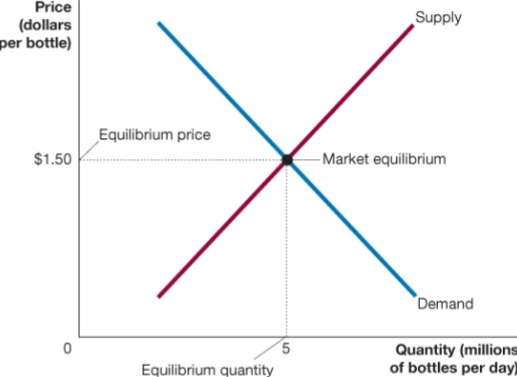
Market Equilibrium
A situation where quantity demanded equals quantity supplied
Competitive market equilibrium
markets with many buyers and sellers where the quantity demanded equals the quantity supplied
Substitute goods
Alternative goods that consumers can use in place of another good
Complement goods
Products that are used or consumed together, where the demand for one increases alongside the popularity or price drop of another
Normal goods
When income increases, the demand for the good increases, and when income decreases, the demand for the good decreases
Inferior goods
When income increases, the demand for the good decreases, and when income decreases, the demand for the good increases
Shifts in equilibrium
A change in a good's own price causes a movement along a curve rather than a shift. An entire curve shifts only when non-price external factors change
Demand shifters
Income (Normal goods, inferior goods)
Price of substitutes
Price of complements
Taste & preferences
Number of buyers

Supply Shifters
Price of inputs
Technological change
Prices of substitutes in production
Number of firms in the market
Expected future prices
Change in demand vs. quantity demanded
A change in demand is a shift of the curve, and a movement along the curve is a change in quantity demanded
Change in supply vs. quantity supplied
A shift of the supply curve is a change in supply, and a movement along the curve is a change in quantity supplied
Price ceiling
A legally determined maximum price that sellers may charge
Price floor
A legally determined minimum price that sellers may receive
Binding constraints
A binding floor is set above the constraints restricting the market from equilibrium by creating a surplus or shortage
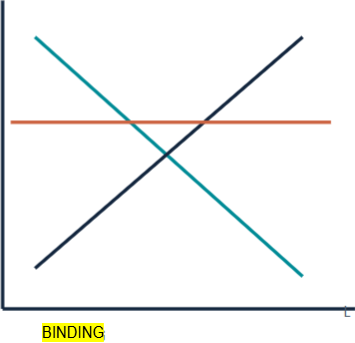
Nonbinding constraint
A nonbinding floor is set at or below equilibrium and does not change the market outcome

Consumer surplus
The difference between the highest price a consumer is willing to pay and what they actually pay
Producer surplus
The difference between the lowest price a firm is willing to accept and what they actually receive
Total economic surplus
The sum of consumer surplus plus producer surplus
Deadweight loss
The loss of total economic welfare or surplus that happens when a market is not at its most efficient equilibrium
Economic efficiency
An efficient market produces the greatest possible combined benefit for buyers and sellers