Ptolemies and the temples
 Call Kai
 Learn
 Practice Test
 Spaced Repetition
 Match
 Flashcards
 Knowt Play
1/7

There's no tags or description
Looks like no tags are added yet.
8 Terms
Ma’at
represented cosmic order, truth and balance in Egyptian religion. Pharaoh was responsible for maintaining it by serving the gods and defending Egypt against chaos.
Isfet
chaos or disorder, which the pharaoh was expected to hold back
Temples
understood as “house of the gods”
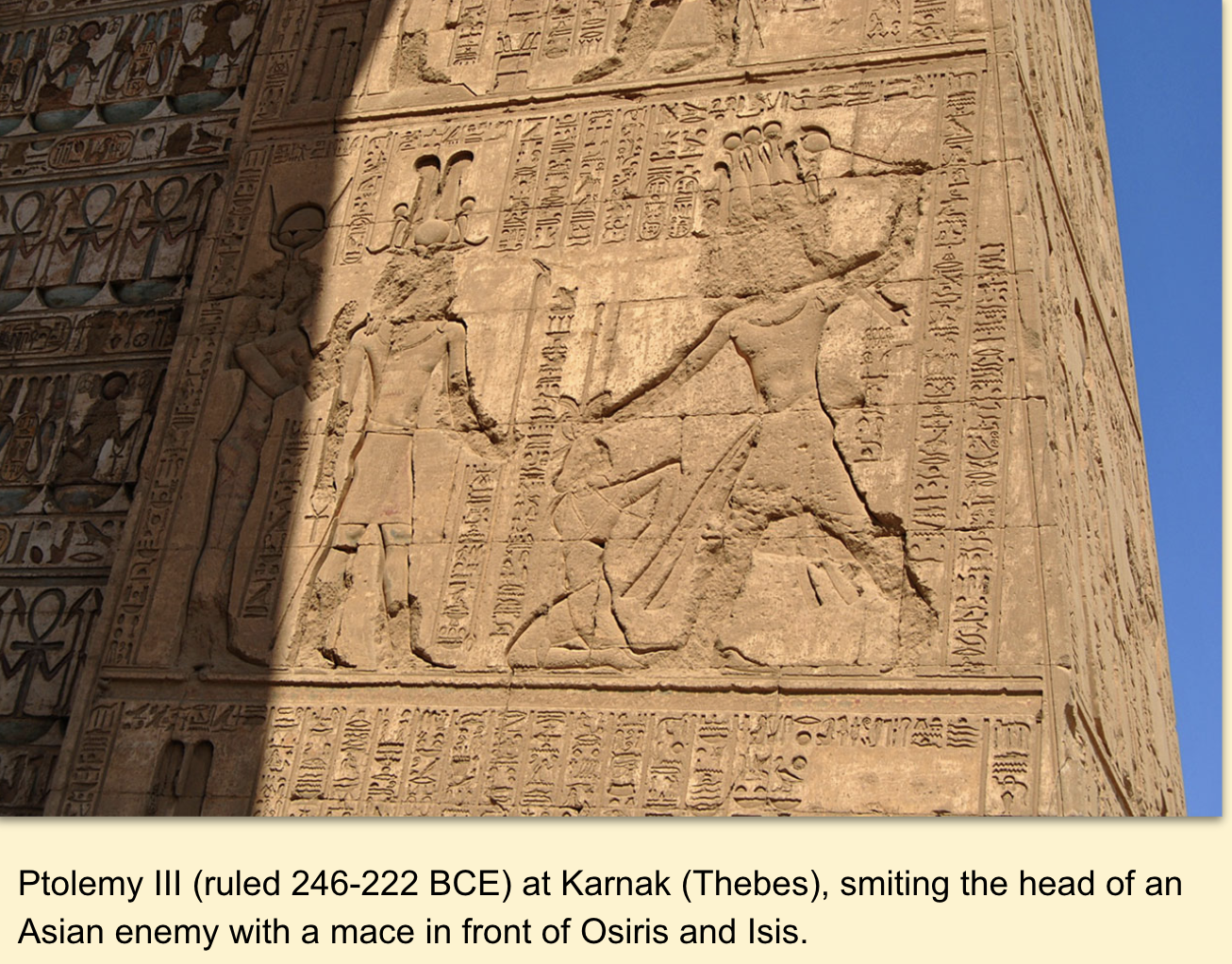
Why temples mattered politically?
Ptolemy III smites enemy before rhe gods Osiris and Isis. Uses traditional Egyptian royal imagery. Matters because the Ptolemies presented themselves as legitimate Egyptian king, not foreign rulers
Interpretatio Greaca
practice of interpreting a god from one culture as equivalent to a god from another. Ex. Greeks associate Amun with Zeus. Shows how Greeks understood Egyptian religion through their own cultural framework
Serapis
God promoted by early Ptolemies as a figure that can appeal to both Greek and Egyptian communites
Royal Cult
involved religious honors for a ruler or members of the royal family. Ptolemies used this cults to strengthened the dynasty’s prestige and connect royal authority with divine favor
Arsinoe II
was sister-wife of Ptolemy II whose royal cult was promoted through temple, festivals and coinage. Her association with Isis and greek goddesses helped make her worship meaningful across cultural communities.