Parasitic helminths in sheep (clinial parasitology)
 Call Kai
 Learn
Learn Practice Test
 Spaced Repetition
 Match
Match Flashcards
 Knowt Play
1/39

There's no tags or description
Looks like no tags are added yet.
Name | Mastery | Learn | Test | Matching | Spaced | Call with Kai | Chat |
|---|
No analytics yet
Send a link to your students to track their progress
40 Terms
What are the SCOPS principles?
Always make sure treatment is fully effective
Reduce dependence on anthelmintics using management and monitoring
Avoid bringing in resistant worms and/or other parasites by following a robust quarantine routine. Test for anthelmintic resistance
Minimise the selection for worms that are resistant to anthelmintics when you treat sheep
How do you make sure anthelmintic treatment is fully effective?
Avoid under dosing- dose to heaviest
Check dosing gun
Correct technique and product
Perform treatment check
What are some methods used to reduce reliance on anthelmintics?
Use diagnostic to inform treatment (FECs, DLWG)
Rotational grazing practices
Good plan of nutrition
Manage concurrent disease
Genetic selection (EBV for resistance to nematodes)
How do you estimate pasture risk using SCOPS table?

How do you minimise the selection for resistance to anthelmintics when you treat sheep?
Don't dose and move
Use Target Selective treatments (untreated animals contribute to in refugia population)
Avoid LA or dual active products without specific indication
Recall the common nematode infections in sheep
Abomasum + more pathogenic
Telodorsagia circumcincta
Trichostrongylus axei
Haemochus contortus
Small intestine + less pathogenic
Trichostrongylus vitrinus & T. colubriformis
Cooperia spp
Nematodirus battus
How do nematodes cause disease?
Damage gut lining
Dec absorption and transit time
Remove nutrients
H. contortus = blood feeding
Host immune response
Explain the concept of hypobiosis
Arrested development L4 stage inside sheep
En masse emergence and pasture contamination in late winter and early spring
What are the clinical signs of nematode infection?
Reduced appetite
Poor weight gain/ weight loss
Diarrhoea
Anaemia (Haemonchosis)
Death
Fly strike
How does nematodirosis present?
Acute severe diarrhoea and death lambs 6-12 weeks old
When does teladorsagiosis present (PGE)?
Type 1- lambs first grazing season, mid summer onwards
Type 2- yearlings winter months, emergence of hypobiotic larvae
How does trichostrongylosis present?
Black scour
Lambs or replacements in autumn winter
How does haemonchosis present?
Adults and lambs affected
Acute regenerative anaemia
Chronic hypoproteinaemia, anaemia, bottle jaw
Sudden death
Explain the lamb to lamb cycle of Nematodirus battus
Eggs shed by lambs one year remain on pasture and infect next years lamb
Overwinter
Large number L3 hatch simulatenously
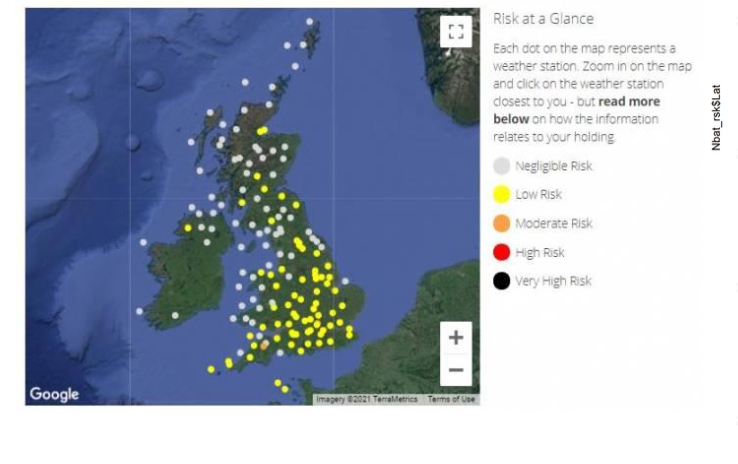
How can nematodirus risk be forecast?
Based on daily temperature to point of hatch
7 days >10°C
Explain how you would perform a FEC to inform dosing
Every 2-4 weeks
Use dung less than 1 hour old
At least 10 individual samples per group- 10% larger groups
Representative group, completely rnaodm
Air expelled from bag and keep cool
What nematode egg counts are not strongly related to clinical disease?
Nematodirus
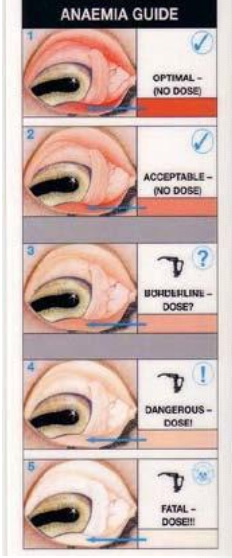
Aside for FEC how can you test for haemonchosis?
FAMACHA score
Use pallour of eye mms
Very high eggs per gram
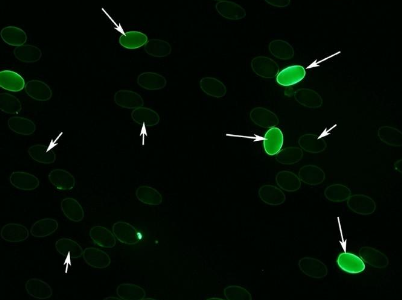
Peanut agglutinin assay - distinguishes from other GIN
Recall the features of 1-BZs
Broad spectrum
Some activity against hypobiosed
SOME tapeworms
Flukes at a higher dose
Recall the features of 2-LVs
Roundworm only
Limited availability as single active prep
Recall the features of 3-MLs
Endectoparaciticide
Parentereral have persistence of activity against certain parasites (check product)
Give an example of 4-AD and a 5-SI. When would you use them
4- Monopantel
5- Derquantel
Not routinely, as part of a worm control plan, esp as a quaratine dose or late season break drench
What parameter defines anthelmintic resistance?
<95% efficacy- based on actual parasite burdens (FEC)
What are the key factors influencing the development of anthelmintic resistance in a population?
1. Treatment frequency
2. Proportion of population exposed to treatment
3. Under dosing
4. Biosecurity (new strains introduced)
How do you minimise the anthelmintic resitance of worms when treating sheep?
Dont dose and move- will infect clean pastures with resistant strains
With products with persistent activity dose and return to conaminated pasture for a few days to pick up susceptible parasites
Don't treat everything at same time
Don't treat everything within group - selective treatment
How do you identify the presence of anthelmintic resistance?
Poor performance and clinical signs
FECRT - FEC should be zero after drug admin 95%> reduction= resistance
Drench test- FEC 7-14 days port treatment
What are the issues with cestode infections in sheep?
Carcass condemnations at abattoir
Echinococcus granulosus - zoonotic
Clinical signs in sheep of “Gid” cysts in the brain
What is the only cestode that the sheep is the primary host for?
Monezia expansa
Farmers may notice bc of segments in faeces
Can treat with BZs
What are the taenia species that affect sheep?
Taenia hydatigena
Taenia ovis
Taenia multiceps
(Important bc of meat condemnation)
How are taenia tapeworms in sheep controlled?
Dog is intermediate host- CONTROL IN DOGS
Treat with praziquantel and don't allow access to pasture
Recall the two forms of liver fluke
Acute disease: sick sheep, sudden death
Chronic disease: thin sheep and associated welfare and prod loss
(No immunity in sheep)
What conditions favour live fluke?
Rain: inc snail habitat, enables miracidial movement, cerceriae dispersal
Temp: >10°C
When is liver fluke traditionally seen?
May to October
Changing due to climate change
What causes acute fluke and when?
2-6 weeks after ingestion of very large numbers of metcercariae
Sept-Dec
Severe haemorrhage due to migration of immature stages though liver
What are the signs of acute fluke disease?
Sudden death (haemorrhage and shock)
Weakness
Pallor
Dyspnoea
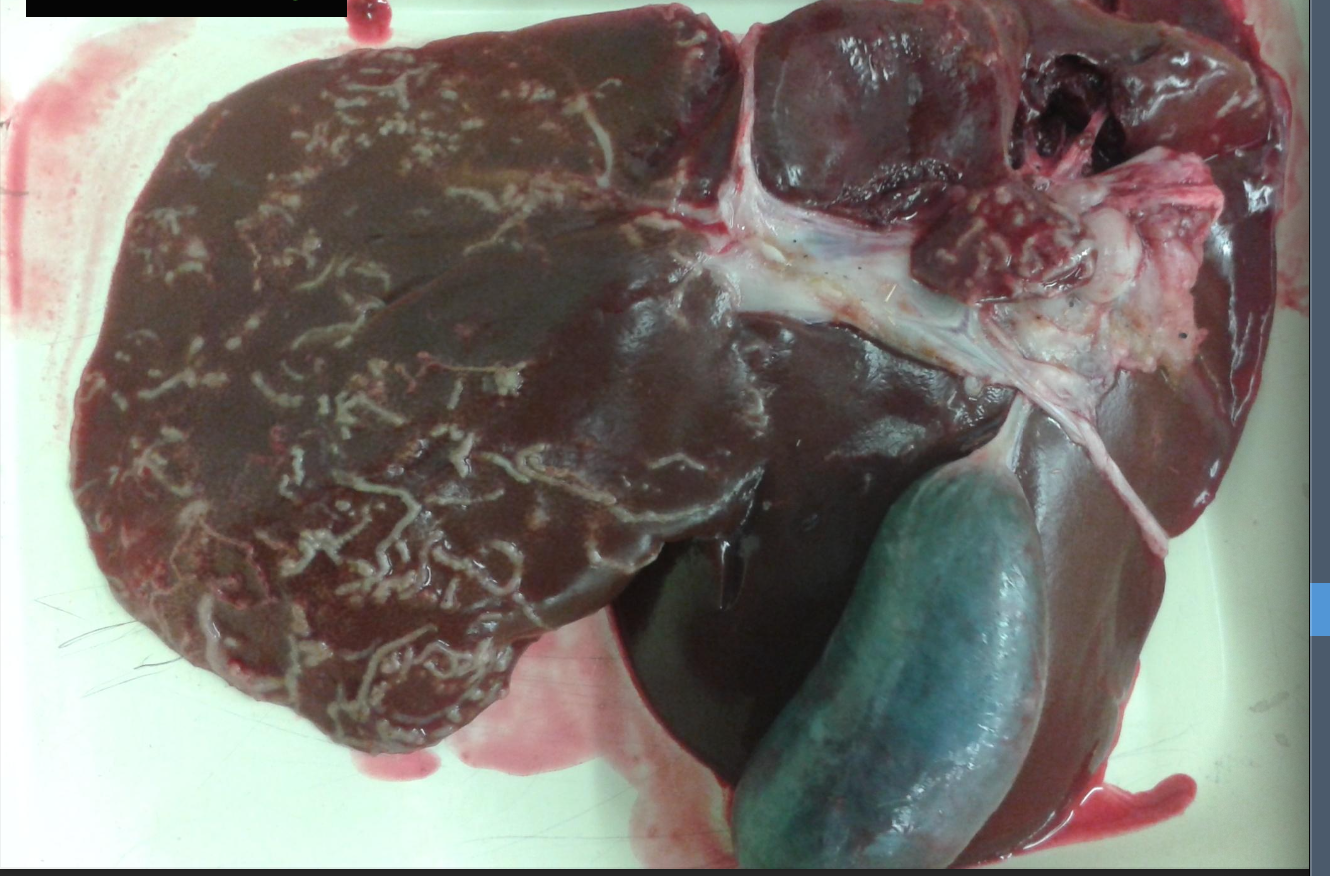
What causes chronic fasciolosis and when?
Late autumn/winter/spring
Metcercariae ingested over longer period
Blood feeding adults in bile ducts (anaemia)
What are the clinical signs of chronic fasciolosis?
Haemorrhagic anaemia
Hypoalbuminaemia (bottle jaw)
Hepatic fibrosis and cholangitis
2° clostridial infection Black's Disease
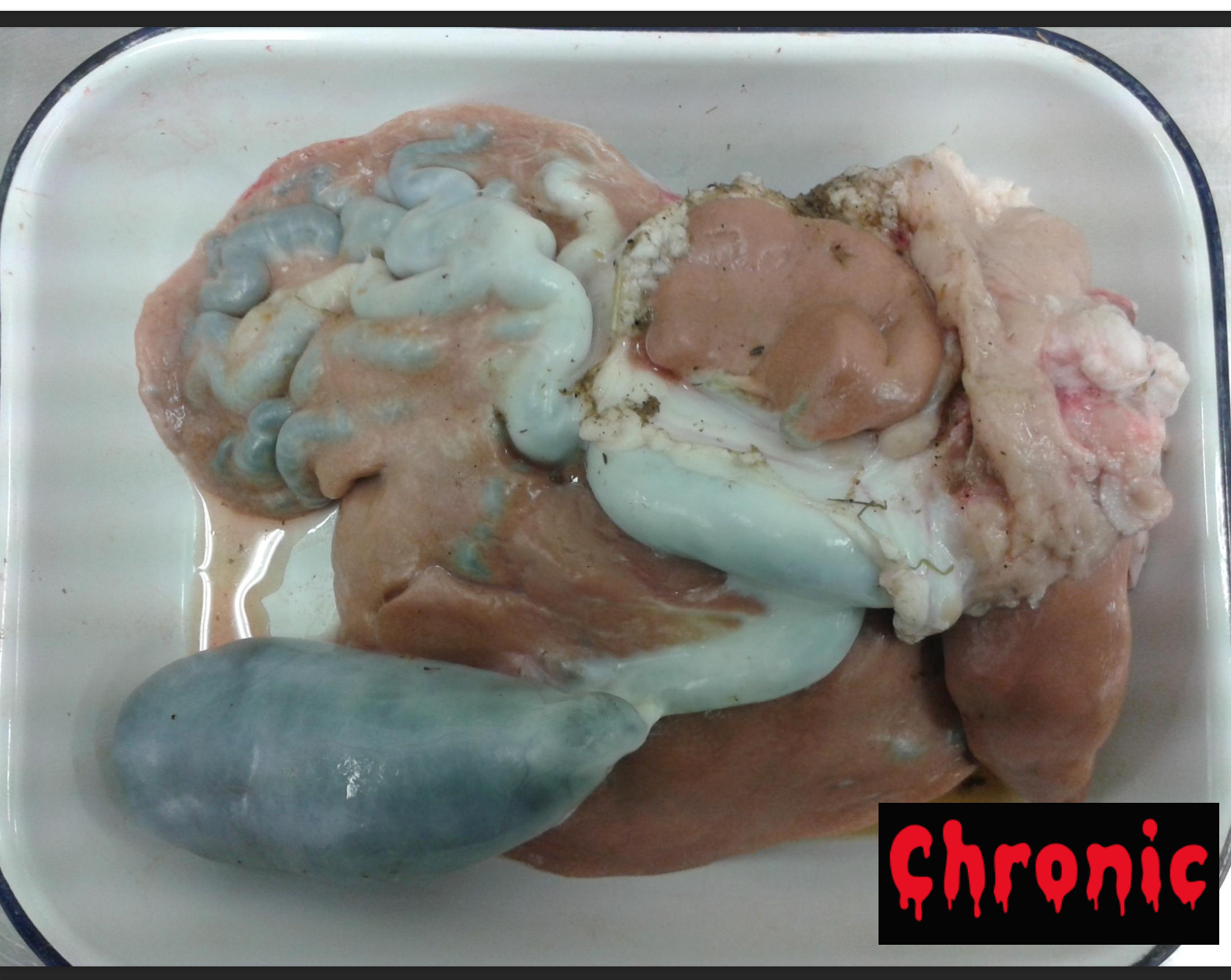
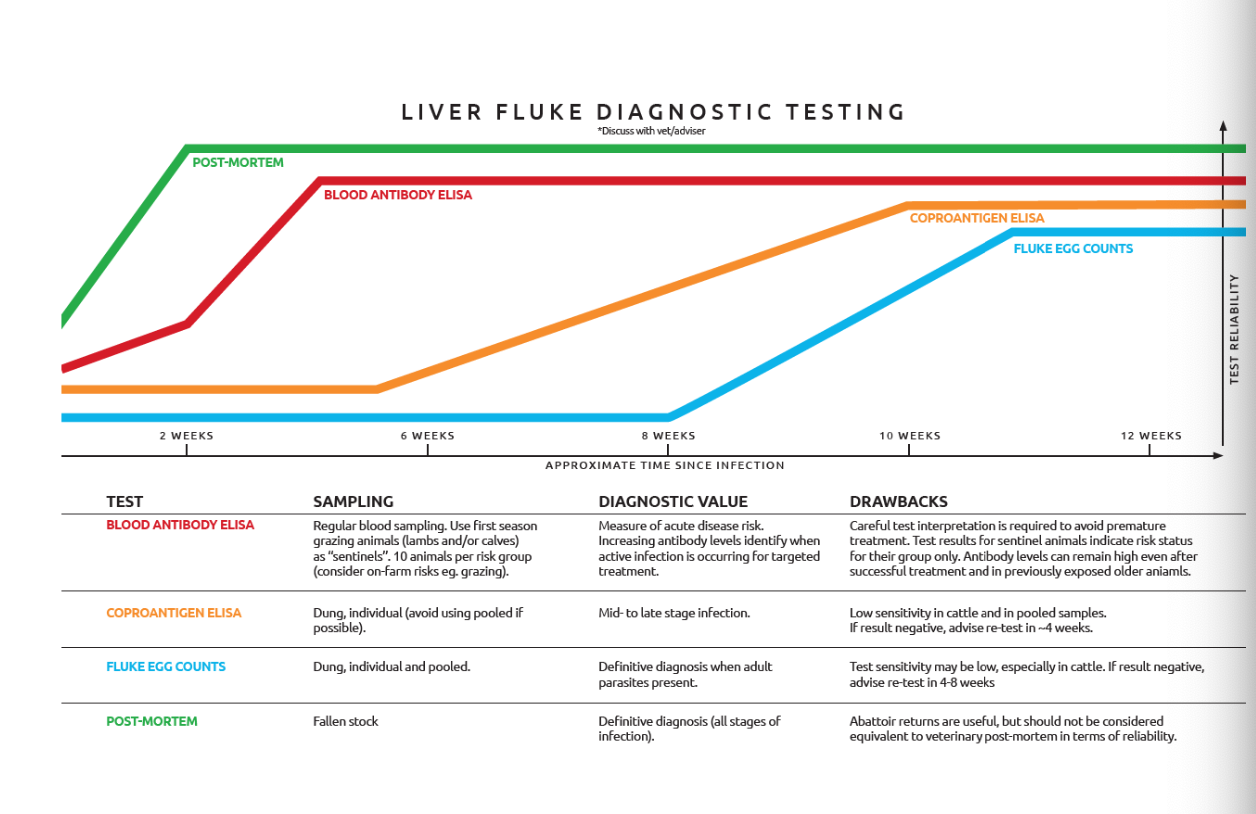
How is fluke diagnosed?
History C/S
PM + Abattoir reports
FEC (sedimentation)- 12 weeks post infection so more for chronic
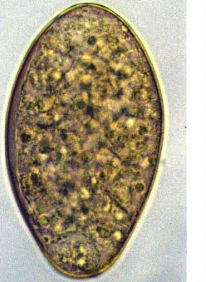
Coproantigen ELISA
Serum ELISA antibody (can help to time autumn treatment)
LFT
Liver enzymes (non specific)
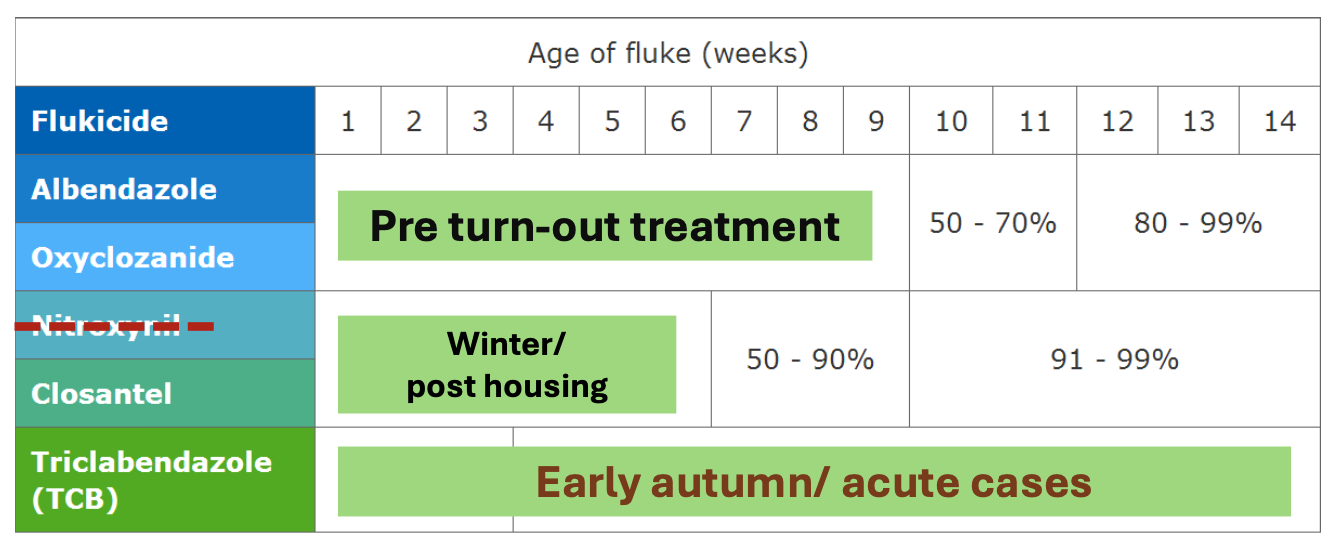
How is fluke treated?
Flukicides - non have persistence of activity so treat and move to low risk pasture
Triclabendazole- only one that will kill all stages
How can you control fluke?
Avoid 'flukey pastures' during high risk periods (e.g.- wetlands)
Monitor risk, on farm disease and treatment efficacy
Biosecurity