PCB3073 Cardiovascular pt.4 - UCF Ahangari
 Call Kai
 Learn
Learn Practice Test
 Spaced Repetition
 Match
Match Flashcards
 Knowt Play
1/117

There's no tags or description
Looks like no tags are added yet.
Name | Mastery | Learn | Test | Matching | Spaced | Call with Kai | Chat |
|---|
No analytics yet
Send a link to your students to track their progress
118 Terms
ECG electrodes are ________________ (i.e., they detect a change in electric potential between two points) and detect the electrical potential change in the frontal plane.
bipolar
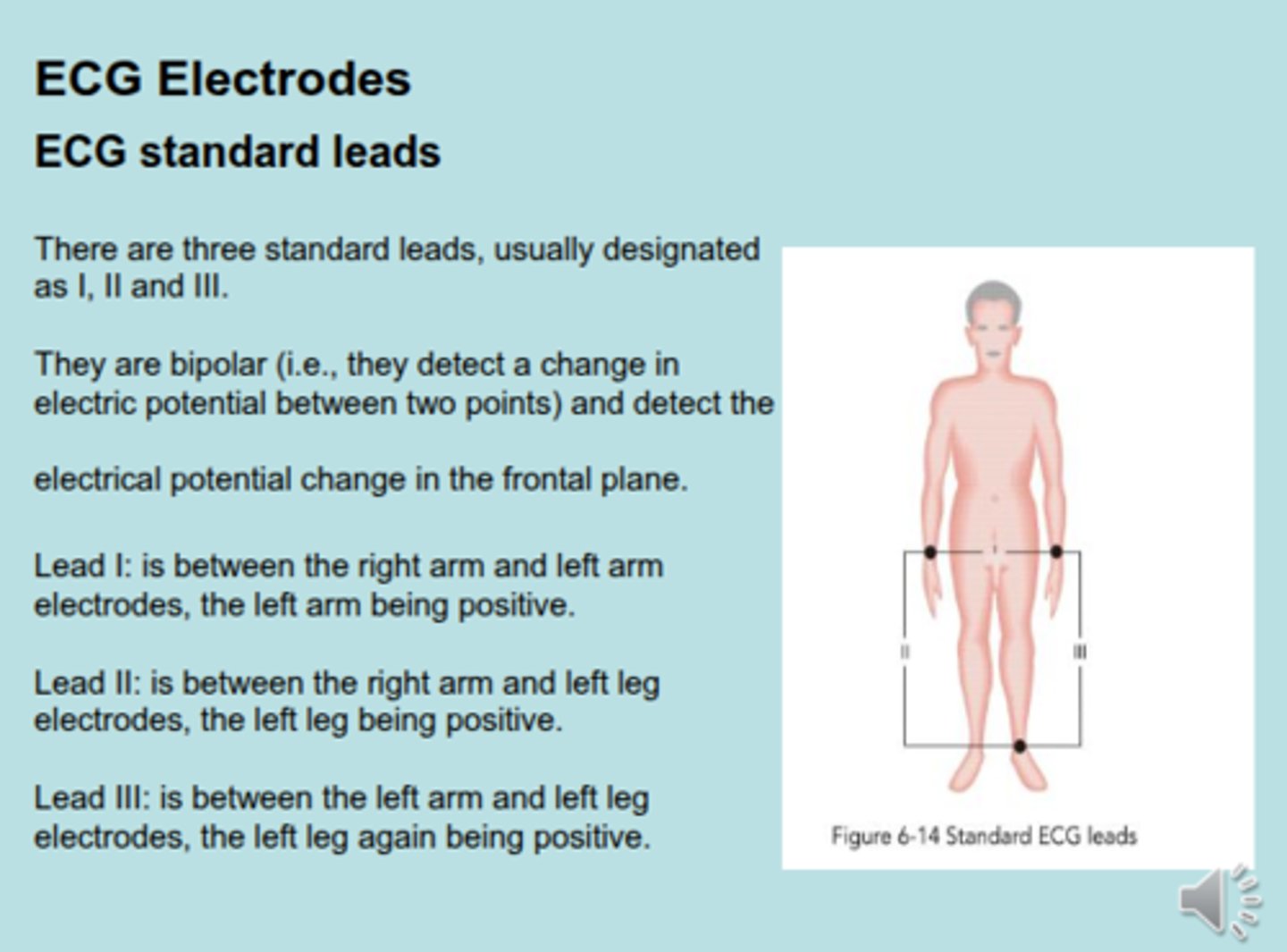
Where is Lead I, where is it positive?
between the right arm and left arm electrodes
-
the left arm being positive
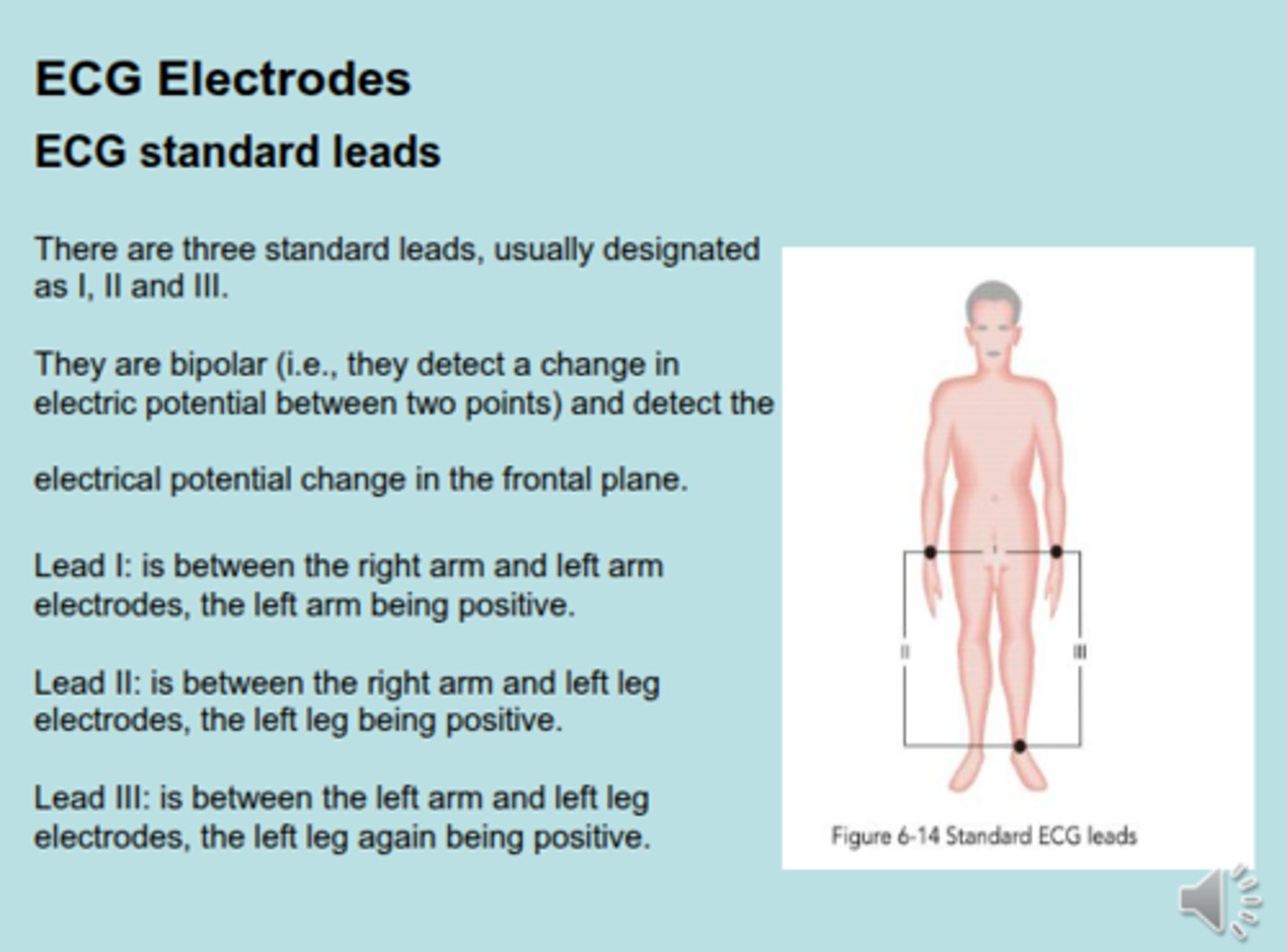
Where is Lead II, where is it positive?
between the right arm and left leg electrodes
-
the left leg being positive
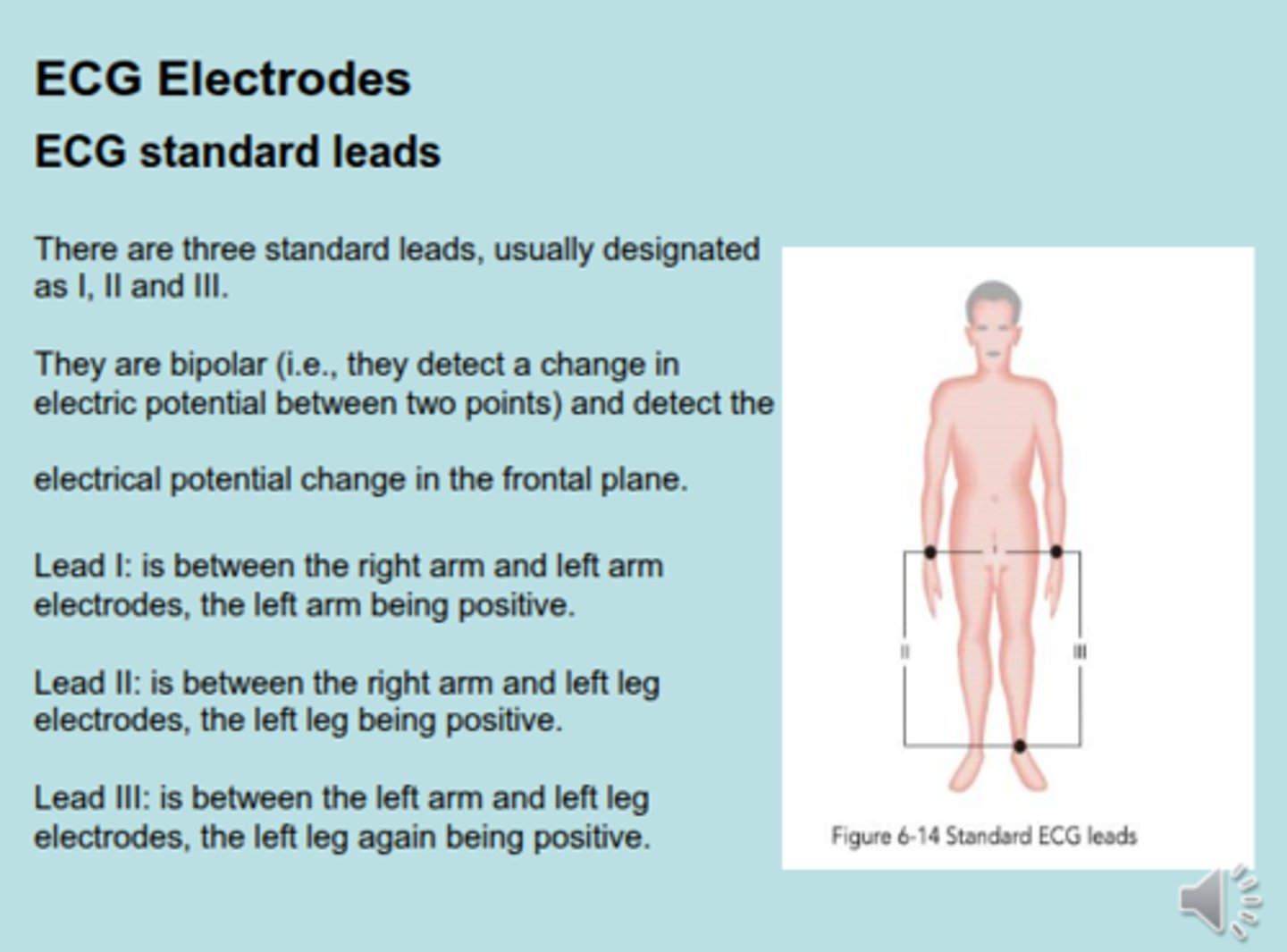
Where is Lead III, where is it positive?
between the left arm and left leg electrodes
-
the left leg being positive
Regarding chest electrode placement :
Fifth intercostal space at midclavicular line
A. V1
B. V2
C. V3
D. V4
E. V5
F. V6
D. V4
Regarding chest electrode placement :
Fourth intercostal space to the right of the sternum
A. V1
B. V2
C. V3
D. V4
E. V5
F. V6
A. V1
Regarding chest electrode placement :
Level with V5 at left midaxillary line. (Directly under the midpoint of the armpit)
A. V1
B. V2
C. V3
D. V4
E. V5
F. V6
F. V6
Regarding chest electrode placement :
Fourth intercostal space to the Left of the
sternum
A. V1
B. V2
C. V3
D. V4
E. V5
F. V6
B. V2
Regarding chest electrode placement :
Level with V4 at left anterior axillary line
A. V1
B. V2
C. V3
D. V4
E. V5
F. V6
E. V5
Regarding chest electrode placement :
Directly between leads V2 and V4
A. V1
B. V2
C. V3
D. V4
E. V5
F. V6
Regarding chest electrodes, what do V1 & V2 detect?
function of R. ventricle
Regarding chest electrodes, what do V3 & V4 detect?
function of interventricular membrane & the lateral wall of L. ventricle
Regarding chest electrodes, what do V5 & V6 detect?
anterior & lateral wall of left ventricle
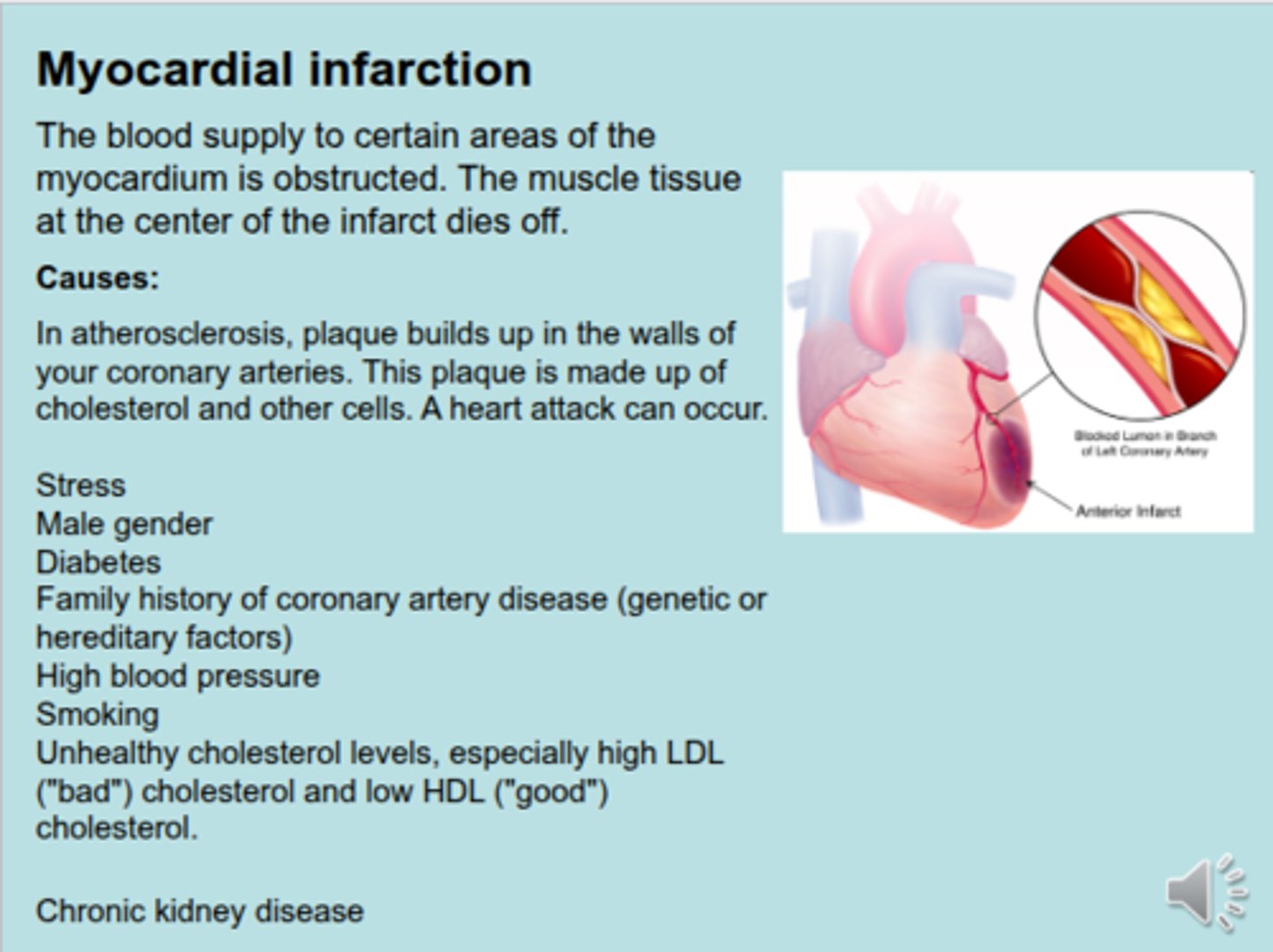
What are the causes of myocardial infarction?
atherosclerosis in cornonary arteries
-
genetics
-
hypercalcemia
-
hyperlipidemia
-
stress (causes abnormal vasoconstriction)
-
chronic kidney disease (T1 Diabetes in long term, the excess sugar destroys the renal artery and the structure of the nephron. This affects the filtration and systemic circulation)
-
polysistic kidney disease (having multiple cysts in the kidneys; affect filtration)
What is the differential diagnosis of MI?
retrosternal pain due to gastric reflux/ the stomach acid can sometimes easily get into the esophagus, which burns it. Duration of this time is 5-10 mins
-
BUT! in MI, duration of pain is 20 minitues
-
MI referred pain is in :
* retrosternal area
* submandibular region
* posterior L. shoulder
* L. forearm
* Last 2 fingers on L. hand
T/F : Rest and medicine will alleviate the pain and symptoms of a MI
FALSE
-
Rest and a medicine do not completely relieve the pain of a heart attack. Symptoms may also go away and come back
What are the symptoms of a MI?
1. Chest pain (angina pectoris)
2. sweating
3. anxiety
4. cough
5. fainting
6. dizziness
7. nausea / vomiting
8. palpitations (feels like heart is beating too fast)
9. dyspnea (shortness of breath)
10. cold sweats
11. vertigo
12. weakness
13.
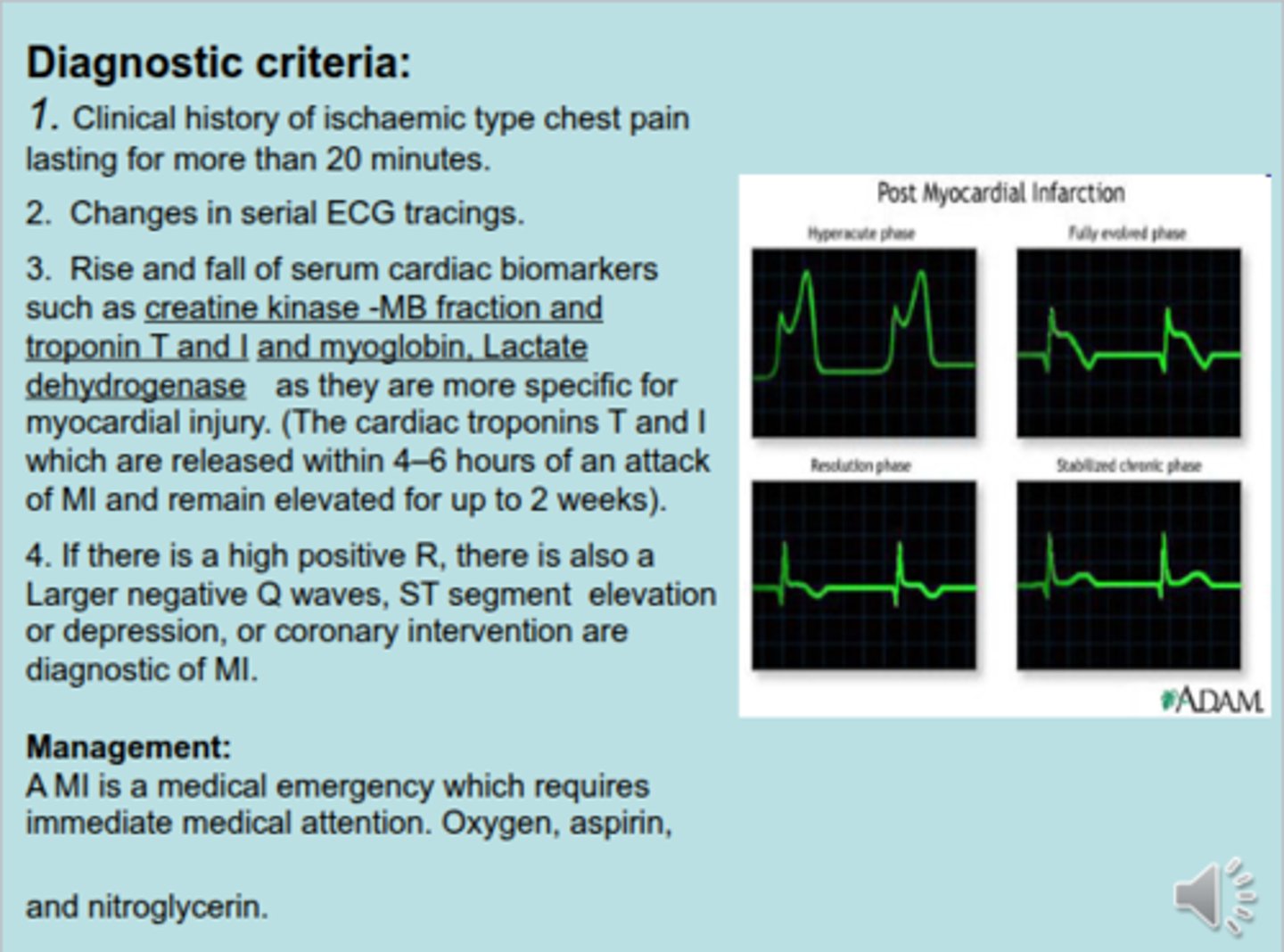
The cardiac troponins _____ & _____ which are released within 4-6 hours of an attack of MI and remain elevated for up to 2 weeks
T & I
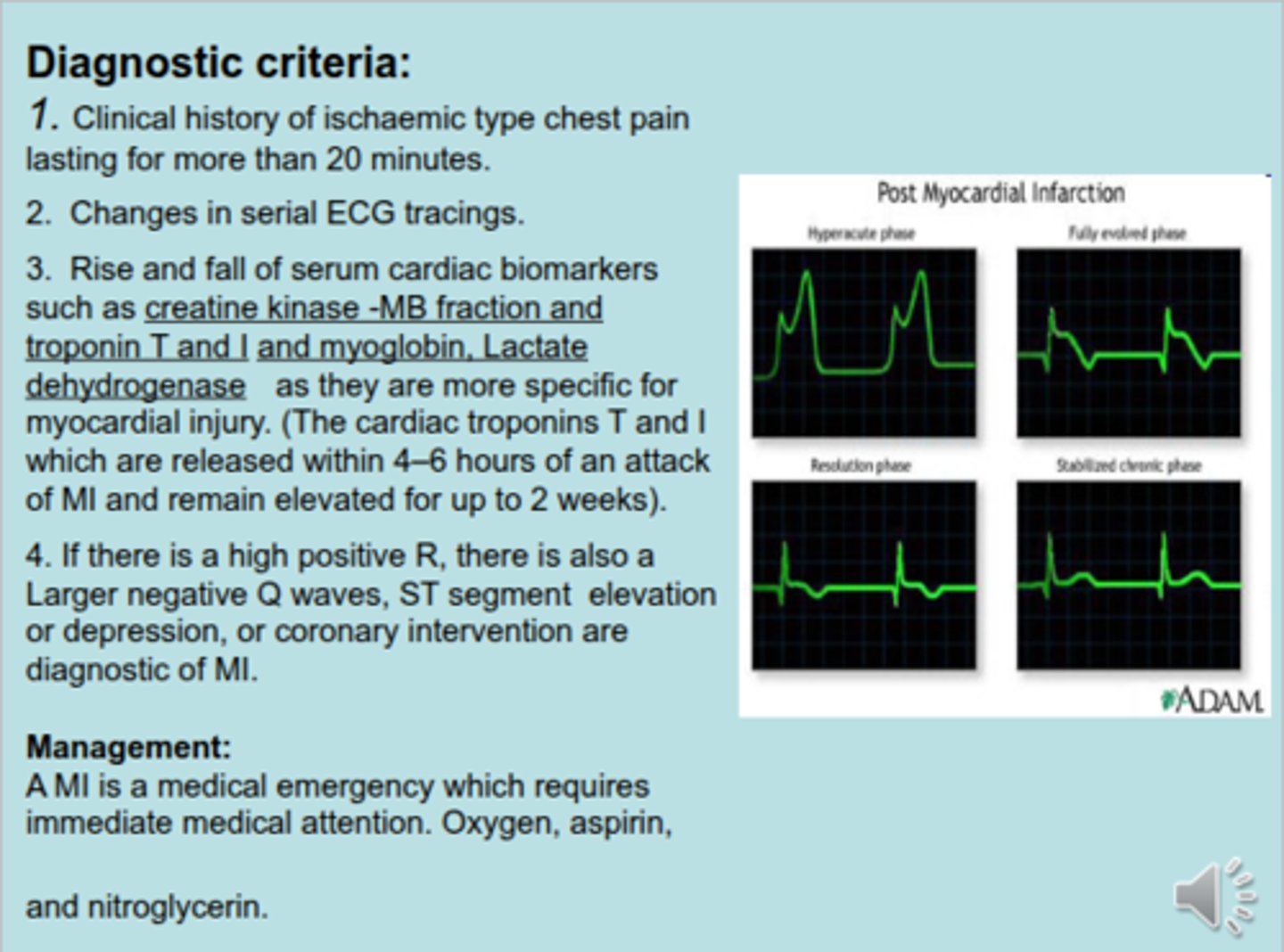
If there is a high positive ____, there is also a Larger negative ______ waves, _____ segment elevation or depression, or coronary intervention are diagnostic of MI
-
Answer is EKG waves/segments/complexes
If there is a high positive R, there is also a Larger negative Q waves, ST segment elevation or depression, or coronary intervention are diagnostic of MI
A MI is a medical emergency which requires immediate medical attention. What can you give this patient?
1. oxygen
2. aspirin ( vasodilator esp. in cornonary artery)
3. nitroglycerin ( vasodilator & inhibits coagulation ; put it under the tongue *NO SWALLOW* for faster absorption by lingual vein)
What 2 things will paramedics test for a person having a MI?
1. finger blood test
2. EKG
What does the blood test show in a MI patient?
increased :
*lactic acid
*lactate dehydrogenase enzyme
*troponin I (inhibitor)
*myoglobin (is a protein which detects non-oxygenated cells. when these levels are high, it means there is damaged/non-oxygenated tissue)
a protein which detects non-oxygenated cells. when these levels are high, it means there is damaged/non-oxygenated tissue
myoglobin
inflammation of the inside lining of the heart chambers and heart valves (endocardium)
endocarditis
What is enocarditis usually a result of?
blood infection.
-
Bacteria or other infectious substance can enter the bloodstream during certain medical procedures, including dental procedures, and travel to the heart, where it can settle on damaged heart valves. The bacteria can grow and may form infected clots that break off and travel to the brain, lungs, kidneys, or spleen
Other than a blood infection, what else can increase chances for developing endocarditis?
Artificial heart valves
-
Congenital heart disease (atrial septal defect, patent ductus arteriosus)
-
Heart valve problems (such as mitral insufficiency).
-
History of rheumatic heart disease
Endocarditis can be a result of _____________ or ____________ disease
bacterial ; autoimmune
What is atrial septal defect? What can it cause?
is a congenital heart disease that can cause endocarditis
-
due to the failure of development of the atrial membrane and closure of the foramen ovale leading to a mix of oxygenated blood with deoxygenated blood
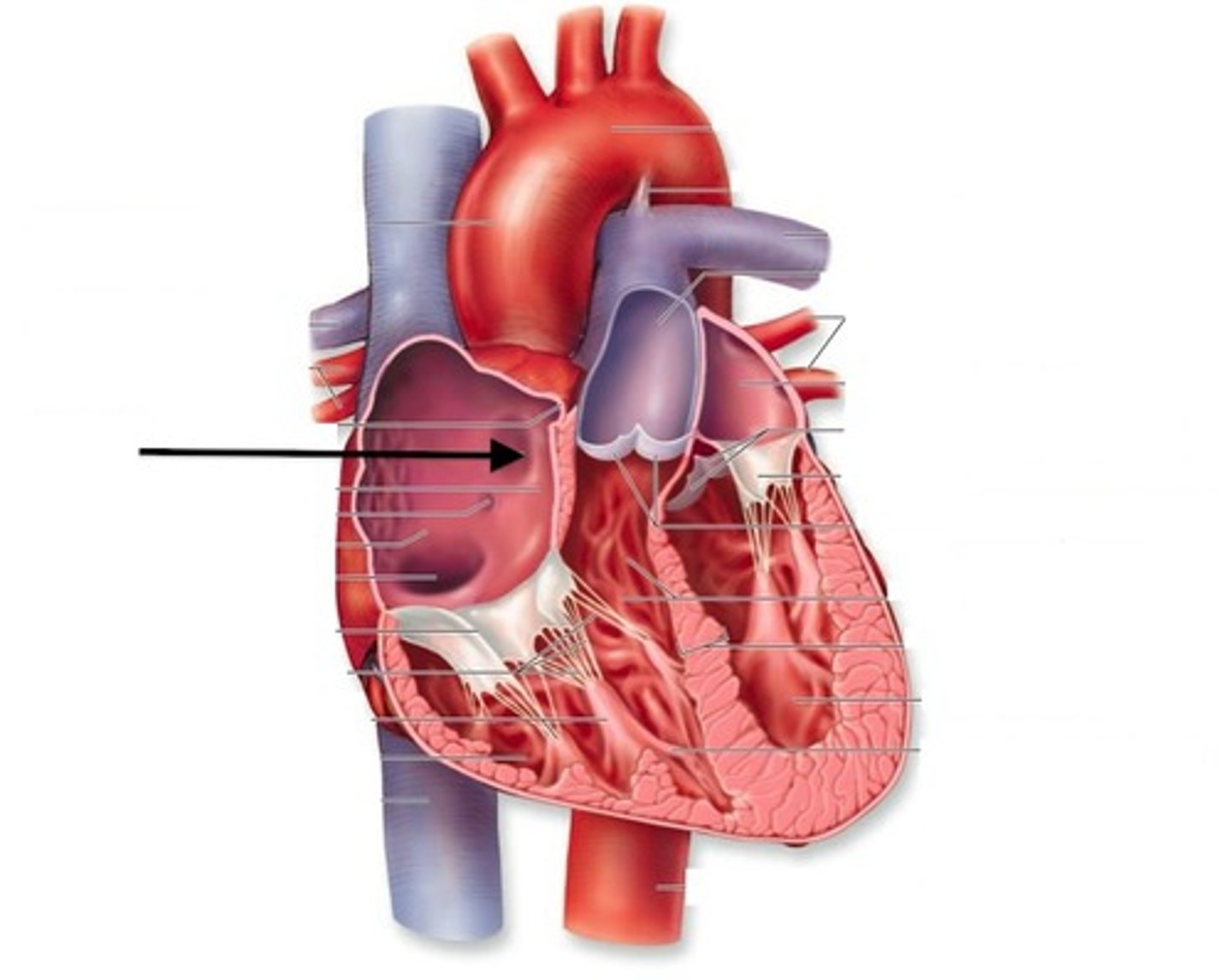
What is the connection between the aorta and pulmonary arteries called?
ductus arteriosus
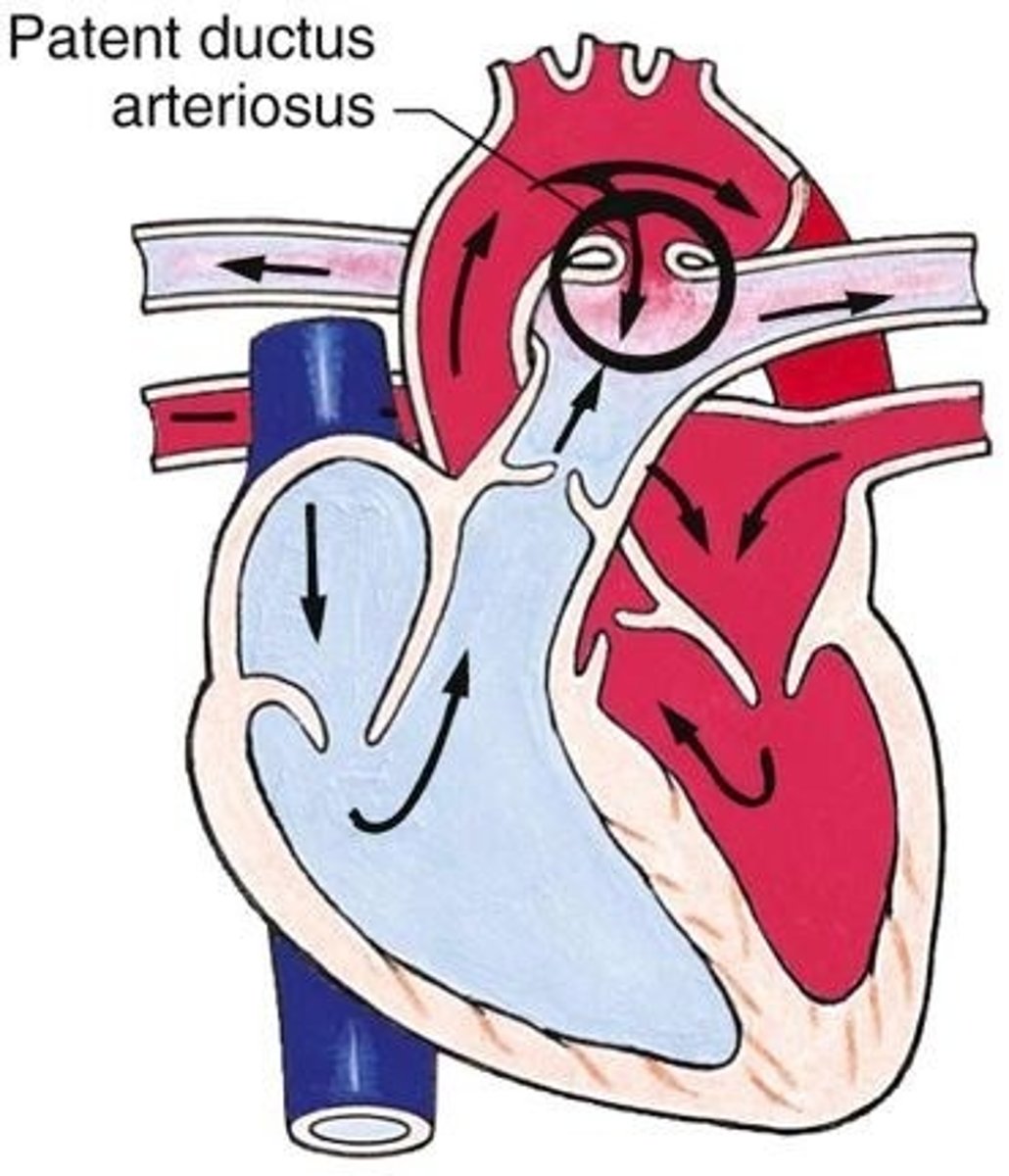
What is patent ductus arteriosus? What can it lead to?
Failure of ductus arteriosus to close
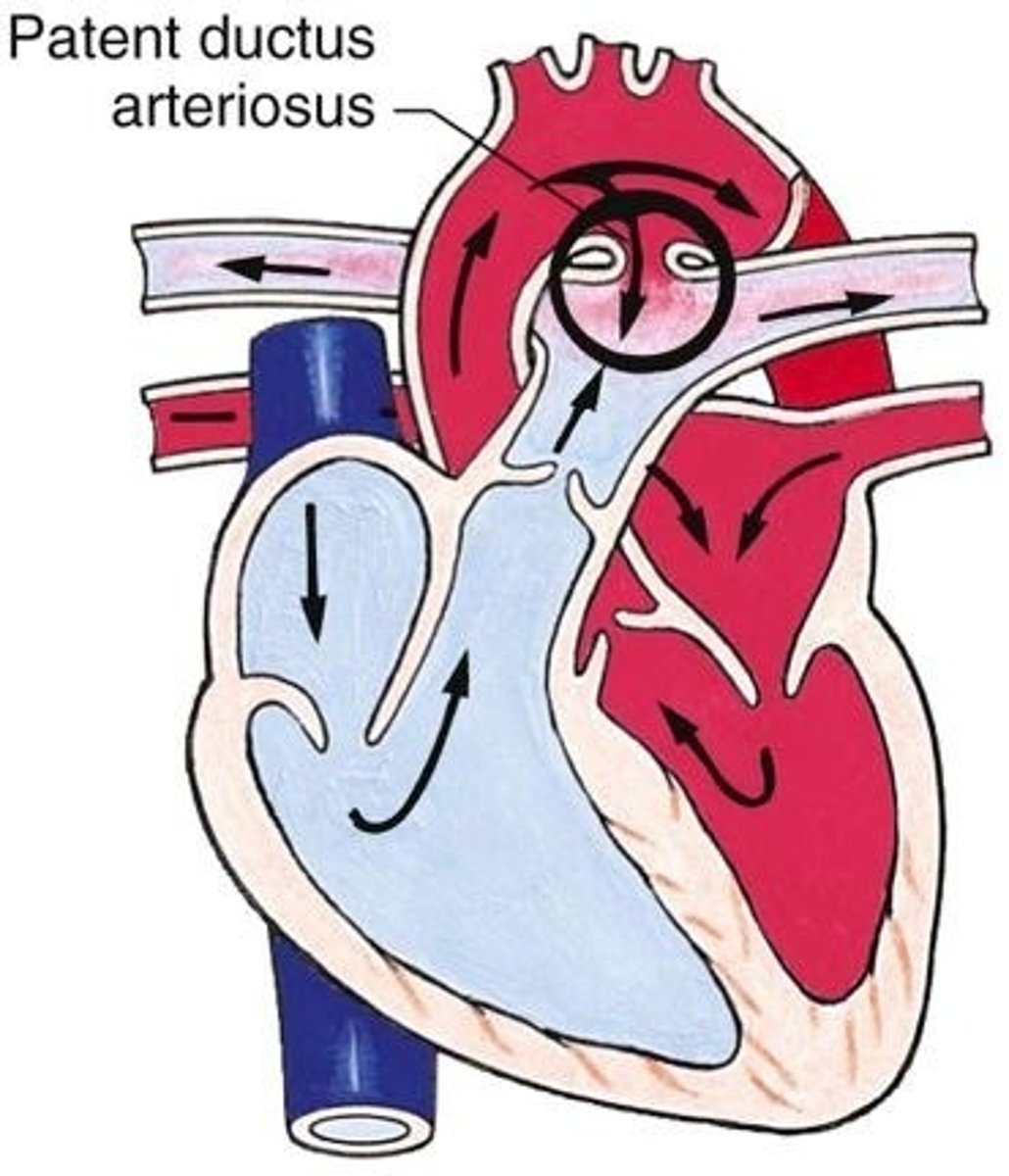
What happens if foramen ovale and ductus arteriosus do not close properly after birth
Immediately after birth, the foramen ovale and this duct close. If not closed on time after birth, it leads to mixing of oxygenated blood of aorta with deoxygenated blood from pulmonary arteries increasing risk of endocarditis
What is rheumatic heart disease? What can it lead to
Bacterial infection not treated with antibiotics. Septicemia spreading to circulation and taken to the heart creating endocarditis.
What are the signs/symptoms of endocarditis?
* Abnormal urine color
* Chills (common)
* Excessive sweating (common)
* Fatigue
* Fever (common)
* Joint pain
* Muscle aches and pains
* Night sweats
* Nail abnormalities (splinter hemorrhages under the nails)
* Paleness
* weakness
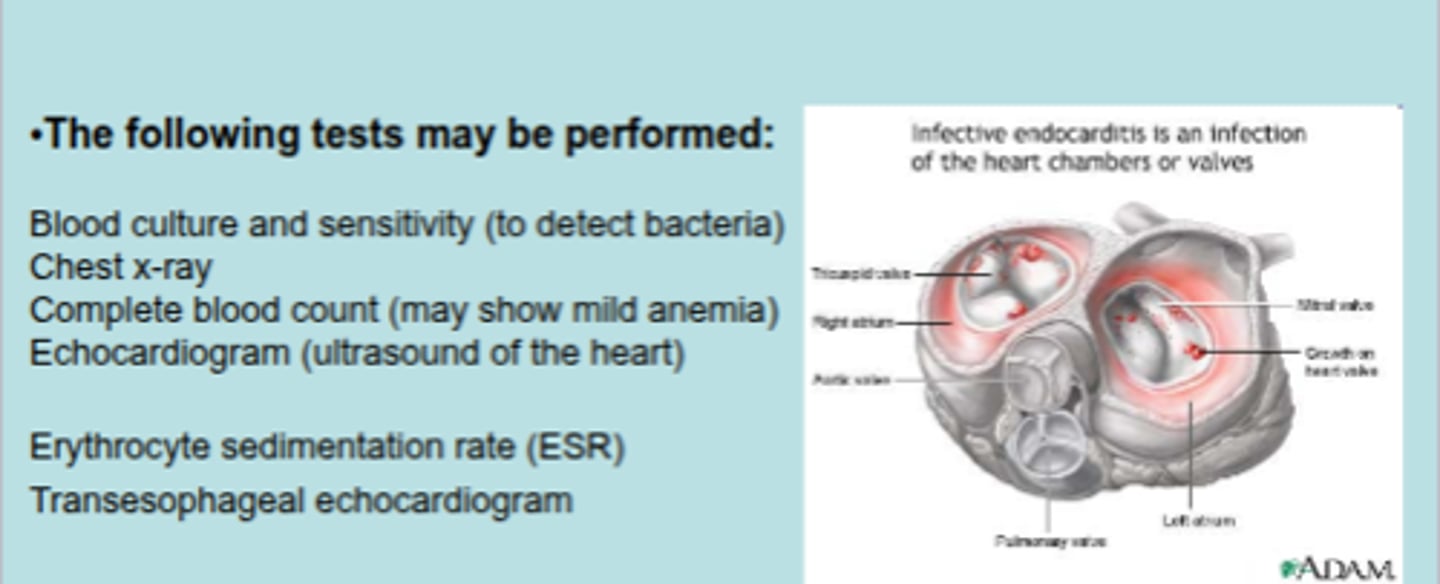
What tests may be performed when diagnosing an endocarditis patient?
What is the treatment & duration?
Long-term, high-dose antibiotic treatment is needed to get rid of the bacteria.
-
Treatment is usually given for 4-6 weeks, depending on the specific type of
bacteria
-
Surgery may be needed to replace damage heart valves
a heart valve disorder that involves the mitral valve. Stenosis refers to a condition in which the valve does not open fully, restricting blood flow
Mitral Stenosis
What occurs in mitral stenosis?
the valve area becomes smaller, less blood flows to the body. The upper heart chamber swells as pressure builds up.
-
Blood may flow back into the lungs. Fluid then collects in the lung tissue (pulmonary edema), making it hard to breathe
In mitral stenosis, when the left atrium contracts, the mitral valves cannot open completely, then the left atrium cannot release all its content into the left ventricle leading to accumulation of blood in the left atrium (starts to contract faster) creating __________________________.
atrial fibrillation (frequent P wave)
What happens when blood gets accumulated in L. atrium in mitral stenosis?
bloodflow gets back into the pulmonary veins causing pulmonary hypertension, which causes pulmonary edema (retroflow of blood excretes fluids into the lung tissue). Accumulation of fluid in lungs can cause death.
The L. ventricle cannot receive blood from the L. atrium and cannot build up diastolic volume. When the L. ventricle does not have enough blood, it decreases CO & SV, creating heart failure
In mitral stenosis, there is atrial fibrillation. No ________ waves visible. The rhythm is __________.
P waves ; irregular
With severe pulmonary hypertension, _______ ventricular _________ can be seen.
right ventricular hypertrophy
What is the treatment for mitral stenosis?
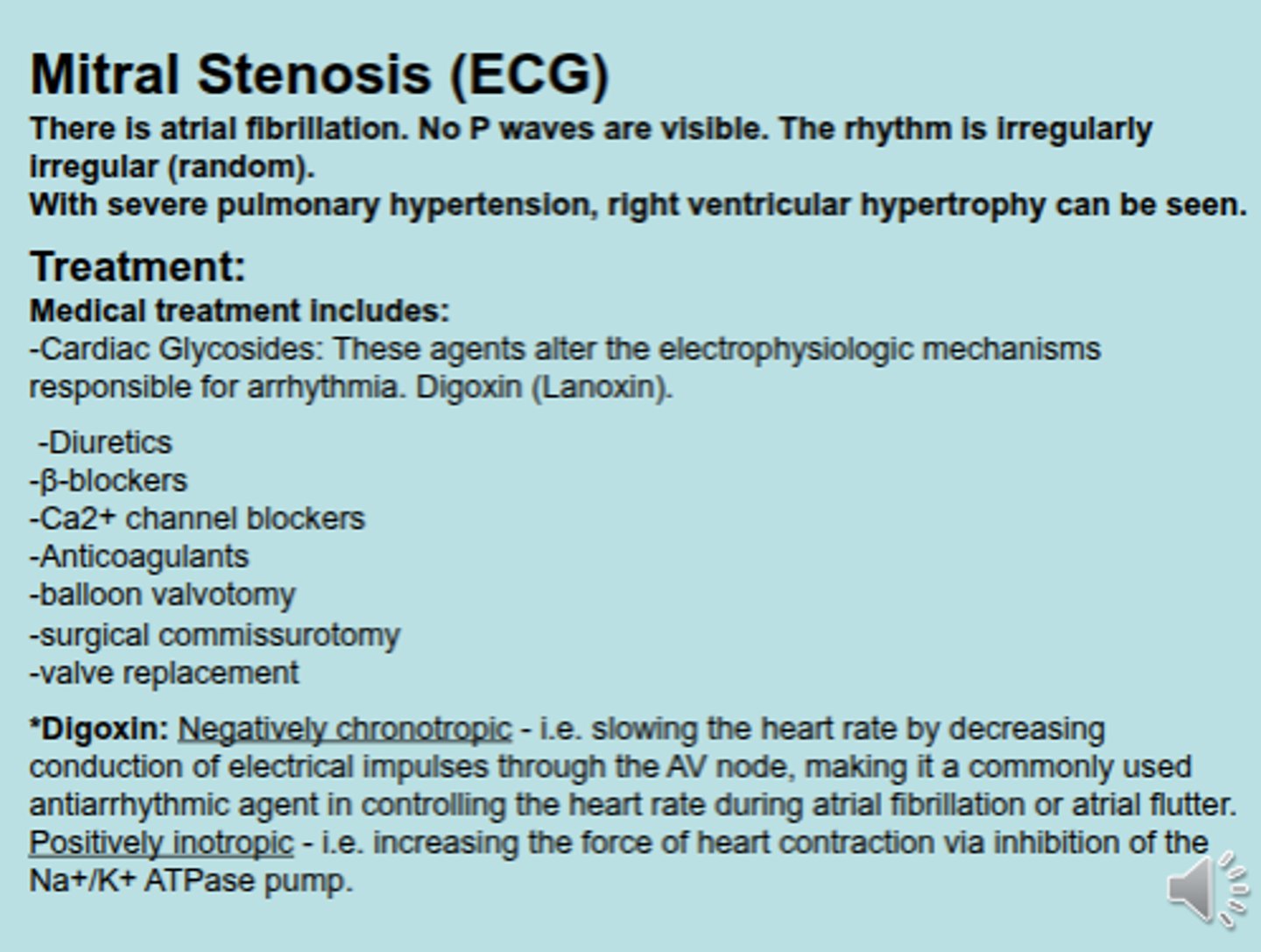
What is the role of digoxin in treating mitral stenosis?
(a digitalis) decreases the HR & increases contractility of atrium. This inhibits atrial fibrillation
What is the role of anticoagulants like heparin in treating mitral stenosis?
prevent coagulation
What is the role of diuretics in treating mitral stenosis?
decrease BP
What is the role of a balloon valvotomy in treating mitral stenosis?
send a balloon via blood vessels to open mitral valve
_______ channel blockers can be used to treat mitral stenosis.
Ca2+
______ blockers can be used to treat mitral stenosis.
Beta
long-term disorder in which the heart's mitral valve does not close properly, causing blood to flow backward (leak) into the upper heart chamber when the left lower heart chamber contracts
mitral regurgitation
Mitral regurgitation is ___________________, which means it gradually gets worse.
progressive
What are the causes of mitral stenosis?
-Mitral valve prolapse
-Congenital
-Atherosclerosis
-Endocarditis
-Heart tumors
-High blood pressure
-Marfan syndrome
-Untreated syphilis
-hypertension
heart ____________ prevent the complete closure of the mitral valve. What can this lead to?
tumors; mitral regurgitation
__________ affects the structure of the heart's mitral valve making it unable to close on time. What can this lead to?
Untreated Syphilis ; mitral regurgitation
In mitral regurgitation, a small amount of blood gets into the _______________ when the left ventricle contracts.
L. atrium
In mitral regurgitation, there is a build up of blood in the left atrium. What does this cause?
atrial fibrilation
What are the symptoms of mitral stenosis?
-Cough
-Fatigue
-Palpitations (related to atrial fibrillation)
-Shortness of breath during activity and when lying down
-Urination, excessive at night
-enlarged liver
----
FROM LEC VID :
-pulmonary edema
-pulmonary HTN
Regarding treatment for mitral regurgitation :
____________ reduce the risk of infective endocarditis in patients with mitral valve prolapse who are having dental work
antibiotics
Regarding treatment for mitral regurgitation :
________________ drugs and vasodilators/vasoconstrictors
Antihypertensive ; vasodilators
Regarding treatment for mitral regurgitation :
___________(2 names)______________ medications prevent clot formation in patients with atrial fibrillation
Anticoagulant or antiplatelet
(EX:heparin)
Regarding treatment for mitral regurgitation :
_______________ may be used to strengthen the heartbeat, along with ______________ to
remove excess fluid in the lungs
Digitalis (DIGOXIN) may be used to strengthen the heartbeat, along with diuretics to
remove excess fluid in the lungs
Digitalis (DIGOXIN) is negative ______________ and positive ______________.
neg : chronotropic
pos : inotropic
When right atrium contracts to release its content into right ventricle, the valve issues causes accumulation of blood in the right atrium causing retroflow of blood into SVC and IVC. Hypertension in venous system (SVC and IVC). Blood can accumulate back into blood leading to edema throughout entire body.
Sign symptoms: Edema, venoushypertension, right ventricle cannot build up with diastolic volume, and lung issues (hypercapnia)
tricuspid stenosis
____% of cardiac output is distributed in cerebral
15%
____% of cardiac output is distributed in coronary
5%
____% of cardiac output is distributed in renal
25%
____% of cardiac output is distributed in GI
25%
____% of cardiac output is distributed in skeletal muscle
25%
(baroreceptor reflex):
____% of cardiac output is distributed in skin
5%
(baroreceptor reflex):
When BP is low, it leads to stimulation of ________________.
baroreceptors
(baroreceptor reflex):
Where are baroreceptors located?
wall of large BVs like carotid sinus near the bifurcation of the common carotid arteries
(baroreceptor reflex):
What CN are stimulated by baroreceptors? Where do they take the information
CN IX (glossopharyngeal)
CN X (vagus)
-
they take the information to brain stem
(baroreceptor reflex):
When baroreceptors are stimulated and brought to brain stem, vagus n. function gets _________________. Vagus is associated with parasympathetic.
decreased
(baroreceptor reflex):
baroreceptors decrease ______________ but increase _______________
decrease parasympathetic
increase sympathetic
(baroreceptor reflex):
Sympathetic NS induces vasoconstriction by ______ receptors. A-1 increases vasoconstriction,________________, & _______________.
a-1
-
A-1 increases vasoconstriction, TPR,& BP
Baroreceptors include __________, neural mechanisms.
fast
Is the baroreceptor reflex a negative feedback system or positive feedback system?
is a negative feedback system that is responsible for the minute-to-minute
regulation of arterial pressure
What are 3 effects to attempt to increase the arterial pressure to normal?
1. increase HR
2. Increase contractility / SV
3. increase vasoconstriction of arterioles & veins
----
Example of the baroreceptor reflex: response to acute blood loss
The renin-angiotensin-aldosterone system is a _________, hormonal mechanism.
slow
REVIEW FROM LAST PPT :
When BP & Na+ are low, renin is released. renin converts angiotensinogen into Ag1. ACE converts Ag1 to Ag2. Ag2 allows for vasoconstriction & aldosterone to be released from the adrenal cortex. aldosterone is carried by blood to nephron of kidney. Now there is reabsorption of Na+, Cl-, H20, and HCO3- from urine into blood. K+ & H+ go from blood into urine. Aldosterone increases BP & blood Na+.
x
When degrades angiotensin II?
angiotensinase
is Ag I or Ag II inactive/active?
Ag I - inactive
Ag II - active
other regulation of arterial BP includes :
1. Cerebral _________
2. __________receptors in the carotid and aortic bodies
3. ______________ (antidiuretic hormone)
4. Atrial __________________ (ANP)
1. Cerebral ischemia
2. Chemoreceptors in the carotid and aortic bodies
3. Vasaopressin (antidiuretic hormone)
4. Atrial natriuretic peptide (ANP)
What is the term used for describing a low partial of O2 in blood
hypoxia
What is the term used for describing high partial pressure of CO2
hypercapnia
In cerebral ischemia, there is low O2 (hypoxia) & high CO2 (hypercapnia). This stimulates _______________ in the carotid & aortic bodies
cWhenhemoreceptors
After the chemoreceptors in cerebral ischemia have been stimulated, which CN are involved and where do they take the information to?
CN IX (glossopharyngeal)
CN X (vagus)
-
CN IX & X take signal to brain stem
In cerebral ischemia when chemoreceptors take information to the brain stem, what gets inhibited & what gets stimulated?
inhibited - parasympathetic (CN X)
----
stimulated - sympathetic
In cerebral ischemia, when sympathetic NS is stimulated, what does it do?
vasoconstriction by a-1, increase TPR.
-
By this way, it increases the blood supply & increases the O2 molecule & decreases the CO2 molecule
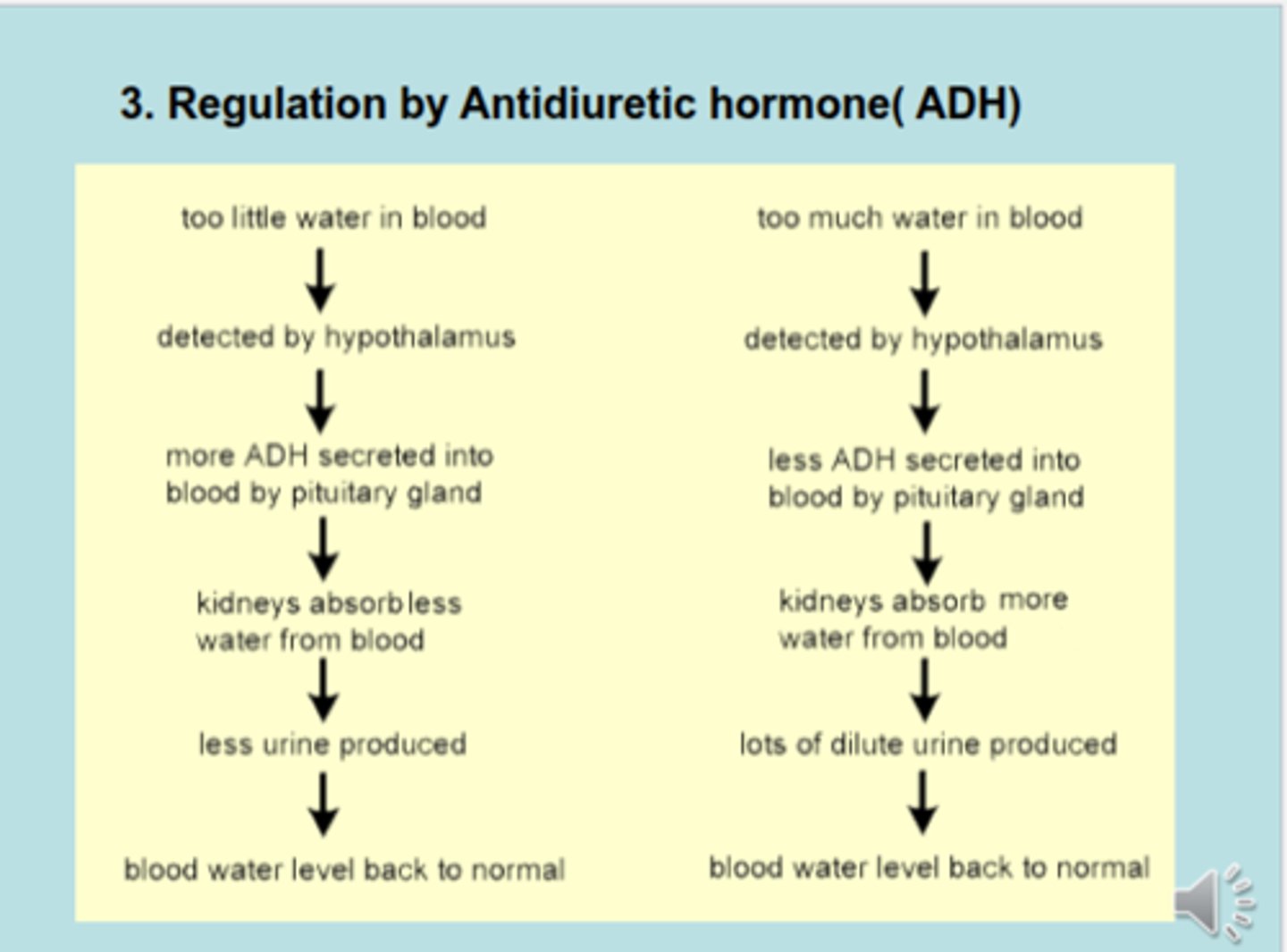
When someone has dehydration after excess sweating, they can become dehydrated. The body's fluid is excreted by sweating. There is stimulation of _________-receptors.
osmoreceptors
When someone is dehydrated, the signal is picked up by osmoreceptors & taken to where?
hypothalamus
The hypothalmus has _____________ & _______________ nuclei that release ________________.
paraventricular & supraoptic
-
release ADH
Blood carries ADH to ____________.
nephron of kidney
What is the function of ADH?
1. fluid retention & reabsorption to inhibit dehydration & urination
ADH functions in fluid retention & reabsorption to inhibit dehydration & urination. Where does the fluid go next?
back into blood
What is Atrial Natriuretic Peptide (ANP)?
When we are nervous/stressed, BP increases. ANP is a hormone that decreases the BP
When BP is high, it stimulates _________ receptors
stretch
Where are stretch receptors located?
wall of large BV & atria
The atrium releases _________ when stretch receptors detect high BP
ANP (Atrial Natriuretic Peptide)
What is the function of ANP (Atrial Natriuretic Peptide)?
vasorelaxer --> drops BP