(2) Protestantism: Military History and Notable Events
 Call Kai
 Learn
Learn Practice Test
 Spaced Repetition
 Match
Match Flashcards
 Knowt Play
1/99

There's no tags or description
Looks like no tags are added yet.
100 Terms
1414 - Oldcastle Revolt (All Facts)
Revolt in which the namesake leader and the Lollards rebelled against King Henry V of England and the Catholic Church of England
Revolt which was foiled and in which 45 of its rebels were executed
Revolt after which the namesake leader was burned at the stake for heresy
Revolt which discredited the Lollardy Movement due to their linking it with social radicalism
1419 - 1434 - Hussite Wars (All Facts)
Series of conflicts between the namesake followers of Jan Hus and the Czech and the Roman Catholic Church that began with the Defenestration of Prague
Series of conflicts in which the namesake followers of Jan Hus protested against the stringent Catholic policies of King Wenceslas IV of Bohemia
Two years into this series of conflicts, at a meeting at Caslav, the representatives of Bohemia and Moravia renounced Holy Roman Emperor Sigismund as their king and founded their own government
Series of conflicts in which the namesake followers of Jan Hus, led by Jan Zizka, won a series of victories in Bohemia against German armies sent to oppose them
Series of conflicts in which the delegates at the Council of Basle attempted to negotiate with the Hussites after their victories
Series of conflicts which ended with the Battle of Lipany
1419 - Defenestration of Prague (All Facts)
Incident which began with a mass demonstration in the namesake capital city of Bohemia, in which thousands of Hussites marched on the New Town Hall
After demands for the release of several of their preachers were ignored, the crowd forced its way into the building and threw the Catholic councilors and others whom the Hussites threw out of the windows into the square
Incident in which a meeting of townspeople was held and which appointed four captains to administer the city
Incident which began with a protest against the recent Catholic policies of King Wenceslas IV

1431 - 1449 - Council of Basel / Ferrara / Florence (All Facts)
In its first phase, it was presided over by Pope Martin V and
worked to negotiate with the Hussites in order to end the Hussite Wars
refused to obey Pope Eugenius IV’s declaration of its dissolution
In response, the pope crowned Sigismund of Hungary Holy Roman Emperor in the hopes that the emperor would support him
oversaw the Hussites split into the Utraquists and Taborites due to the readiness of the council to reopen negotiations with the Hussites in order to end the Hussite Wars
the Hussites were eventually condemned as heretics
In its second phase, it was presided over by Pope Eugene IV and
taking advantage of a split in the first phase of the council over the best place to meet a Greek delegation seeking the reunion of the churches, the Pope invited them to the namesake but only a minority from the first phase of the council came while a majority stayed behind and declared Pope Eugene IV suspended
In its third phase, it was presided over by Pope Eugene IV, who had moved it once again to the namesake city in Italy
When the delegates of previous phases of the council once again refused to follow Eugene IV and the rest of the council that followed him to the namesake city in Italy, they had Pope Eugene IV deposed and they elected their own pope in his place, a layman famous for his wisdom and wealth named Duke Amadeus VIII of Savoy, who adopted the name Felix V
In this third and final phase, the Byzantines (Greeks)
agreed to all the major demands of Pope Eugenius IV
recognized the pope as the head of the whole Christian church
agreed to (re)unify with the Roman Catholic Church in order to successfully defend the Christian world from the Ottoman Turks
capitulated to the Roman Catholic view of the Trinity
In this third and final phase, the Ethiopians (Ethiopian Orthodox Tewahedo Church)
Send a representative to the namesake church council
sign an act of union with the Roman Catholic Church
Finally, the namesake council elected Pope Nicholas V as Pope and dissolved itself
In so doing, it oversaw Felix V’s abdication
1509 - 1559 - English Reformation (All Facts)
Movement which began as a controversy over King Henry VIII’s matrimonial problems and evolved into a political revolution in England
Movement in which England broke with the Roman Catholic Church
Movement in which the King of England needed to carry public opinion with him, causing him to increasingly seek the support of parliament
Movement in which the following developments took place:
Convocations of Canterbury and York
1533 Submission of the Clergy Act
1534 Supremacy Act
1534 Succession Act
1535 Suppression of Religious Houses Act
Dissolution of the Monasteries
Increasing clerical unemployment in which clerics
Lost their jobs as clerics of church properties and monasteries
Lost their jobs among those who sat in the House of Lords
The English Bible
With the Bible being printed into English, it rendered clerics obsolete for the people could at the time then read the Bible for themselves
Movement which took place alongside the spread of Protestantism throughout northern Europe at the time

1516 - 1648 - Swiss Reformation (All Facts)
Period and Movement led by
Ulrich Zwingli, who
had an alternative form of Holy Communion held in Zurich during the Swiss Reformation, which was of great simplicity with neither music nor singing
He presided over a table laid with beakers and wooden vessels
He served the congregation first, and then himself afterwards
John Calvin (from France)
William Farel (from France)
Theodore Beza (from France)
Period and Movement from which emerged Anabaptism
Period and Movement focused in Zurich, during which
local magistrates there banned the Roman Mass
Period and Movement which spread from Zurich to
Berne, which decided in favor of the namesake and abolished the Mass
Geneva, in which, in 1536, its city council met at its cathedral and officially adopted the Protestant Reformation after William Farel had returned there a third time after being expelled twice
1520s - 1600s - French Reformation (All Facts)
Period and Movement led by John Calvin and Theodore Beza

1524 - 1525 - German Peasants’ War / German Peasants’ Revolt (All Facts)
Failed Popular Revolt in some German-speaking areas in Central Europe, especially in Germany (the Holy Roman Empire) amongst the peasants and common people against the German Princes and the Holy Roman Empire
Revolt which was the largest and most widespread popular uprising in Europe prior to the French Revolution
Revolt which
began in Bavaria and spread rapidly to Hesse, Franconia, Thuringia, Saxony, and Tyrol
Revolt which consisted of a series of local uprisings against oppression by
German princes
German landlords
the German Catholic Church
was inspired by
Martin Luther’s teachings
the radical Christian communities springing up at the time like the one set up at Allstedt based on common ownership
Revolt supported by Thomas Muntzer
Revolt in which Thomas Muntzer was beheaded
Revolt in which peasants speared the Count of Helfenstein in front of his wife and child at Weinsberg
This atrocity caused Martin Luther to condemn the namesake conflict in his work, “Against the Murdering Thieving Hordes of Peasants”
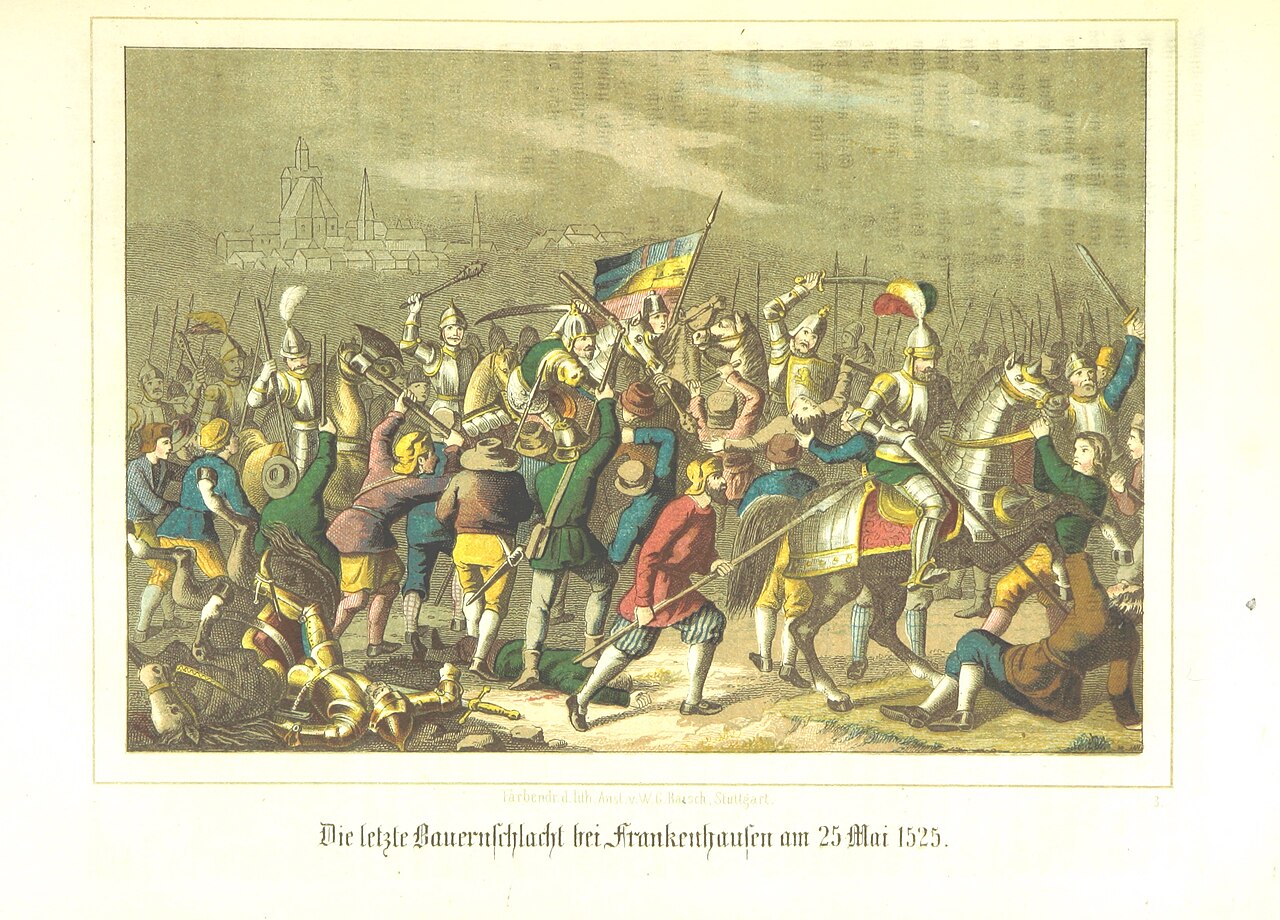
1525 - Battle of Frankenhausen (All Facts)
Battle in which Thomas Muntzer and the German Peasants’ Army was defeated by the Holy Roman Empire and German princes during the German Peasants’ War / German Peasants’ Revolt
Battle after which Thomas Muntzer was beheaded
1518 - (First) Diet of Augsburg (All Facts)
Imperial Diet at which martin Luther refused to retract his then-widely-circulated 95 Theses

1521 - Diet of Worms (All Facts)
Imperial Diet called by Holy Roman Emperor Charles V
Imperial Diet during which Martin Luther
challenged the papal claim that the Papacy was to be the sole authority on the scriptures
questioned many of the rights of the priests
rejected the belief that bread and wine become the body and blood of Christ
affirmed Christians’ personal right to faith
Imperial Diet in which
friends of Martin Luther feared for his life as he confronted the young Holy Roman Emperor Charles V and refused to retract his theological views
the welcome of the German crowd showed that he struck a popular chord
Holy Roman Emperor Charles V feared that the revolutionary spirit of Luther’s speech might affect his power
Imperial Diet in which, as a result of Luther’s refusal to retract, denounced him and tried to have him executed
As a result, Luther was “kidnapped” for his own safety by Duke Frederick of Saxony a few weeks later
1526 - (First) Diet of Speyer (All Facts)
Imperial Diet which allowed each prince to decide the religious allegiance of his state
Imperial Diet which found that because an agreement could not be obtained in the prior Imperial Diet of Worms, each city and territory involved was still independent from the authority of the empire via their prince’s decision of religious allegiance and thus could allow Protestantism to continue unaffected if the prince deemed it so
1529 - (Second) Diet of Speyer (All Facts)
Imperial Diet during which the “Protestation at Speyer” occurred and the term “Protestantism” / “Protestants” was coined
Imperial Diet dominated by Catholics which condemned the First Diet of its kind and that Diet’s results and thus prohibited future reformation
Imperial Diet in which 19 reformed states protested against the repeal of the edict that came out of the (First) Diet of Speyer
1529 - Protestation at Speyer (All Facts)
Incident in which the letter, “A Protestation,” was signed by six of Germany’s (Protestant) Princes and the burghers of 14 cities, thus rejecting the (Second) Diet of Speyer and in which the signatories of the letter were dubbed “Protestants”
Incident in which a petition was signed against an imperial ban of Martin Luther, as well as the proscription of his works and teachings, and called for the unhindered spread of the evangelical faith
Incident which was seen as a challenge to the authority of the Holy Roman Emperor Charles V

1529 - Marburg Colloquy (All Facts)
Meeting organized by Philip of Hesse which sought to close the emerging gap in Protestant theology between Martin Luther and Ulrich Zwingli
Meeting in which Philip of Hesse invited the reformers of Wittenberg, Strasbourg, and Zurich to meet in the namesake castle and tried (and ultimately failed) to resolve their theological differences which emerged as divisions within the Protestant Reformation
Meeting in which Philip of Hesse managed to persuade Martin Luther and Ulrich Zwingli to visit his castle in the namesake town in Germany to discuss their views, along with other Protestant reformers of the time including
Philip Melanchthon
Johannes Oecolampadius
Meeting in which they all signed off on fifteen articles, agreeing on all items of doctrine except the Eucharist
Meeting in which Luther and Zwingli agreed and
renounced transubstantiation
renounced the belief that the eucharist was a sacrifice for the living and the dead
insisted on communion in both kinds of Christ
Meeting in which Luther and Zwingli disagreed on
whether or not Christ's body and blood are present in the Eucharist
Meeting which ended badly, as Luther and Zwingli remained divided politically
Luther refused to move against Holy Roman Emperor Charles V
Zwingli was keen for the Swiss to revolt against the Holy Roman Empire

1530 - (Second) Diet of Augsburg (All Facts)
Imperial Diet in which the Catholics defeated the Protestants and decided that the Protestants (Lutherans) must recognize the Pope or would be threatened with force if they failed to do so
As a result, the more moderate Lutherans united with the more militant and radical Zwinglians (Swiss)
Imperial Diet in which Holy Roman Emperor Charles V and the Catholics and Philip of Melanchthon and the Protestants both wanted to achieve unity
They were keen on compromise and unity in order to defend themselves against the Muslim Ottoman Turks who had just besieged Vienna a year prior
However, close observers saw this as nothing more than window-dressing as their religious differences remained much deeper in reality
Imperial Diet in which the namesake Confession was presented in an (failed) attempt to avoid a permanent split and thus achieve reconciliation with the Catholic Church
Imperial Diet attended by Philip Melanchthon as Martin Luther was still in exile from the Holy Roman Empire

1531 - Second War of Kappel / Battle of Kappel (All Facts)
Civil War / Battle in which the Catholic Cantons of Switzerland defeated the Protestants of Switzerland including Zurich, Basle, and Berne
Civil War / Battle in which Ulrich Zwingli was killed
1532 - Peace of Nuremberg (All Facts)
Treaty signed between Holy Roman Emperor Charles V and the Schmalkaldic League in which the principalities in the League were granted freedom of worship in exchange for military aid of the Holy Roman Empire against the Ottoman Turks
1534 - Affair of the Placards (All Facts)
Incident in which anti-Catholic posters appeared in public places in Paris and in four major provincial cities, Blois, Rouen, Tours and Orléans during the reign of King Francis of France
These posts violently criticized the Catholic mass
Some of them even appeared on the royal chateau at Blois
Incident which caused a wave of sectarian hatred to engulf Paris
Incident which represented the beginnings of Protestantism in France and the influence Martin Luther had on France
Incident in which there were rumors hat Protestants plan to murder faithful Catholics at Mass
Incident after which King Francis of France was expected to take harsh action against the Protestant reformers

1534 - 1535 - Anabaptist Munster Rebellion (All Facts)
Incident in which the town of Munster was taken by an alliance of Catholic and Protestant troops after it had been controlled by the Anabaptist revolutionaries for two years
Incident in which Anabaptists
killed anyone unbaptized
seized property
proclaimed world rebellion
Incident in which the town of Munster’s Anabaptist inhabitants were massacred or forced into hiding as a tidal wave of disgust swept Germany as well as the Netherlands (where the Anabaptist movement spread) and Switzerland (where the Anabaptist movement started)
Incident in which the Anabaptist Movement’s ringleaders were seized, including John of Leyden
1536 - 1541 - Dissolution of the Monasteries (All Facts)
Movement in England under the reign of King Henry VIII in which he set up a commission under Thomas Cromwell, which
disbanded all Catholic Church properties in England, Wales, and Ireland
seized their wealth
redistributed their wealth to the Crown of England and to fund King Henry VIII’s military campaigns
disposed of their assets
destroyed buildings and relics
dispersed or destroyed libraries
provided for their former personnel and functions
former abbots, monks, and nuns were given pensions; however clerical unemployment rose significantly during this movement
turned many of the nearly 800 church properties sold into private homes for the Gentry class
ceased the Church’s system of distributing alms, thus causing hardship amongst England’s poor
made it so that monks and abbots no longer sat in the House of Lords, having lost political power in addition to religious authority
Movement in England under the reign of King Henry VIII in which he set up a commission under Thomas Cromwell, in which
Cromwell sent the commissioners appointed under him by King Henry VIII storming throughout England in which they
interrogated monks, nuns, and friars
claimed to have uncovered profound bawdiness, drunkenness, and “whores in feather beds”
put up for sale nearly 800 church properties, which the proceeds having gone to the Crown
King Henry VIII and Thomas Cromwell had
sought excuses for suppressing the English monasteries and confiscating their assets for
The English Crown
Henry VIII’s military campaigns
redistributed some of the assets
to their supporters as gifts of property
to put up for auction
Over 550 church properties being brought to a close, with their treasure of plate and jewels being passed into King Henry VIII’s possession
370 of these were smaller and were the first to fall
186 of these were bigger and were the last to fall
New family fortunes, for the time, were established on the namesake basis
as a result of
being guarantors of the gifts of property given to supports of King Henry VIII’s English Reformation
buying off of auctions of former properties initiated by King Henry VIII’s administration
by
William Cavendish
Richard Rich
1539 - Treaty of Frankfurt / Truce of Frankfurt (All Facts)
Peace Treaty between Holy Roman Emperor Charles V and the Catholics and Philip Melanchthon and the Protestants at the namesake German city
1545 - Merindol Massacre (All Facts)
Massacre carried out against the Waldensians (proto-Protestant group of France) in the namesake area in Provence in France
Massacre in which villages were pillaged, women were burnt alive in a church, and men were rounded up to be enslaved in the galleys
Massacre which began with rumors that the Waldensians were plotting sedition; however, these rumors were started deliberately by Jean Meynier, a local baron who coveted the land of a neighbor of his who happened to be Waldensian and he was given the task by King Francis to stamp out such “sedition,” which was done with great cruelty and he ended up seizing the land which he coveted
1546 - 1547 - Siege of St. Andrew’s Castle (All Facts)
Battle in which the French captured Scottish Protestants and imprisoned them as galley slaves afterwards, including John Knox; whom were not released until the French paid the English 400K crowns via the Treaty of Boulogne

1546 - 1547 - (First) Schmalkaldic War (All Facts)
Civil War which began when Holy Roman Emperor Charles V formed an alliance with Maurice of Saxony against the namesake League of German Protestant princes and outlawed Philip of Hesse and John Frederick, two heads of the namesake league
Civil War which caused the namesake league to dissolve
Civil War in which the namesake league’s Protestants
at the outset, dominated the Danube River, capturing castle after castle as they advanced onto the County of Tyrol
had a plan to block the passes, ensuring that Italian troops could not get through to join Holy Roman Emperor Charles V’s forces
However, this plan failed due to lack of organization as most of Charles V’s opponents (Henry VIII of England, Francis of France, Martin Luther, and Barbarossa of the Ottoman Empire) by that time had died
Civil War after which Holy Roman Emperor Charles V
assumed peak stature over Europe
systematically began to take German cities until his armies came to the banks of the Elbe River

1547 - Battle of Muhlberg (All Facts)
Battle in which Charles V and his Holy Roman forces defeated John Frederick of Saxony and his forces during the Schmalkaldic War
Battle in which Charles V’s outnumbered army defeated and captured John Frederick of Saxony
Battle after which John Frederick of Saxony was court martialed and sentenced to death
1548 - (Third) Diet of Augsburg (All Facts)
Imperial Diet in which the namesake “Interim” decree was issued by Holy Roman Emperor Charles V
The Schmalkaldic League representatives at the namesake diet reluctantly accepted the “Interim” agreement which had a strongly Catholic bias
1550 - Treaty of Boulogne (All Facts)
Peace Treaty signed between England and France
Peace Treaty which ended the Rough Wooing between England and Scotland
After the treat was signed, English troops withdrew from Scotland
Peace Treaty in which the English surrendered the namesake French city in exchange for 400K crowns and the release of Protestant Scots including John Knox
These Protestant Scottish prisoners were originally captured by the French at the Siege of St. Andrews Castle
1552 - (Second) Schmalkaldic War / Princes’ Revolt (All Facts)
Civil War in which Maurice of Saxony, with help from King Henry II of France, and their combined forces defeated Holy Roman Emperors Charles V and his forces
Civil War which began with
The Treaty of Chambord
Civil War which saw
Maurice of Saxony and his forces take Augsburg
Maurice of Saxony and his forces nearly capture Holy Roman Emperor Charles V at Innsbruck, who fled in time
Civil War which ended with the Treaty of Passau
1552 - Peace of Passau (All Facts)
Peace Treaty signed between Ferdinand of Habsburg, on behalf of Holy Roman Emperor Charles V, and Maurice of Saxony, which
revoked the Augsburg Interim
thus promised religious freedom to the Protestant German Princes
1553 - 1558 - Marian Persecutions (All Facts)
Campaign during the reign of Queen Mary of Tudor in which approximately 280 to 300+ Protestants were executed for heresy in an attempt to restore Roman Catholicism to England
1554 - Wyatt’s Rebellion (All Facts)
Rebellion led by the namesake and Protestants against Queen Mary of England and her proposed marriage to King Philip II of Spain which was suppressed by Queen Mary of England
Rebellion in which the namesake led 3,000 men from Kent to march on London, unsuccessfully, to try to stop Queen Mary’s marriage to Philip II of Spain

1555 - Peace of Augsburg (All Facts)
Peace Treaty signed between Holy Roman Emperor Charles V and the German Protestant Princes (Schmalkaldic League), which
ended the religious struggle between Catholics and Lutherans in the Holy Roman Empire
ended the Schmalkaldic Wars
established the “cuius regio, eius regio” principle (“to each kingdom its own religion), which
allowed rulers to choose Catholicism or Lutheranism as the official administrative religion
gave German Princes power over the bodies and souls of their subjects
did NOT give ordinary people their religious freedom, but did allow them to move to adjoining states if their own prince does not permit their religion
did NOT allow rulers to choose Calvinism, as Calvinists were excluded from the agreement
thus advocated that the religion of a prince should determine the faith of his subjects
thus sanctioned the existence of Lutheran states
established the “reservatum ecclesiasticum” (“ecclesiastical reservation”) principle, which
meant that the religion of the ruler would be the religion of the country and of its people, those being his possessions by inheritance
represented a clear recognition by Catholics of the co-existence for the new Protestant churches throughout Europe
represented a clear recognition by Holy Roman Emperor Charles V to grant power and rights to the German Princes
thus allowed Catholicism to continue in some of the German principalities (states), as the Catholic German Princes were driven by different political motives but could never have withstood the surging popularity of Lutheranism on their own
decided that there should be an equal number of Lutherans and Catholics in the imperial chamber
1560 - Scottish Reformation Parliament (All Facts)
Meeting of the Scottish Parliament in Edinburgh in which 100 lairds heard the Scots Confession, drafted by John Knox

1560 - Amboise Conspiracy (All Facts)
Huguenot plot to capture the French court and topple the powerful Guise family that failed because the Guise family was warned
As a result of the attempted namesake plot, hundreds of Huguenots were arrested or executed and Louis de Bourbon, duke of Conde, was imprisoned

1561 - Colloquy of Poissy (All Facts)
Series of talks set up by Catherine de Medici, acting on the advice of Michel de l’Hopital, between French Catholics (led by the Spainiard Diego Laynez) and Huguenots (led by Theodore Beza) at the namesake location, in an attempt to settle their religious differences which were proving dangerous to France
In the meeting, Catherine de Medici consented to an edict giving the Huguenots qualified toleration; however it eventually turned out that the two sides’ differences were so great that there would not be any reconciliation between them
1562 - Treaty of Hampton Court (All Facts)
Treaty signed between Queen Elizabeth and Louis de Bourbon (the prince and duke of Conde of France and Huguenot leader)
Treaty in which
The English will occupy Le Havre in return for aiding Bourbon’s forces against Catholic troops in the First French War of Religion
The English will leave Le Havre once the French return Calais to England (which they had taken during the Anglo-French War and Ninth Italian War)

1562 - Massacre at Vassy (All Facts)
Massacre of an (illegal) Huguenot congregation in the namesake French city, carried out on the orders of Francois, the Duke of Guise
Massacre which directly triggered the French Wars of Religion and First French War of Religion
1562 - 1563 - First French War of Religion (All Facts)
Civil War in which Francois de Lorraine, duke of Guise and the French Catholics defeated Gaspard de Coligny and the French Huguenots
Civil War in which French Catholic nobles, led by Francois de Lorraine, duke of Guise, opposed to French Huguenot religious reform, organized for the Massacre of Vassy, which directly caused the namesake war
Civil War which resulted in negotiated settlements for both sides in the Peace of Amboise, with no clear victor, but in which the Huguenots were allowed to maintain their religion
Civil War which saw the Huguenots called to arms, retaliating against the French Catholics and their Massacre at Vassy by
despoiling churches
murdering priests
raping nuns
taking possession of
Lyons
Rouen
Orleans (via the Siege of Orleans, where Francois de Lorraine, duke of Guise, was assassinated)
slaughtered many other towns
Civil War which ended with the assassination of Francois de Lorraine, duke of Guise, by a Huguenot gentleman
Civil War which officially ended with the Peace of Amboise
1563 - Siege of Le Havre (All Facts)
Battle in which the namesake city, the subject of the Treaty of Hampton Court and previously occupied by the English while awaiting the return of Calais from France, is taken by French Catholic troops from French Huguenot troops during the First French War of Religion
1563 - Peace of Amboise (All Facts)
Edict of Peace signed between the French Catholics and Huguenots that ended the First French War of Religion
Edict of Peace which granted the Huguenots limited toleration, despite their defeat in the First French War of Religion
Edict of Peace which did not hold long, for it
left French Catholics angry at the concessions given to Huguenots
left French Huguenots fearful that progress of the new faith had been curbed

1566 - 1648 - Eighty Years War / Dutch Revolt (All Facts)
War between Spain and the Habsburg (Spanish) Netherlands
War which began
when King Philip II of Spain
decided to curb the Netherlands’ autonomy
bring the Spanish Inquisition into the Netherlands
when popular revolts against Spanish rule were
triggered by
bad harvests
increase in the price of bread
famine
mass unemployment
floods
resentment against the implementation of the Spanish Inquisition into the Netherlands
oppressive taxes (especially the “tenth penny” tax of Fernando Álvarez de Toledo, the Duke of Alba)
encouraged by
anti-Catholic Dutch Calvinists
other anti-Spanish / anti-Catholic “heretics”
the Dutch Protestant Reformation
War which began when
the three leaders King Philip II of Spain had appointed to rule the Habsburg (Spanish) Netherlands began to challenge him and Spain for these anti-Netherlandish measures, making them symbols of Dutch resistance
churches were ransacked
monasteries were sacked
gold and silver ornaments were looted in villages throughout the Low Countries, as magistrates looked on helplessly
Catholic nobles were removed from their town councils
Margaret of Parma used newly-arrived funds from Spain to build up an army
War which began when Fernando Álvarez de Toledo, the Duke of Alba, acting on the orders of King Philip II of Spain had
pledged himself to bring back the Spanish Inquisition into the Netherlands
pledged himself to establish a new order for King Philip II
turned his regime over the Netherlands into a dictatorship by which he
imposed the hated “tenth penny” tax on the (Spanish) Netherlands to help a bankrupted Spain and pay his army in the Low Countries
humiliated Margaret of Parma, the civil governor, by
forcing her to demobilize her army she raised
assuming many of her powers until she was forced to leave for Italy
established the “Council of Troubles,” a newer and more sinister form of the Spanish Inquisition within the Netherlands, in which he
organized the arrests of thousands just in one spring
oversaw the execution of 1,000 alleged heretics
oversaw the stripping of property of 8,000 alleged heretics
oversaw the seizing and burning of 500 alleged heretical books in the Calvinist city of Tournai
imposed the “tenth penny” tax to help a nearly-bankrupted Spain pay its armies in the Low Countries (Netherlands)
War which began when Fernando Álvarez de Toledo, the Duke of Alba, acting on the orders of King Philip II of Spain had
ordered the arrest of Counts Egmont and Hoorne, the leaders of the nobility there
ensured that William of Orange was deprived of his office of stadtholder of Holland, Zeeland, and Utrecht
set up a new court in the Netherlands that tried suspected rebels
ordered the execution in Brussels of 20 noble leaders, including Counts Egmont and Hoorne
imposed crippling taxation on the rebel province of Groningen
oversaw the Count of Egmont’s execution via order of the repressive “Court of Unrest,” the so-called “Council of Blood”
suppressed the initial anti-Catholic, anti-Spanish Calvinist insurrection
came with 10K elite Spanish troops and marched through the streets of Ghent, organizing the troops into ranks of five, following them up with prostitutes in frilly dresses riding donkeys and bringing with a host of camp followers
made sure the behavior of his troops underlined the ferocity with which he approached his task
had the Dutch population, even the good Catholics there, insulted in the streets as “traitors” and “heretics”
had merchants beaten up
War in which the “Sea Beggars” fled from Fernando Alvarez de Toledo’s repression in their native Netherlands to England
They harried shipping between Spain and the Netherlands for three years
They chanted the Lord’s Prayer addressed to Fernando Alvarez de Toledo saying, “cursed father who in Brussels doth dwell, cursed be thy name in Heaven and in Hell”
When they tried using Dover in England as the base for their operations, Queen Elizabeth of England expelled them from the port
They eventually controlled Brill, Enkhuisen, Flushing, Arnemuide, Veere, Holland, and Zeeland when Luis de Requenses y Zyniga assumed the governorship
War in which the Dutch
raised their own revenue from their trade in the East and West Indies
captured an entire (Spanish) treasure fleet in the Caribbean one year, the proceeds of which enabled them to launch a major assault against Spain within the Netherlands
(from the Seven United Provinces) occupied the mouth of the Scheldt, halting any seaborne trade with Antwerp
War in which Francis, Duke of Anjou tried to regain Antwerp for the Dutch Calvinists
War in which Piet Heyn and his forces seized 80 tons of silver from (Spanish) Cuba, whom carried the namesake war across the Atlantic to colonies and shipping in the New World of the Americas
War which saw the Pacification of Ghent
War in which the Hague of the Netherlands deposed Philip II of Spain as ruler of the seven provinces which formed the Union of Utrecht, thus declaring war against and independence from Spain
War in which Alexander Farnese of the Netherlands secured the submissions of the southern Netherlands, Flanders, and Brabant to the Spanish crown
War in which Robert Dudley returned to England after failing to aid the Dutch in their revolt against Spain
War in which a Twelve Year Truce was declared
However, this did not last because of a renewal of hostilities occurred because of Dutch ships having grown in numbers and trading throughout much of the world and threatening Spain’s trade monopoly with its colonial possessions
Apart from their success in trading, the Dutch waged war with Spanish shipping and settlements on the Pacific Ocean; which provoked their hostilities amongst one another
War in which the Spanish court ended the Twelve Year Truce once
the Dutch established “Fort Orange” on Hudson’s River in North America
established their Dutch West India Company, which was formed to promote trade and war in Spanish South America
War in which the Dutch were so desperate for military aid against Spain that they
appealed to Cardinal Richelieu and France for assistance, who gave them a subsidy of a million livres on the condition that Dutch ships join in a blockade of the Huguenot fortress in the Battle of La Rochelle
The Dutch leaders’ willingness to support a war against their fellow Huguenots (French Calvinists) angered the Dutch Calvinists of the Netherlands
struck at other American possessions of King Philip IV and Spain in order to inflict maximum damage on the king’s lucrative trade with the colonies
They ignored the claims of Spain (and Portugal) and dealt directly with the colonies to raise revenues
This trade became so large that
King Philip IV had to continue fighting because of what he would lose
The Dutch had to continue fighting because of what they had gained
They seized the Spanish (formerly Portuguese) capital of Brazil, the port of Bahia
War during which the Dutch and the Spanish traded with each other despite the conflict in which
The Dutch levied port charges on ships sailing to Spanish territories, using the money to build warships
The Spanish needed the grain and naval stores brought by the Dutch from northern Europe for their own use
War which dragged on for so long because the Spanish crown, despite being much more powerful
became bankrupt and could not pay its troops fighting for them in the Netherlands
Thus, mercenaries working for Spain frequently mutinied, walking out of forts and letting the Dutch take them over
Thus, Spanish military gains in the Netherlands were frequently lost
depended on a steady flow of precious metal from New Spain (the New World) to pay its troops; its entire empire existing solely to fund the war
had to pay heavily to move her troops across Europe from Italy
had a depleted navy which had to be deployed in protecting treasure ships in the Atlantic and escorting troop-ships to Genoa, leaving the North Sea and Baltic ports open for Dutch shipping
had leaders who were busy patronizing artists (whom some of their money went to)
had a gradual but demoralizing effect on Spain, it being an intolerable strain on Spain’s resources in manpower and money
War which saw
The Capture of Brielle in which
monasteries were sacked there
Catholic nobles were removed from its town council
it provided the first foothold on land for the rebels at a time when the rebellion was all but crushed, which offered the sign for a new revolt throughout the Netherlands which led to the formation of the Dutch Republic
The Siege of Haarlem
The Battle of Mookerheyde
The Sack of Antwerp
The Battle of Gembloux
The Fall of Antwerp
The Battle of Nieuwpoort
The Siege of Ostend
The Siege of Bergen op Zoom
The Capture of Bahia
The Battle of San Juan
War which ended with the Peace of Munster, in which the Netherlands gained their independence from Spain and were no more the Habsburg (Spanish) Netherlands but were known as the Dutch Republic
1567 - 1568 - Second French War of Religion (All Facts)
Civil War between Louis de Bourbon and the French Huguenots and King Charles IX and the French Catholic Royalists (including Anne de Montmorency), that ended in a stalemate
Civil War which began when Louis de Bourbon and the French Huguenots rallied to kidnap the young King Charles IX at Meaux, fearing that he was going to persecute Huguenots
Civil War which officially ended with the Peace of Longjumeau

1567 - Battle of St. Denis (All Facts)
Battle in which Anne de Montmorency and the French Catholic Royalists of King Charles IX defeated Louis de Bourbon and the French Huguenots during the Second French War of Religion
Battle in which Anne de Montmorency was killed despite his forces being victorious
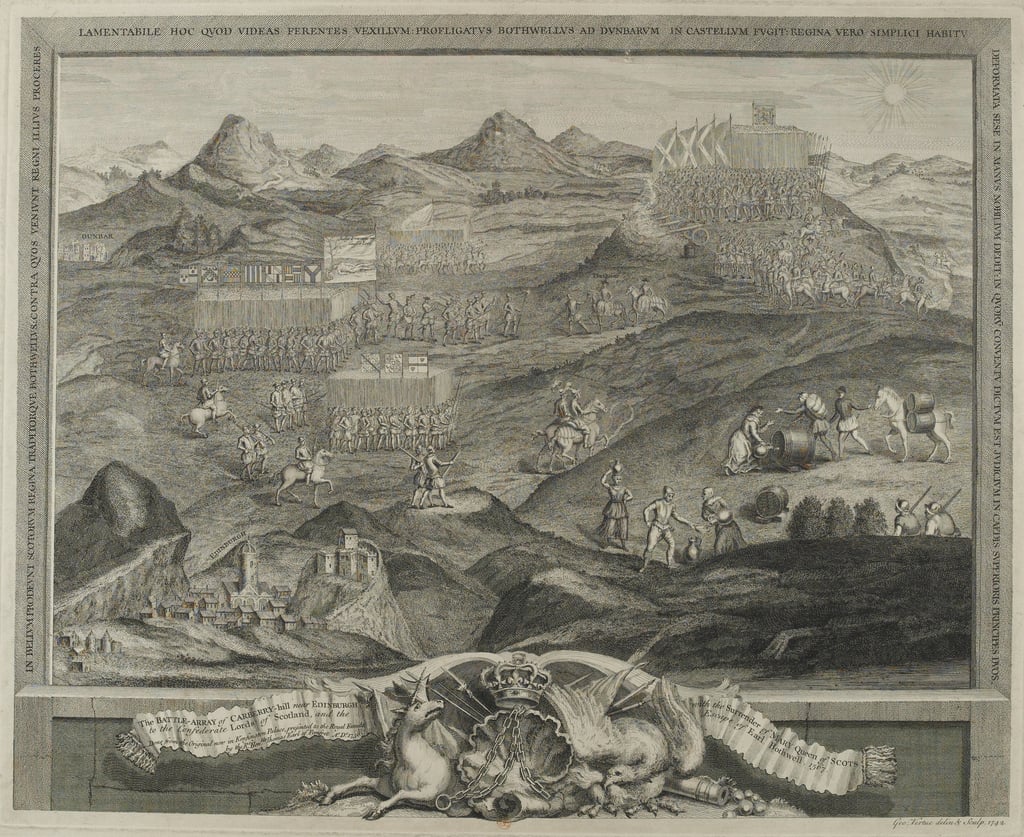
1567 - Battle of Carberry Hill (All Facts)
Battle in which the Protestant Scottish nobility rebelled against Queen Mary of Scotland for her marriage to James Hepburn, who was known to have murdered her previous husband
Battle after which Queen Mary of Scotland is discredited for her marriage to James Hepburn due to the murder of her previous husband Henry Stuart, was imprisoned as a result, and forced to abdicate in favor of her one-year-old son to succeed her
1568 - Peace of Longjumeau (All Facts)
Edict of Peace signed between the French Catholics and Huguenots that ended the Second French War of Religion, overseen by Catherine de Medici
Edict of Peace which effectively reimposed the Peace of Amboise
1568 - Battle of Langside (All Facts)
Battle in which the Protestant “King’s men” defeated the Catholic “Queen’s men”
Battle after which Queen Mary of Scotland escaped captivity and fled to England, where Queen Elizabeth of England imprisoned her
1568 - 1570 - Third French War of Religion (All Facts)
Civil War between Louis de Bourbon and the French Huguenots and King Charles IX and the French Catholic Royalists (including Anne de Montmorency), that ended in a stalemate
Civil War which officially ended with the Treaty of St. Germain
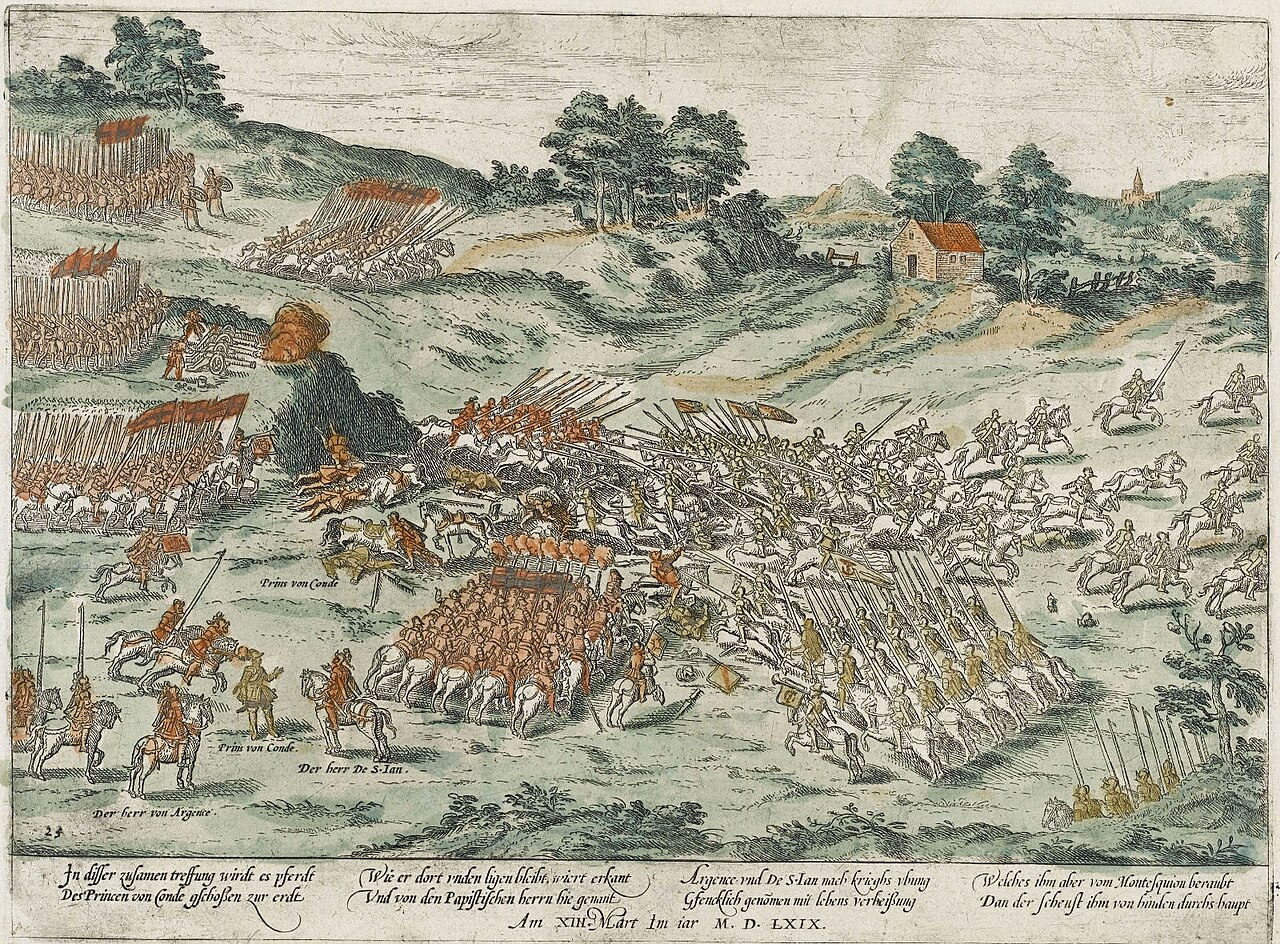
1569 - Battle of Jarnac (All Facts)
Battle in which the French Catholic Royalists defeated Louis de Bourbon and the French Huguenots during the Second French War of Religion
Battle in which Louis de Bourbon was murdered while crossing the Charente River by the Catholic army of King Charles IX’s brother, the Duke of Anjou
1570 - Treaty of St. Germain (All Facts)
Treaty signed between King Charles IX and the French Catholic Royalists and French Huguenots that ended the Third French War of Religion
Treaty which gave the Huguenots a large measure of religious toleration as well as the security of garrison towns

1572 - 1573 - Fourth French War of Religion (All Facts)

1572 - St. Bartholomew’s Day Massacre (All Facts)
Massacre of thousands of Huguenots in Paris who were celebrating the wedding of the Huguenot Henry IV of Navarre to Catholic King Charles IX’s sister Margaret of Valois
Massacre instigated by Catherine de Medici, who feared that Huguenots in France were aiming for war with Spain, and so convinced King Charles IX that the Huguenots were about to rebel against him and that their leaders must be killed by the Guise faction
Massacre in which the people of Paris, overcome by bloodlust; slaughtered men, women, and children in the hundreds and spread their killing to other towns
Massacre in which Henry IV of Navarre’s life was spared but he was arrested and forced to rescind his Protestantism

1572 - Capture of Brielle (All Facts)
Incident in which the namesake port town was captured by William II de la Marck and his “Sea Beggars” forces
Incident which marked a turning point in the uprising of the Low Countries against Spain in the Eighty Years' War
The namesake port provided the first foothold on land for the rebels at a time when the rebellion was all but crushed
Incident which offered the sign for a new revolt throughout the Netherlands which led to the formation of the Dutch Republic
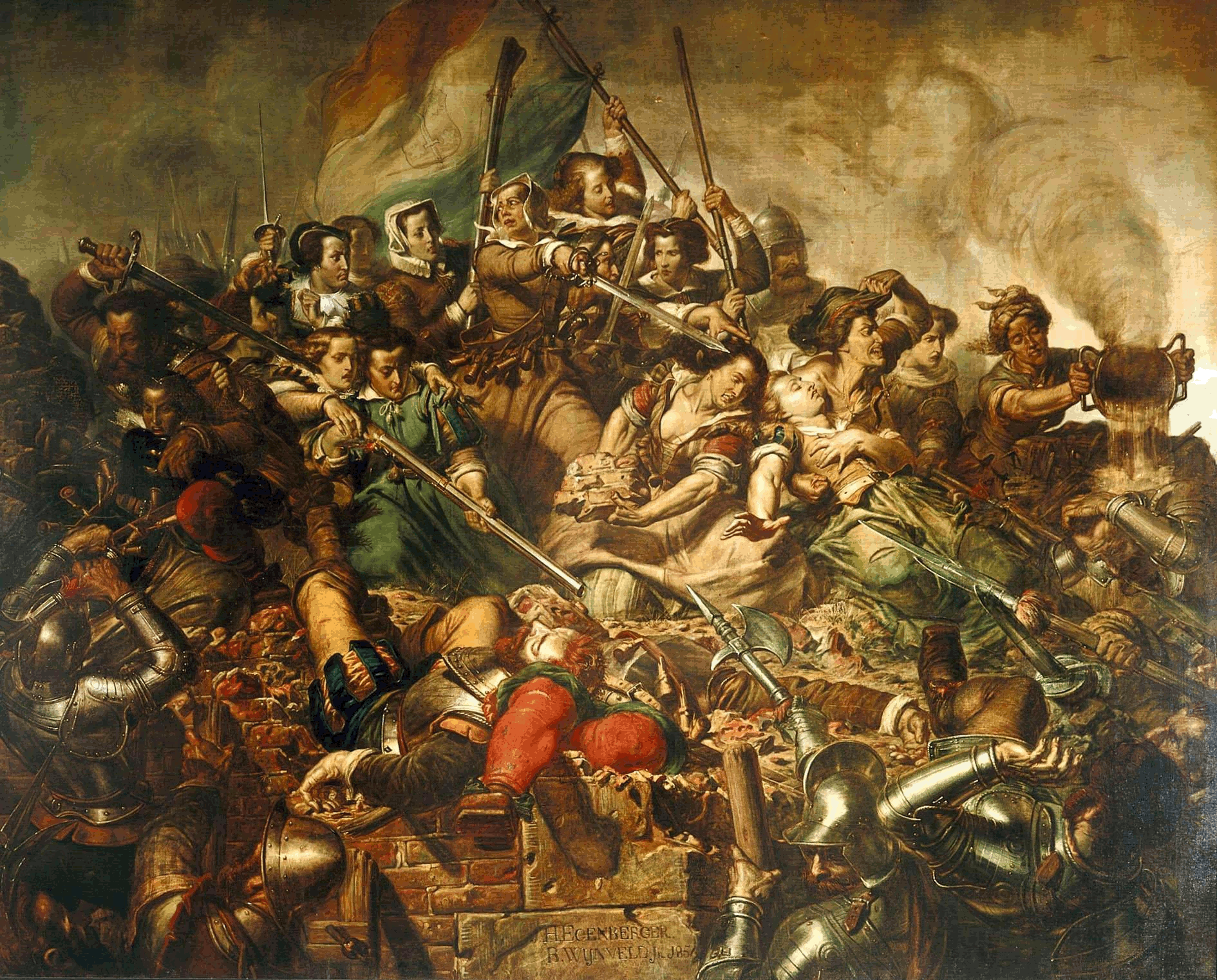
1572 - 1573 - Siege of Haarlem (All Facts)
Battle in which the Spanish took the namesake city from the Dutch during the Dutch Revolt / Eighty Years’ War
1573 - Edict of Boulogne (All Facts)
Treaty signed between King Charles IX and the French Catholic Royalists and French Huguenots that ended the Fourth French War of Religion
Treaty which, for the first time, severely limited Huguenot rights in France
1574 - 1576 - Fifth French War of Religion (All Facts)

1574 - Battle of Mookerheyde (All Facts)
Battle in which Luis de Requesens y Zúñiga and his Spanish forces defeated the Dutch Protestant / Calvinist rebels during the Dutch Revolt / Eighty Years’ War
1575 - Battle of Dormans (All Facts)
Battle in which Henri, duke of Guise, and his Catholic forces defeated the Huguenots during the Fifth French War of Religion
1576 - Peace of Chastenoy (All Facts)
Treaty that ended the Fifth French War of Religion
It was also known as the Paix de Monsieur after Francis, duke of Alencon, who gained control of the duchy of and became duke of Anjou as per the namesake treaty
Treaty which promised religious freedom to Huguenots once again
Treaty accepted by the (Catholic) King Henry III

1576 - Sack of Antwerp (All Facts)
Incident which became known as the “Spanish Fury”
During the Eighty Years’ War, the Spanish soldiers took and destroyed the namesake city in which they
mutinied yet indulged in extortion and robbery
rampaged through the city; burning, killing, and looting
killed 8,000 people
destroyed 1,000 houses
“spared neither age nor sex, time nor place, person nor country, profession nor religion, young nor old, rich nor poor, strong nor feeble, but, without any mercy, did tyrannously triumph”
killed hundreds of children
It was prompted by a mutiny four years ago, by Spanish soldiers, that brought the hatred to the boiling point in the namesake conflict
This occurred as thousands of hardened veteran troops expelled their officers and formed their own revolutionary committees, with brutal excesses following
It led to the negotiations which led to the Pacification of Ghent
1576 - 1577 - Sixth French War of Religion (All Facts)

1578 - Battle of Gembloux (All Facts)
Battle in which John of Austria and his Spanish forces defeated the Estates-General of Dutch Rebels during the Dutch Revolt / Eighty Years’ War
1579 - 1580 - Seventh French War of Religion (All Facts)
1579 - 1583 - Second Desmond Rebellion (All Facts)
Rebellion of the county of Munster in Ireland against English and Protestant domination and potential Spanish incursion
1580 - Treaty of Fleix (All Facts)
Treaty signed between the Catholic Francis, duke of Anjou and Alencon; and Huguenot King Henry IV of Navarre (during the reign of King Henry III) that ended the Seventh French War of Religion
Treaty which maintained the previous balance between Catholics and Huguenots
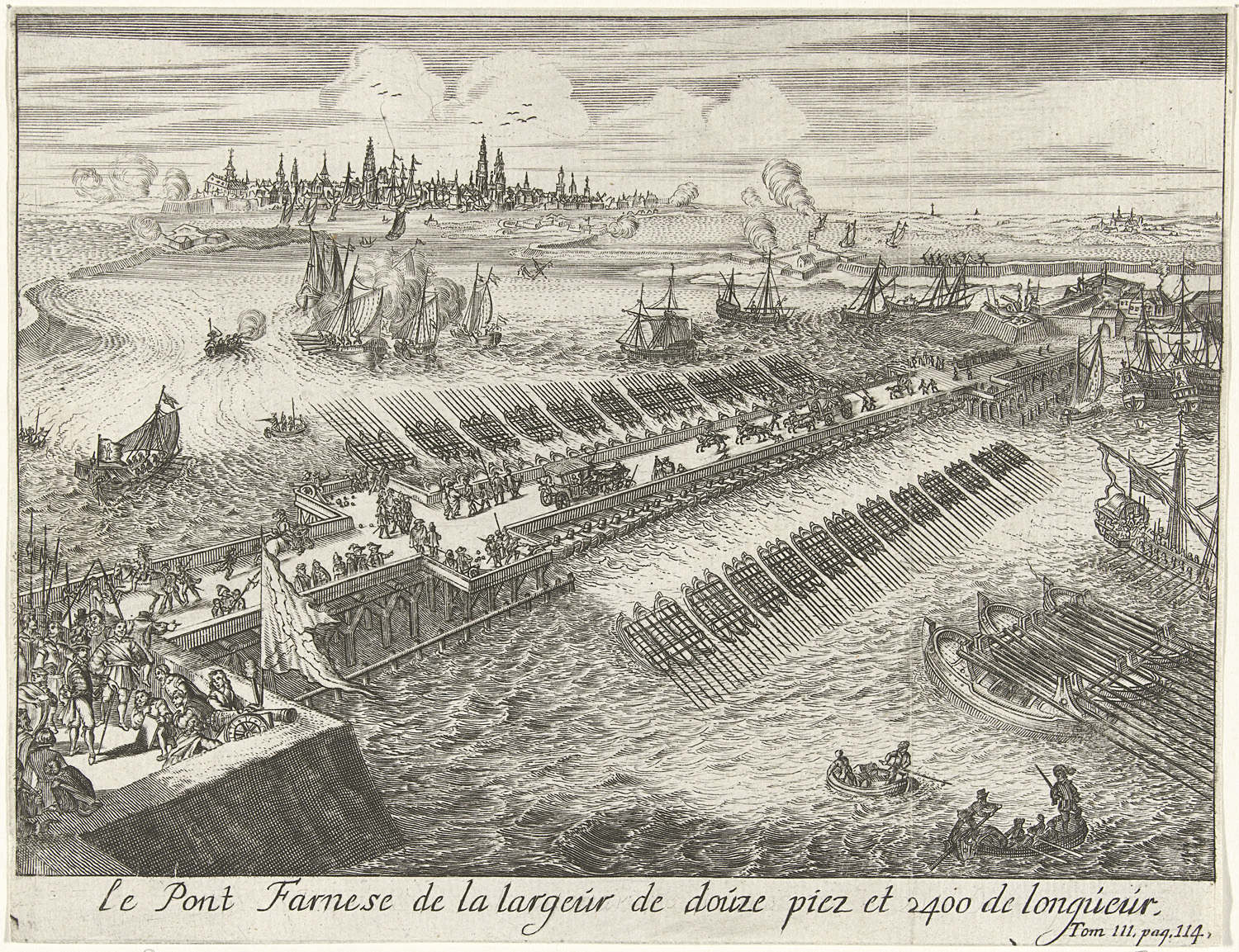
1584 - 1585 - Fall of Antwerp (All Facts)
Battle in which Alexander Farnese and his Spanish forces defeated the States General and took the namesake city to be submitted to the Spanish crown during the Dutch Revolt / Eighty Years
1585 - Treaty of Nemours (All Facts)
Treaty signed between Catherine de Medici, acting on behalf of King Henry III, and the Guise faction, which revoked all concessions to the Huguenots and proscribed the “pretended reformed religion,” thus being the most limiting treaty yet on the Huguenots
Treaty which made another war between the Catholics and Huguenots inevitable, and eventually caused the Eighth French War of Religion / War of the Three Henrys
1585 - 1589 - Eighth French War of Religion / War of the Three Henrys (All Facts)
Three-way war of succession between
the current Catholic King Henry III of France, supported by the French Catholic Royalists and Politiques
the presumptive Huguenot King Henry IV of Navarre, supported by Queen Elizabeth of England and the German Protestant Princes
Henri, duke of Guise and leader of the Catholic League, funded and supported by King Philip II of Spain
War which begun when Francis, duke of Anjou and Alencon, died (him being the last of King Henry III’s brothers), and King Henry III was forced to recognize Huguenot King Henry IV of Navarre as heir to the French throne; a shattering blow to the French Catholics
However, (Catholic) Henri of Guise also staked a claim to the French throne and he signed a treaty with King Philip II of Spain
War which was (also) triggered by the signing of the Treaty of Nemours
War in which
Henri of Guise
forced the Swiss and German troops who attempted to link up with King Henry IV of Navarre’s army at Vimory and Auneau to retreat
triumphantly entered into Paris, forcing King Henry III to flee
King Henry III’s men, supported by Swiss guards, took up strategic positions where irate crowds gathered, erected barricades in the streets, and stationed arquebusiers behind them
a shot rang out near the Pont St. Michel and 60 soldiers died in the ensuing fracas
milling crowds surrounded groups of isolated troops, most of these cut-off detachments having surrendered to cheering crowds
by nightfall it was obvious that King Henry III’s coup against Henri of Guise had failed
Henri of Guise and his brother, the cardinal of Guise, were assassinated on the orders of King Henry III
King Henry III was stabbed to death by Jacques Clement
1587 - Battle of Coutras (All Facts)
Battle in which King Henry IV of Navarre and his Huguenot forces defeated Anne, duke of Joyeuse, and his Catholic forces; during the Eighth War of Religion / War of the Three Henrys
1587 - Battle of Vimory (All Facts)
Battle in which Henri of Guise and his French Catholic forces defeated French Huguenots and their German and Swiss mercenaries; during the Eighth War of Religion / War of the Three Henrys

1589 - Battle of Arques (All Facts)
Battle in which King Henry IV and his Huguenot forces defeated Charles de Lorraine and his forces during the Eighth French War of Religion / War of the Three Henrys
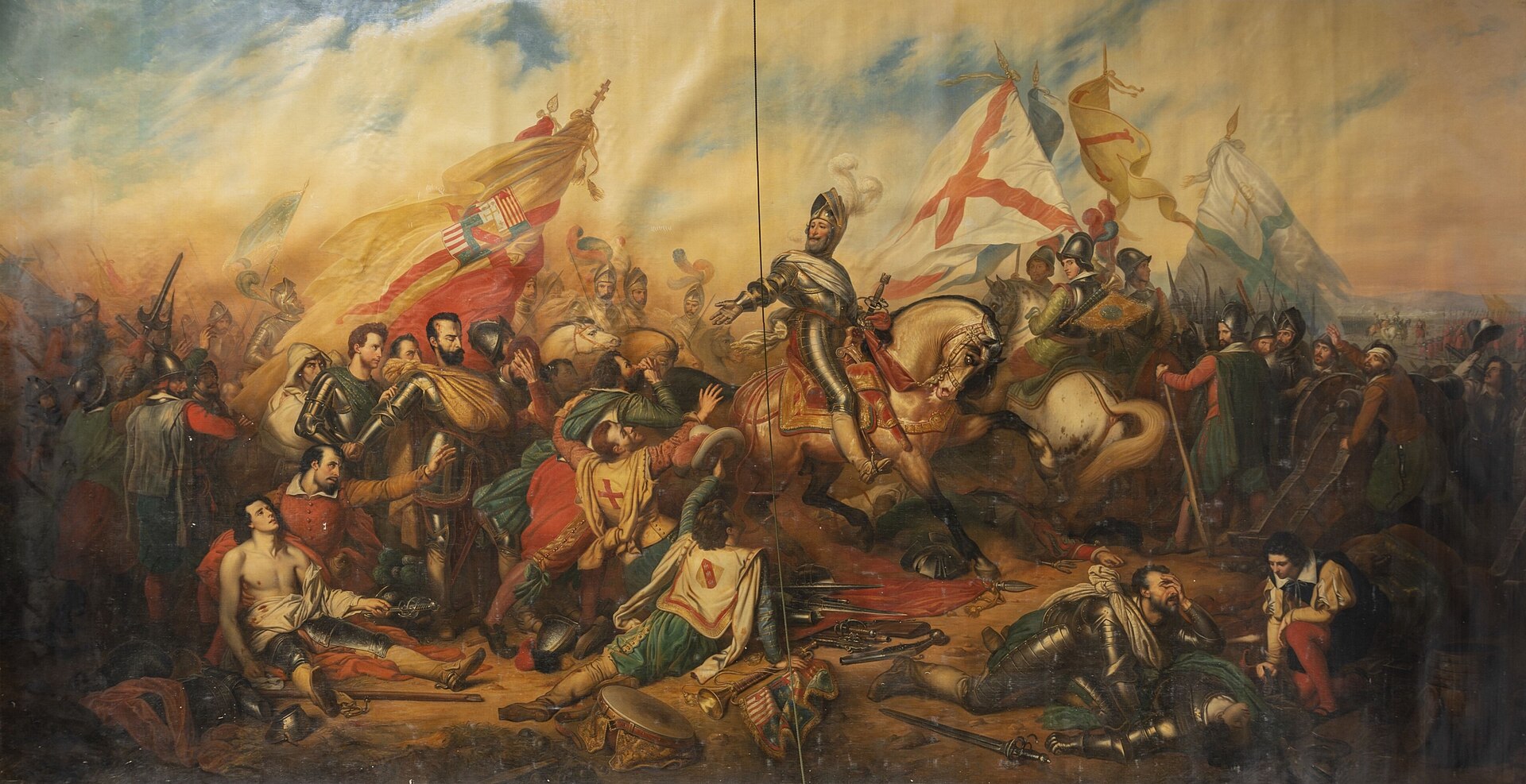
1590 - Battle of Ivry (All Facts)
Battle in which King Henry IV and his Huguenot forces defeated Charles de Lorraine and the Catholic League forces

1590 - Siege of Paris (All Facts)
Battle in which King Henry IV and his Huguenot forces were defeated by Alexander Farnese and his Catholic-Spanish forces
1600s / 1500s - German Witch-Hunts / German Witch Trials (All Facts)
Series of trials and executions of the namesake “mental disease” throughout the Holy Roman Empire (Germany) which was as widespread and as terrifying as the plague (Black Death) whose only cure was death by trial and execution, with the accused’s confessions being extracted through torture
Period which saw the archbishop-elector of Trier burn 368 of the namesake accused persons in just six years
On a single day, 133 witches were executed at the convent of Quedlinburg
Period which saw church dignitaries having been the most ferocious persecutors of the namesake accused persons, but the secular powers were nearly just as keen
Period whose origins and justifications were (and are still) heavily debated
Some of the methodology is laid out in the work “Malleus Maleficarum” by Jakob Sprenger

1600 - Battle of Nieuwpoort (All Facts)
Battle in which Maurice of Nassau and his Dutch forces defeated Albert VII of Austria and his Spanish forces during the Eighty Years’ War / Dutch Revolt

1601 - 1604 - Siege of Ostend (All Facts)
Three-year siege in which the Spanish took the namesake city from the Dutch during the Eighty Years’ War

1604 - Hampton Court Conference (All Facts)
Conference between King James of England and Henry Jacob and the Puritans which oversaw discussions concerning the Millenary Petition
Conference which resulted in minor revisions to the Book of Common Prayer, resulting in the new 1604 Book of Common Prayer, as well as the formulation and publication of the King James Version of the Holy Bible (KJV)

1618 - 1648 - Thirty Years’ War (All Facts)
Conflict
between Catholics and Protestants in Germany following the failure to reconcile them via the Peace of Augsburg
Conflict in which
4.5M-8M people were killed from
the battlefield
plague and disease
the constant maneuvering helped to spread disease
famine
the constant maneuvering laid waste to vast tracts of farmland
Crops were destroyed
German towns lost as many as 50% of their populations from
being razed to the ground by siege and fire
plague borne by countless armies
the European continent was nearly destroyed
Conflict which began
with the Defenestration of Prague and Bohemian Revolt
when Bohemia elected itself a new Protestant as king, Frederick V, previously the elector of Palatine, to replace the Habsburg King Ferdinand II, whom the Bohemian estates had previously “accepted” as king
Conflict during which
The Protestant Union was dissolved
Conflict during which
Johann Tserclaes (Count of Tilly) and his Catholic forces sacked the Heidelberg University Library
Bavaria (as well as Spain and Austria) invaded France with their armies and advance units of the Bavarian cavalry arrived in the Parisian suburbs
These armies invaded France but were driven back
Conflict which saw
The Bohemian Revolt
The Defenestration of Prague
The Battle of White Mountain
The Vatellina War (between Spain and Switzerland)
The Battle of Lutter
The Battle of Dessau Bridge
The Sack of Magdeburg
The Battle of Breitenfeld
The Battle of Lutzen
The Battle of Nordlingen
The Battle of Wittstock
The Battle of Rheinfelden
The Battle of Freiburg
Conflict which involved
The Eighty Years’ War / Dutch Revolt (between Spain and the Netherlands / Dutch Republic)
Conflict which ended with
The Peace of Prague
The Peace of Westphalia
This took three years of negotiation in two cities, Munster and Osnabruck, to bring about the official signing
Just four years prior to the start of the war,
Catholics and Protestants alike in Germany were already preparing for the conflict, which threatened to engulf the whole continent as
battle-lines were already being drawn up by then
fortunes were already being spent equipping private armies throughout Germany
Germany prepared itself to be the battlefield when the war would break out
In the Protestant north of Germany,
whole cities were ringed with star-shaped walls, bastions, and moats
In Catholic Bavaria and in the Rhineland,
great new fortresses pierced the skylines
intense diplomatic activity was taking place, particularly on the part of
Prince Christian of Anhalt-Bernburg
King James of England
Conflict which ended when three successive salvos crashed out from 70 cannons on the walls of Munster to announce that peace came from a war-ravaged Europe after three decades of bitter conflict in which every power became involved both on land and sea
Conflict after which
100K+ mercenaries had to be paid and returned home lest they turn themselves into robber-bands adding even more torment to a war-weary Europe
the high cost of the war caused massive tax demands on both nobles and peasants, both parties of whom threatened revolt

1618 - 1620 - Bohemian Revolt (All Facts)
Revolt of the namesake estates against Ferdinand II and the Habsburgs that were ruling there
Revolt of Bohemians against the pro-Catholic policy of the regents in Prague
Revolt led by Jindřich Thurn (of Bohemia)
Revolt which triggered the Thirty Years’ War
Revolt which began with the Defenestration of Prague

1619 - Synod of Dort / Synod of Dordrecht (All Facts)
Synod by the Dutch Reformed Church to discuss the religious issue and rise of Arminianism convened by Maurice of Nassau
Synod which concluded that Arminianism is not Calvinism and thus should not be practiced amongst the Dutch, leading to Maurice of Nassau’s banishment of Arminians from the Netherlands
Thus, the purest form of Calvinism, which accepted the belief of absolute predestination, and rejected the belief of conditional predestination, was reaffirmed
Prior to the Synod, the Arminians were ordered not to preach before they were called up
In the Synod, the president was a stern Calvinist

1620 - Battle of White Mountain (All Facts)
Battle in which the Holy Roman Empire and Catholic League of Imperial Princes, with help from Spain, defeated Bohemia and the Electorate of the Palatinate during the Bohemian Revolt during the Thirty Years’ War
Battle during which
King Frederick V of Bohemia and his queen were in high spirits at the dinner table as they entertained the English ambassadors there
the armies of the fanatically Catholic emperor Ferdinand II had invaded Bohemia from Austria
King Frederick V was confident that his enemy’s forces were too weak with hunger or wracked with plague to fight while his own army occupied an unassailable position on the namesake location near Prague
the army of Bohemia had become mutinous during a lengthy artillery barrage and many had refused to fight as they were overwhelmed by Bavarian and Spanish infantry
King Frederick V rode out to encourage his soldiers after his dinner with the English ambassadors, but had not even reached the city gates when he met the first fugitives after his army had been defeated and Holy Roman Emperor Ferdinand II’s banner flew over the namesake location
the citizens of Prague closed the gates against their invaders, and King Frederick V and his wife fled in such haste that they almost forgot their youngest prince, although they did remember most of their crown jewels

1623 - Battle of Stadtlohn (All Facts)
Battle in which Johann Tserclaes and his Catholic League forces defeated Christian of Brunswick and his forces during the Thirty Years’ War
Battle in which 15K of Brunswick’s 21K men died
Battle after which Tserclaes firmly held Heidelberg and Mannheim and upon which the House of Habsburg controlled the entire northern Palatinate

1626 - Battle of Lutter (All Facts)
Battle in which Johann Tserclaes and his Holy Roman forces and Catholic League defeated Christian IV and his Danish-Norwegian forces during the Thirty Years’ War

1626 - Battle of Dessau Bridge (All Facts)
Battle in which Albrecht von Wallenstein and his forces defeated the Danish-Norwegian forces during the Thirty Years’ War

1627 - 1628 - Siege of La Rochelle (All Facts)
Battle in which Cardinal Richelieu and French Catholic Royalist forces defeated the Huguenots and George Villiers and the English forces after a 15-month siege
Battle that ended the Huguenot Rebellions and Anglo-French War; all of which ended with the Peace of Ales

1631 - Sack of Magdeburg (All Facts)
Incident in which Johann Tserclaes and his Holy Roman forces and Catholic League defeated and destroyed the namesake Protestant German city during the Thirty Years’ War
Incident which is considered the worst massacre of the Thirty Years’ War
Incident in which 20K people died, the bodies having been so numerous that they were thrown in wagonloads into the Elbe River
Incident in which 5K of the town’s inhabitants, mostly women, survived
Incident during which
the whole fury and savagery of war descended on the namesake German town
drunken soldiers of nine nations reeled among its smoldering ruins, dragging captive women as they sought wine in charred cellars
the town fell to a two-pronged attack, and by then the horror began
the largely Croat and Walloon soldiers conquered it and then rioted, murdered, raped, and looted
a monk herded 500 women into the namesake town’s cathedral for safety
fires spread across the town, fanned by a strong wind, as the namesake town ended up becoming a roaring furnace which burned soldiers and citizens to death without discrimination
Incident in which
many people believed the people of the namesake town brought the massacre upon themselves after they refused to help Dietrich von Falkenberg prepare his defense against the besieging army of Johann Tserclaes
even as Tserclaes was beginning his final assault, the namesake town’s people were pleading with the defenders to surrender

1631 - Battle of Breitenfeld (All Facts)
Battle in which Gustavus Adolphus and his Swedish forces and John George of Saxony and his German Lutheran forces defeated Johann Tserclaes and his Holy Roman forces and Catholic League during the Thirty Years’ War

1632 - Battle of Lutzen (All Facts)
Battle in which Gustavus Adolphus, Bernard of Saxe-Weimar, and their combined Swedish forces defeated Albrecht von Wallenstein and his Holy Roman forces and Catholic League during the Thirty Years’ War
Battle in which Gustavus Adolphus was killed

1634 - Battle of Nordlingen (All Facts)
Battle in which Ferdinand III of Austria and the Holy Roman Empire, the Catholic League, and Spain and his Holy Roman forces defeated Bernard of Saxe-Weimar and the Protestant German Princes and Sweden during the Thirty Years’ War
Battle during which Ottavio Piccolomini contributed to his commander’s downfall and went on to distinguish himself in the Holy Roman victory
Battle after which
France feared its result would lead to the revival of the Holy Roman Empire’s dream of universal domination and thus served as a pretext for its entry into the Thirty Years’ War
Sweden’s influence in southern Germany ended
Battle which brought about the ceasefire which, in turn, brought about the Peace of Prague
1635 - Peace of Prague (All Facts)
Peace Treaty signed between Holy Roman Emperor Ferdinand II and Elector John George of Saxony in which
ended the pre-French “religious-based” phase of the Thirty Years’ War as the war was not really about religion thereafter
the dukes of Saxony and Brandenburg retained their ecclesiastical lands which they held eight years prior
the armies of Saxony and Brandenburg had to switch allegiance and come under the command of the Holy Roman Empire
Calvinists were excluded, and the Holy Roman Empire would continue to wage war on them thereafter
Peace Treaty signed between Holy Roman Emperor Ferdinand II and the Lutheran states of Bavaria, Mainz, Cologne, and Trier
This allowed the emperor to claim that all the major German Protestant Princes were united behind him
The treaty was political and religious in nature
Peace Treaty which
brought rejoicing to Germany
brought fear to France, the Netherlands, and other European powers

1636 - Battle of Wittstock (All Facts)
Battle in which the Swedish defeated John George of Saxony and his Holy Roman forces during the Thirty Years’ War

1638 - Battle of Rheinfelden (All Facts)
Battle in which Bernard of Saxe-Weimar and his French forces defeated the Holy Roman and Bavarian (German) forces during the Thirty Years’ War
Battle after which Bernard of Saxe-Weimar took Freiburg and the fortified town of Breisach afterwards
1638 - Scottish General Assembly (All Facts)
General Assembly upon which the Scottish Presbyterian Church abolished the episcopate and defied King Charles of England’s orders to disband

1639 - 1640 - Bishops’ Wars (All Facts)
War in which the Presbyterian Covenanters of Scotland defeated the Anglican King Charles and England
Revolt in Scotland against King Charles, William Laud, and their religious administration in England for
threatening the properties of the Scottish nobility by revoking all grants of crown lands made in the last century
ordering the Scottish Archbishop Spottiswood to wear an English surplice for his father’s funeral
treating Scottish visitors to his court like uncultured roughs
attempting to introduce the English Common Book of Prayer and Church of England practices into Scotland
Revolt in Scotland that began when the Scottish came together for a meeting and signed their National Covenant, openly defying King Charles of England (and Scotland)
The Scottish suspected a plot from King Charles to restore the “popish Anti-Christ,” especially in their detestation of rituals including
kneeling when taking communion
oral confession
Conflict in which bishops feared for their lives and fled to England
Conflict in which the one bishop who read the Book of Common Prayer in the kirk, the Bishop of Brechin, did so with loaded pistols pointed at his congregation
War which contributed to the causes of the English Civil War
1639 - Treaty of Berwick (All Facts)
Treaty which ended the First Bishops’ War between England and Scotland
1640 - Treaty of Ripon (All Facts)
Treaty which ended the Second Bishops’ War between England and Scotland after the English suffered several humiliating defeats by the Scots
Treaty in which Scotland kept possession of Northumberland and Durham and were to be paid every day until a new English Parliament could work out final peace terms
Treaty which thus forced King Charles to summon Parliament, fulfilling its aforementioned obligation

1644 - Battle of Freiburg (All Facts)
Battle in which Turenne and his French forces defeated the Holy Roman Empire during the Thirty Years’ War
Battle after which Turenne and his French forces captured Mainz and Worms
1648 - Peace of Westphalia / Treaty of Westphalia (All Facts)
Peace Treaty signed between the Holy Roman Empire and Spain (Habsburgs), France, Sweden, and their dozens of allies; which ended the Thirty Years’ War
Peace Treaty which
guaranteed the full sovereignty of the German states from the Habsburgs (Holy Roman Empire and Spain)
guaranteed total religious freedom in German states for Catholics, Lutherans, and Calvinists (with the exception of the hereditary lands of the Habsburgs)
Peace Treaty in which
the Habsburgs
recognized the independence of
the Protestant German states (from the Catholic Holy Roman Empire)
Switzerland (from the Holy Roman Empire)
The Netherlands (from Spain)
France
acquired as reparation
Alsace
other territories
Sweden
acquired Pomerania
This gave them dominance in the Baltic
Peace Treaty which
was signed in conjunction with the Treaty of Munster, in which the Habsburgs recognized the independence of the Netherlands (the Dutch Republic) from Spain
represented the failure by the Habsburgs to turn Germany into a Catholic monarchy
1680s - Dragonnades (All Facts)
Period of persecution against Huguenots under the reign of King Louis XIV
in which
the Edict of Nantes was ignored, and eventually formally revoked
thousands all over France were being forced to give up their Calvinism
which was
due to King Louis XIV’s wish and some of the Catholic bishops’ wish to have a unified France with one religion
Period of persecution against Huguenots in which they
were excluded from the commercial guilds and financial posts of France
were excluded from the Palace of Versailles
In Poitiers, Marilllac, its local intendant, used the traditional police practice of quartering soldiers on unruly citizens, namely Huguenots, as “missionaries in boots” which extracted forcible conversions
These soldiers were called “dragoons,” hence the namesake
Period of persecution in which many wealthy Huguenots emigrated France rather than gave into King Louis XIV’s demands