msen exam2
 Call Kai
 Learn
 Practice Test
 Spaced Repetition
 Match
 Flashcards
 Knowt Play
1/43

There's no tags or description
Looks like no tags are added yet.
44 Terms
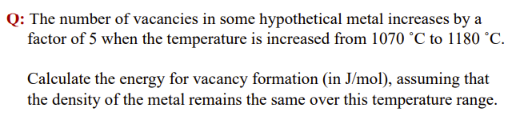
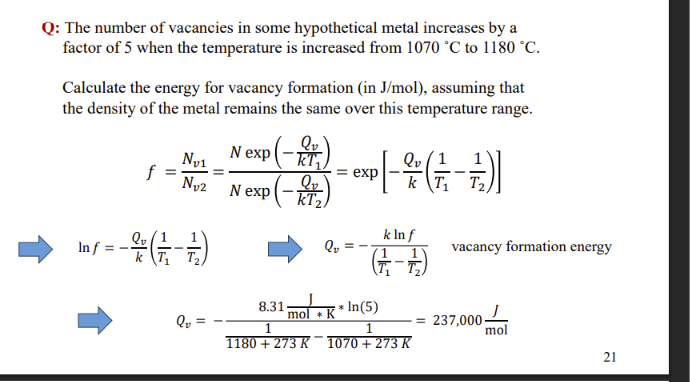

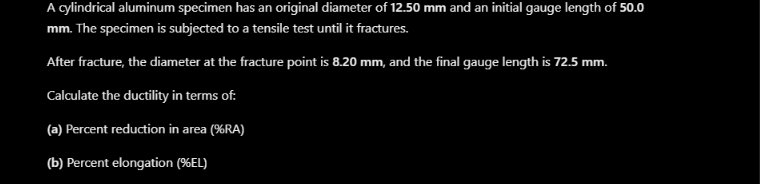
2.2×10 ^ 25 vacanies

2.89×10 ^ 22

1.28×10^5

96822

scew and edge


.00682

0.0817 weight percewnt


(a) How much sugar will dissolve in 1000 g of water at 90°C?
(b) If the saturated liquid solution in part (a) is cooled to 20°C, some of the sugar will precipitate out as a solid, because as seen in the figure, the composition of the saturated liquid solution drops to 64 wt% sugar. How much of the solid sugar will come out of solution upon cooling to 20°C?


At 100°C, what is the maximum solubility (a) of Pb in Sn and (b) of Sn in Pb?


How many kilograms of nickel must be added to 2.43 kg of copper to yield a solidus temperature of 1300°C?
3.36kg

d
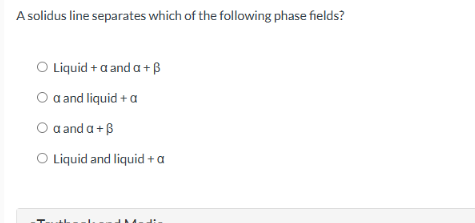

From the lead-tin phase diagram, which of the following phases/phase combinations is present for an alloy of composition 46 wt% Sn–54 wt% Pb that is at equilibrium at 44°C?
a + b
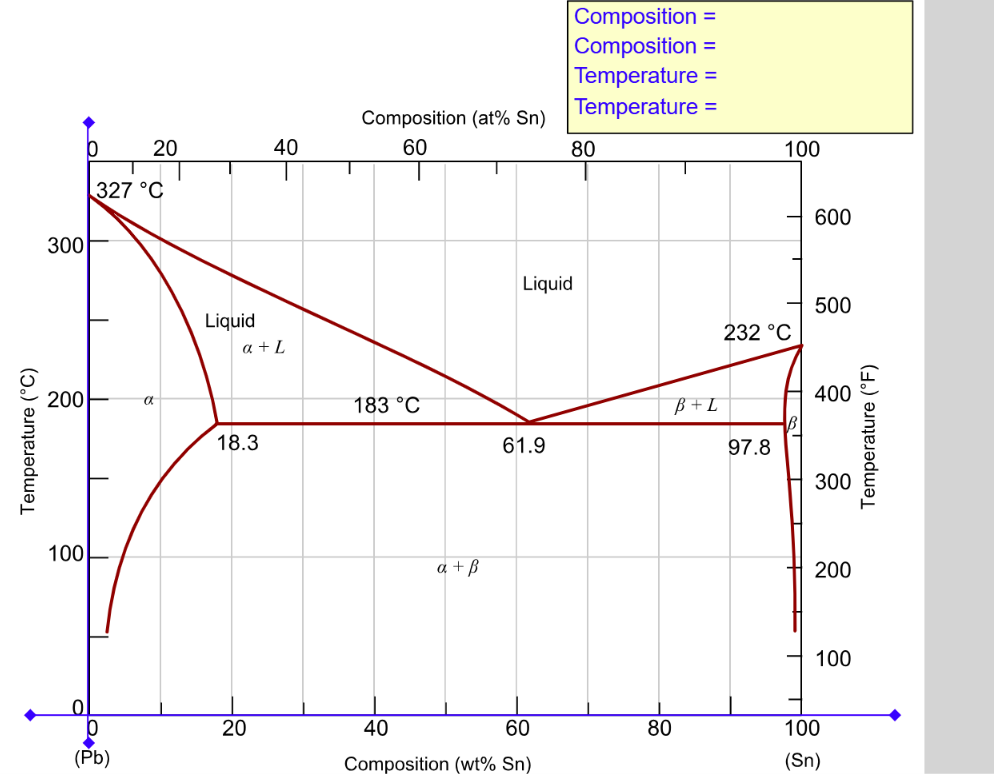
Practice Problem: Lead-Tin Phase Diagram
A lead-tin (Pb-Sn) alloy contains 15 wt% Sn and 85 wt% Pb at a temperature of 100°C. The densities of pure tin and lead at this temperature are:
Tin density: 7.29 g/cm³
Lead density: 11.27 g/cm³
Using the Pb-Sn phase diagram (Animated Figure 10.8), answer the following questions.
(a) What phases are present in the alloy at 100°C?
(b) What are the compositions of the alpha and beta phases in wt% Sn?
(c) What are the relative amounts, expressed as mass fractions, of the alpha and beta phases?
(d) What are the densities of the alpha and beta phases in g/cm³?
(e) What are the relative amounts, expressed as volume fractions, of the alpha and beta phases?
Practice Problem: Lead-Tin Phase Diagram — Answer Key
(a) What phases are present in the alloy at 100°C?
Alpha + Beta phases
(b) What are the compositions of the alpha and beta phases in wt% Sn?
Alpha: 5 wt% Sn, 95 wt% Pb
Beta: 99 wt% Sn, 1 wt% Pb
(c) What are the relative amounts, expressed as mass fractions, of the alpha and beta phases?
Alpha mass fraction: 0.8936
Beta mass fraction: 0.1064
(d) What are the densities of the alpha and beta phases in g/cm³?
Alpha density: 10.97 g/cm³
Beta density: 7.32 g/cm³
(e) What are the relative amounts, expressed as volume fractions, of the alpha and beta phases?
Alpha volume fraction: 0.8485
Beta volume fraction: 0.1515

Find the phase compositions for an alloy of 15 wt% Sn–85 wt% Pb at 100°C (212°F).
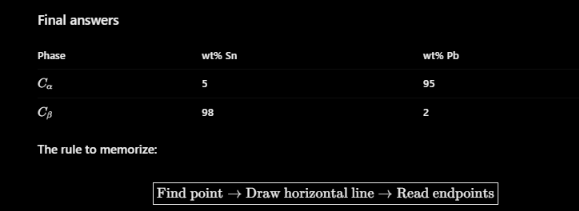

Find the phase compositions for an alloy of 25 wt% Pb–75 wt% Mg at 425°C (800°F)

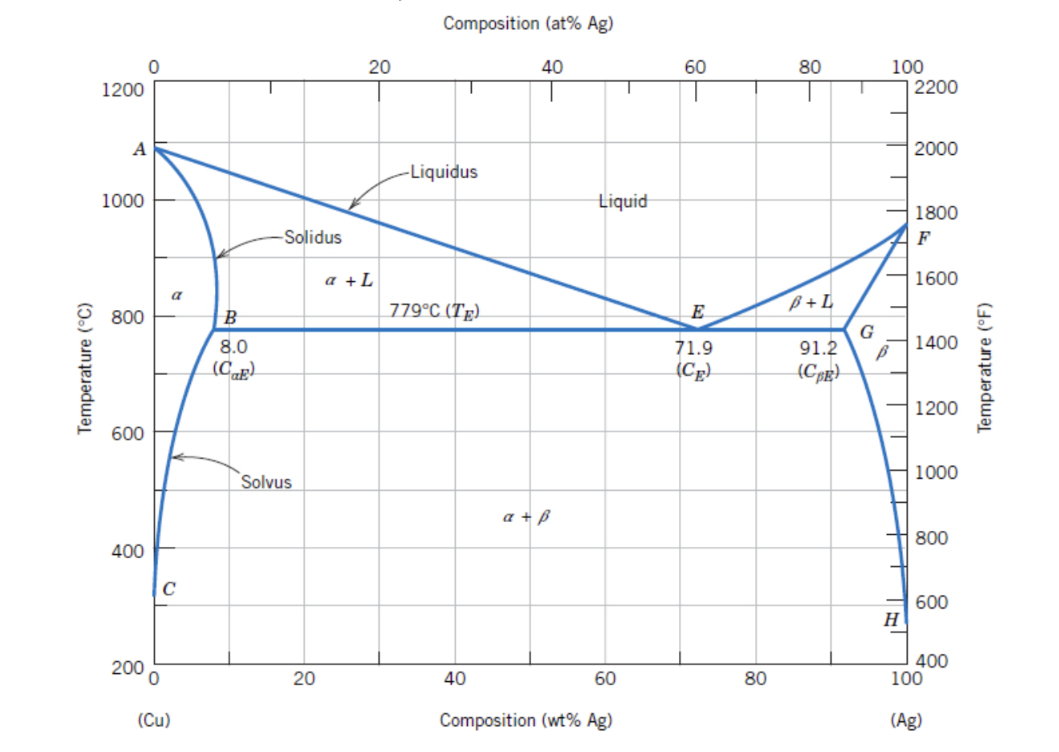
Find the phase compositions for an alloy of 85 wt% Ag–15 wt% Cu at 800°C (1470°F).


Find the phase compositions for an alloy of 55 wt% Zn–45 wt% Cu at 600°C (1110°F).


Find the phase compositions for an alloy of 1.25 kg Sn and 14 kg Pb at 200°C (390°F).
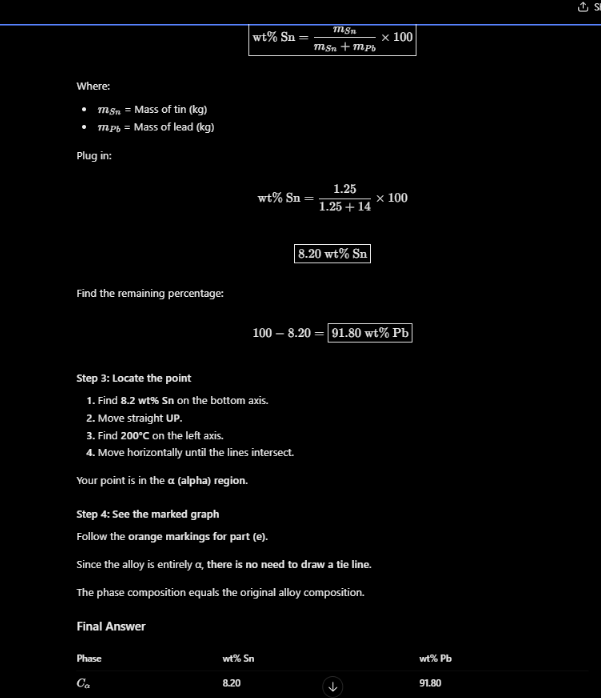

Find the phase compositions for an alloy of 7.6 lb Cu and 144.4 lb Zn at 600°C (1110°F).


Find the phase compositions for an alloy of 21.7 mol Mg and 35.4 mol Pb at 350°C (660°F).


Find the phase compositions for an alloy of 4.2 mol Cu and 1.1 mol Ag at 900°C (1650°F).


3rd option
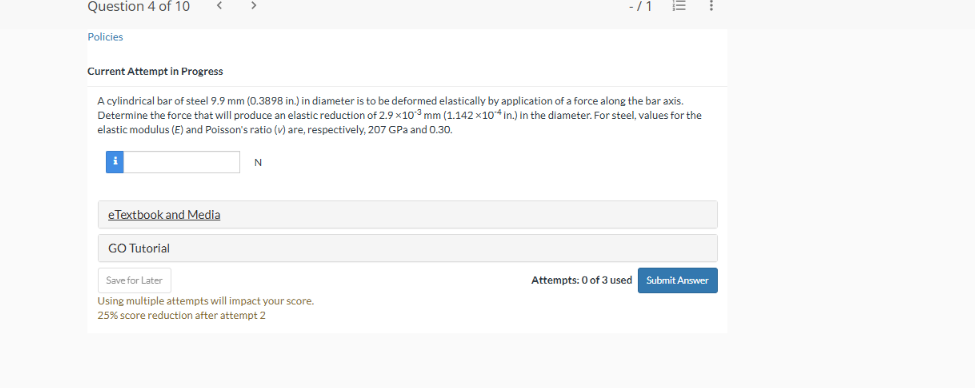
15558.66N

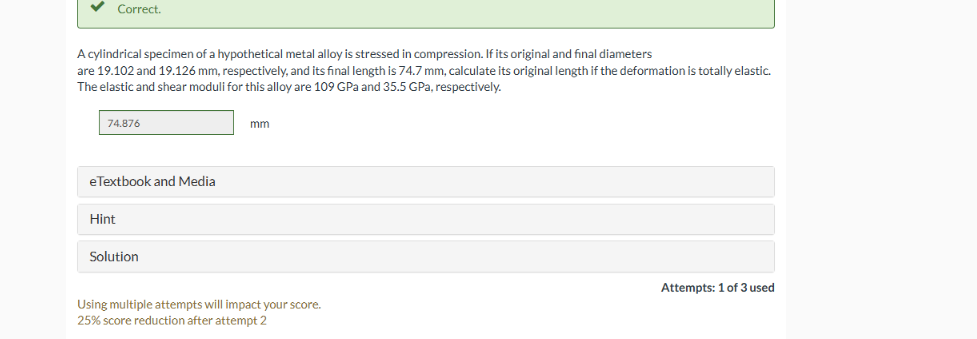
74.876 mm
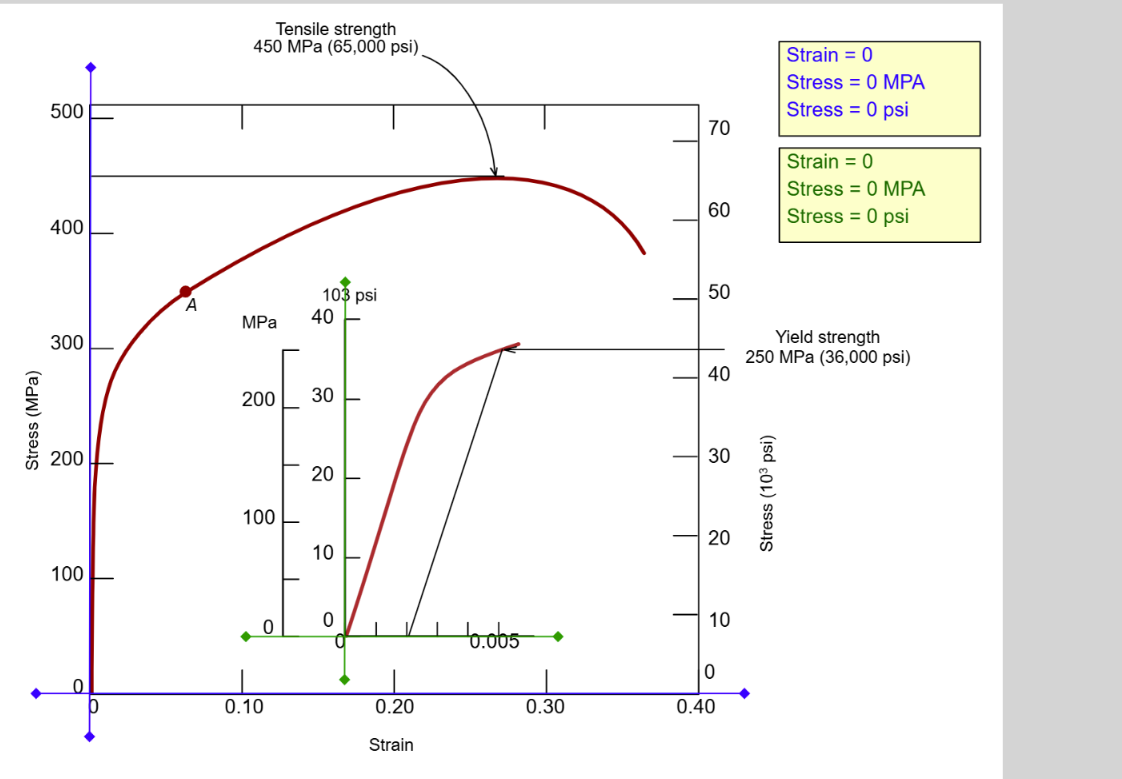
Determine working stress for the alloy that has the stress-strain behavior shown in the Animated Figure 7.12, assuming a factor of safety of 2.
125


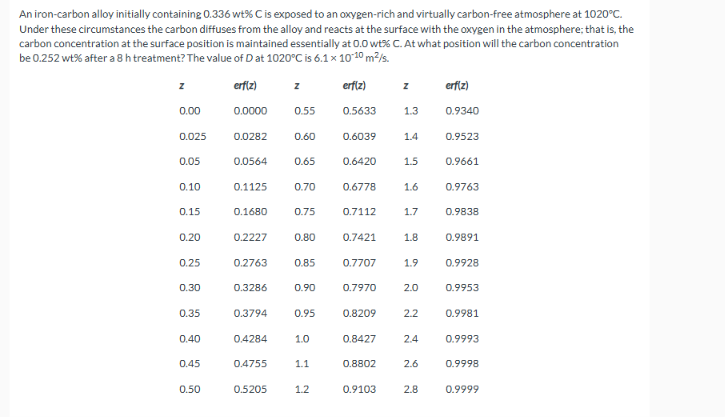
ONNNN EXAMMMMMMMMMMM
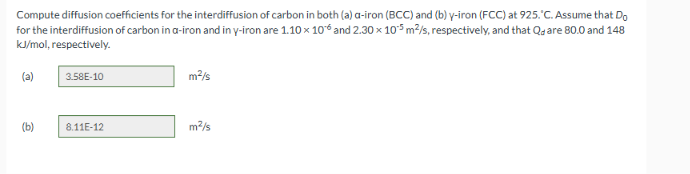
ONNNNN EXAMMMMM (cover up answers)

For a lead–tin alloy of composition 25 wt% Sn–75 wt% Pb, select from the following list the phase(s) present and their composition(s) at 200°C. (The Pb–Sn phase diagram appears in Animated Figure.) ONNNNNN EXAAMMMMMMMM


A copper-nickel alloy of composition 70 wt% Ni–30 wt% Cu is slowly heated from a temperature of 1300°C (2370°F).
(a) At what temperature does the first liquid phase form?
(b) What is the composition of this liquid phase?
(c) At what temperature does complete melting of the alloy occur?
(d) What is the composition of the last solid remaining prior to complete melting? ……… ONNNNNNNNNNNNNNNNNNN EXXXAAAAMMMMMMMM

ONNNNNNNN EXXXAMMMMM (cover answer)

ONNNNNNNN EXAMMMMMMM (cover answers)