chapter 5-prejudice, discrimination, & racism
 Call Kai
 Learn
 Practice Test
 Spaced Repetition
 Match
 Flashcards
 Knowt Play
1/15

Earn XP
Description and Tags
16 Terms
racism
prejudice and discrimination based on a person’s racial background, or institutional or cultural practices that promote domination of one racial group over another
prejudice (affect)
negative [or positive] feelings or attitudes toward people based on their membership in certain groups
discrimination (behavior)
behavior directed at people because of their membership in a certain group
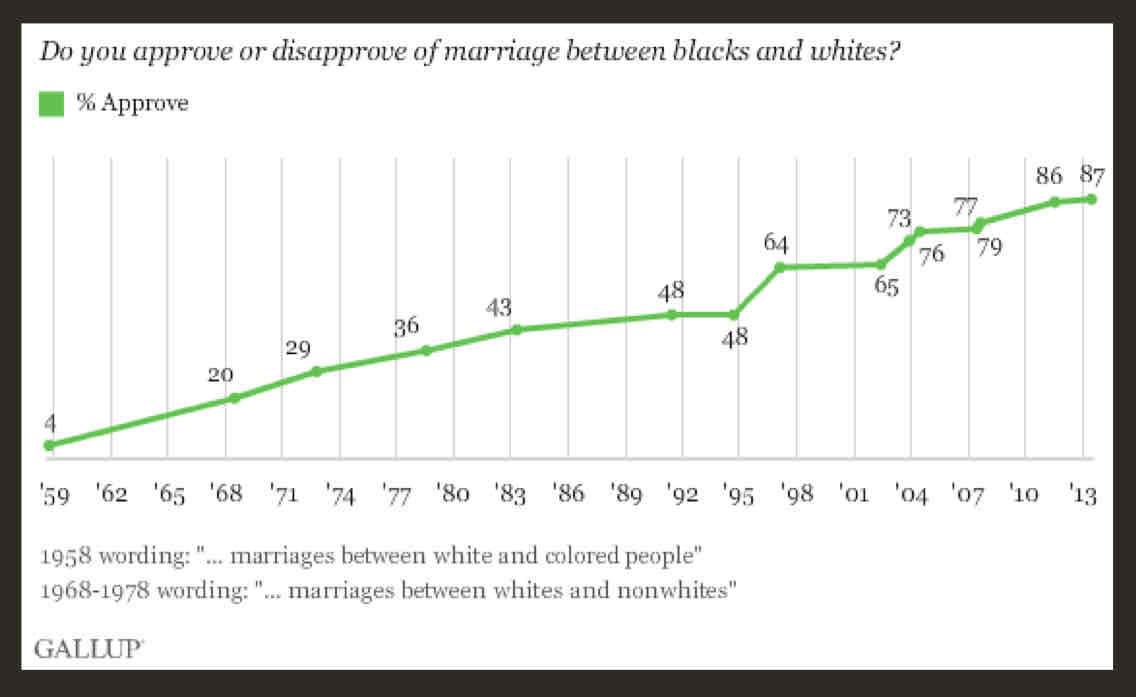
evidence of decline in racial prejudice
1958 Mildred and Richard Loving married in Washington, DC following the 1967 Loving vs. Virginia, landmark Supreme Court Case
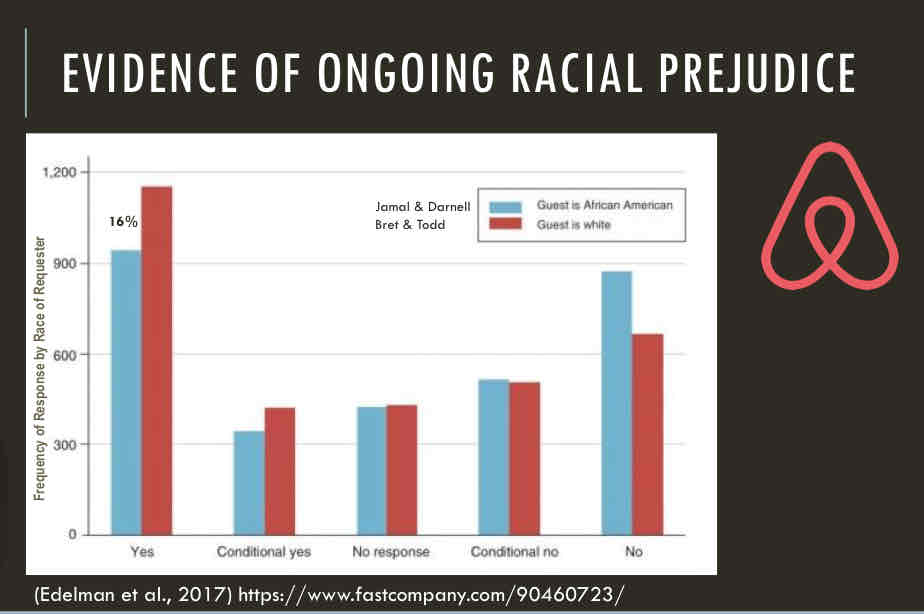
evidence of ongoing racial prejudice
names and booking hotels/airbnbs
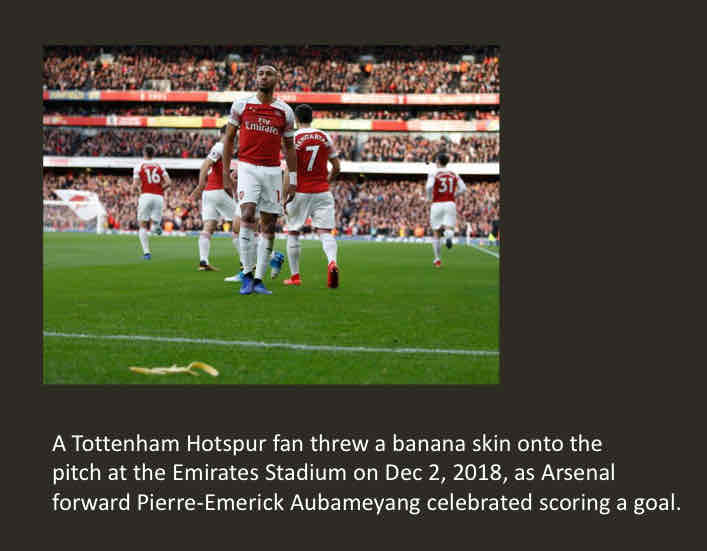
old fashioned racism
blatant, explicit, unmistakable racism
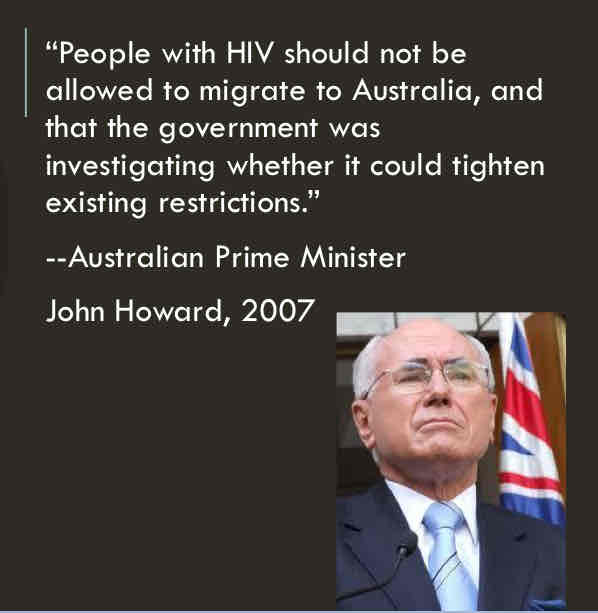
modern racism
racism that surfaces in subtle ways when it is safe, socially acceptable, and easy to rationalize
implicit racism
racism that operates unconsciously and unintentionally
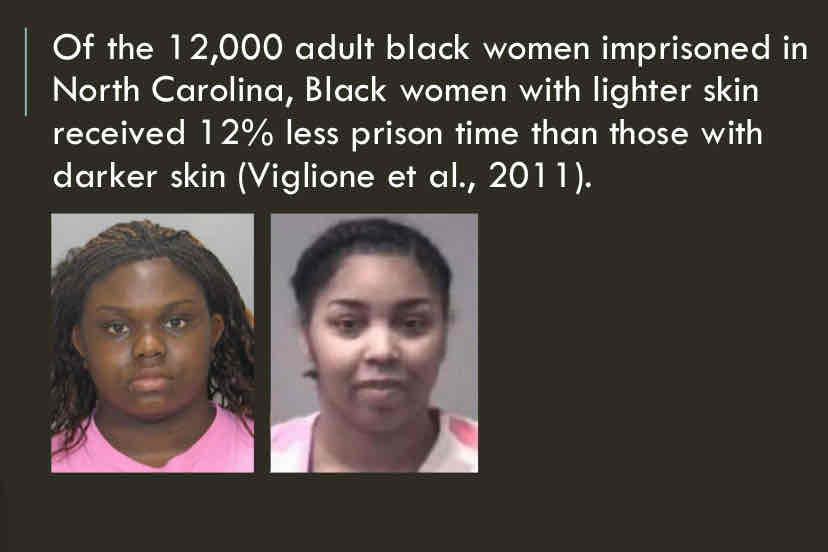
technically it’s colorism, which has deep roots in implicit racism
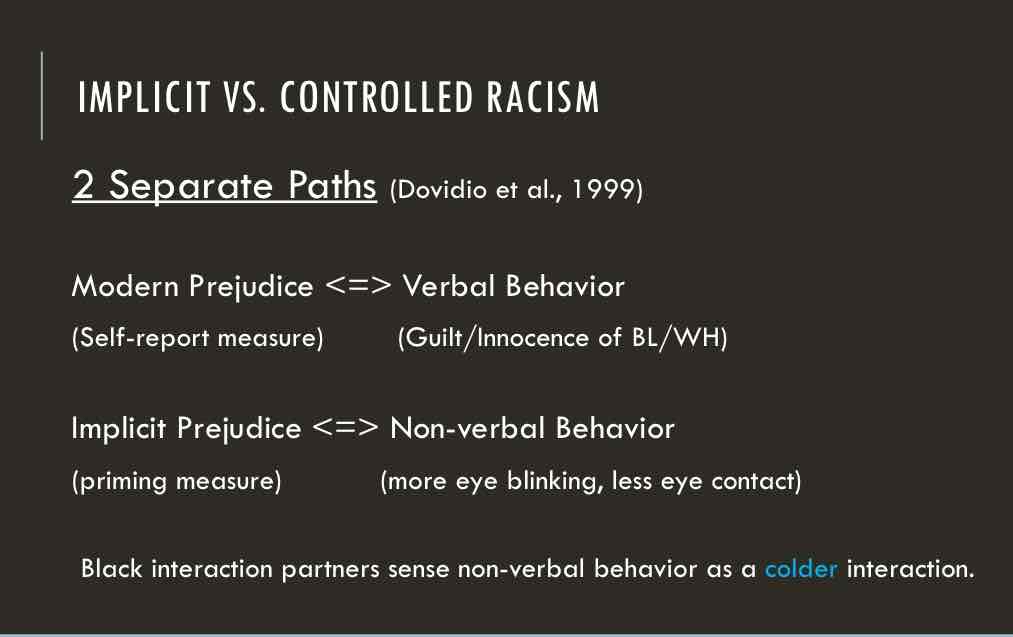
implicit v controlled racism
2 separate paths (Dovidio et al., 1999)
stereotype threat
defined by Claude Steele as “vulnerability experienced by a person from a stereotyped group when their behavior could potentially confirm the stereotype about their group”
“experienced as anxiety or distracting thoughts which has a negative impact on performance”
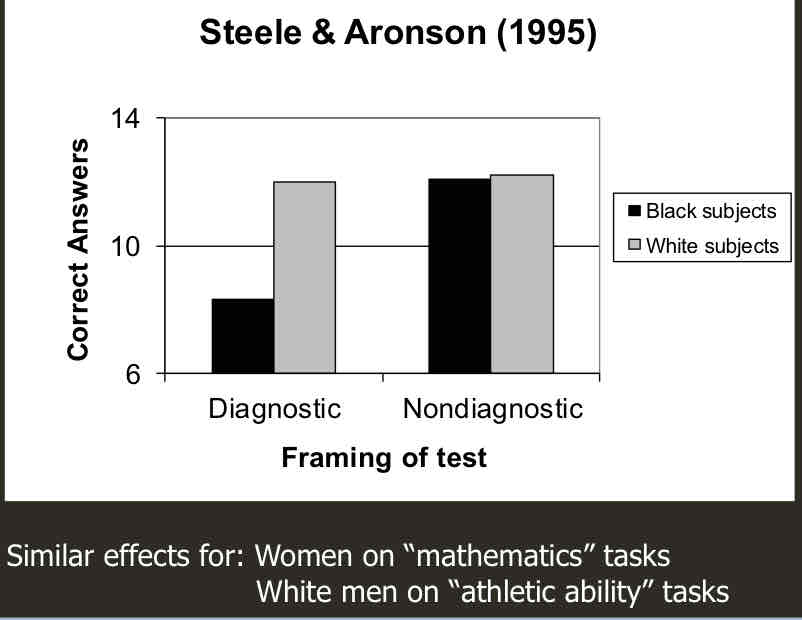
experiment: steele & aronson (1995)
participation: black & white students with equal prior test scores
manipulation:
group a: instructions say: “test diagnostic of intellectual ability”
group b: instructions say: “test nondiagnostic of intellectual ability”
dv: performance on a difficult standardized test
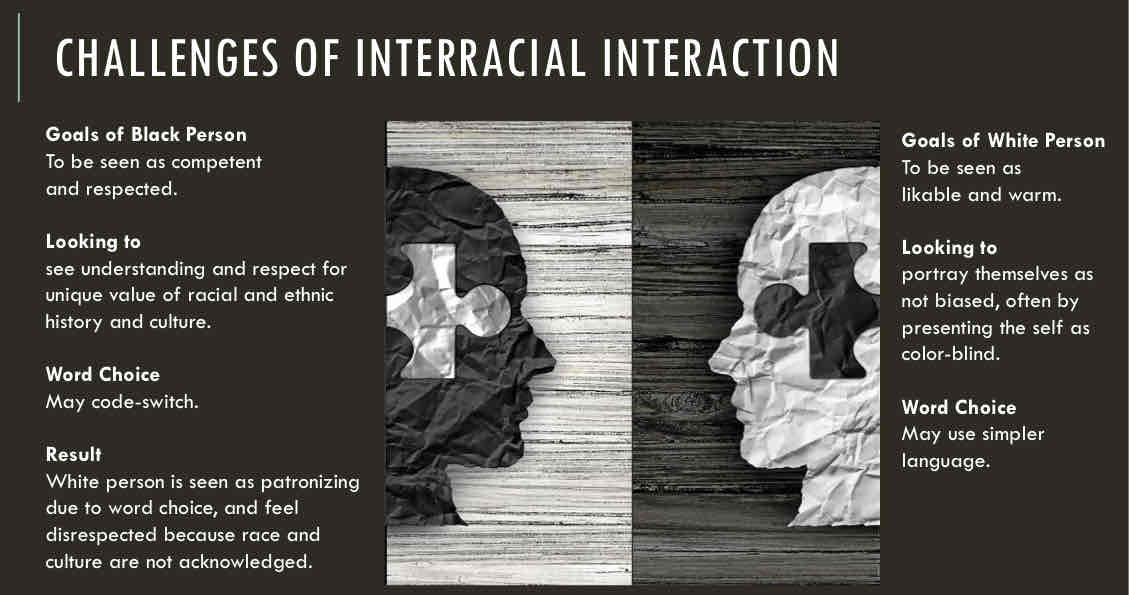
differences between interracial group interactions
each group approaches the other differently, because they have conflicting goals in terms of how they want to perceive and how they want to be perceived
the white person does not want to be perceived as racist, so they refuse to acknowledge the concept of race
the black person does not want to be belittled and wants to be respected as a black individual so they code-switch to a vernacular more suitable for the white person
social identity theory
self esteem= personal identity + social identity
group identities are used to maximize self-esteem
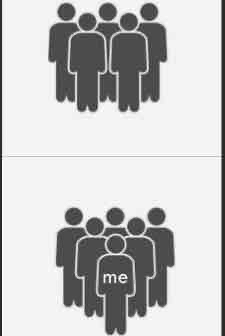
how do group identities improve self esteem?
social comparison: ingroup favoritism, outgroup derogation
shifting to better group, or increasing own group status
realistic conflict theory
competition for limited resources (ie jobs, housing, etc) breeds hostility & results in prejudice & discrimination
competition can be real OR perceived
predicts: prejudice & discrimination tend to increase when economic & political arenas are uncertain or “under threat”
higher unemployment rates associated with more discrimination against ethnic minorities in the Netherlands (Coenders et al., 2008)
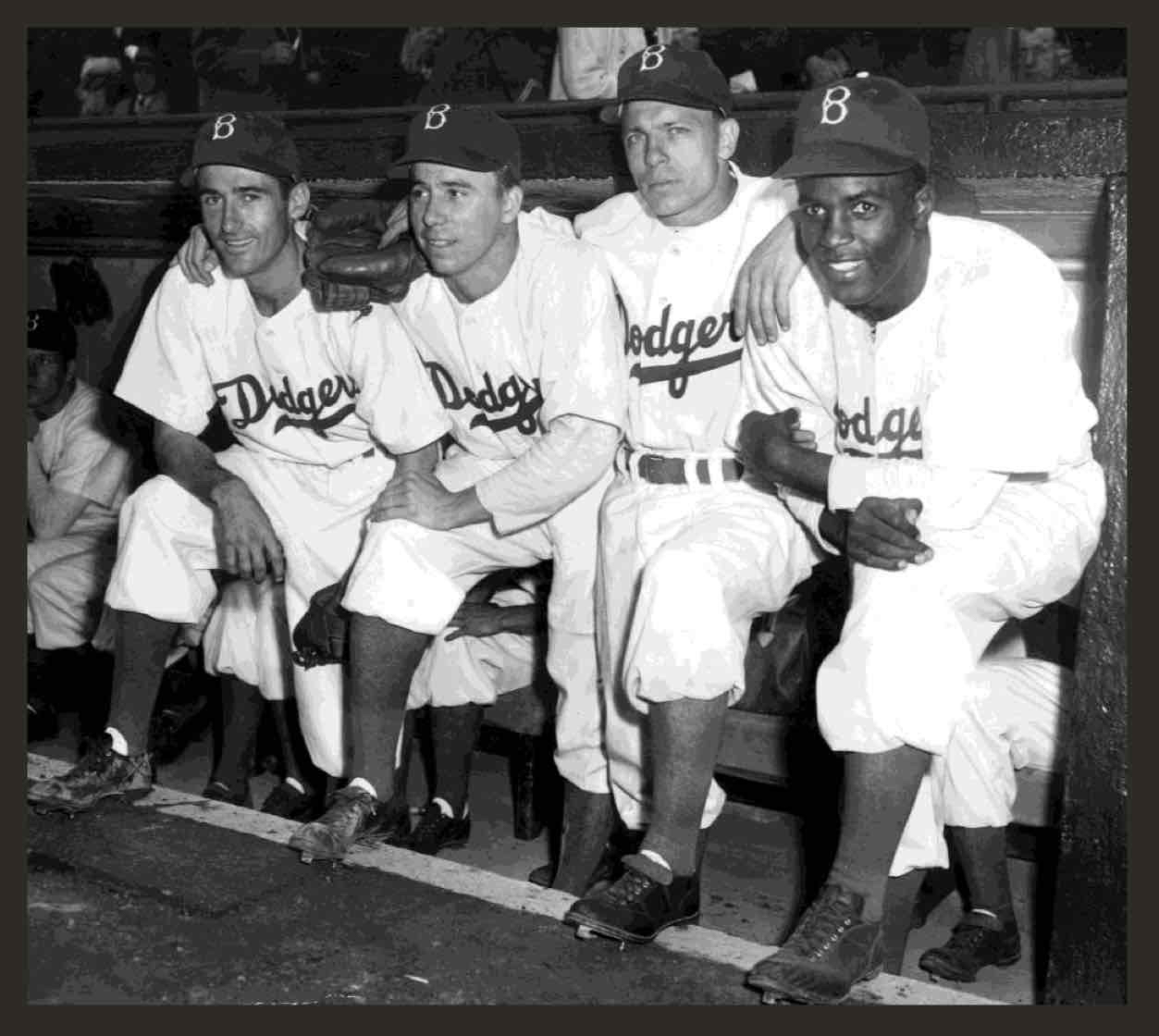
contact hypothesis
direct contact between groups reduces prejudice (Alport, 1954)
works best when certain criteria are met:
mutual interdependence of groups
equal status
personalized interactions between individuals
intergroup contact sanctioned by social norms