Atrial Fibrillation (Class 6)
 Call Kai
 Learn
 Practice Test
 Spaced Repetition
 Match
 Flashcards
 Knowt Play
1/40

There's no tags or description
Looks like no tags are added yet.
41 Terms
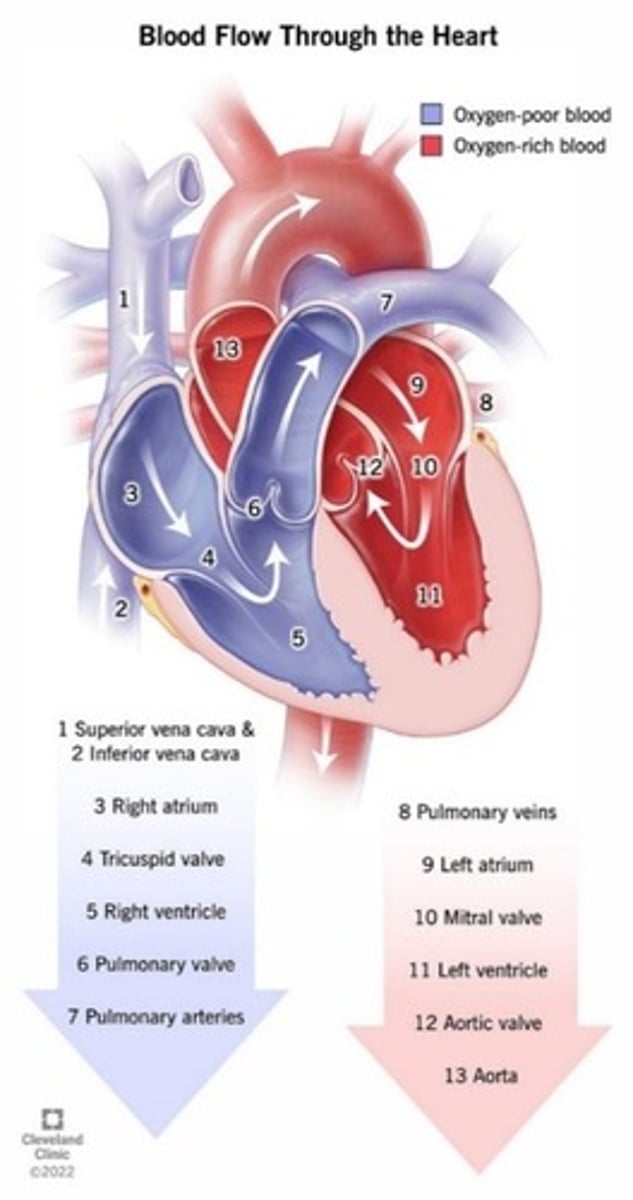
What is the role of each heart chamber in blood flow?
- Right atrium: Receives deoxygenated blood from the systemic circulation
- Right ventricle: Pumps deoxygenated blood to the pulmonary circulation
- Left atrium: Receives oxygenated blood from the pulmonary circulation
- Left ventricle: Pumps oxygenated blood to systemic circulation
Describe pathological features of atrial fibrillation (AFib).
Characterized by disorganized, rapid impulses in the atria
Involves multiple re-entrant pathways
- Results in a rapid, irregular atrial rate (400-600 bpm)
- Ventricular rate is variable (often irregular and rapid, 120-180 bpm)
ECG changes:
- P wave: Absent (only fibrillatory waves)
- Rhythm: Irregularly irregular
What are common risk factors for AFib?
Genetic factors:
- Advanced age
- Height
Lifestyle factors:
- Smoking
- Alcohol use
- Sedentary lifestyle
- Obesity
Chronic medical conditions:
- Hypertension
- Diabetes
- Cardiovascular disease (heart failure, coronary heart disease, valvular heart disease)
- Chronic kidney disease
- Obstructive sleep apnea
- Thyrotoxicosis (hyperthyroidism)
What are signs/symptoms of AFib?
Signs:
- Tachycardia
- ECG changes
- Hypotension
Symptoms (note: 20-30% asymptomatic):
- Palpitations
- Dyspnea
- Presyncope (dizziness, lightheadedness)
- Chest pain
- Fatigue
- Syncope
What criteria define each of the four substages of stage 3 AFib?
Paroxysmal (pAF)
- Intermittent and terminates spontaneously or with intervention within 7 days of onset
- Episodes may recur with variable frequency
- May be asymptomatic
Persistent
- Continuous and sustains for > 7 days
- Requires pharmacologic or electric cardioversion
Long-standing persistent
- Continuous for > 12 months in duration
Successful AFib ablation
- Freedom from AFib after percutaneous or surgical intervention
What criteria defines permanent (stage 4) AFib?
- Cease attempts to restore/maintain normal sinus rhythm (NSR)
- Joint decision made by patient and provider
What are two landmark clinical trials that shaped how AFib is managed? Discuss their key findings.
AFFIRM trial
- No significant difference in overall mortality between rate and rhythm control strategies
- Rhythm control does not improve outcomes and increases risk of hospitalizations and TdP
EAST-AFNET 4 trial
- Rhythm control associated with a reduction in primary composite (CV mortality, stroke, HF hospitalization, or ACS hospitalization) in early onset (< 1 year) AFib
- No difference in primary safety outcome (stroke, death, serious adverse effects)
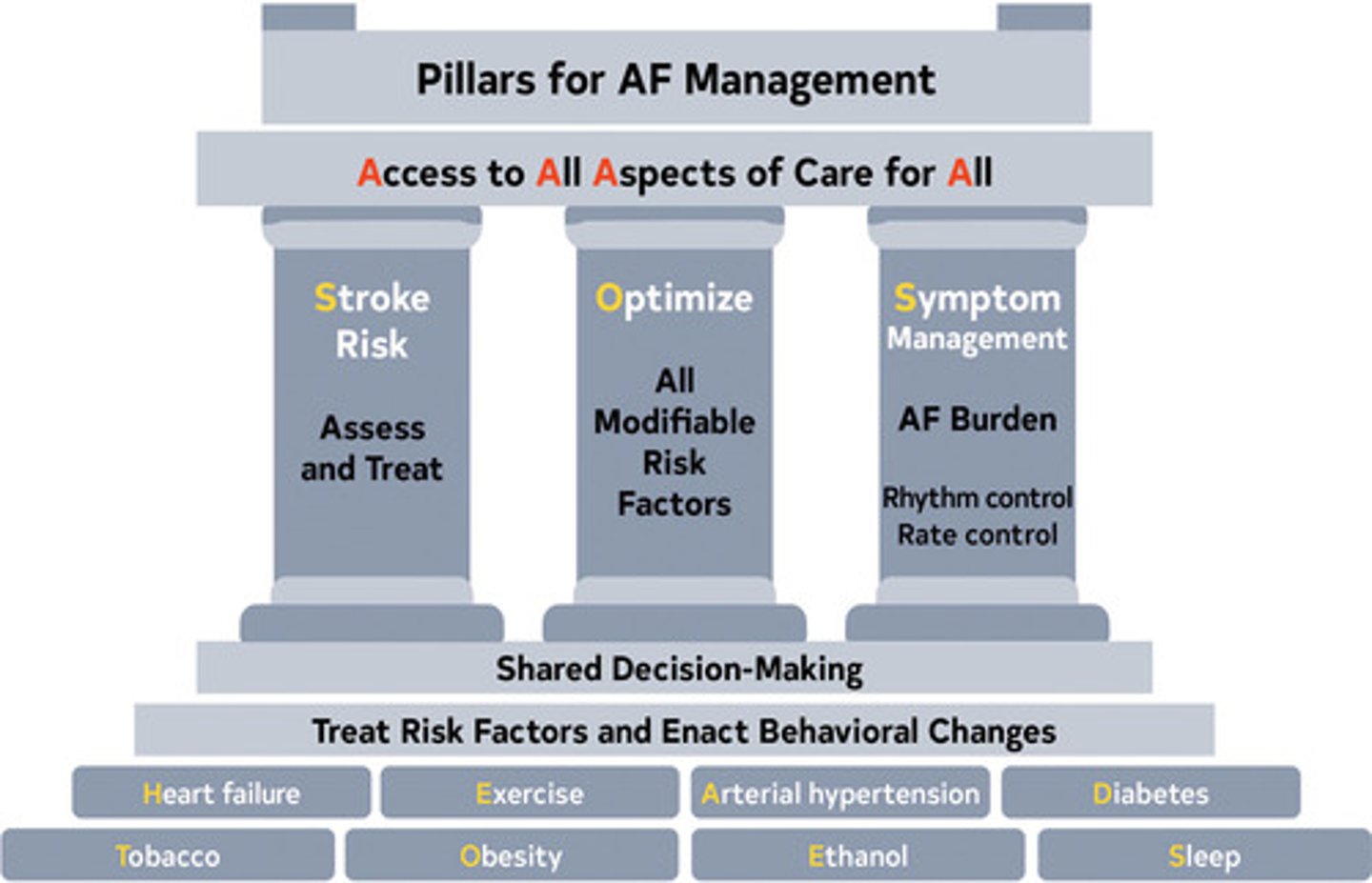
Describe the pillars for AFib management.
1. Stroke risk assessment and treatment
- Prevent thromboembolism/stroke
2. Optimize all modifiable risk factors
- Correct underlying etiology if possible
- Manage contributing factors
3. Symptom management using rate- and rhythm-control strategies
- Rate control in all patients
- Rhythm control in select patients
- Prevent adverse drug events and drug toxicities
What are the resting heart rate targets in symptomatic and asymptomatic patients with AFib?
Symptomatic: Resting HR < 80 bpm
Asymptomatic: Resting HR < 100 bpm
- Note: Left ventricular systolic function must also be preserved (EF > 40%)
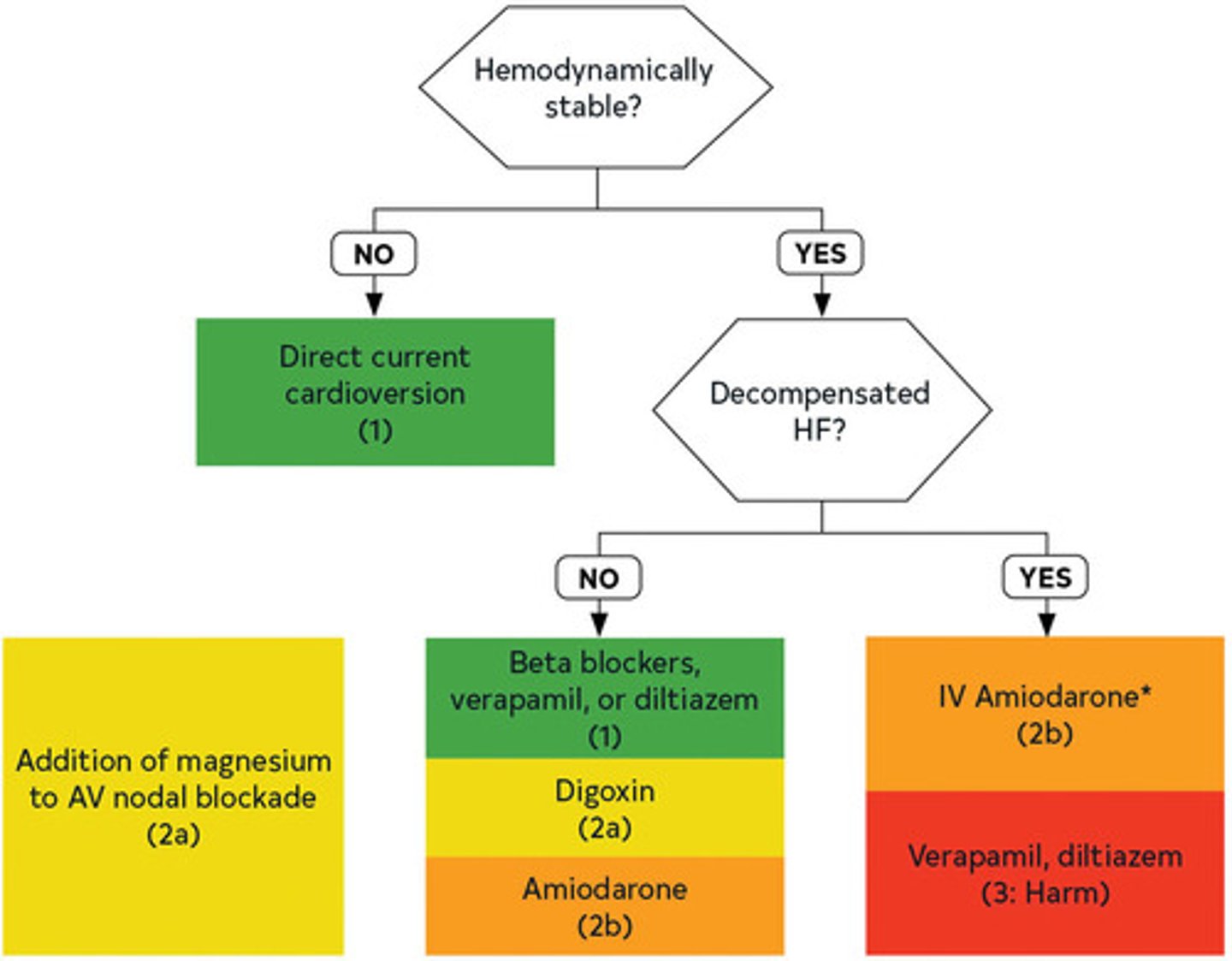
AHA 2024 Guidelines: Describe the treatment algorithm for acute rate control.
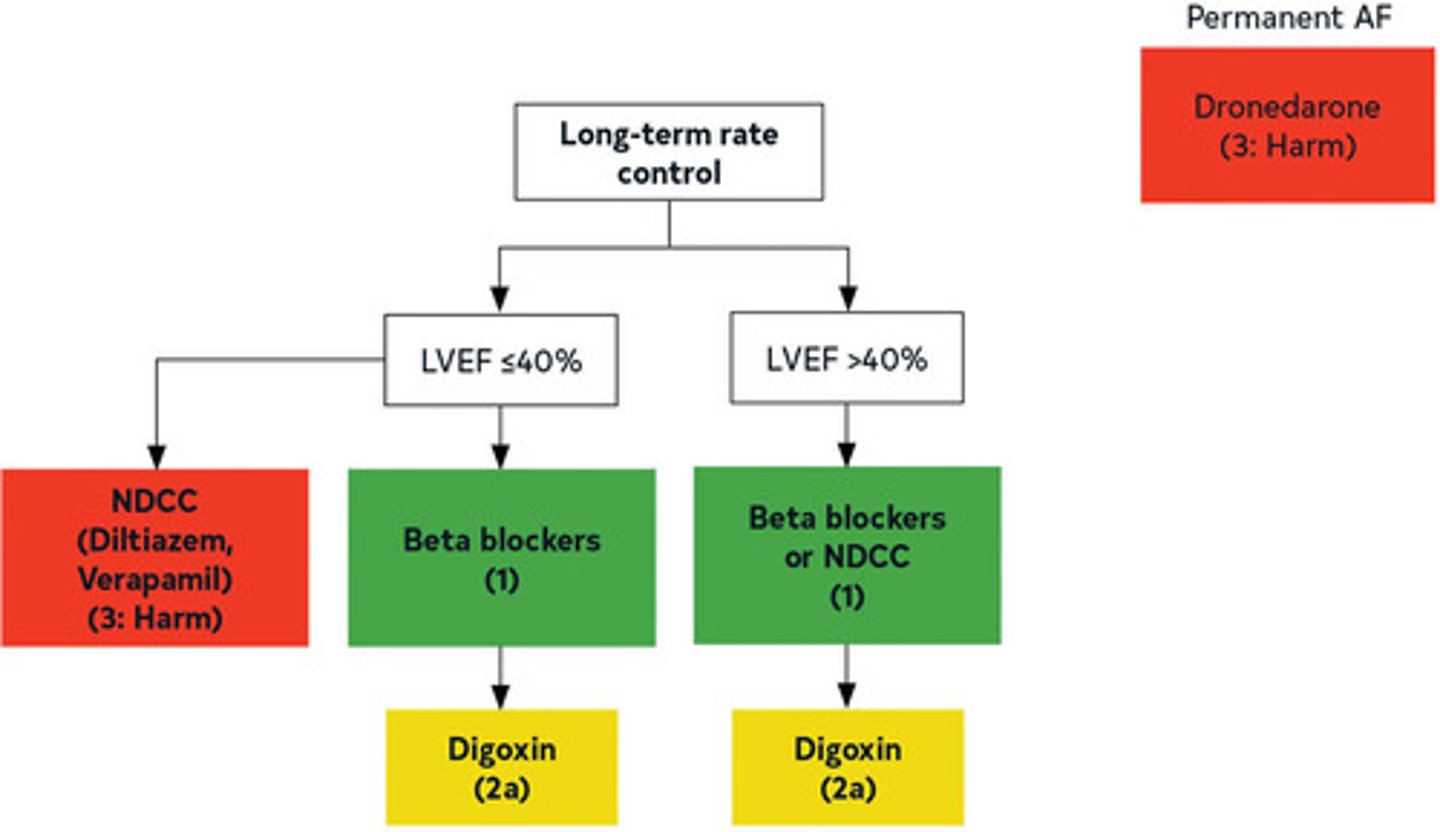
AHA 2024 Guidelines: Describe the treatment algorithm for long-term rate control.
How do β-blockers exert their rate controlling effects in AFib?
β-adrenergic receptor inhibition blocks sympathetic activity
- Slows AV nodal conduction
- Prolongs AV nodal refractoriness
Which β-blockers are recommended for rate control in AFib?
- Any β-blockers without ISA (avoid acebutolol, pindolol, and penbutolol)
- Preferred in patients with HF: Metoprolol succinate, carvedilol, and bisoprolol
When should caution be used in the initiation of β-blockers for rate control in AFib?
- Hypotension
- Bradycardia
- Bronchospasm
- Initiation in decompensated HF
How do non-DHP CCBs exert their rate controlling effects in AFib?
Block calcium channels, decreasing Ca2+ influx
- Slows AV nodal conduction (and HR)
- Prolongs AV nodal refractoriness
Also has negative inotropic properties
When should the use of non-DHP CCBs be avoided for rate control in AFib?
- Left ventricular dysfunction (HFrEF)
- Decompensated HF
What does the CHA2DS2-VASc score assess? How is it calculated?
Point-based system used to estimate stroke risk in patients with AFib
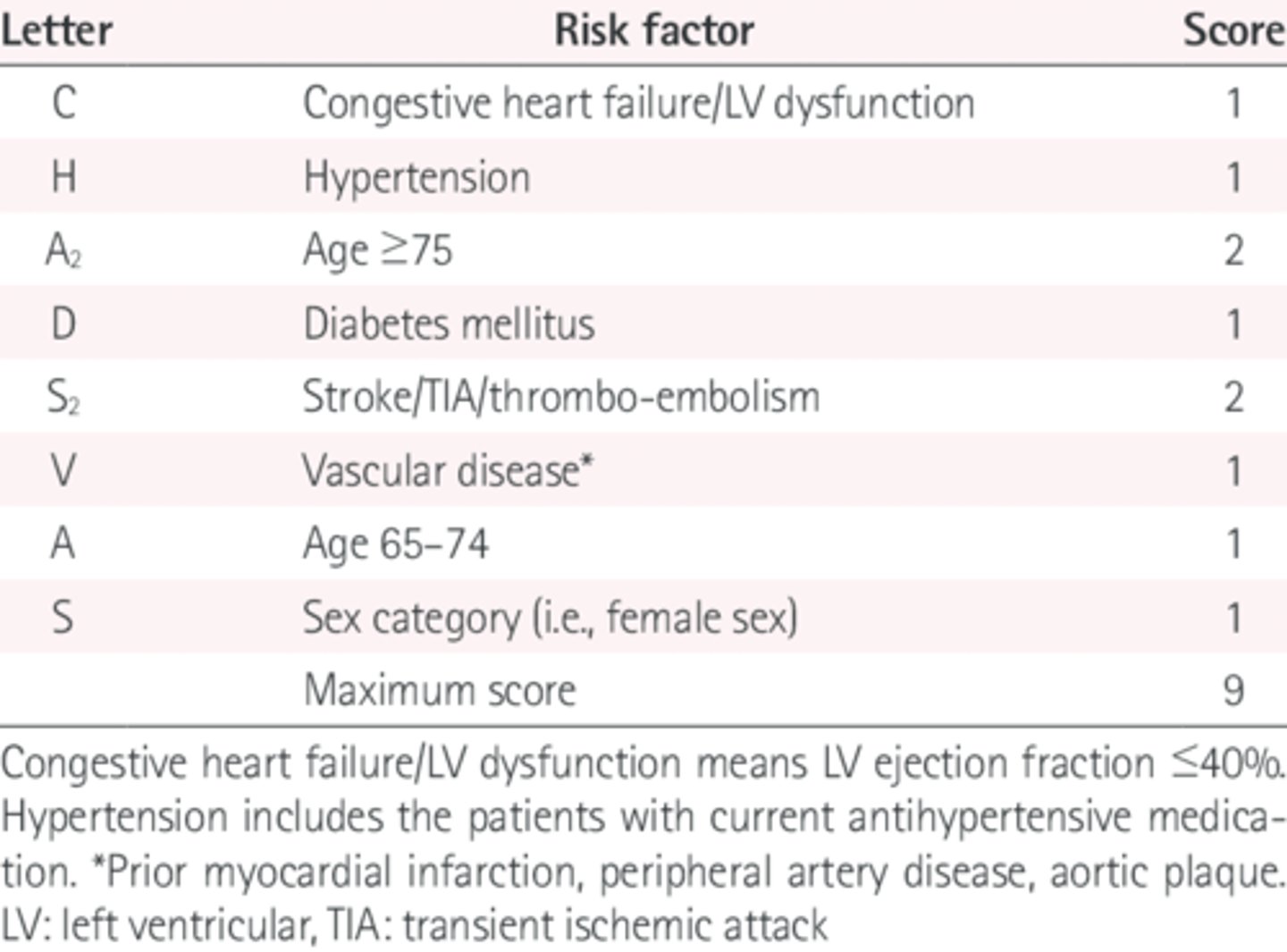
What are the anticoagulation recommendations based on a patient's CHA2DS2-VASc score?
No risk factors: CHA2DS2-CASc score of 0 (men) or 1 (women)
- No recommendation for antithrombotic
- May benefit from modifiable risk factor reduction
One moderate risk factor: CHA2DS2-CASc score of 1 (men) or 2 (women)
- Consider oral anticoagulation
High risk or >1 moderate risk factor: CHA2DS2-CASc score ≥2 (men) or ≥3 (women)
- Anticoagulation with warfarin or DOAC indicated
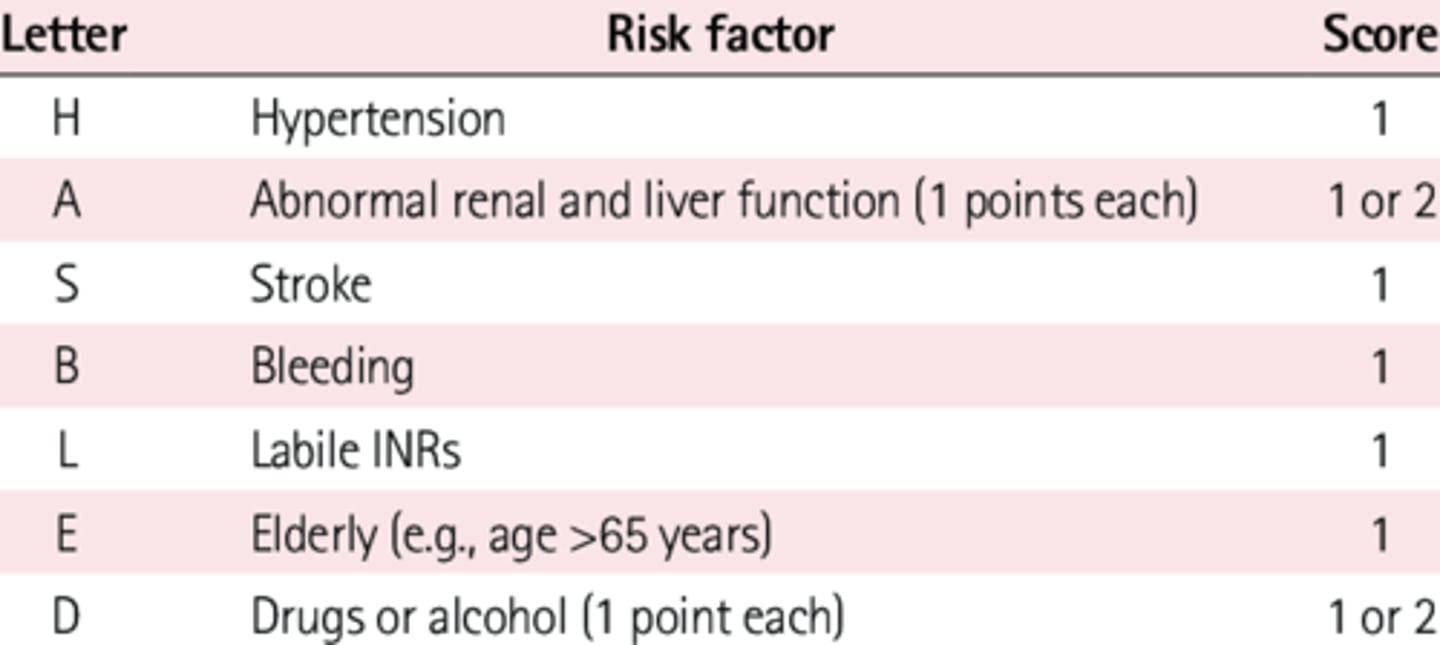
What does the HAS-BLED score assess? What score indicates high risk?
Point-based system used to assess the 1-year risk of major bleeding in patients on anticoagulation
- Score ≥ 3 indicates high risk for bleeding
- Helps identify modifiable risk factors, but should not be used to deny anticoagulation if otherwise indicated
What is the MOA for warfarin?
Inhibits vitamin K epoxide reductase complex 1 (VKORC1) in the liver
Blocks conversion of oxidized vitamin K to reduced vitamin K
Without reduced vitamin K, carboxylation (i.e., activation) of vitamin K-dependent clotting factors in the liver is prevented
- Procoagulant Factors II, VII, IX, and X
- Anticoagulant proteins C and S
What are some limitations to using warfarin as anticoagulation therapy?
Delayed anticoagulant effect
- Onset of action: 24-72 hours
Delayed offset
- Duration of action: 2-5 days
Requires frequent INR monitoring
- Narrow therapeutic window (black box warning for bleeding risk)
- Interpatient variability
Drug/nutrient interactions
What medications are considered direct oral anticoagulants (DOACs)?
Oral DTI:
- Dabigatran (Pradaxa)
Factor Xa inhibitors:
- Apixaban (Eliquis)
- Rivaroxaban (Xarelto)
- Edoxaban (Savaysa)
What are some advantages and limitations to using DOACs as anticoagulation therapy?
Advantages:
- Predictable and consistent response (less variability)
- Fixed dosing
- Less need for routine monitoring
- Fewer drug/nutrient interactions
Limitations:
- No defined monitoring
- Cost
How often is dabigatran dosed in AFib? Are renal dose adjustments required?
- 150 mg BID
- Avoid use if CrCl < 15 mL/min
What are examples (brand and generic) of direct factor Xa inhibitors? Describe their MOA.
Agents:
- Rivaroxaban (Xarelto)
- Apixaban (Eliquis)
- Edoxaban (Savaysa)
MOA: Selectively and directly inhibit free and clot-bound Factor Xa
- Blocks conversion of prothrombin (II) to thrombin (IIa)
- Prevents downstream conversion of fibrinogen to fibrin
How is apixaban dosed in patients with AFib? What are the criteria for dose reductions in AFib?
5 mg BID
Reduce dose to 2.5 mg BID if patient meets 2 out of 3 of the following criteria:
1. SCr ≥ 1.5
2. Age ≥ 80 years
3. Weight ≤ 60 kg
How is rivaroxaban dosed in patients with AFib?
20 mg daily with evening meal
How often is edoxaban dosed in patients with AFib? At what CrCl should its use be avoided?
60 mg daily
Avoid use if CrCl > 95 mL/min OR < 15 mL/min
Which DOAC must be given with food?
Rivaroxaban (Xarelto)
What is the preferred DOAC for ESRD?
Apixaban (Eliquis)
What landmark clinical trials have shaped approaches to anticoagulation in AFib?
RE-LY: Dabigatran vs. warfarin in AFib
- Dabigatran is superior in efficacy, but similar in safety
- Dabigatran associated with significantly increased risk of dyspepsia
ARISTOTLE: Apixaban vs. warfarin for stroke prevention in AFib
- Apixaban superior in efficacy and safety
ROCKET-AF: Rivaroxaban vs. warfarin for stroke prevention in AFib
- Both drugs similar in efficacy and safety
ENGAGE AF-TIMI 48: Edoxaban versus warfarin for stroke prevention in patients with AFib
- Edoxaban similar in efficacy, but superior in safety
Are DOACs or warfarin primarily recommended in AFib?
DOACs are preferred unless patient has history of...
- Moderate to severe rheumatic mitral stenosis
- Mechanical heart valve
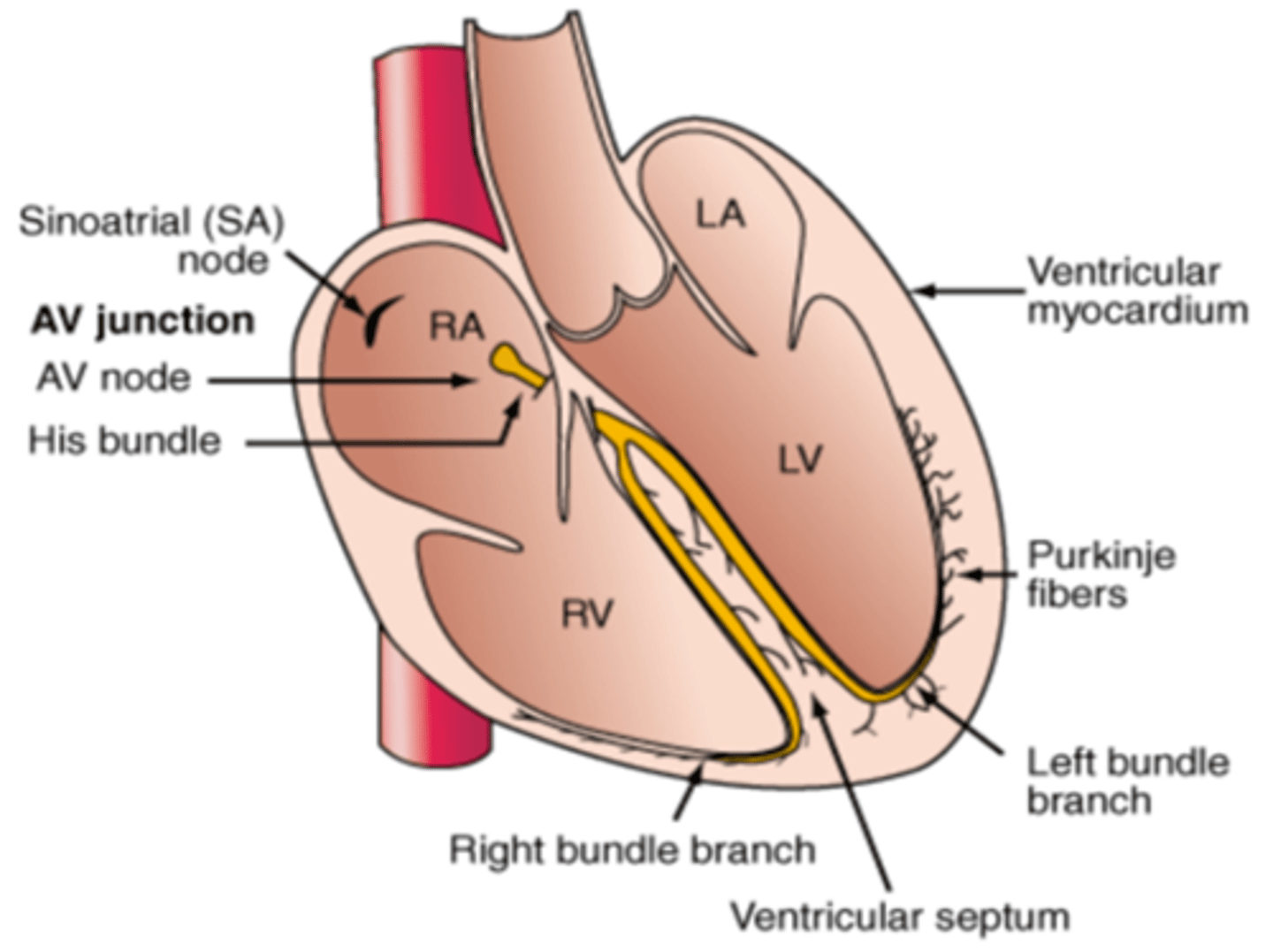
Describe the cardiac conduction system of the heart.
1. Electrical activity is initiated at the sinoatrial (SA) node
- Spontaneously generates action potentials
2. Wave of depolarization spreads through the atria
- Atrial contraction occurs
3. Current reaches atrioventricular (AV) node
- AV node slows conduction
- Ensures atrial contraction is completed before ventricles are activated
4. Continues down through Bundle of His (AV bundle)
- Splits into right and left bundle branches
5. Bundle branches further divide into Purkinje fibers
- Spread through ventricular walls, resulting in ventricular contraction
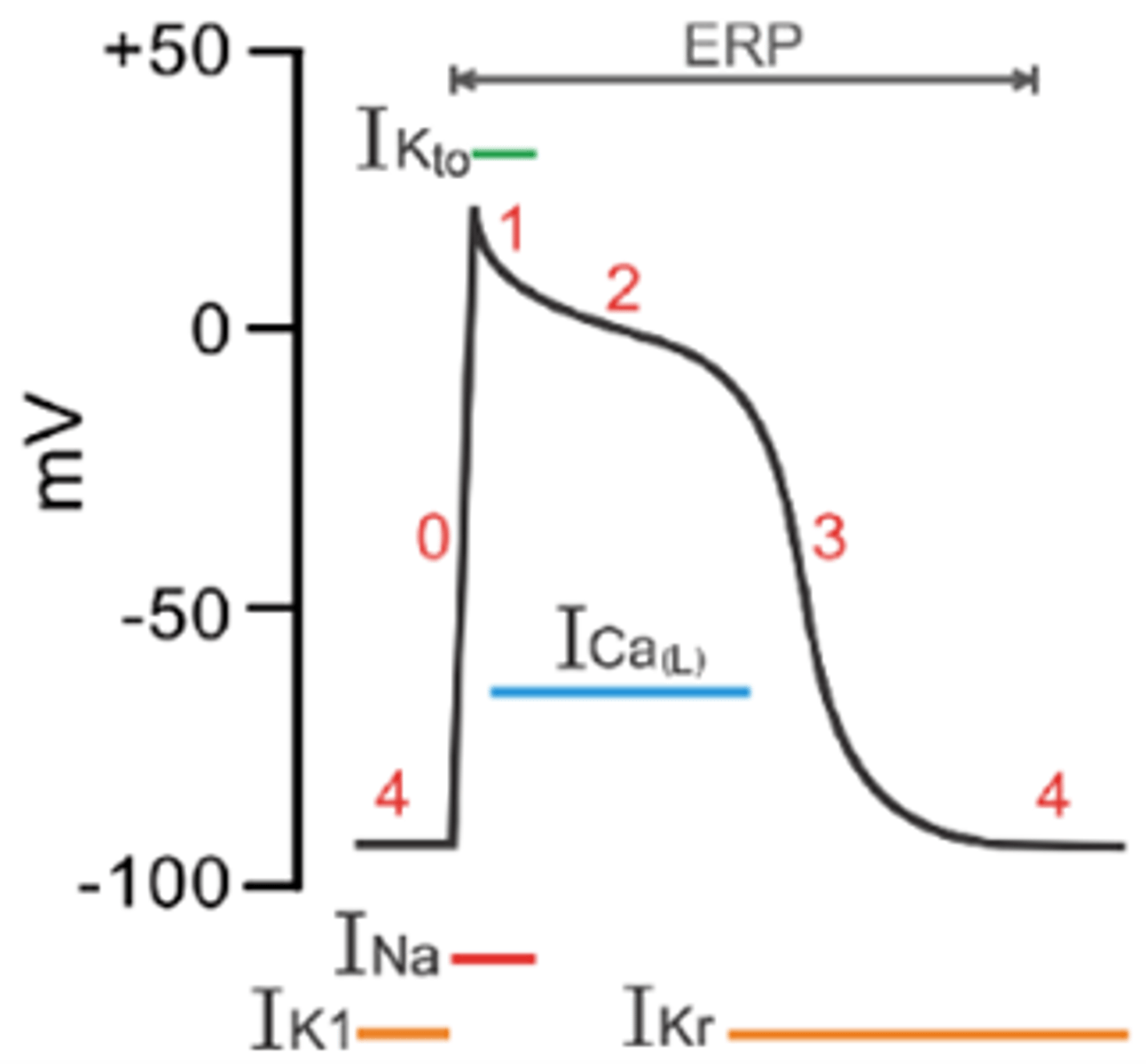
What triggers depolarization in atrial/ventricular tissue (i.e., non-nodal tissue)?
Phase 4: Stable resting membrane potential (RMP -90mV)
- Slow Na+ channels allow Na+ influx
Phase 0: Depolarization
- AP from neighboring cells results in membrane potential changes
- At -70mV, the fast Na+ channels open, causing rapid depolarization
Phase 1: Partial repolarization
- Closure of Na+ channels
- Opening of transient outward K+ channels
Phase 2: Plateau phase
- Outward K+ current is offset by slow, inward Ca2+ current
- Prolongs AP
Phase 3: Repolarization
- Closure of Ca2+ channels
- Increased K+ efflux restores RMP
What indications warrant the initiation of rhythm control therapy in AFib?
- Symptomatic from AFib (despite attempt at rate control)
- Rate control strategy unsuccessful or intolerable
- Heart failure with reduced ejection fraction (HFrEF)
- Young or newly diagnosed patients
- Low chance of recurrence (e.g., first episode or precipitated by acute illness)
- Tachycardia-mediated cardiomyopathy
- Patient preference
What antiarrhythmic medications can be used for rhythm control in AFib?
Class IA
- Agents: Quinidine, procainamide, disopyramide
- Rarely used
Class IC
- Agents: Flecainide, propafenone
- Often used as a “pill-in-the-pocket” method for self-termination of AFib
Class III
- Amiodarone (most common)
- Dronedarone
- Dofetilide
- Sotalol
What are contraindications for the use of dofetilide in AFib?
- Concurrent use with HCTZ
- Baseline QTc > 440 msec
- CrCl < 20 mL/min
What are contraindications for the use of sotalol in AFib?
- Baseline QTc > 450 msec
- CrCl < 40 mL/min
- Serum K+ < 4 mEq/L
- Sick sinus syndrome
What pharmacologic cardioversion agent is preferred based on structural heart disease (SHD) status?
No SHD:
- Class IC: Flecainide or propafenone
- Class III: Amiodarone, dronedarone, sotalol, or dofetilide
Coronary artery disease:
- Amiodarone
- Dronedarone
- Sotalol
- Dofetilide
Heart failure:
- Amiodarone
- Dofetilide
When is direct current cardioversion indicated?
How long must anticoagulation therapy be continued following electrical/pharmacological cardioversion?
Always continue warfarin/DOAC for at least 4 weeks afterwards