MB1 M3
 Call Kai
 Learn
Learn Practice Test
 Spaced Repetition
 Match
Match Flashcards
 Knowt Play
1/99

There's no tags or description
Looks like no tags are added yet.
Name | Mastery | Learn | Test | Matching | Spaced | Call with Kai | Chat |
|---|
No analytics yet
Send a link to your students to track their progress
100 Terms
A. Primordial Rationale:
Primordial - health policies
Primary - health promotion and protection
ex: HPV vaccine for cervical cancer
Secondary - early disease detection
Tertiary - improves quality of life
Sharmaine works with a local government to implement smoke-free ordinances, improve access to healthy foods, and create community exercise programs to prevent the development of risk factors. The interventions described represent which level of preventive care?
A. Primordial
B. Primary
C. Secondary
D. Tertiary
B. I, II, IV
A Level 2 General Hospital does NOT have the following service,
EXCEPT:
I. Pharmacy
II. Tertiary Clinical Laboratory
III. Blood bank
IV. General ICU
A. I, II, III, IV
B. I, II, IV
C. I, III
D. I, II, III
D. Docetaxel
Which of the following requires sterile compounding procedures that protect both the compounded preparation and the compounding personnel?
A. Total Parenteral Nutrition
B. Oral Potassium Chloride
C. Cefuroxime
D. Docetaxel
A. Category A Rationale:
Category A - (anakan) basic outpatient
Category B - (birth) long-term nursing
Category C - (check up) diagnostic testing
Category D - (dialysis) specialized outpatient
A pharmacist is assigned to a healthcare facility that provides basic outpatient consultation, emergency services, and normal delivery services without operating as a hospital. The facility is identified as an infirmary and birthing home. Under which category of healthcare facility is it classified?
A. Category A
B. Category B
C. Category C
D. Category D
C. II, III, IV Rationale:
San Lazaro hospital - infectious disease
Tala hospital - leprosarium (chronic disease)
The following hospitals specialize in maternal and neonatal care EXCEPT:
I. Fabella Memorial Hospital
II. San Lazaro Hospital
III. Tala Hospital
IV. National Children’s Hospital
A. I
B. I, II, III
C. II, III, IV
D. I, II, III, IV
A. Honorary
Roberto is not employed by the hospital but is being recognized for his significant contributions to its research activities. What type of appointment may be granted to him?
A. Honorary
B. Courtesy
C. Attending
D. Resident
A. Glucose, sodium, potassium, chloride, and citrate
Which of the following combinations correctly represents the essential components of ORS?
A. Glucose, sodium, potassium, chloride, and citrate
B. Glucose, calcium, magnesium, and phosphate
C. Sodium, calcium, bicarbonate, and phosphate
D. Glucose, amino acids, potassium, and bicarbonate
C. A Physician representing a clinical department
According to Department of Health (DOH) guidelines, which of the following is considered a voting member of the Pharmacy and Therapeutics Committee (PTC)?
A. The Chief Nurse
B. The Hospital Administrator
C. A Physician representing a clinical department
D. The PhilHealth Representative
B. 16 g x ½ in Rationale: the higher the gauge = the smaller the diameter
A pharmacist is preparing materials for a surgical procedure. Which of the following needles has the largest diameter?
A. 23 g x 1 in
B. 16 g x ½ in
C. 21 g x 1 ½ in
D. 25 g x 1 in
A. 1 statement is incorrect (Statement II)
The central pharmacy conducts its drug inventory every 15th of the month. Which of the following transactions will DECREASE the “stock-on-hand” of Drug XYZ.
I. Dispensing of Drug XYZ during a routine fill
II. Return of Drug XYZ to pharmacy from the nursing unit
III. Return of Drug ABC to the supplier after a recall order
A. 1 statement is incorrect
B. 2 statements are incorrect
C. 3 statements are incorrect
D. All statements are correct
B. Core List Rationale:
Core list - always availables
Complementary list - special meds requiring specific medicines
Open formulary - wide range of drugs
Closed formulary - restricted list of approved meds
A list of drugs that are available at all times in adequate quantities and appropriate dosage forms to meet most healthcare needs is called:
A. Complementary List
B. Core List
C. Open Formulary
D. Closed Formulary
A. First statement is correct
The Pull system of pharmaceutical supply chain involves: Pharmacy units request stock based on actual consumption needs.
While, central pharmacy determines and distributes stock levels to all units.
A. First statement is correct
B. Second statement is correct
C. Both statements are correct
D. Both statements are incorrect
C. III, IV
The following describe the floor stock distribution method EXCEPT:
I. Predetermined list of medications available at present patient care area
II. Medications stored in the nursing stock
III. Safest and most accepted method
IV. Patient medications compounded and dispensed in the pharmacy
A. I, II, IV
B. I, III
C. III, IV
D. I, II, III, IV
D. Both statements are incorrect
Rationale: TPN is for long-term, while PPN is for short-term.
Which of the following statements correctly describes Total Parenteral Nutrition (TPN) and Partial Parenteral Nutrition (PPN)?
Statement I: TPN provides complete nutritional requirements for short-term use.
Statement II: PPN provides partial nutritional support for long-term use.
A. Statement I is incorrect
B. Statement II is incorrect
C. Both statements are correct
D. Both statements are incorrect
C. Vitamins (BUD is 24 hours)
Which component of a TPN admixture is considered the least chemically stable?
A. Carbohydrates
B. Proteins
C. Vitamins
D. Lipids
A. Ethical drug Rationale:
Mefenamic acid 250mg is the dose for OTC, while 500mg is an Rx dose.
Naproxen 220mg is an OTC dose, 250, 375, and 500mg are Rx doses.
Ibuprofen 200mg is an OTC dose, while 400, 600, and 800ng are Rx doses.
Melanie visits her physician complaining of back pain. She is prescribed mefenamic acid 500 mg, a nonsteroidal anti-inflammatory drug (NSAID). This medication is classified as:
A. Ethical drug
B. Non-prescription drug
C. Dangerous drug
D. Over-the-counter
B. II
*BEQ - Zoledronic acid is an example of a biphosphonate
A patient presents a prescription for a bisphosphonate. Which of the following ancillary labels should be attached to the medication container and emphasized during counseling?
I. May cause drowsiness
II. Do not chew or crush. Swallow whole.
III. For external use only
IV. Shake well before use
A. I, II
B. II
C. II, III
D. I, II, III, IV
B. Azithromycin 500 mg (Zithromax)
Which part of the prescription is considered the “heart” of the prescription?
A. Rx
B. Azithromycin 500 mg (Zithromax)
C. July 15, 2026
D. Take 1 tablet once a day for 3 days

A. Left ear
A patient with an ear infection presents a prescription with the following signa: “Instill 2 gtts a.s. h.s. prn.” The abbreviation “a.s.” refers to:
A. Left ear
B. Right ear
C. Left eye
D. Right eye
B. 1 year
A patient presents a valid prescription for morphine sulfate tablets. After dispensing the medication, the pharmacist retains the original prescription in compliance with legal requirements. For how long should the dangerous drug prescription be retained by the pharmacy?
A. 6 months
B. 1 year
C. 2 years
D. 5 years
D. Valid
Evaluate the following prescription based on generic prescribing requirements:
A. Erroneous
B. Violative
C. Impossible
D. Valid

C. III and IV are incorrect
Erroneous Prescription
I. Brand name precedes generic name
II. Generic name is in parenthesis
III. “No substitution”
IV. Only generic name is written but not legible
A. I and III are incorrect
B. I and II are incorrect
C. III and IV are incorrect
D. I, II, and III are incorrect
A. Statement I is incorrect
Evaluate the following statements regarding medication safety practices:
Statement I: The use of trailing zeros for doses expressed as whole numbers is recommended.
Statement II: A zero should be placed before a decimal point when the dose is less than one whole unit.
A. Statement I is incorrect
B. Statement II is incorrect
C. Both statements are correct
D. Both statements are incorrect
A. Adverse Drug Event (ADE)
A 55-year-old male is enrolled in a Phase III clinical trial for a newly developed oral anticoagulant. Three weeks into the trial, the patient slips on a wet floor at a grocery store, sustains a fractured radius, and goes to the emergency department. The principal investigator of the trial documents the fracture in the patient’s record and reports it to the trial sponsor, even though the slip was purely environmental.
Based on standard drug monitoring definitions, how is this fractured radius best classified?
A. Adverse Drug Event (ADE)
B. Adverse Drug Reaction (ADR)
C. Side effect
D. Medication error
B. Precaution Rationale:
Precaution - special care instructions
Warning - potential risks or adverse effect
Contraindication - condition in which can cause harm
Indication - approved condition, disease or purpose for which a drug is used.
A pharmacist dispenses an oral suspension and instructs the patient: “Shake the bottle well before each use.” This instruction is classified as:
A. Warning
B. Precaution
C. Contraindication
D. Indication
A. Warning
A label on a prescribed antihistamine state: “May cause drowsiness. Avoid driving or operating machinery.” This instruction is best classified as:
A. Warning
B. Precaution
C. Contraindication
D. Indication
C. Dispensing Error
A pharmacist receives a prescription for Amlodipine 5 mg tablets, take one tablet once daily. While filling the prescription, a pharmacy staff member accidentally selects Amlodipine 10 mg tablets because the packaging looks similar. The pharmacist fails to detect the mistake during the final check, and the patient receives the incorrect strength.
Based on medication safety definitions, this incident is best classified as:
A. Prescribing Error
B. Transcribing Error
C. Dispensing Error
D. Monitoring Error
D. Both statements are false Rationale:
Physical incompatibility - w/o chemical reaction, example: liquefaction
Chemical incompatibility - caused by a chemical reaction, example: photolysis/photodegradation
Evaluate the statements:
Statement I: Physical incompatibilities involve changes in physical properties of drugs or excipients without chemical reaction. An example is photochemical degradation.
Statement II: Chemical incompatibilities involve chemical reactions between substances leading to degradation or new product formation. An example is liquefaction.
A. Statement I is true; Statement II is false
B. Statement I is false; Statement II is true
C. Both statements are true
D. Both statements are false
A. Alum Rationale: Efflorescent hydrates
Na2CO3
Sulfates
Phosphates
Alum
Citric acid
Which of the following compounds are known efflorescent hydrates that lose water of crystallization upon exposure to air?
A. Alum
B. Silica
C. Calcium hydroxide
D. Phenacetin
D. Eutexia Rationale:
Eutexia - lowering of each other’s melting points
Hygroscopy - absorbs but does NOT dissolve
Deliquescence - absorbs AND dissolve
Efflorescence - release moisture and dissolves
A compounding pharmacist is preparing a topical preparation and notices that when menthol and camphor are weighed together in the same mortar, the mixture becomes semi-liquid even without adding any solvent. The pharmacist recalls that this change is due to a phenomenon involving interactions between substances based on their melting points. This phenomenon is referred to as:
A. Hygroscopy
B. Deliquescence
C. Efflorescence
D. Eutexia
B. Cementation Rationale:
Acacia + Bismuth subnitrate = Cementation (ABC)
Acacia + Ferrous salts = Gelatinization (AFG)
A pharmacist prepares a liquid mixture containing bismuth subnitrate and acacia as a suspending agent. After a short period of standing, the preparation becomes thick, less uniform, and shows reduced dispersion of the drug particles due to interaction between the colloidal system and the suspended solid. This phenomenon is best classified as:
A. Gelatinization
B. Cementation
C. Racemization
D. Polymerization
B. Probable Rationale:
not PROven = PRObable
A patient taking warfarin is started on metronidazole. The pharmacist notes that this combination is very likely to produce a clinically significant drug interaction, although it has not yet been proven in clinical studies.
A. Established
B. Probable
C. Possible
D. Likely
D. No interaction is likely to occur because systemic absorption of topical miconazole is minimal
A patient taking a medication that is primarily metabolized by CYP2C9 is prescribed topical miconazole for a fungal skin infection. Which pharmacokinetic effect is most likely to occur?
A. The plasma levels of miconazole will likely decrease
B. The plasma levels of miconazole will likely increase
C. The plasma levels of the other drug will likely increase
D. No interaction is likely to occur because systemic absorption of topical miconazole is minimal
C. Decrease absorption of the vitamin Rationale:
Orlistat prevents the hydrolysis of fats and reduces its absorption, since Vit E is a fat-soluble vitamin, it blocks this process.
A 35-year-old woman is taking orlistat for weight loss. She tells the pharmacist that she also takes Myra-E® every morning with breakfast because she wants to maintain healthy skin. Which is the most clinically significant interaction the pharmacist should explain?
A. Decrease absorption of Orlistat
B. Increase absorption of Orlistat
C. Decrease absorption of the vitamin
D. Increase absorption of the vitamin
C. The warfarin–trimethoprim/sulfamethoxazole interaction is pharmacokinetic, while the warfarin–aspirin interaction is pharmacodynamic.
A 68-year-old man with atrial fibrillation has been taking warfarin for several years. He recently started trimethoprim- sulfamethoxazole for a urinary tract infection. A few days later, his INR increases significantly. At the same time, he also takes aspirin
daily for cardiovascular protection, further increasing his risk of bleeding. Which statement correctly describes the interactions in this patient?
A. Both interactions are pharmacokinetic.
B. Both interactions are pharmacodynamic.
C. The warfarin–trimethoprim/sulfamethoxazole interaction is pharmacokinetic, while the warfarin–aspirin interaction is pharmacodynamic.
D. The warfarin–trimethoprim/sulfamethoxazole interaction is pharmacodynamic, while the warfarin–aspirin interaction is pharmacokinetic.
B. Milk increases gastric pH, causing the enteric coating to dissolve prematurely in the stomach
A patient purchases over-the-counter enteric-coated bisacodyl tablets for occasional constipation. They ask the pharmacist if they can take the tablet with a warm glass of milk before bedtime to help them sleep. The pharmacist strongly advises taking the medication with water instead, and avoiding milk within one hour of the dose. What is the primary pharmacological rationale for this advice?
A. Calcium in the milk binds to bisacodyl, forming an insoluble complex that prevents drug action.
B. Milk increases gastric pH, causing the enteric coating to dissolve prematurely in the stomach.
C. Milk delays gastric emptying, prolonging the onset of the laxative effect.
D. The fat content in milk significantly increases the systemic absorption of bisacodyl, leading to toxicity.
B. Increased anticoagulant effect of warfarin
A patient stabilized on warfarin therapy is prescribed a broad- spectrum antibiotic for infection. The pharmacist warns the patient about possible changes in anticoagulant effect. What is the most likely clinical outcome of this drug interaction?
A. Decreased anticoagulant effect of warfarin
B. Increased anticoagulant effect of warfarin
C. No significant interaction occurs
D. Complete inactivation of warfarin
A. Gastrointestinal absorption
A 28-year-old female is prescribed oral ciprofloxacin for an uncomplicated urinary tract infection. Three days later, she returns to the clinic reporting no improvement in her dysuria and frequency. During medication counseling, she mentions taking the pill every morning with her cereal and a large glass of milk. This specific dietary habit reduces the antibiotic’s efficacy by directly impairing which of the following pharmacokinetic processes?
A. Gastrointestinal absorption
B. Hepatic metabolism
C. Systemic distribution
D. Renal excretion
D. III, IV
A drug is administered orally. Which of the following drugs is most likely to decrease its therapeutic effect by altering gastrointestinal motility or absorption?
I. Hyoscyamine
II. Opioids
III. Metoclopramide
IV. Senna
A. I, II
B. I, III
C. I, II, III
D. III, IV
D. III, IV
The following drugs may decrease the plasma concentration of other drugs when taken concomitantly, EXCEPT:
I. Carbamazepine
II. Rifampicin
III. Cimetidine
IV. Erythromycin
A. I, II
B. I, III
C. I, II, III
D. III, IV
B. Decreased renal excretion of the primary drug
A patient is prescribed a renally cleared antibiotic. To prolong its duration of action and enhance its therapeutic effect, the prescriber adds a second medication known to alter renal transport. What is the most likely pharmacokinetic outcome of adding this second agent?
A. Increased active tubular secretion of the primary drug
B. Decreased renal excretion of the primary drug
C. Increased hepatic biotransformation of the primary drug
D. Decreased gastrointestinal absorption of the primary drug
C. Synergism
Two drugs are administered together and produce an effect greater than the sum of their individual effects. This type of pharmacodynamic interaction is classified as:
A. Additive
B. Potentiation
C. Synergism
D. Antagonism
D. III, IV
Which of the following drug combinations are examples of potentiation, EXCEPT:
I. Levodopa + Carbidopa
II. Ampicillin + Sulbactam
III. Sulfadoxine + Pyrimethamine
IV. Sulfamethoxazole + Trimethoprim
A. I, II
B. I, III
C. I, II, III
D. III, IV
C. Aztreonam (β-lactam antibiotic, does not inhibit β-lactamase enzymes)
Which is NOT a β-lactamase inhibitor?
A. Tazobactam
B. Sulbactam
C. Aztreonam
D. Clavulanic acid
A. Chemical Antagonism
A patient receiving heparin therapy develops signs of excessive anticoagulation and bleeding. The physician administers protamine sulfate, which directly binds to heparin and neutralizes its effect. This drug interaction is an example of:
A. Chemical Antagonism
B. Physical Antagonism
C. Pharmacokinetic Antagonism
D. Physiological Antagonism
D. Physiological Antagonism
A patient develops an acute hypersensitivity reaction characterized by bronchoconstriction, hypotension, and flushing due to histamine release. Epinephrine is administered and reverses these effects by stimulating adrenergic receptors and counteracting histamine-mediated responses.
This drug interaction is an example of:
A. Chemical Antagonism
B. Physical Antagonism
C. Pharmacokinetic Antagonism
D. Physiological Antagonism
B. hyperkalemia
A 68-year-old man with hypertension and diabetic nephropathy is prescribed enalapril. During a follow-up visit, laboratory tests reveal an electrolyte abnormality despite stable renal function. Which adverse effect is most likely associated with this medication?
A. hypokalemia
B. hyperkalemia
C. hyponatremia
D. hypocalcemia
B. Increased risk of bleeding due to additive antiplatelet effects
A patient taking aspirin regularly consumes a milk-based herbal supplement containing ginkgo biloba. The pharmacist warns the patient about a potential clinically significant interaction between the two agents. What is the most likely outcome of this interaction?
A. Chelation occurs, reducing drug absorption
B. Increased risk of bleeding due to additive antiplatelet effects
C. Decreased risk of bleeding due to antagonistic effects
D. Increased therapeutic effect of ginkgo biloba without adverse effects
A. Hypertensive crisis due to excessive catecholamine accumulation
A. Hypertensive crisis due to excessive catecholamine accumulation A patient taking a monoamine oxidase inhibitor (MAOI) for depression also takes St. John’s wort without consulting a physician. The pharmacist warns about a potentially serious drug–herb interaction affecting central neurotransmitters. What is the most likely clinical outcome of this combination?
A. Hypertensive crisis due to excessive catecholamine accumulation
B. Serotonin syndrome due to excessive serotonergic activity
C. Increased antidepressant effect due to enzyme induction
D. Orthostatic hypotension due to enhanced MAOI effect
B. Precipitant
A 60-year-old woman taking simvastatin for hyperlipidemia is prescribed clarithromycin for community-acquired pneumonia. A few days later, she develops severe muscle pain and elevated creatine kinase levels. In this interaction, clarithromycin is the:
A. Object
B. Precipitant
C. Active
D. Inactive
A. Toxicity
A noxious, unintended response that occurs when a drug is administered at doses higher than those normally used in patients is classified as:
A. Toxicity
B. Side effect
C. Adverse drug reaction
D. Medication error
B. I, III
All of the following statements describe Type B (Bizarre) adverse drug reactions, EXCEPT:
I. Dose-dependent
II. Pharmacologically unrelated
III. Predictable
IV. Idiosyncratic
A. I, II
B. I, III
C. I, IV
D. I, II, III
C. Anaphylaxis following Penicillin administration (Type B)
Which is NOT an example of type A (Augmented) adverse drug reaction:
A. Drowsiness after taking Diphenhydramine
B. Constipation after taking Verapamil
C. Anaphylaxis following Penicillin administration
D. Excessive bleeding after Aspirin use
A. Type I (allergic reaction)
patient with rheumatic heart disease was advised to be given an intramuscular injection of benzyl penicillin. Upon administration, patient develops difficulty of breathing, wheezing, urticaria, and hypotension. Patient was then brought to the emergency department and administered with epinephrine intramuscularly.
What type of hypersensitivity reaction was described?
A. Type I
B. Type II
C. Type III
D. Type IV
C. I, II, III Rationale:
IV. is type IV (delayed)
Cy2toxic, IgE (1), IgM (2)
Which of the following statements about Type II hypersensitivity reaction is/are correct?
I. Cytotoxic
II. Mediated by IgE or IgM antibodies
III. Example is blood dyscrasias
IV. Cell-mediated
A. I, II
B. I, III
C. I, II, III
D. I, II, III, IV
D. II, III, IV
Rationale:
Methimazole - Aplasia cutis
Phenytoin - Fetal hydantoin syndrome
Tetracycline - Teeth discoloration
Thalidomide - Phocomelia
Warfarin - Fetal warfarin syndrome
Alcohol - Fetal alcohol syndrome
Determine which of the following Type D (Delayed) adverse drug reaction associations is/are INCORRECT:
I. ACE inhibitor – Renal Dysgenesis
II. Methimazole – Fetal Hydantoin Syndrome
III. Tetracycline – Phocomelia
IV. Warfarin – Fetal alcohol syndrome
A. I, II
B. I, III
C. I, IV
D. II, III, IV
C. Both statements are true
Type A (Augmented) reactions are related to the drug’s pharmacologic action and are dose-dependent. An example is dry cough associated with ACE inhibitors.
While, Type B (Bizarre) reactions are less common, not dose-dependent, and are unrelated to the drug’s pharmacologic action. An example is red man syndrome caused by vancomycin.
A. Statement I is true; Statement II is false
B. Statement I is false; Statement II is true
C. Both statements are true
D. Both statements are false
A. Type C
A phenomenon known as “Monday disease” occurs in workers repeatedly exposed to nitrates, where tolerance develops and symptoms return after a nitrate-free interval. This adverse drug reaction is classified as: A. Type C B. Type A C. Type D D. Type B
D. Type F
A patient was prescribed an antibiotic for 7 days but stopped taking the medication after 4 days because the symptoms had already resolved. Two weeks later, the infection recurred, and culture results showed reduced susceptibility of the organism to the same antibiotic. This outcome is best classified as:
A. Type C
B. Type D
C. Type E
D. Type F
A. Category C
According to the FDA pregnancy risk classification, which category is assigned when animal studies show fetal risk, but there are no adequate and well-controlled studies in humans?
A. Category C
B. Category A
C. Category D
D. Category B
C. Sevoflurane
Rationale:
Desflurane - De pwede sa asthma
Enflurane - for asthma
Sevoflurane - S for sanggol
Isoflurane - i for isip (neurosurgery)
Methoxyflurane - m for mother
A 62-year-old man is scheduled for open colectomy under general anesthesia. After induction, the anesthesiologist administers an agent through the breathing circuit that produces unconsciousness and is rapidly eliminated through the lungs once discontinued. Which of the following drugs best fits this description?
A. Propofol
B. Ketamine
C. Sevoflurane
D. Midazolam
C. Rosuvastatin Addtn’l info:
common A/E of -statins is rhabdomoyolysis
need AST and ALT monitoring
A clinical pharmacist is conducting a medication review for a newly admitted geriatric patient with a history of recurrent falls. The pharmacist plans to recommend tapering or switching several medications that are known to impair balance or blood pressure regulation.
Which of the following drugs on the patient’s profile is LEAST likely to be targeted for contributing to the patient’s fall risk?
A. Zolpidem
B. Diazepam
C. Rosuvastatin
D. Prazosin
B. Omission error
Rationale:
Omission - not given to the patient
Commission - giving the wrong drug
A nurse on duty failed to administer a scheduled dose of insulin at 8:00 AM to a patient with diabetes mellitus. The missed dose was noted during chart review, and the patient’s blood glucose level later increased. This medication error is classified as:
A. Commission error
B. Omission error
C. Dispensing error
D. Transcribing error
D. Type G (Grabe na ang harm)
A patient with rheumatoid arthritis has been receiving methotrexate therapy for several years without regular liver function monitoring. During follow-up, the patient is diagnosed with biopsy-confirmed liver cirrhosis attributed to chronic methotrexate toxicity. Based on the patient outcome classification of adverse drug reactions, this event is classified as:
A. Type D
B. Type E
C. Type F
D. Type G
C. Type I (Iyak patay na)
A patient was mistakenly administered a high dose of an anticoagulant due to a dispensing error. The error was not detected before administration. The patient subsequently developed severe internal bleeding and died as a direct consequence of the overdose. This medication error outcome is
classified as:
A. Type G
B. Type F
C. Type I
D. Type H
B. IgE (Ellergy)
A 22-year-old woman develops generalized urticaria, wheezing, and hypotension within minutes of receiving an intravenous dose of penicillin. She is treated immediately with intramuscular epinephrine. The pharmacist explains that this reaction is an immediate hypersensitivity reaction mediated by a specific class of immunoglobulin.
Which immunoglobulin is primarily responsible for this reaction?
A. IgM C. IgG
B. IgE D. IgA
D. Leucovorin
Rationale:
Methotrexate - Leucovorin/Folinic acid (different from Folic acid!!!)
Doxorubicin - Dexrazoxane (DeDo)
Cyclophosphamide - MESNA
Cisplatin - Amifostine
A patient receiving methotrexate therapy develops significant toxicity due to folate depletion. Which drug is used as a rescue agent to reduce methotrexate toxicity?
A. MESNA
B. Dexrazoxane
C. Amifostine
D. Leucovorin
A. Filgrastim
A 58-year-old woman with breast cancer is scheduled to receive a chemotherapy regimen associated with a high risk of febrile neutropenia. To reduce the incidence of chemotherapy-induced neutropenia and allow maintenance of the planned chemotherapy dose intensity, which medication should be administered prophylactically?
A. Filgrastim
B. Epoetin alfa
C. Romiplostim
D. Iron sucrose
A. Sevelamer
Rationale:
phosphate binding agent
used for hypephosphatemia
Which is NOT used as immunosuppressant?
A. Sevelamer
B. Sirolimus
C. Adalimumab
D. Prednisone
C. To prevent oral thrush
costeroid for asthma. The pharmacist instructs the patient to rinse the mouth or gargle after each use to prevent a common local adverse effect. What is the primary reason for this instruction?
A. To prevent immunosuppression
B. To prevent halitosis
C. To prevent oral thrush
D. To avoid developing gingivitis
B. Cimetidine
Which of the following medications is most commonly associated with both clinically significant drug interactions and endocrine adverse effects?
A. Loratadine
B. Cimetidine
C. Amantadine
D. Famotidine
A. Bethanechol
A patient receiving atropine therapy develops xerostomia. Which pharmacologic agent can counteract this adverse effect by stimulating muscarinic receptors and increasing salivary secretion?
A. Bethanechol
B. Ipratropium
C. Glycopyrrolate
D. Diphenhydramine
A. Scabicide
Benzyl benzoate is primarily used as which of the following?
A. Scabicide
B. Disinfectant
C. Insecticide
D. Antifungal agent
A. Phase I
Which phase of clinical drug trials primarily involves administration of the investigational drug to healthy volunteers to evaluate safety, dosage range, and pharmacokinetics?
A. Phase I
B. Phase II
C. Phase III
D. Phase IV
A. Enoxaparin is routinely administered by subcutaneous injection for anticoagulation therapy.
Which of the following statements correctly matches the medication with its appropriate route of administration?
A. Enoxaparin is routinely administered by subcutaneous injection for anticoagulation therapy.
B. Insulin glargine is administered by continuous intravenous infusion to provide long-acting basal glucose control.
C. Nitroglycerin transdermal patches are placed under the tongue to provide rapid relief of acute angina attacks.
D. Isosorbide mononitrate is administered as a transdermal patch for long-term prevention of angina.
A. The drug does not significantly reduce inflammatory mediators in affected joints
Rationale:
produces analgesic and antipyretic effects, but with minimal peripheral anti-inflammatory action.
A 68-year-old patient with osteoarthritis of the knee is started on paracetamol for pain management. After several weeks, the patient reports that the pain improves slightly but still experiences significant discomfort during episodes of joint swelling and stiffness. The physician considers that the current medication may not adequately address all features of the disease process.
Which of the following is the most appropriate explanation for the limited effectiveness of the current therapy?
A. The drug does not significantly reduce inflammatory mediators in affected joints
B. The drug is rapidly metabolized into inactive compounds in synovial fluid
C. The drug primarily acts on central pain pathways rather than peripheral inflammation
D. The drug requires co-administration with corticosteroids for full analgesic effect
B. Serum alanine aminotransferase (ALT) and aspartate aminotransferase (AST) levels
Rationale:
Optic neuritis (Ethambutol) - Visual acuity and color vision testing
Rifampicin-associated thrombocytopenia - Complete blood count with platelet count
Renal function assessment - Serum creatinine and estimated glomerular filtration rate (eGFR)
A 52-year-old man is receiving the intensive phase of treatment for newly diagnosed pulmonary tuberculosis with isoniazid, rifampicin, pyrazinamide, and ethambutol (HRZE). Two weeks after starting therapy, he reports fatigue, nausea, and loss of appetite. The pharmacist suspects a drug-induced adverse effect that is associated with multiple agents in the regimen. Which monitoring parameter is most appropriate to assess this patient?
A. Visual acuity and color vision testing
B. Serum alanine aminotransferase (ALT) and aspartate aminotransferase (AST) levels
C. Complete blood count with platelet count
D. Serum creatinine and estimated glomerular filtration rate (eGFR)
C. I, III
Rationale: HeparIN - aPaTT (IV or SQ), INtrinsic coag. pathway
Which of the following statements correctly describe the pharmacologic effects and laboratory monitoring of heparin therapy?
I. It primarily acts on the intrinsic coagulation pathway
II. It primarily acts on the extrinsic coagulation pathway
III. It is monitored using activated partial thromboplastin time (aPTT)
IV. It is monitored using prothrombin time-international normalized ratio (PT-INR)
A. I, II
B. II, III
C. I, III
D. II, IV
B. Bacille Calmette–Guérin (BCG) vaccine
Rationale:
Measles - given at 9 months
PCV and DPT-HepB-Hib - 6 weeks
A healthy full-term infant is brought to the health center within 24 hours after birth for routine newborn care. According to the Philippine National Immunization Program, which vaccine should be administered as soon as possible after birth?
A. Measles-containing vaccine (MCV)
B. Bacille Calmette–Guérin (BCG) vaccine
C. Pneumococcal conjugate vaccine (PCV)
D. Pentavalent vaccine (DPT-HepB-Hib)
B. Bone marrow suppression
A 45-year-old patient receiving prolonged chloramphenicol therapy develops fatigue, pallor, and a decreased reticulocyte count. Which adverse effect of chloramphenicol best explains these findings?
A. Gray baby syndrome
B. Bone marrow suppression
C. Fanconi syndrome
D. Megaloblastic anemia

A. 37.46 mL/min
A 72-year-old female patient weighing 70 kg has a serum creatinine level of 1.5 mg/dL. The physician wants to estimate his renal function before adjusting the dose of a renally cleared medication. Using the Cockcroft–Gault equation, what is the estimated creatinine clearance?
A. 37.46 mL/min
B. 44.07 mL/min
C. 53.67 mL/min
D. 67.23 mL/min
B. Thyroid function test
A patient with atrial fibrillation is receiving long-term amiodarone therapy. Which laboratory test should be monitored periodically because of a common endocrine adverse effect?
A. Serum amylase level
B. Thyroid function test
C. Peak flow test
D. Serum uric acid
A. Spirometry
A 58-year-old patient with a long history of smoking presents with progressive shortness of breath and chronic cough. The physician suspects chronic obstructive pulmonary disease (COPD) and orders a test to evaluate the patient’s lung function, specifically measuring airflow limitation and ventilatory capacity. Which of the following diagnostic tools is most appropriate for this purpose?
A. Spirometry
B. Sphygmomanometer
C. Glucometer
D. Electrocardiogram (ECG)
A. Both drugs may contribute to hyperkalemia due to potassium retention Rationale: higher serum K levels = hyperkalemia
A pharmacist reviews a medication order for Aldactone in a patient who is already taking an ACE inhibitor for hypertension. The pharmacist is concerned about a potential drug interaction.
Which of the following best describes the expected effect of this combination?
A. Both drugs may contribute to hyperkalemia due to potassium retention
B. Both drugs may lead to significant potassium depletion
C. One drug increases potassium excretion while the other decreases it
D. No clinically significant interaction is expected
C. Both statements are true
Which of the following statements correctly describe kwashiorkor and marasmus?
Statement I: Kwashiorkor is primarily caused by protein deficiency with adequate calorie intake.
Statement II: Marasmus is caused by deficiency of both protein and total caloric intake.
A. Statement I is true; Statement II is false
B. Statement I is false; Statement II is true
C. Both statements are true
D. Both statements are false
B. To rapidly achieve therapeutic plasma concentration
A 62-year-old patient is started on digoxin for atrial fibrillation with rapid ventricular response. The physician wants to quickly achieve therapeutic plasma levels because the patient is symptomatic. The pharmacist recommends giving an initial higher dose before starting the usual maintenance regimen
What is the primary purpose of this initial higher dose?
A. To prevent drug accumulation in tissues over time
B. To rapidly achieve therapeutic plasma concentration
C. To reduce the drug’s bioavailability in the gut
D. To prolong the drug’s elimination half-life
A. 29.57 mL
1 fl oz is equivalent to:
A. 29.57 mL
B. 473 mL
C. 3.69 mL
D. 240 mL

C. ₱202.50
A 62-year-old patient is started on digoxin for atrial fibrillation with rapid ventricular response. The physician wants to quickly achieve therapeutic plasma levels because the patient is symptomatic. The pharmacist recommends giving an initial higher dose before starting the usual maintenance regimen
What is the primary purpose of this initial higher dose?
A. To prevent drug accumulation in tissues over time
B. To rapidly achieve therapeutic plasma concentration
C. To reduce the drug’s bioavailability in the gut
D. To prolong the drug’s elimination half-life

C. 4, 500 ppm
Half-NSS is equivalent to how many parts per million?
A. 9, 000, 000 ppm
B. 9, 000 ppm
C. 4, 500 ppm
D. 4, 000, 000 ppm

C. 19.44°C
Convert 67°F to °C
A. 25.44°C
B. 35.44°C
C. 19.44°C
D. 54.44°C
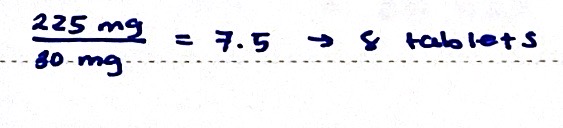
C. 8 tablets
A physician orders 225 mg of a medication for a patient. The available tablet strength is 30 mg per tablet. How many tablets should be administered to deliver the ordered dose?
A. 6 tablets
B. 7 tablets
C. 8 tablets
D. 9 tablets
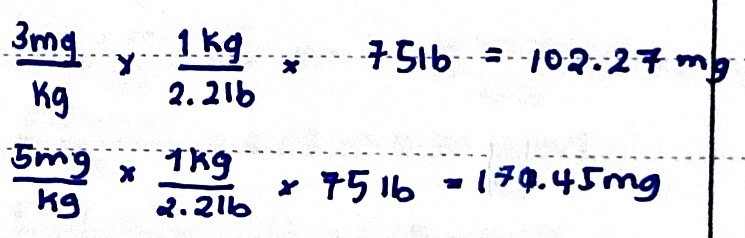
A. 102.27 mg – 170.45mg
The usual dose range of gentamicin is 3–5 mg/kg/day. A patient weighs 75 lb. What is the corresponding daily dose range in milligrams?
A. 102.27 mg – 170.45mg
B. 75.47 mg – 125.25 mg
C. 90.27 mg – 150.45 mg
D. 110.47 – 185.25 mg

C. 400 mg
A topical ointment contains 2% (w/w) ketoconazole. A pharmacist is tasked to prepare 20 g of this formulation. How many milligrams of ketoconazole are required?
A. 200 mg
B. 300 mg
C. 400 mg
D. 500 mg

A. 25.42 %
A pharmacist is compounding an alcohol-based solution using the following preparations: 300 mL of 60% alcohol solution and 500 mL of 25% alcohol solution. Sterile water is added to make a final volume of 1,200 mL. What is the final percentage strength (v/v) of alcohol in the solution?
A. 25.42 %
B. 30.27 %
C. 35.13 %
D. 40.24 %

B. 0.90 – 1.28 mEq/L
The normal serum potassium level is reported as 3.5 to 5.0 mg%. Given that the atomic weight of potassium (K) is 39, express this concentration range in milliequivalents per liter (mEq/L).
A. 0.09 – 0.13 mEq/L
B. 0.90 – 1.28 mEq/L
C. 3.5 – 5.0 mEq/L
D. 35 – 50 mEq/L

D. 14 proof gallons
A pharmacist is calculating alcohol content for compounding purposes. A solution contains 10 wine gallons of 70% v/v ethanol.
How many proof gallons of absolute alcohol are present in the solution?
A. 5 proof gallons
B. 7 proof gallons
C. 10 proof gallons
D. 14 proof gallons
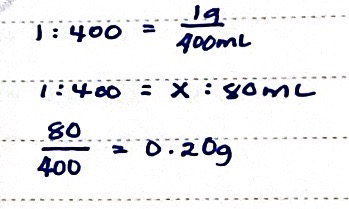
B. 0.20 g
A pharmacist is tasked to prepare 80 mL of a 1:400 (w/v) solution of a certain antiseptic. How many grams of the drug are needed?
A. 0.10 g
B. 0.20 g
C. 0.30 g
D. 0.40 g=

B. 25 mL
A pharmacist has a 12% w/v solution of a drug. How many milliliters of the solution are needed to obtain 3 grams of the drug?
A. 20 mL
B. 25 mL
C. 30 mL
D. 35 mL

B. 53.33 gtt/min
A physician orders an IV infusion of lidocaine 180 mg diluted in 120 mL D5W to be administered over 45 minutes. The IV set has a drop factor of 20 gtt/mL (macrodrip). What is the flow rate in drops per minute?
A. 47.23 gtt/min
B. 53.33 gtt/min
C. 60.33 gtt/min
D. 73.23 gtt/min

D. 148.5 mL
Refer to the prescription below:
Rx
Hydrogen peroxide 0.03%
Purified water qs 150 mL
If a 3% stock solution of hydrogen peroxide is available, how many mL of distilled water should be added to the required amount of stock solution to prepare the final product?
A. 1.5 mL
B. 55 mL
C. 67.5 mL
D. 148.5 mL