Chian
 Call Kai
 Learn
 Practice Test
 Spaced Repetition
 Match
 Flashcards
 Knowt Play
1/31

There's no tags or description
Looks like no tags are added yet.
32 Terms
Emperor Qianlong
Qing emperor who refused Britain's 1793 trade request.

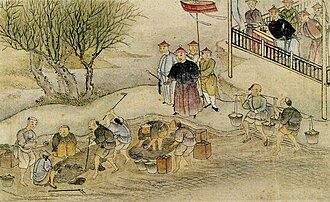
Lin Zexu
Chinese official who destroyed British opium, sparking the First Opium War.
Hong Xiuquan
Taiping Rebellion leader who believed he was Jesus's younger brother.

Puyi
The last emperor of China, who abdicated in 1912.
Sun Yat Sen
Founder of the Republic of China and the KMT.
Chiang Kai Shek
Nationalist leader who fought Communists and fled to Taiwan.
Mao Zedong
Communist leader who won the civil war and ruled until 1976.
Canton System (1757)
Rule limiting European trade to the single port of Canton.
Qianlong and George III (1793)
Britain requested more trade; Qianlong refused.
First Opium War (1839 to 1842)
Conflict over opium ending in China's defeat and loss of Hong Kong.
Taiping Rebellion (1850 to 1864)
Massive anti-Qing rebellion led by Hong Xiuquan with millions of deaths.
Second Opium War (1856 to 1860)
War opening more Chinese ports and granting foreign rights.
Hundred Days' Reform (1898)
Guangxu's failed modernization attempt stopped by Cixi.
Boxer Rebellion (1899 to 1901)
Uprising against foreigners crushed by a foreign alliance.
Fall of the Qing (1912)
The definitive end of imperial rule in China.
May 4th Movement (1919)
Student protests sparking Chinese nationalism over the Treaty of Versailles.
The Long March (1934 to 1935)
Communist military retreat that established Mao as clear leader.
Japanese Invasion (1937 to 1945)
Brutal occupation weakening Nationalists and boosting Communists.
Communist Victory (1949)
Mao declared the PRC while Nationalists fled to Taiwan.
Land Reform (1950)
Land confiscated from landlords and distributed to peasants.
First Five Year Plan (1953 to 1957)
Soviet-assisted initiative to build heavy industry in China.
Hundred Flowers Campaign (1956 to 1957)
Mao invited criticism, then punished those who spoke out.
Anti Rightist Campaign (1957)
Systematic punishment of citizens who criticized the government.
Great Leap Forward (1958 to 1962)
Failed rapid industrialization plan causing a massive famine.
Cultural Revolution (1966 to 1976)
Mao's chaotic purge of political enemies and old ideas.
Mandate of Heaven
Belief that disasters and rebellions mean an emperor lost divine rule.
Ethnocentrism
Believing one's own culture is superior and the world's center.
Unequal Treaties
Deals forced on China stripping away trade and legal control.
Century of Humiliation
Period from 1839 to 1949 when foreign powers controlled China.
Three People's Principles
Sun Yat Sen's core platform of nationalism, democracy, and livelihood.
Peasant Revolution
Mao's belief that farmers should drive the communist revolution.
Uninterrupted Revolution
Mao's belief that the revolution should never stop.