General Evaluation of the Equine Upper Respiratory Tract
 Call Kai
 Learn
 Practice Test
 Spaced Repetition
 Match
 Flashcards
 Knowt Play
1/39

Earn XP
Description and Tags
Lecture 32
40 Terms

What is structure A?
arytenoid cartilage

What is structure B?
opening to esophagus

What is structure C?
vocal cord/fold

What is structure D?
epiglottis
What is normal resting respiration rate in horses?
8-20 bpm
What is maximal exercising respiration rate in horses?
80-100 bpm
What minute ventilation is associated with maximal exercising respiration rate in horses?
1500 liters
What is the equation for minute ventilation?
respiratory rate x tidal volume
tidal volume = 5 liters at rest
What is total lung capacity in liters for horses?
40 L
Horses are obligate nasal breathers. Knowing this, does their upper respiratory tract have a high or low resistance to airflow?
high
What is the limiting factor in horse’s exercise capacity?
their upper repiratory tract having a high resistance to airflow
A galloping horse exhales when?
as forehand contacts ground
Is exhalation positive or negative pressure?
positive
Is inhalation positive or negative pressure?
negative
True or false: Exercise increases pressure disparity between inhalation and exhalation.
True
Airway resistance is primarily determined by what?
airway diameter
Cutting the radius of the airway in half increases the resistance by a factor of?
16
List the 4 areas of resistance in the upper airway.
external nares
nasal mucosa
pharynx (soft palate and pharyngeal walls)
larynx (epiglottis and arytenoids)

What is your diagnosis?
left laryngeal hemiplegia

What is your diagnosis?
pharyngeal collapse

What is your diagnosis?
dorsal displacement of the soft palate
What is the major contributor to upper airway stabilization?
muscular tone
Are respiratory noise and exercise intolerance synonymous?
NO
List the steps for evaluation of the upper respiratory tract.
history —> use, complaint, nasal discharge, cough, exercise intolerance, respiratory noise, dysphagia
PE —> respiratory disease, lameness, myopathies, cardiac disease, neurological disease, etc
ancillary diagnostic aids —> endoscopy, radiographs, CT/MRI, ultrasound, blood work
What should the ratio of inspiration to expiration be?
1:1
When performing an endoscopy, the scope should be placed how into the nasal cavity?
through medial aspect of ventral meatus
What structures are located in the lateral compartment of the guttural pouch?
external carotid artery
What structures are located in the medial compartment of the guttural pouch?
internal carotid artery
CN IX, X, XII
What separates the lateral and medial compartments of the guttural pouch?
stylohyoid bone
When performing an endoscopy, should you give sedation?
No
Why do we perform nasal occlusion during an endoscopy at rest?
it allows us to get negative pharyngeal pressures that are similar to exercise and allows then to hold arytenoid abduction longer
What is the best imaging modality for evaluating sinuses?
CT

What is indicated by the star?
opening to airway
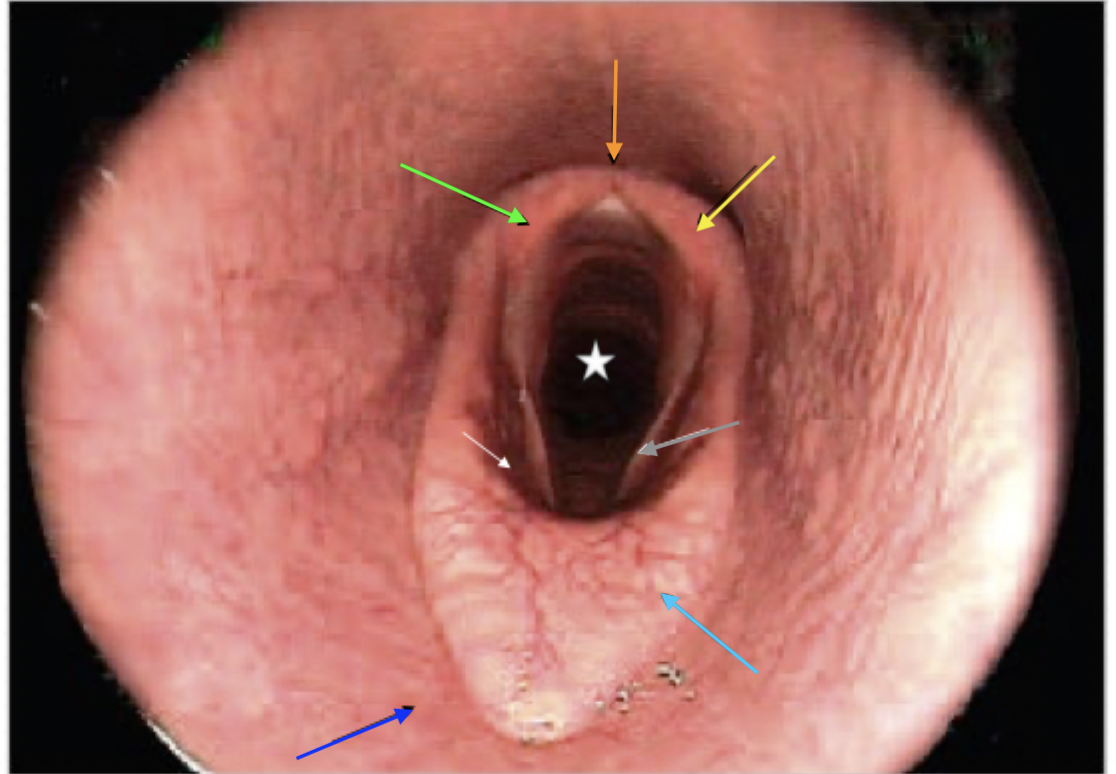
What is indicated by the green arrow?
right arytenoid cartilage

What is indicated by the yellow arrow?
left arytenoid cartilage
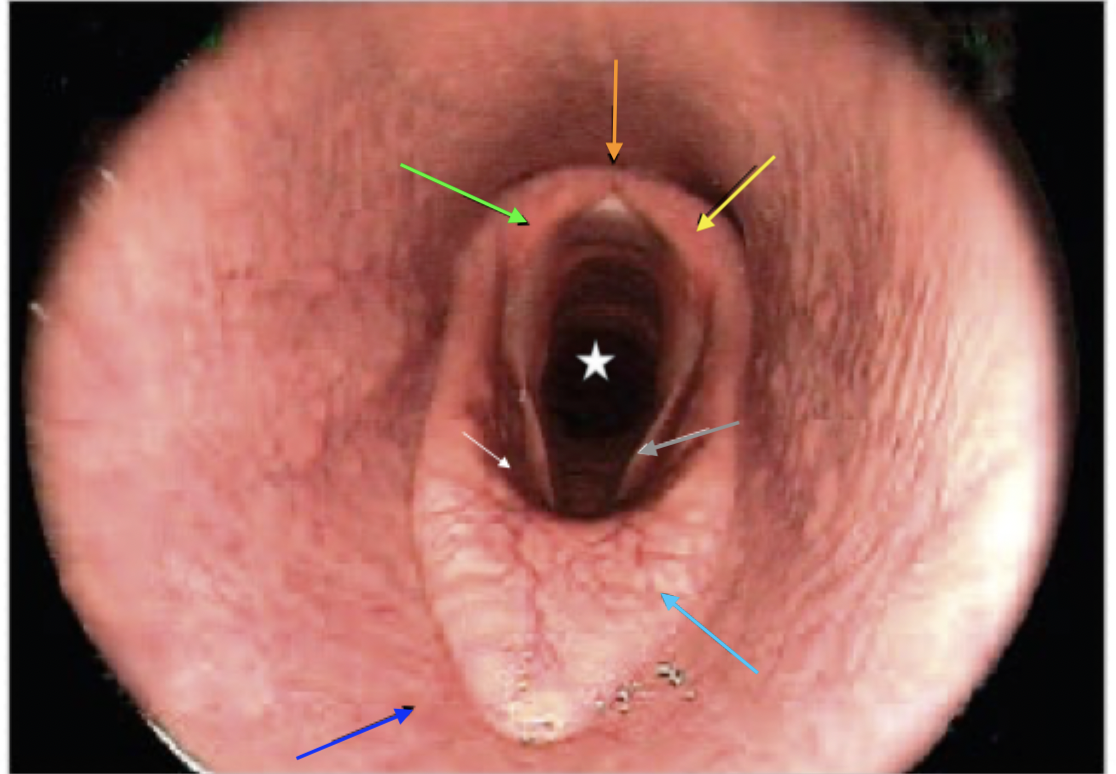
What is indicated by the orange arrow?
opening to esophagus

What is indicated by the silver arrow?
vocal cord (fold)

What is indicated by the white arrow?
laryngeal saccule (ventricle)

What is indicated by the dark blue arrow?
soft palate
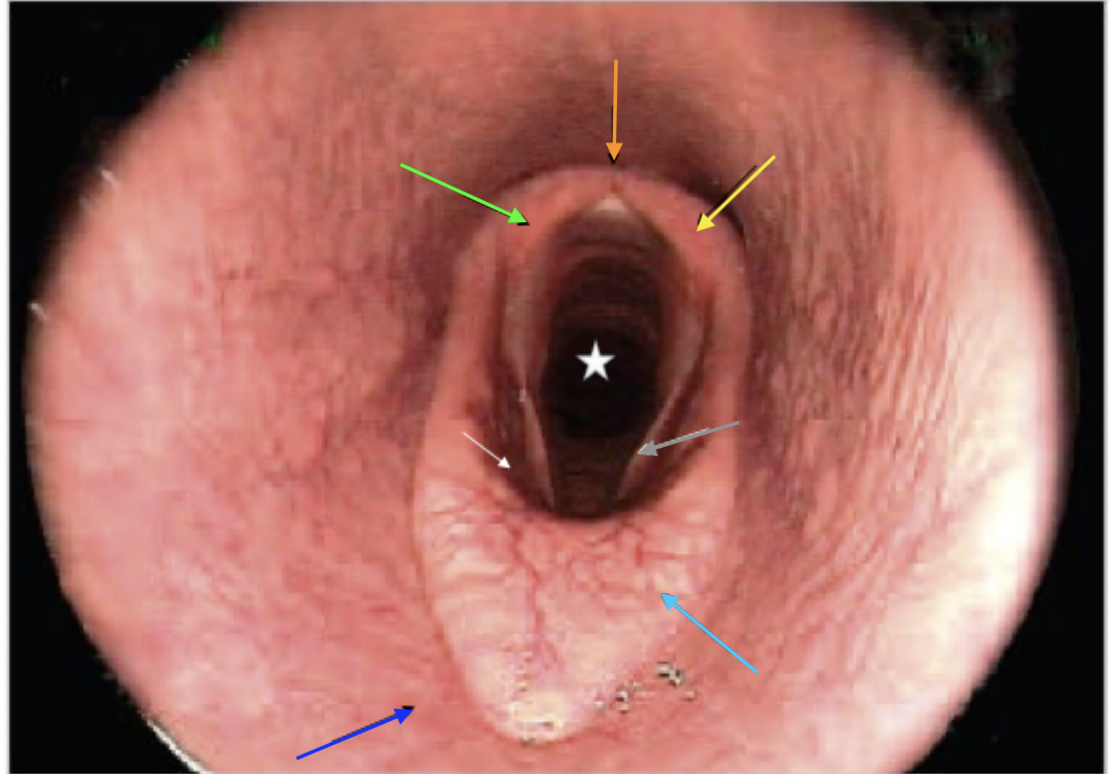
What is indicated by the light blue arrow?
epiglottis