Blood Sampling in birds
 Call Kai
 Learn
 Practice Test
 Spaced Repetition
 Match
 Flashcards
 Knowt Play
1/47

There's no tags or description
Looks like no tags are added yet.
48 Terms
avian veins
-veins generally superficial
-veins fragile and prone to haematomas
critical to them, small blood vol, haematoma and haemorrhage,
-approach veins directly not laterally
where can we sample blood from in bird
jugular
basilic/ ulnar v
medial metatarsal
how to avoid avian haematomas and post sampling haemorrhage
-ensure plunger moves smooth
-use small syringe
CAN BE LIFE THREATENING
safe volume to take bloods from birds
-circulating blood is 6-12% of BW
-can collect 10%
-if in poor health take much less
EDTA in birds?
haemolyse RBCs→ so not really used
what is the tube of choice in avian and reptiles
lith hep
lithium heparin in birds for?
haematology and biochem
always take when doing blood samples in bird and reptiles
2 blood smears
haematology of birds
manually done since automated techniques difficult as nucleated RBCs
why dont hold birds around the middle
lack diaphragm → cant breath

inadequate restraint of birds can cause what
-injury to patient
-injury to handler
-possibly fatal haemorrhage
prolonged restraint of birds cause
-stress
-hyperthermia
why use sedation or GA with gas for birds blood sampling
-less risk in sick or fractious birds
-reduce haematoma formation by relieving stress and lowering blood pressure
how to hold bird for blood sampling
around head and neck, do not push on rest of chest
jugular vein for birds blood sampling
-large accessible vein
-right jugular vein used as often larger
-don't have to pluck feathers
-can palpate and blind technique

issue with jugular vein on birds
-difficult to prevent or stop haematoma
how to access jugular in bird
-bevel down
-access in caudal direction: less likely to come in contact with other structures if move
ulnar/basilic in bird and its issues
-small samples in larger birds
-potential to fracture wing if performed conscious
-haematomas common and can be severe
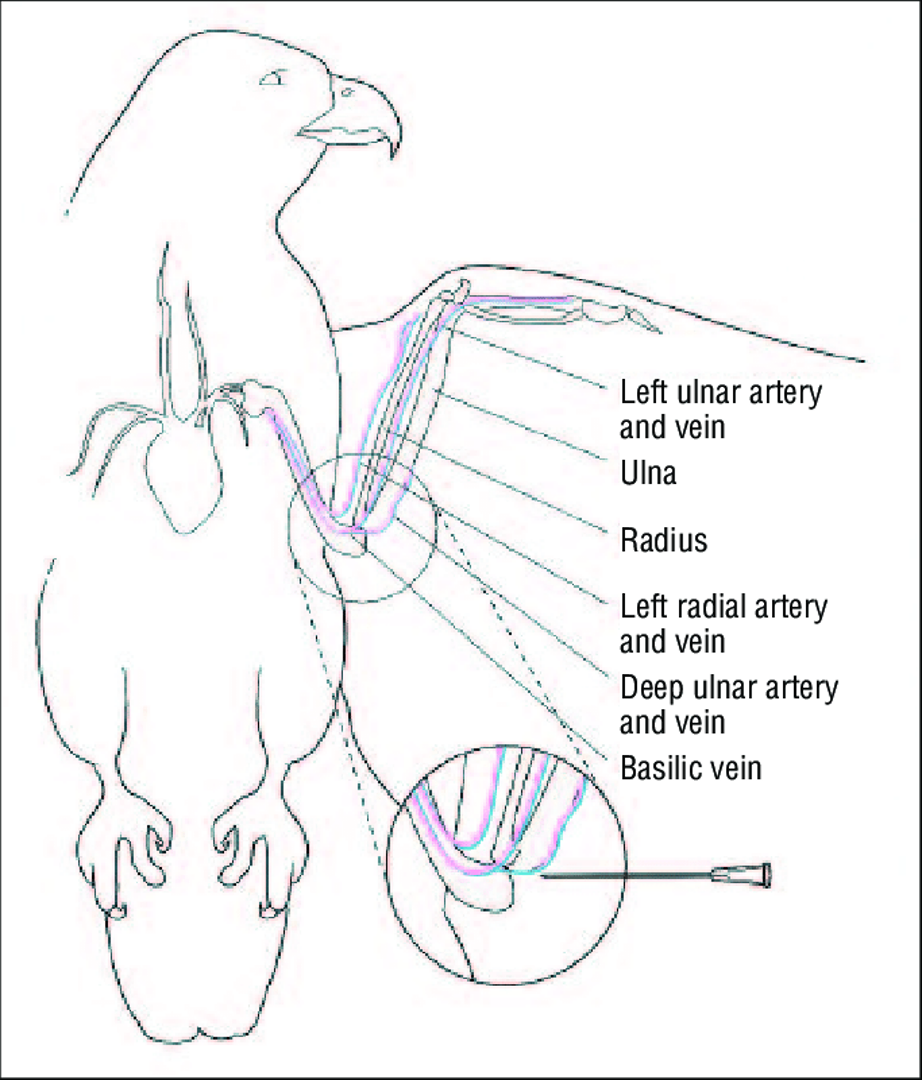
how to take ulnar/basilic vein in bird
-bird in dorsal recumbency
-extend wing
-wing stabilised with thumb and forefinger
-syringe rested on thumb and advanced into vein
-not in conscious patient→ usually ga or sed

medial metatarsal vein in birds blood sampling
-very useful in waterfowl and chickens
-heavy scaling may be problem
-hyperkeratosis not good for this

how to get blood sample in bird from medial metatarsal vein
-lateral recumbencu with lower lumb extended caudally
-easy to restrain in towel with feed out
-limb held by assistant similar to dog or cat
-medial aspect, above or below joint
-light pressure bandage easily placed to prevent haematoma
primary lymphoid organs of birds
-bursa of Fabricius→ mature b cells
-thymus→ mature t cells
secondary lymphoid organs of birds
-spleen
-interstitial lymphoid tissue
-bone marrow
thymus of bird location
-located in neck and consists of 3-8 flattened, pale pink lobes lying along neck, close to jugular vein
t lymphocyte precursors of birds
produced by stem cells in embryonic yolk sac and bone marrow and develop into t lymphocytes in thymus
thymus in birds at sexual maturity
decreases
bursa of fabricius
-unique to birds
-dorsal diverticulum in proctodeum
-consists of folds of lymphoid tissue
-stem cells in yolk sac produce b lymphocyte precursors which then develop in bursa
-subsequently seeds other lymphoid organs with b cells
spleen of birds
-situated on right side of coelom between proventriculus and ventriculus
-shape varies
-not blood reservoir so relatively small→ so dont really get a splenic contraction etc
-aged erythrocytes are phagocytosed
-aids in lymphopoeisis and production of antibody
avian erythrocytes formed where
bone marrow
difference in avian rbc, and what is function
-nucleated
-similar function to mammals

PCV of birds
35-55%
lifespan of bird erythrocytes
25-45 days
-blood loss replenished in days
how erythrocytes differ between bird species
-cell size
-normal to find mild immature RBC→ bc turnover so quick
avian thrombocyte
-like mammalian platelets
-originate from stem cell not megakaryocyte
-nucleated

thrombocyte function in birds
-phagocytic function
-clotting function weaker compared to mammals
-despite higher blood pressure, clotting still works
avian heterophils
-function like mammals neutrophil
-most abundant
-round cell with lobed basophilic nucleus
-prominent needle shape, oval red cytoplasmic granules
-cytoplasm colourless

role of heterophils
-phagocytosis, bactericidal, roles in inflam
heterophilia in bird
-stress
-infection
heteropaenia in birds
-acute or severe inflam
-sepsis
-viruses
avian eosinophils
-normally low numbers
-round cells, lobed basophilic nucleus
-cytoplasm stains clear blue
-granules bright and tend to be round

when might eosinophils be elevated
-may be elevated with tissue damage and parasitic disease and poss some viral infections
avian basophils
-smaller than heterophils
-clear cytoplasm, darker granules
-nucleus, non lobed round to oval and often obscured by cytoplasmic granules
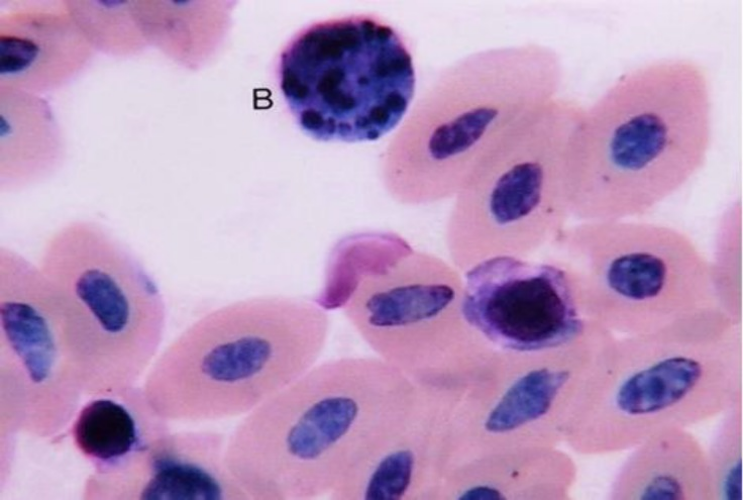
function of basophils
-function unknown, poss involved in acute inflam and hypersensitivity reactions
avian lymphocytes
-similar to mammals
-large round nucleus with pale blue cytoplasm
-variation in size and shape

lymphocytosis in birds
excitement, leukaemia
lymphopeania in birds
chronic stress
avian monocytes
-rare in healthy birds
-similar to mammals
-largest leukocyte
-little consistency in appearance

monocytosis in birds
-chronic inflam/infectious conditions e.g. psittacosis, TB, aspergillosis, egg coelomitis