Chapter 4: Three Major Classes of Chemical Reactions
 Call Kai
 Learn
Learn Practice Test
 Spaced Repetition
 Match
Match Flashcards
 Knowt Play
1/63

Name | Mastery | Learn | Test | Matching | Spaced | Call with Kai | Chat |
|---|
No analytics yet
Send a link to your students to track their progress
64 Terms
Solution
A homogenous mixture with a uniform composition and no visible component boundaries, consisting of a dissolved solute and dissolving solvent
Aqueous solution
A solution where water is the solvent
Concentration
The quantity of solute dissolved in a given quantity of solution
This is an intensive property, independent of volume

Molarity (M)
The most common unit of concentration, expressing moles of solute per liter of solution
Can be used as conversion factor to find other values
Requires solution (not solute) volume
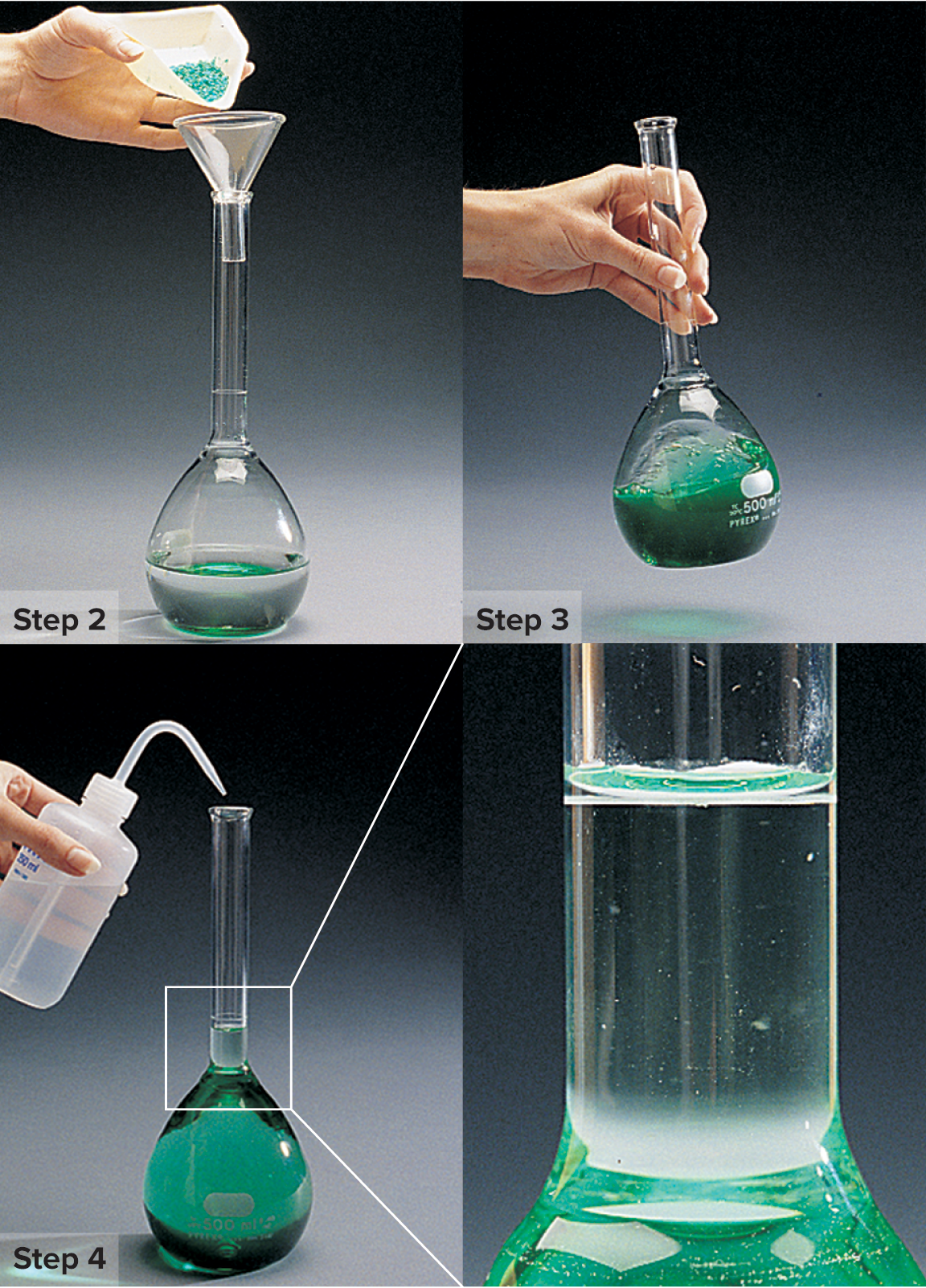
Calculate the mass of solid needed for the desired volume and molarity.
Transfer the solid to the flask, and add enough solvent (typically half of the final volume) to dissolve the entire mass of solid first.
Dissolve the solid by swirling.
Add the remaining amount of solvent needed, and mix again.
How would I prepare a solution?
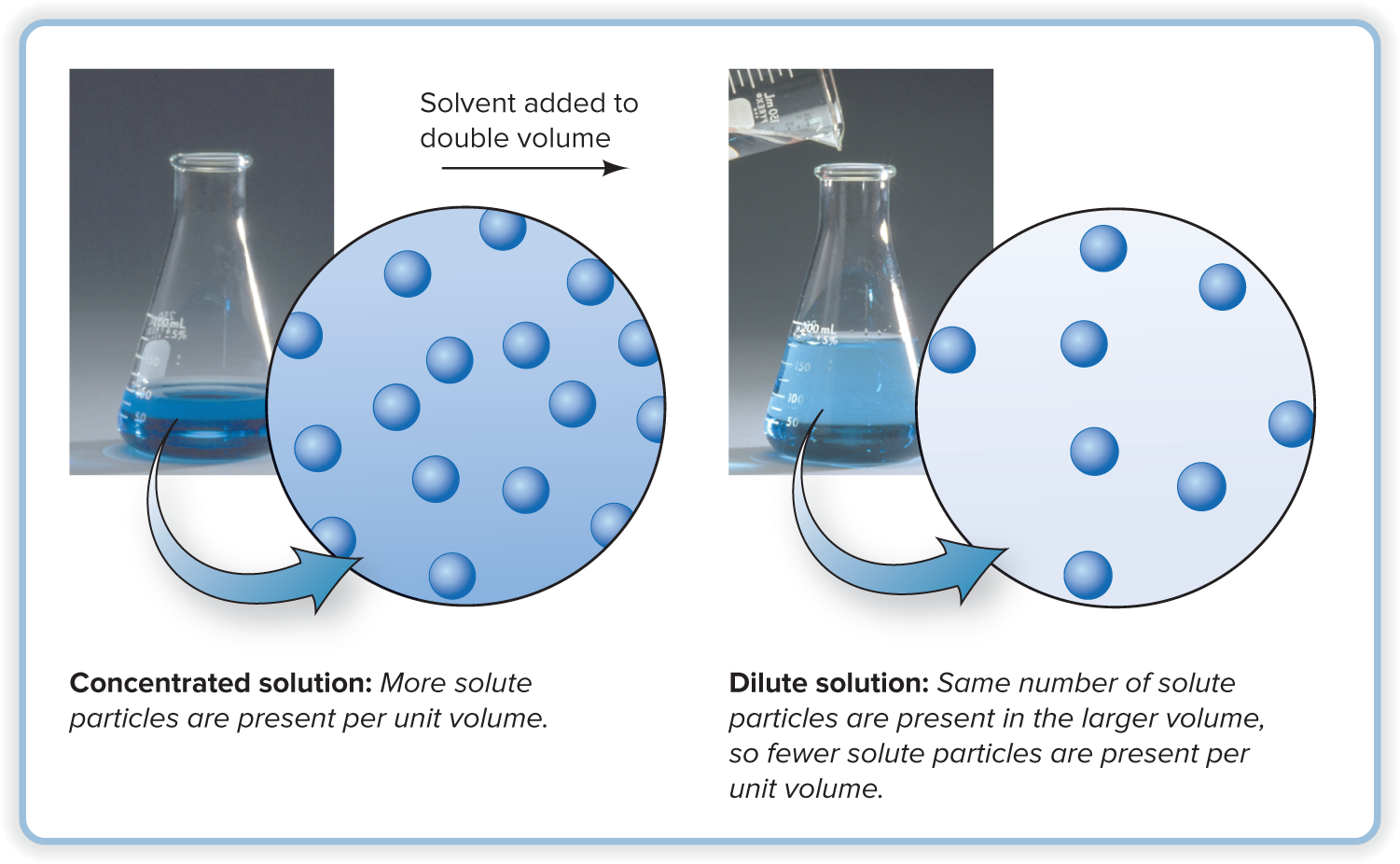
Dilution
The addition of more solvent to lower the concentration and molarity of a solution
Stock solution
A highly concentrated solution which is stored for future use in dilution
First, find the amount in moles needed in the dilute solution.
Next, find the amount of stock solution needed to obtain that same amount in moles.
Finally, add enough solvent to the calculated amount of stock solution to obtain the desired volume of the dilute solution. Check your answer with the molarity equation.
How would I prepare a dilute solution from a concentrated solution?
MconcVconc = MdilVdil = constant mol of substance
What is the equation to solve for molarities or volumes given a constant amount of substance?

Water
A polar, unevenly-charged molecule with two positive H atoms and one negative O atom that forms a bent molecular shape
These forces can break apart bonds in certain ions, should the attraction between the ions be lower than the attraction towards the water molecules
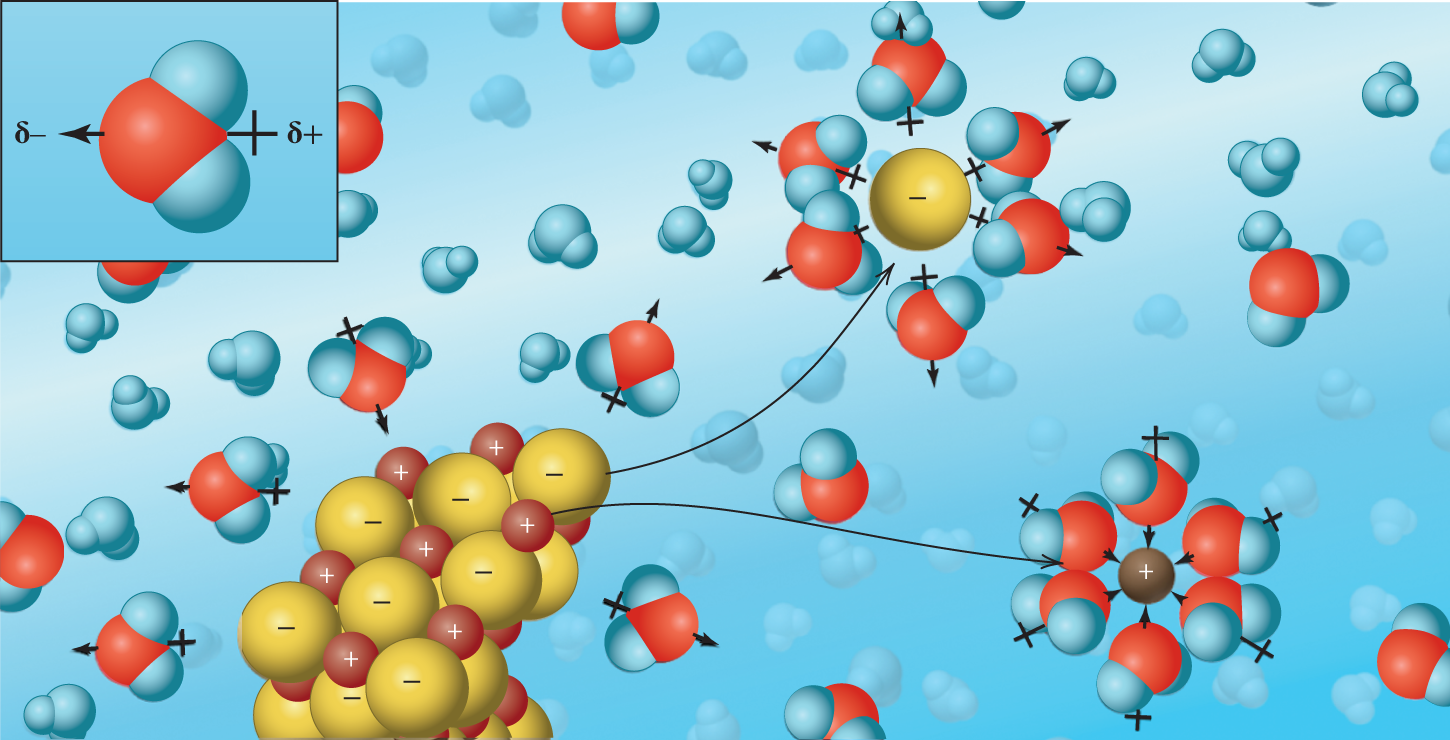
Solvation
The close surrounding of ions by solvent molecules, allowing them to move randomly in solution
This allows for a dramatic increase in conductivity due to this new available movement of charged particles
May also occur to covalent compounds, but only between molecules and not individual ions with no conductivity

Electrolyte
A substance that conducts a current when dissolved in water, as ions move towards the electrode of opposite charge
Higher ionic dissociation results in stronger variants of these, like NaCl
Nonelectrolytes
Substances that do not conduct electric current when dissolved in water
Includes many covalently-bound molecules

Precipitation reactions
Reactions where two aqueous ionic compounds are combined to form a solid
Results from a newly made cation-anion attraction that is stronger than those in water
May be expressed through a molecular, total ionic, or net ionic equation
Molecular equation
An equation that depicts all reactants and products as if they were undissociated substances, after balancing charges
2AgNO3(aq) + Na2CrO4(aq) → Ag2CrO4(s) + 2NaNO3(aq)
Total ionic equation
An equation that depicts all substances as they actually exist in solution, typically as ions, combining to potentially form a solid precipitate
2Ag+(aq) + 2NO-3(aq) + 2Na+(aq) + CrO42-(aq) → Ag2CrO4(s) + 2Na+(aq) + 2NO3-(aq)
Net ionic equation
An equation that depicts only the changed ions in a total ionic equation, without spectator ions
2Ag+(aq) + CrO42-(aq) → Ag2CrO4(s)
Spectator ions
Ions that remain unchanged in the combination of two aqueous ionic substances

Solubility rules
These are required to determine if the compounds that are formed will be soluble in water

Metathesis reactions (double-displacement reactions)
Reactions in which the reactant ions change partners
Includes precipitation and acid-base reactions
Hydronium
The name for the the H3O+ ion formed between an H+ ion and a water molecule
Gaseous reactions
Reactions that form a gas and sometimes a water
Includes reactions with carbonates, sulfites, and bisulfates for an equation resembling CO2
Includes reactions with sulfides for H2S
Includes reactions with ammonium for NH3
Note the color changes of the indicator in acids and bases
Measure out a known volume of acid (or base) with indicator
Add drops of base (or acid) to replace H+ (or OH-), observing a temporary change in color that goes away when swirled
Stop when the endpoint is reached, where a color is effected even after swirling
How would I perform a titration?
Acid
A substance that increases the concentration of H+ when dissolved in water
Base
A substance that increases the concentration of OH- when dissolved in water
Can either dissociate to form OH- (when strong) or remove an H+ ion from water (if weak)
Acid-base reaction
A reaction between an acid and a base with water acting as a solvent, product, or reactant
Strong acid
An acid with a strong tendency to dissociate into ions in water, allowing for high electrolytic capacity
Includes hydrogen and N-ate, S-ate, Cl-+ate, Br, and I, which are soluble
Weak acid
An acid with a low tendency to dissociate into ions in water, creating low electrolytic capcity
Written as undissociated compound decomposing into ions in ionic equations
Strong base
A base with a strong tendency to dissociate in to OH- and another substance in water
Includes OH- and group 1 and 2 metals, of which ones are soluble
Weak base
A base that does not readily dissociate in water and instead forms OH- through the attraction of an H+ ion from water
Typically includes nitrogen, like in NH3+ (ammonia)
Electrolytic capacity
This is increased when a salt, strong acid, or strong base dissociates into water
Allows for the use of molarity as a conversion factor
Metathesis reactions (double-displacement reactions)
Reactions where cation and anion partners switch
Molecular equation
An equation where all compounds are shown as undissociated substances
Total ionic equation
An equation where all compounds are shown as they exist in solution, potentially as ions for a salt, strong base, or weak base
Net ionic equation
An equation where only changed ionic compounds are shown in solution
Does not include spectator ions
Spectator ions
Ions that do not participate in a reaction and are left out in the net ionic equation
Equivalence point
When the moles of OH- equal the moles of H+ in a solution for complete neutralization
End point
When the moles of either H+ or OH- in a solution are slightly greater than the other, effecting a change in an indicator that does not disappear when swirling
Sometimes treated as equivalent to the equivalence point due to only slight difference

Redox reaction
A reaction involving the oxidation and reduction of two substances at the same time
Contributes to both ionic and covalent compounds as electrons are transferred or shifted
Seen with 2Na+ + Cl2- → 2NaCl, as Na loses a negative charge (oxidized) and Cl gains a negative charge (reduced)
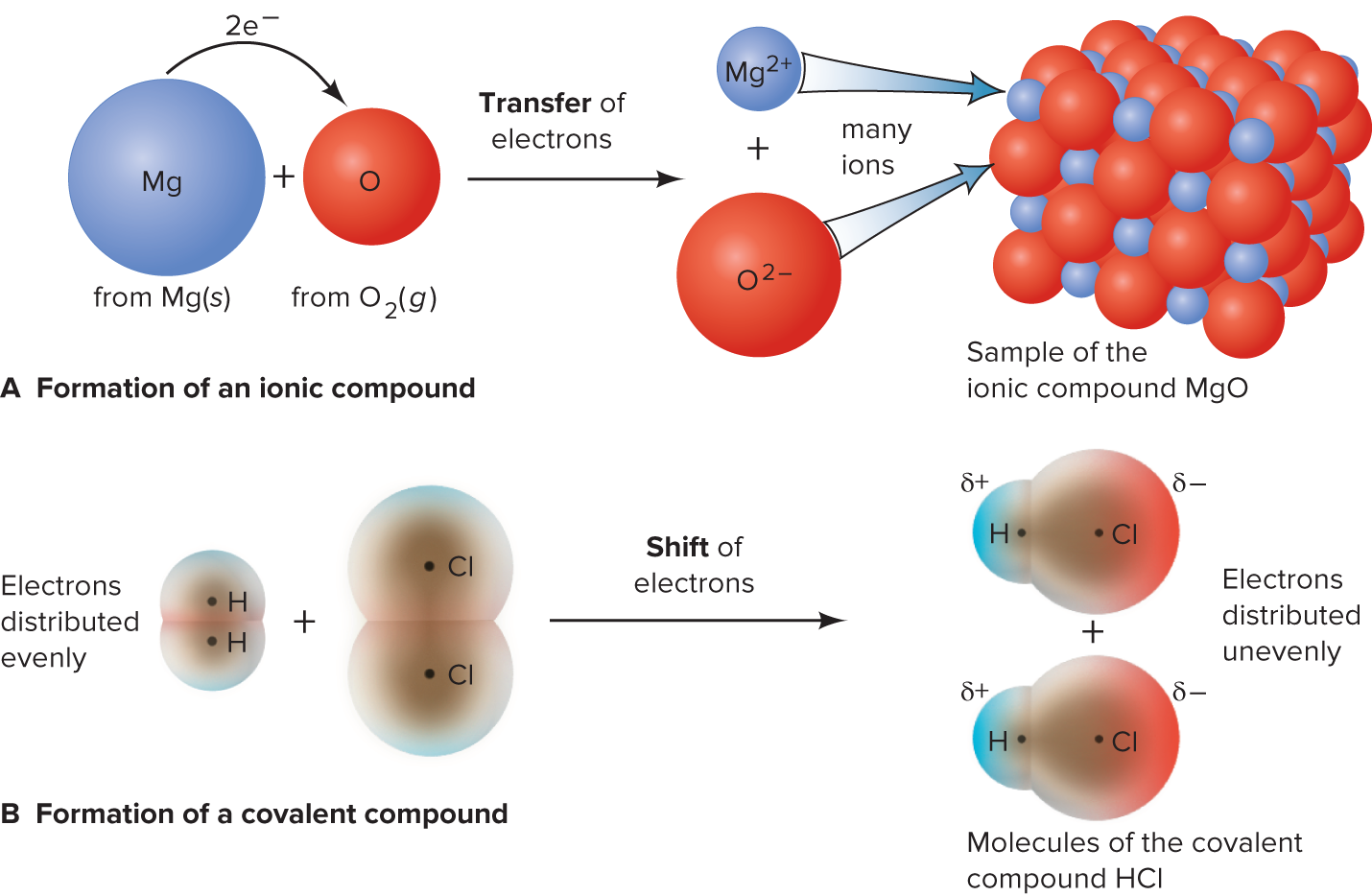
Electron transfer
What occurs between atoms in an ionic compound

Electron shift
What occurs between atoms in a covalent compound, with no ions formed yet still a difference in charge
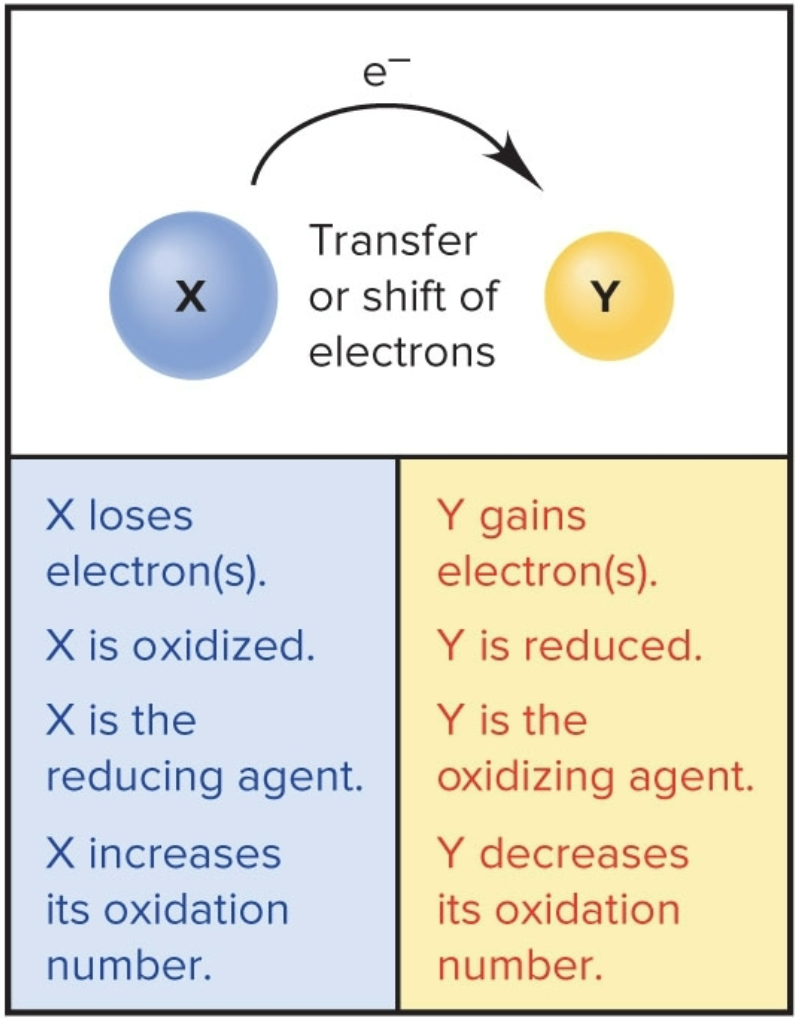
Oxidation
The loss of electrons to an oxidizing agent
In 2Na+ + Cl2- → 2NaCl, Na has this done to it as it loses negative electrons to Cl
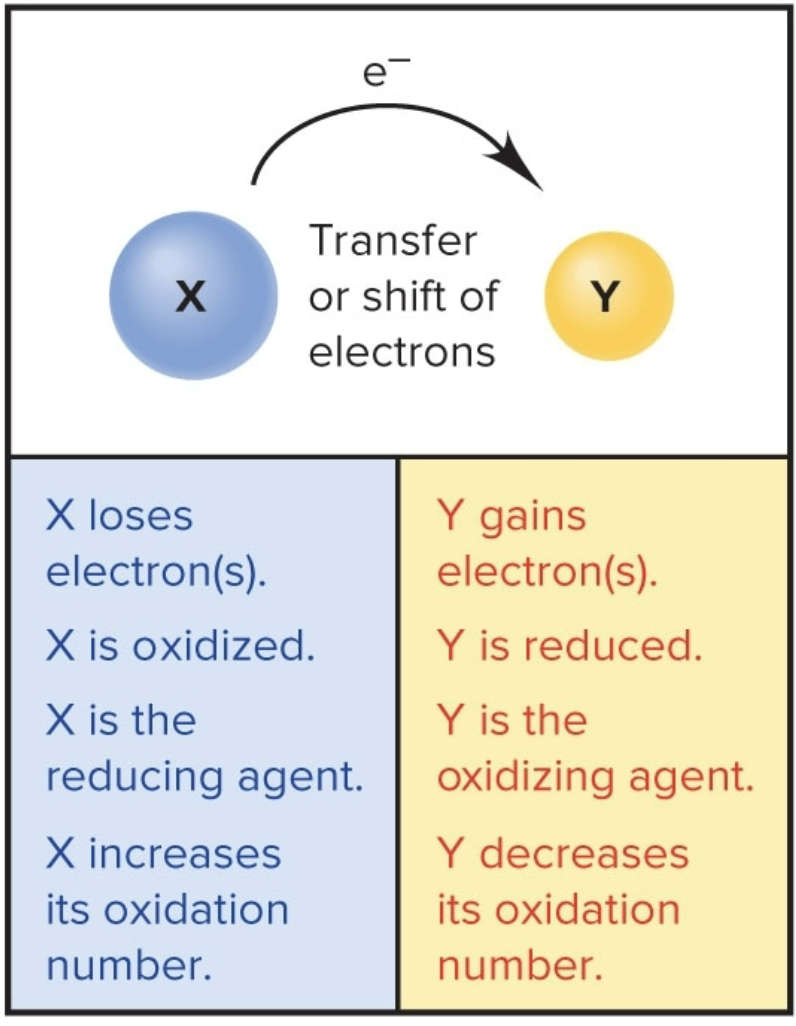
Reduction
The gain of negatively-charged electrons from a reducing agent
Term refers to the total positive charge going down
In 2Na+ + Cl2- → 2NaCl, Cl has this done to it as it gains negative electrons from Na

Oxidizing agent
What receives the negatively-charged electrons from an oxidized atom, thus becoming reduced with more negative charges
Term refers to the other substance’s change after losing electrons
In 2Na+ + Cl2- → 2NaCl, Cl is this as it removes electrons from Na
Makes something more positive by becoming more negative
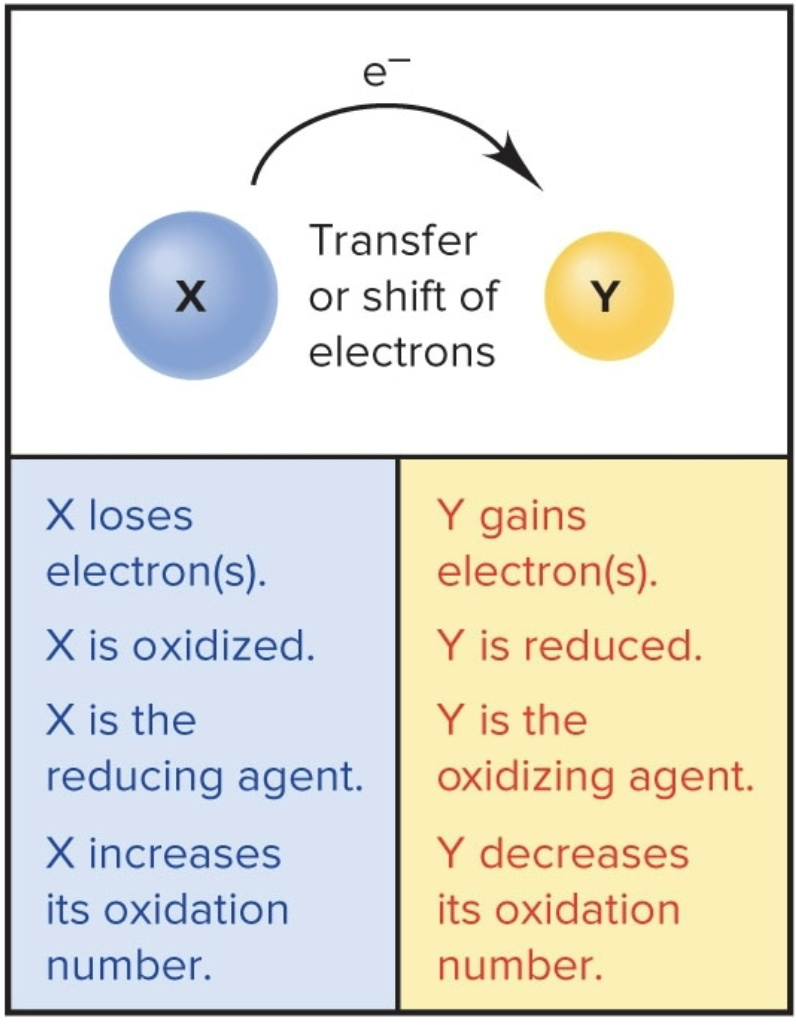
Reducing agent
What loses electrons to a reduced atom, thus becoming oxidized with fewer negative charges
Term refers to the other substance’s change as it gains negatively-charged electrons
In 2Na+ + Cl2- → 2NaCl, Na is this as it contributes electrons to Cl
Makes something more negative by becoming more positive

Oxidation number (ON)
A number stating the charge an individual atom would have, if all its shared electrons were transferred to the atom that attracts them more strongly
Sum of multiplied charges must equal 0 or stated charge
Written as (+2) and not (2+)
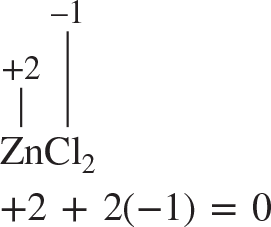
Ion charge
What is the oxidation number for each element in a binary ionic compound?
What must the sum of all multiplied oxidation numbers be in an equation?
0 or the stated charge

Oxidation rules
The oxidation number for each element in a covalent compound is determined by these
What is the oxidation number for an atom in its elemental form, like Na or C?
0
What is always the oxidation number for F?
-1
What is the oxidation number for O, when in a peroxide?
-1
What is the oxidation number for O outside of a peroxide or compounds with F?
-2

What is the oxidation number for H when bound to a nonmetal?
+1

What is the oxidation number for H when bound to a metal or B?
-1
What is the oxidation number for elements in group 17, when bound to metals, non-O nonmetals, and non-F halogens?
-1

Write out the oxidation numbers for each of the elements in a reaction, then compare.
How would I find out which elements are oxidized or reduced in a reaction?
Add enough ion indicator to a substance such that the substance changes color at the end point, signifying that the moles of electrons lost are equal to the moles of electrons gained. Then, use the chemical equation to perform extended calculations.
How would I perform a redox titration?
Combination reaction
A reaction in the form X + Y → Z
Includes ionic compounds and covalent bond formation
Decomposition
A reaction in the form Z → X + Y
Can be achieved through heating or electricity
Displacement
A reaction in the form:
AB + CD → AD + BC (double)
X + YZ → XZ + Y (single)
Metal activity series
How metals are ranked for displacement ability based on their ability to displace H2; those that are closer to Li have generally higher abilities
Halogen activity series
How halides are ranked for displacement ability, similar to metals, except for those closer to F
Combustion
A reaction involving a substance and O2 to produce heat