CLS 251 EXAM 2 CONCEPT MAP
 Call Kai
 Learn
 Practice Test
 Spaced Repetition
 Match
 Flashcards
 Knowt Play
1/46

Earn XP
Description and Tags
bolded only
47 Terms
what is a complement?
a series of more than 30 different soluble and cell-bound proteins that circulate in the blood as inactive precursors that when activated interact to enhance host defense mechanisms against foreign cells
most plasma complement proteins are synthesized in the liver
what do complements act as?
acts as opsonins which are activated by IgG and IgM
what else do complements do?
increase vascular permeability (vasoactive substances)
recruit monocytes and neutrophils to the area of antigen concentration (chemotactic substances)
what is the end product in the complement pathways?
lysis of the invading cell (through MAC)
what activates the classical pathway?
activated by IgM, IgG1, IgG2, and IgG3
IgM: most efficient due to multiple binding sites
what is the end product of the classical pathway?
MAC
what are the subunits for C1 (the recognition unit) for the classical pathway?
one Clq
two Clr
two Cls
C1qrs
what is formed in the classical pathway that is considered the activation unit?
C4b2a3b → bridges two adjacent IgG FC regions or single IgM bound to antigen
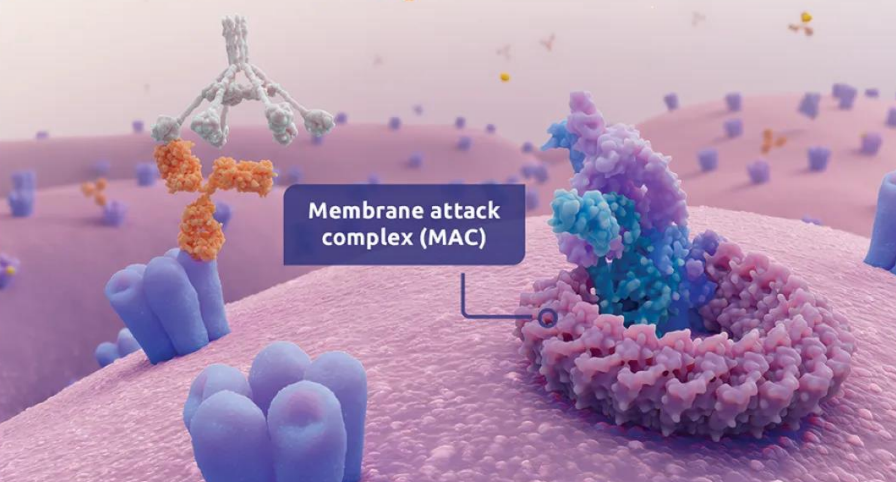
what is the process that happens when MAC is activated in the classical pathway?
C5b attaches to the cell membrane to initiate formation of the MAC (C5b6789) → MAC perforates the cell membrane by creating a hole in the membrane leading to lysis of the cell
what does the lectin pathway serve as?
a defense mechanism in infancy in between loss of maternal antibody and development of full antibody response & involves three classes of recognition molecules (lectins, ficolins, CL-L1)
what is the definition of hypersensitivity?
exaggerated immune response to a typically harmless antigen
what type of hypersensitivity is delayed reactions?
type IV
what is type 1 hypersensitivity known as?
anaphylactic hypersensitivity
what are the key components of type 1 hypersensitivity?
IgE
mast cells
basophils
eosinophils
what is the sensitization phase also called?
allergen sensitization phase
what is the activation phase process in hypersensitivity?
allergen cross-links adjacent cell-bound IgEs → mast cells and basophils degranulate → chemical mediators are released and bind to target organs → allergy symptoms are produced
what is a common allergen for type 1 hypersensitivity?
pollen “hay fever”/rhinitis
how is the in vivo skin test done to test for type 1 hypersensitivity?
apply a panel of allergens to separate sites on the skin and wait 15 to 20 minutes… a positive test would be a wheal and flare at the site of application
percutaneous or intradermal
what is allergen-specific IgE immunoassay testing?
the most appropriate way to detect IgE to a specific allergen in patient serum
what is type 2 hypersensitivity?
type involved in transfusion reactions and hemolytic disease of the newborn, HDN
what does ADCC stand for in type 2 hypersensivitiy?
antibody-dependent cell-mediated cytotoxicity
what do cytotoxic T lymphs do in type 4 hypersensitivity?
cytotoxic T lymphocytes are recruited and destroy target cells
what does the direct antiglobulin test (DAT or direct coombs test) detect?
detects RBC coated with complement components or IgG (in vivo sensitization of RBCs) antibody by incubation with a poly-specific anti-human Ig directed against IgG and C’
RBC sensitization occurs in vivo
what does the indirect antiglobulin test (IAT or indirect coombs test) test for?
tests patient serum for allo-antibodies to RBC antigens, sensitization occurs in vitro
what is the process for the indirect antiglobulin test?
incubate reagent RBCs with known antigenic makeup with patient serum at 37C; wash to remove excess serum and serum proteins and add anti-human globulin → positive test = RBC agglutination
what are autoimmune disease due to?
due to loss of self-tolerance → ability of the immune system to accept self antigens and not initiate an immune response against them
essentially an immune response against self-antigens results in autoimmune diseases
what is systemic lupus erythematosus (SLE)?
a chronic systemic inflammatory disease that affects multiple organ systems in which patients develop numerous autoantibodies
ex. to dsDNA and other nuclear components, lymphocytes, RBCs, and platelets
what is the process in how SLE develops?
immune complexes form, and are deposited on tissue of kidneys and the joints, and auto-antibodies to ds-DNA triggering C’ activation, chemotaxis of neutrophils, and inflammation
95% of patients have ds-DNA antibodies
what are the screening tests to detect autoimmune disease?
CRP
ESR
CBC
antinuclear antibodies (ANA)
DS DNA screen with Crithidia luciliae (up to 95% of SLE patients have ds-DNA antibodies)
what is immunofluorescence using Crithidia lucillae (flagellated parasite of houseflies) used for?
used to detect antibodies to dsDNA
is IIF using C. luciliae as the substrate which contains a kinetoplast that is rich in dsDNA)
what can phospholipid antibodies cause?
can cause false-positive results in nontreponemal tests for syphilis
ex = lupus anticoagulant (produces prolonged APTT and PT
what are anti-neutrophil cytoplasmic antibodies (ANCA)?
produced against proteins in neutrophil granules and are strongly associated with syndrome including vascular inflammation
ex. granulomatosis with polyangiitis (wegener granulomatosis)
what is hashimoto’s thyroiditis?
immune destruction of the thyroid gland produces hypothyroidism
what is graves disease?
an AITDS characterized by hyperthyroidism
how does insulin deficiency start in type 1 diabetes mellitus?
type 1 destruction of beta cells in pancreas
what are the laboratory results in type 1 diabetes mellitus?
increased glucose blood level
elevated HbA1c
autoantibodies to GAD and IA-2, ICA
what is celiac disease?
an immune reaction to eating gluten, a protein found in wheat, barley, and rye → autoantibodies form in genetically pre-disposed people triggered by gluten
what two tests are performed together to ensure accurate screening for celiac disease?
tissue transglutaminase IgA antibody (tTG-IgA), plus an IgA antibody
done in order to ensure that the patient generates enough of this antibody to render the celiac disease test accurate
what are the laboratory findings in multiple sclerosis (MS)?
CNS lesions seen on magnetic resonance imaging
increased immunoglobulins in spinal fluid and increased IgG index
oligoclonal bands on protein electrophoresis of CSF
what happens in myasthenia gravis?
affects neuromuscular junction, resulting in weak skeletal muscles
what do patients produce in goodpasture’s syndrome?
produces autoantibodies (anti-glomerular basement membrane antibodies) to basement membranes lining the renal glomeruli and lung alveoli (specifically directed against alpha-3 chain of type IV collagen) → auto-antibodies immune complexes bind to basement membranes, attract C’, and cause damage by type 2 hypersensitivity
what can goodpasture's syndrome progress to?
can progress to renal failure and respiratory problems (cough, shortness of breath, hemoptysis)
what methods are used to detect circulating anti-GBM antibodies?
IIF (indirect immunofluorescence) on frozen kidney sections
ELISA for antibodies against the alpha-3 subunit of type IV collagen
tissue-bound anti-GBM detected by direct immunofluorescence on kidney biopsy sections; produces a smooth, linear, ribbon-like fluorescence along the GBM
how are secondary immunodeficiencies acquired?
acquired as a result of other conditions, such as infection (e.g. HIV), autoimmune disease, malignancy, or immunosuppressive therapy
what happens to the neutrophils in chronic granulomatous disease (CGD)?
neutrophils are unable to generate oxidative burst → genetic defect in a component of the NADPH oxidase system which decreases killing of catalase (+) organisms
how is chronic granulomatous disease (CGD) detected in the lab?
negative nitroblue tetrazolium (NBT) test
dihydrorhodamine (DHR) assay
how are those for suspected immunodeficiency screened?
CBC and WBC differential
quantitative serum levels of IgG, IgM, IgA, and IgG subclasses
isohemagglutinins (natural ABO antibodies)
decreased levels in reverse grouping of elderly and newborns
CH50 assay for complement function