Chapter 16 Notes
 Call Kai
 Learn
 Practice Test
 Spaced Repetition
 Match
 Flashcards
 Knowt Play
1/14

There's no tags or description
Looks like no tags are added yet.
15 Terms
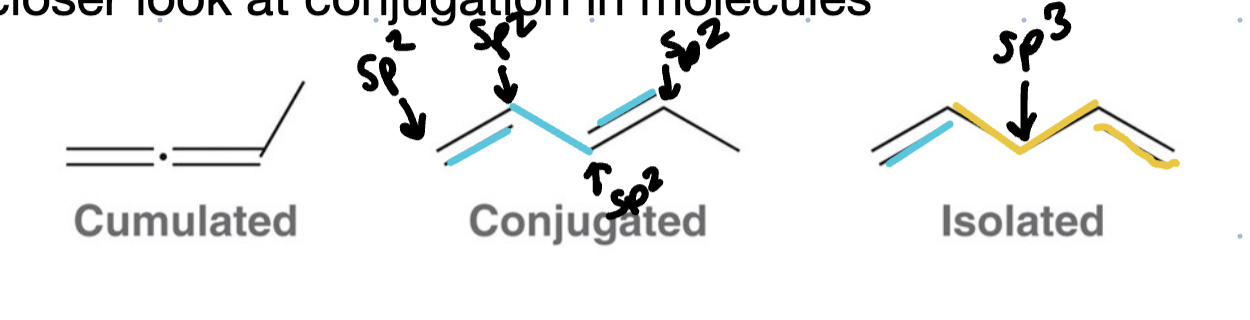
Type | Memory trick |
|---|---|
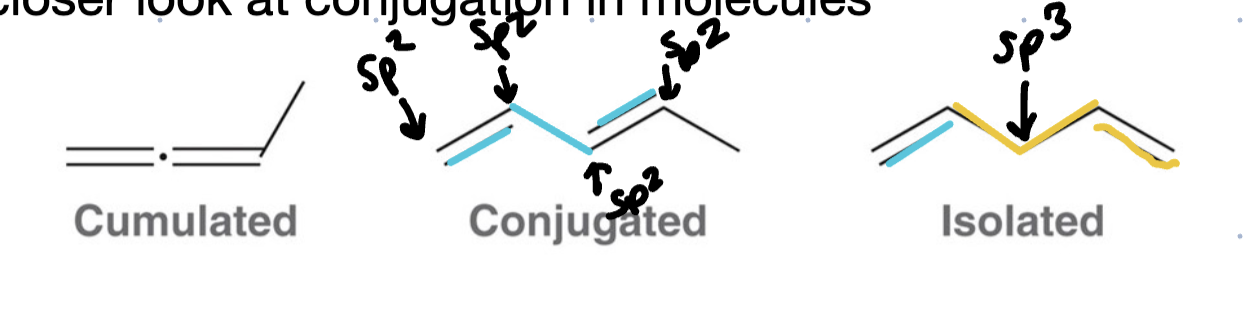
Conjugated | Double–single–double |
Isolated | Double bonds separated by more than one single bond |
Cumulated | Double bonds share a carbon |
Why does conjugation matter?
Resonance delocalization stabilizes the molecule.
Stabilizing alternating pi electrons where double bonds are separated by only one single bond
In a conjugated system, each atom that is conjugated is ____ hybridized.
sp2
Dienes
Compounds with two alkenes
Conjugation creates stability!
Conjugation creates stability! YAS
Resonance Delocalization of the pi system in conjugated dienes accounts for them being _______ kcal more stable.
3.5-4.1
Conjugated dienes will react with electrophiles through _____________ reactions.
1,2 and 1,4 addition
1,2 addition (Kinetic control)
-78
Faster product
Think: Cold = Quick
H and Br add at positions 1 and 2.
1,4 addition (Thermodynamic control)
25-50
More stable product
Think: Heat = Stability
H and Br add at positions 1 and 4, with the double bond moving to the middle.
More substituted alkene determines the structure of the product.
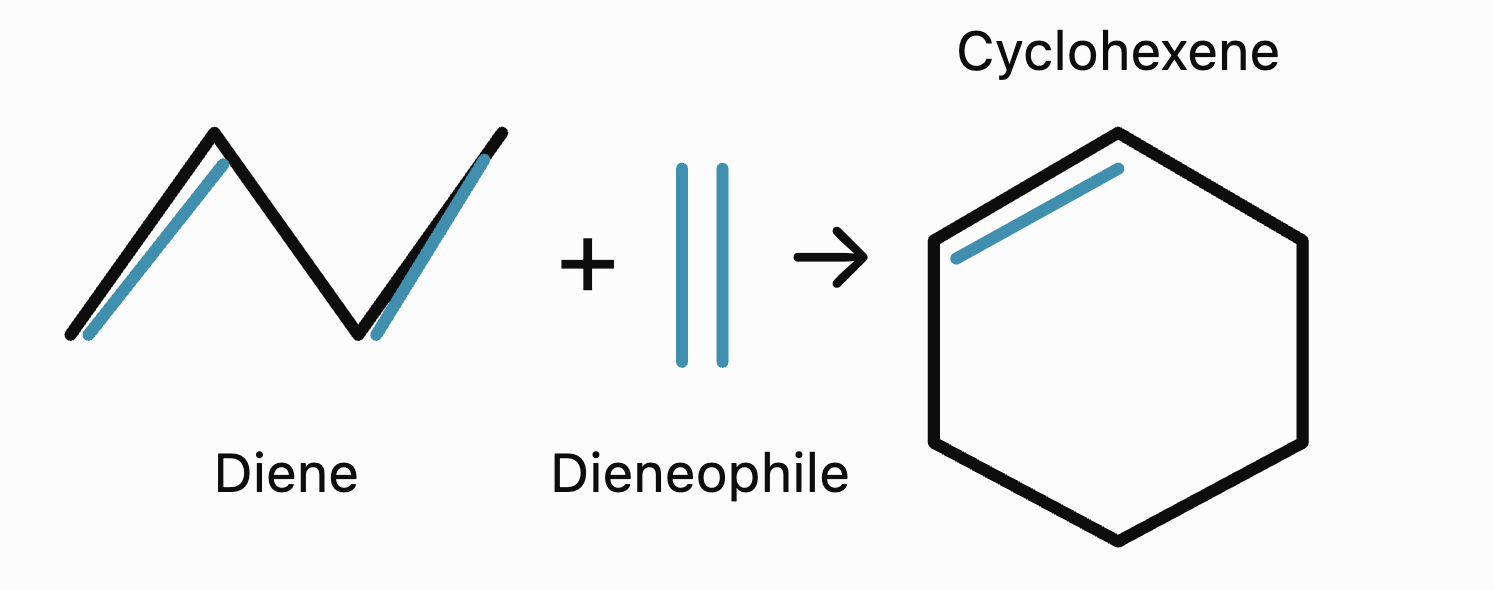
Diels–Alder Reaction
Memory trick: "4 + 2 = 6!"
Diene contributes 4 π electrons.
Dieneophile contributes 2 π electrons.
They form a six-membered ring in one concerted step.
Two new C–C sigma bonds form, and one pi bond remains from the diene.
Important: The product is a cyclohexene framework, not simply cyclohexane, because a double bond remains.
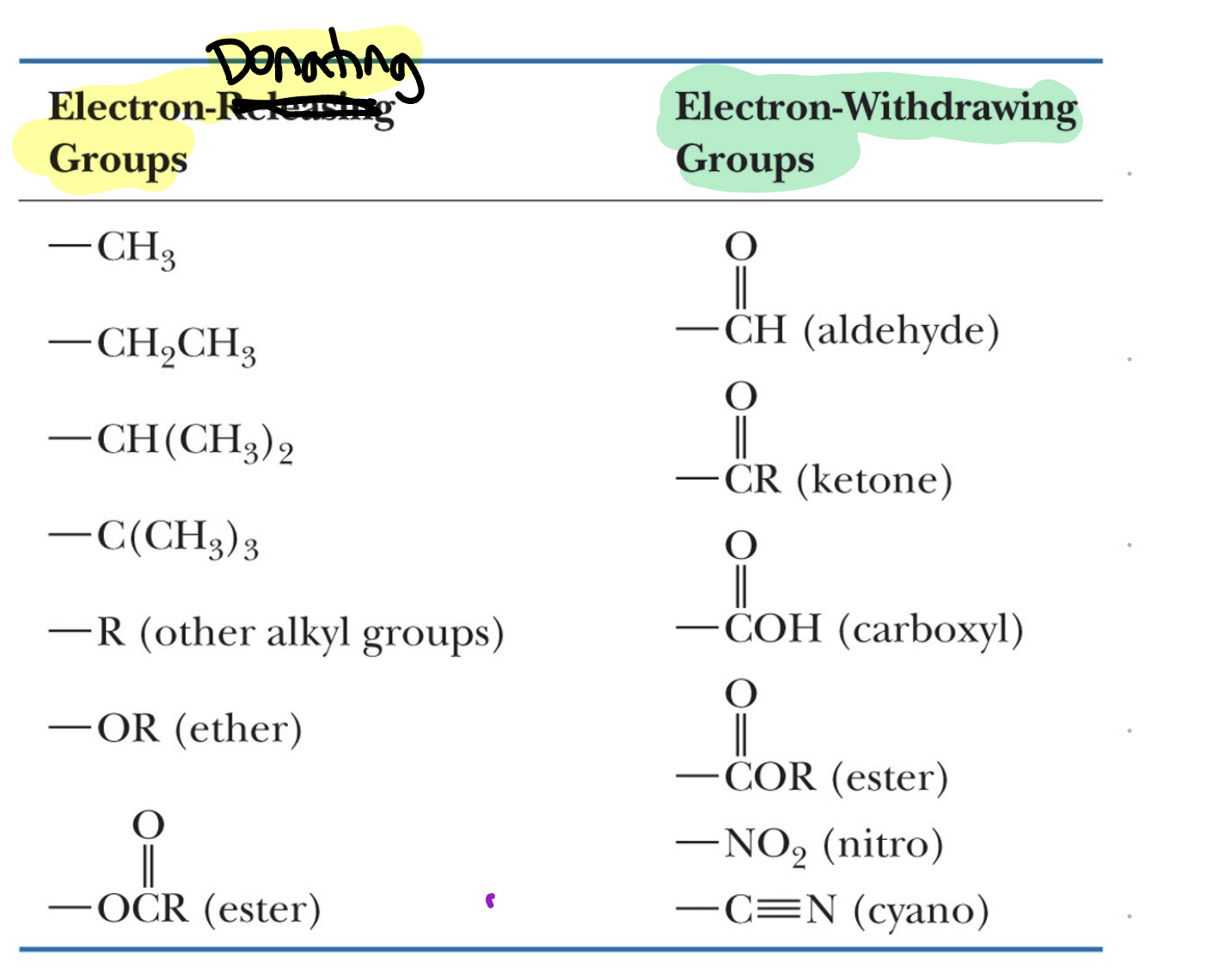
Donating groups help the diene. Withdrawing groups help the dieneophile.




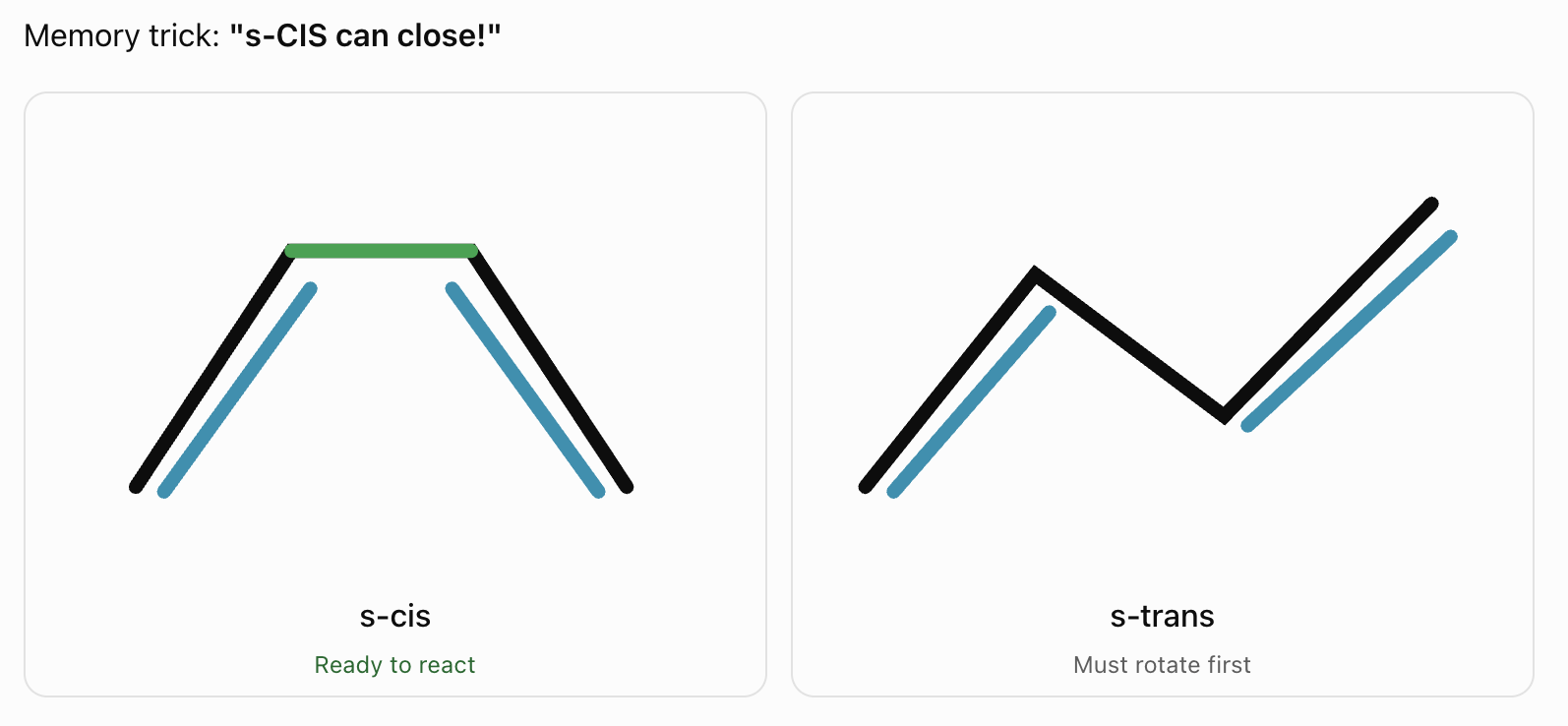
s-cis vs. s-trans
Memory trick: "s-CIS can close!"
The diene must be s-cis to undergo Diels–Alder.
Acyclic dienes can rotate from s-trans to s-cis.
Cyclic dienes may be locked in place, so check whether their geometry permits the reaction.
Think of s-cis as two arms bending toward each other to make a ring.
Alkynes as Dieneophiles
Memory trick: "Triple loses one, double remains!"
Diels Alder reaction is always a 4 + 2 cycloaddition, only pi bond is reacted in the Diels Alder reaction. Therefore, the product also has an additional double bond.
Remember:
Alkene dieneophile → one double bond in the ring.
Alkyne dieneophile → two double bonds in the ring.
Bicyclic Compounds
Memory trick: "Ring diene makes two rings!"
When the diene is already part of a ring, the Diels–Alder reaction produces a bicyclic structure.
When your diene is in a ring, your product is always Bicyclic.
Remember: Endo = favored kinetic product